Record US power use as AI surges, and more top energy stories
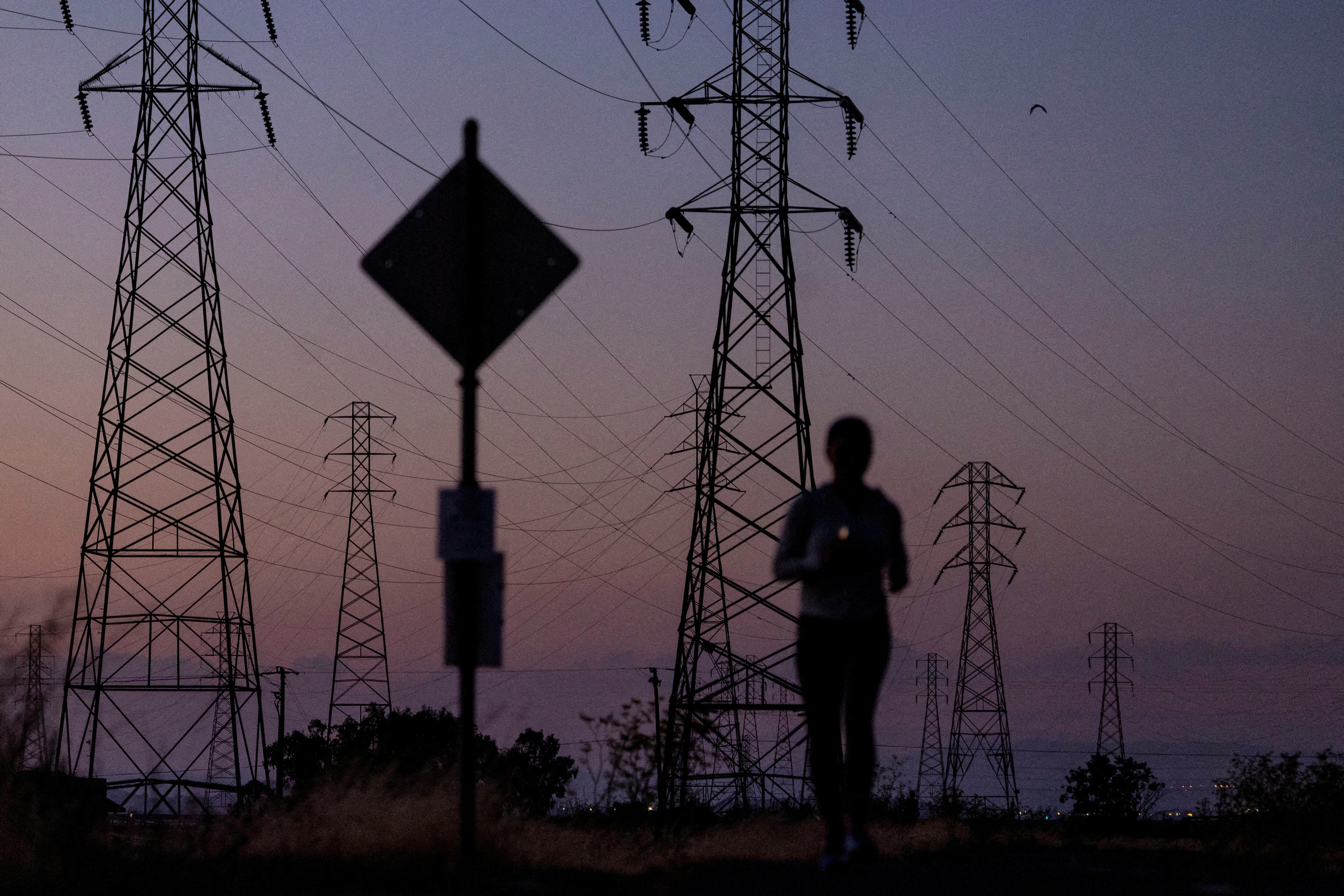
The rapid growth of AI is putting pressure on power grids. Image: REUTERS/Carlos Barria
- This round-up brings you key stories from the energy sector over recent weeks.
- Top energy news: AI surge drives record US power use; Data collaboration could boost industrial competitiveness; Extreme heat puts pressure on Europe’s energy systems.
- For more on the World Economic Forum’s work in the energy space, visit the Centre for Energy and Materials.
1. US power demand soars as AI boom fuels growth
Artificial intelligence (AI) may be reshaping electricity systems faster than many grids can adapt. But while it is driving up power demand, the technology is also offering tools that could help manage it.
In the United States, power consumption is expected to break records again in 2026 and 2027, after hitting a second consecutive annual high in 2025, as data centres serving AI and broader electrification drive demand higher, according to the US Energy Information Administration. Total electricity use in the country will rise from 4,195 billion kilowatt-hours (kWh) in 2025 to 4,268 billion kWh in 2026 and 4,391 billion kWh in 2027, it forecasts.
PJM Interconnection, the biggest US grid operator serving a fifth of the population, said it is preparing proposals intended to close a widening gap between available electricity supply and demand, led largely by data centres.
Similar pressures are being felt worldwide as the data centre industry expands faster than many electricity networks can support, according to a new report from the International Data Center Authority. It estimates that data centres now consume 67.7GW of electricity worldwide – around 1.9% of global generation – a 17% increase over the previous year. AI-focused facilities increased their electricity consumption by 50% in 2025.
The report says that current grid constraints “are only the beginning, as AI fundamentally alters the trajectory of digital infrastructure power consumption”. In the absence of new grid construction, data centres could jump from consuming 6% of US power in 2025 to 12% by 2030, it adds.
The World Economic Forum’s Energy Transition Index 2026 underscores how AI and digitalization are simultaneously driving demand and placing stress on the electricity system.
But the relationship between AI and energy is not one-way. From Paradox to Progress: A Net-Positive AI Energy Framework, a Forum report produced in collaboration with Accenture, describes an "AI-energy paradox": while AI increases electricity demand, it can also help energy systems become more efficient and resilient. The report highlights opportunities to use AI to optimize energy use, support renewable integration and strengthen grids, while improving the efficiency of AI itself and managing growing data centre demand.
2. Data sharing could unlock smarter industrial energy systems
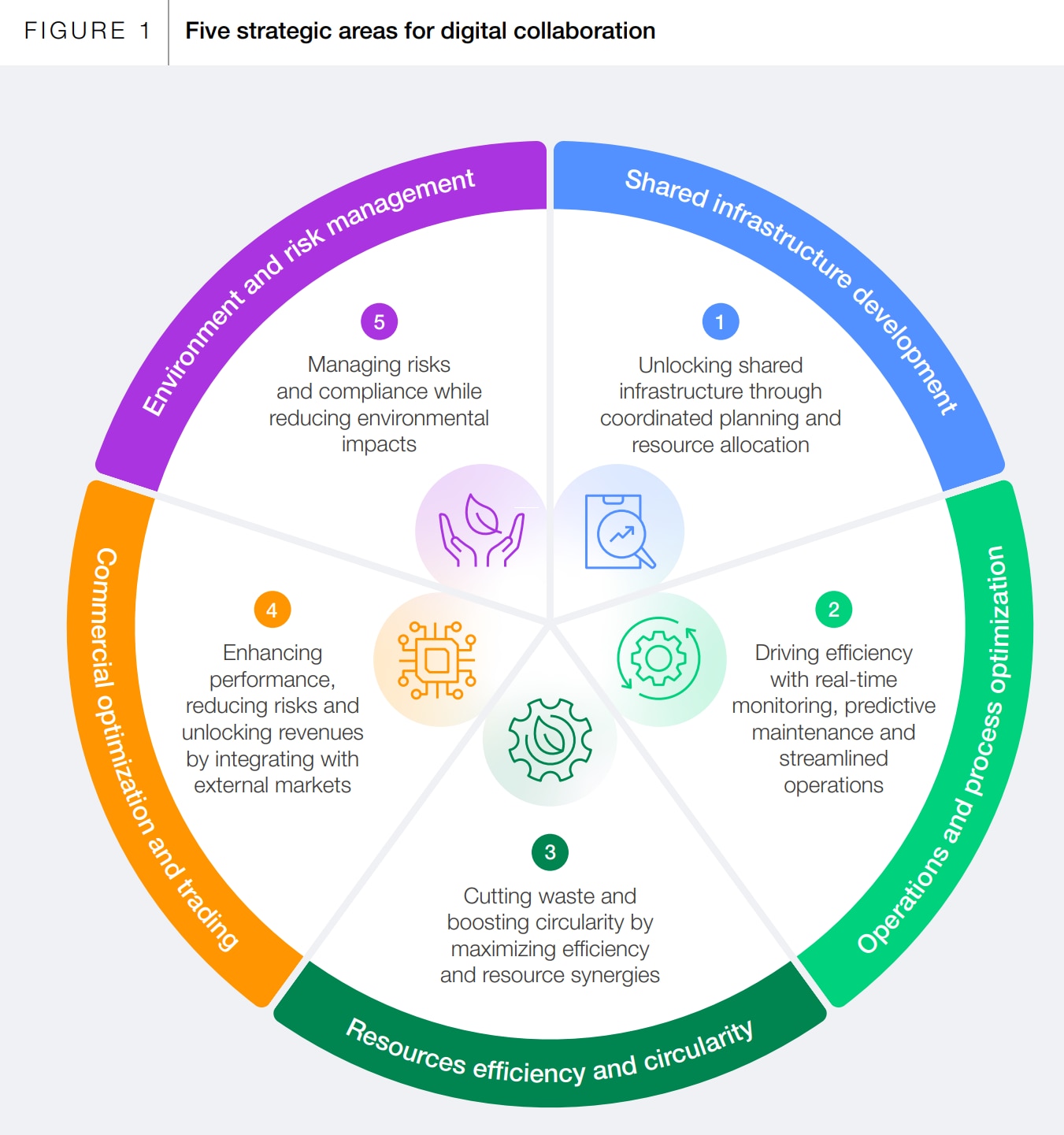
Industrial competitiveness is increasingly being shaped by how effectively companies can connect data, infrastructure and operations across entire ecosystems, according to new Forum research.
Advantage now belongs to ecosystems that collaborate, not merely co-locate, finds Intelligent Industrial Ecosystems: Turning Proximity into Intelligence, produced in collaboration with Accenture.
Around 80% of industrial data in the EU remains unused, while fragmented systems, uneven digital maturity and cybersecurity concerns can make collaboration across organizations difficult.
Trusted data sharing can help industrial clusters optimize energy, logistics and resources at a systems level and create the foundations for AI to do the same. At China’s Ordos-Envision Net-Zero Industrial Park, for example, shared data across more than 50 enterprises has helped achieve around 80% on-site green electricity consumption while reducing overall energy costs by around 10%.
The report sets out a framework for moving from isolated company-level optimization towards connected industrial ecosystems, built around data governance, data readiness, technology and cyber resilience.
3. News in brief: More energy stories from around the world
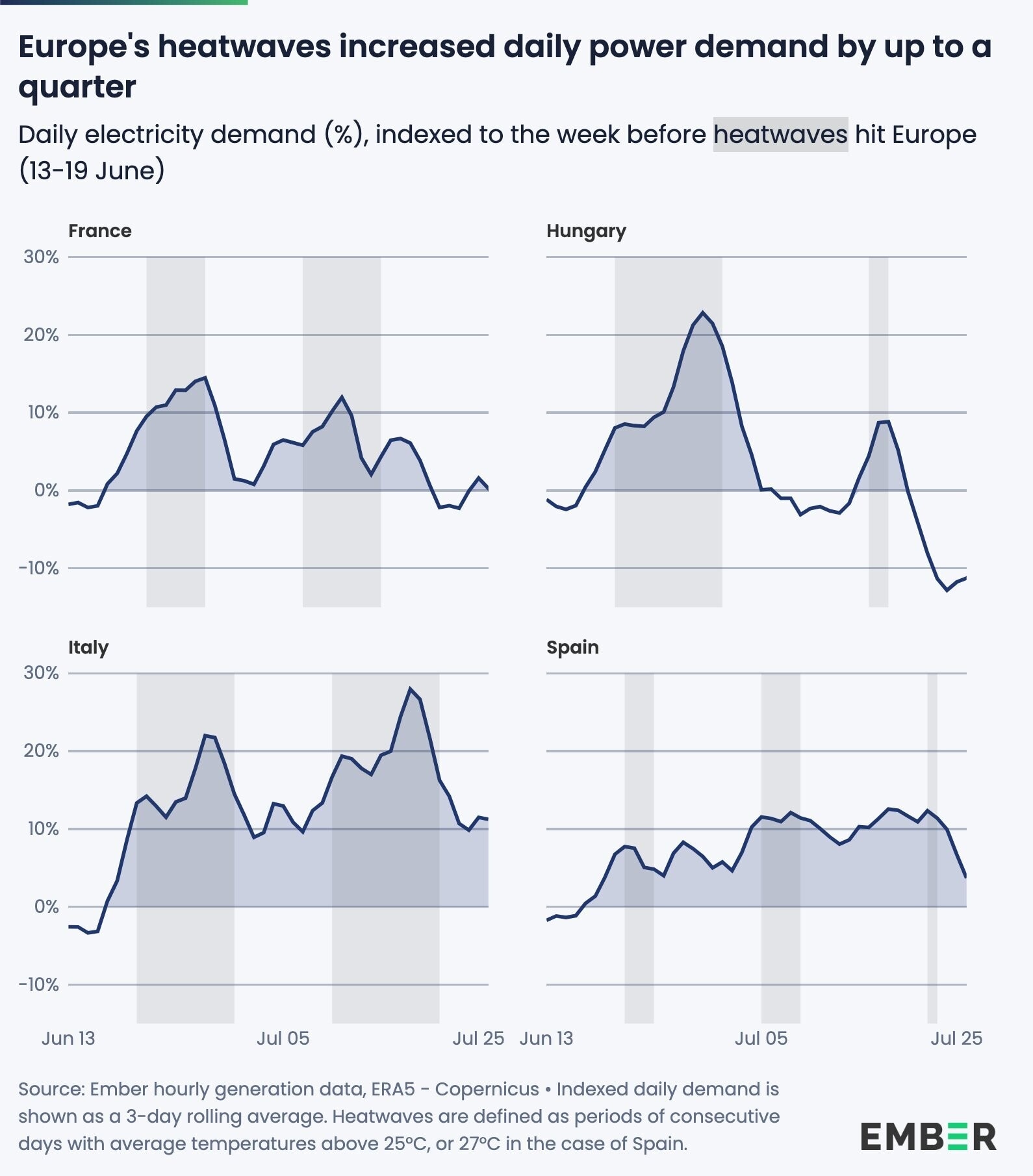
Extreme heat has put pressure on European electricity systems. Romania began disconnecting its only operational nuclear reactor amid record-low Danube water levels, while Hungary and France also curtailed nuclear generation. Solar power has helped meet higher demand during the heatwaves, but European spot power prices rose by more than 20% during the most recent spell of extreme heat.
Natural gas from an undersea field off Cyprus could start flowing to Europe as early as the spring of 2028, the country’s energy minister has said. The European Union is looking to diversify its gas supply sources to increase the bloc's energy security.
US clean energy deployment is continuing to grow despite efforts to reduce its expansion, the Financial Times reports. The trend suggests that demand from companies, states and consumers, alongside falling technology costs, is continuing to support investment in renewables and clean energy infrastructure.
Chile’s government has allowed state copper miner Codelco to reinvest all of its 2025 profits, rather than redirect them to the treasury, to ease a financial crisis at the company. Copper is essential for electric grids, clean energy infrastructure and AI data centres.
Britain’s electricity system operator temporarily limited some power exports to Europe during a recent heatwave, according to the Financial Times, as part of measures to manage domestic supply during periods of high demand. The episode highlights the growing pressure hotter summer months can place on electricity systems.
Nigeria’s president has approved a new regulatory and fiscal framework for offshore oil and gas projects that the government says could draw up to $50 billion in investment and revive developments that have been delayed.
Australia is considering building its first new oil refinery in more than 60 years as it looks to improve energy security, its prime minister has said. Australia depends on imports for about 80% of the fuel it needs and, amid the Iran war, has been working to secure supplies.
4. More on energy from Forum Stories
The fragility of the global energy system has been exposed by recent geopolitical events, including the current Middle East conflict and disruption around the Strait of Hormuz. Early-stage start-ups are developing technologies that could strengthen resilience, from distributed battery storage and microgrids to cleaner fuels, solar-powered cold-chain logistics and systems that convert CO2 into useful materials. Scaling these innovations could help energy systems adapt more quickly to future shocks.
As the AI race becomes a competition for power grids in other countries, demand from data centres has yet to overwhelm electricity systems in Africa. Countries across the region can succeed by planning power and digital systems together and treating data centres as strategic infrastructure, according to Karikari Achireko, Director for Corporate Strategy & Global Partnerships at the Africa Sustainable Energy Centre.
Greater cross-industry coordination on the energy transition could strengthen competitiveness, affordability, energy security and resilience, while also advancing decarbonization. But how can organizations across sectors scale this transformation in a pragmatic and resilient way? Six industry-agnostic enablers can help.
To learn more about the work of the Centre for Energy and Materials, contact Ella Yutong Lin: ellayutong.lin@weforum.org
License and Republishing
World Economic Forum articles may be republished in accordance with the Creative Commons Attribution-NonCommercial-NoDerivatives 4.0 International Public License, and in accordance with our Terms of Use.
The views expressed in this article are those of the author alone and not the World Economic Forum.

Forum Stories newsletter
Bringing you weekly curated insights and analysis on the global issues that matter.


