How collaboration can unlock industrial transformation and accelerate the energy transition

Cross-sector collaboration supports industrial transformation. Image: Getty Images / thitivong
- Industries are becoming increasingly interconnected through infrastructure, energy, supply chains and investment decisions.
- Greater cross-industry coordination on the energy transition could strengthen competitiveness, affordability, energy security and resilience, while also advancing decarbonization.
- There are six industry-agnostic enablers that can help organizations across sectors to scale this transformation in a pragmatic and resilient way.
Industrial systems are evolving into interconnected ecosystems in which energy, chemicals, metals, transport, logistics and infrastructure are tightly coupled through shared supply chains, physical networks and coordinated investment decisions.
When these ecosystems are planned separately, however, it leads to fragmentation and inefficiency. A lack of alignment across sectors creates challenges for optimizing resource flows, scaling clean technologies and accelerating the energy transition.
This matters because demand for energy, materials and transport continues to grow, while supply chains remain fragile and infrastructure is under strain. Geopolitical fragmentation and shifting trade, industrial and climate policies further complicate long-term planning across interconnected industrial value chains.
“The strongest progress in the energy transition happens when supply, demand and infrastructure develop in alignment,” says Tobias Meyer, CEO of DHL Group. “Policy frameworks are a decisive factor when it comes to long-term investment and ensuring sustainable solutions remain globally competitive. The world needs systems to price and elevate the costs of CO2 emissions.”
Greater coordination on these issues will strengthen competitiveness, affordability, energy security and resilience while advancing industrial decarbonization.
The limits of industrial transformation
The energy system is the core of today’s industrial landscape. It connects supply, infrastructure and industrial value chains. And because industries increasingly depend on one another, energy transition transformation can no longer happen in silos.
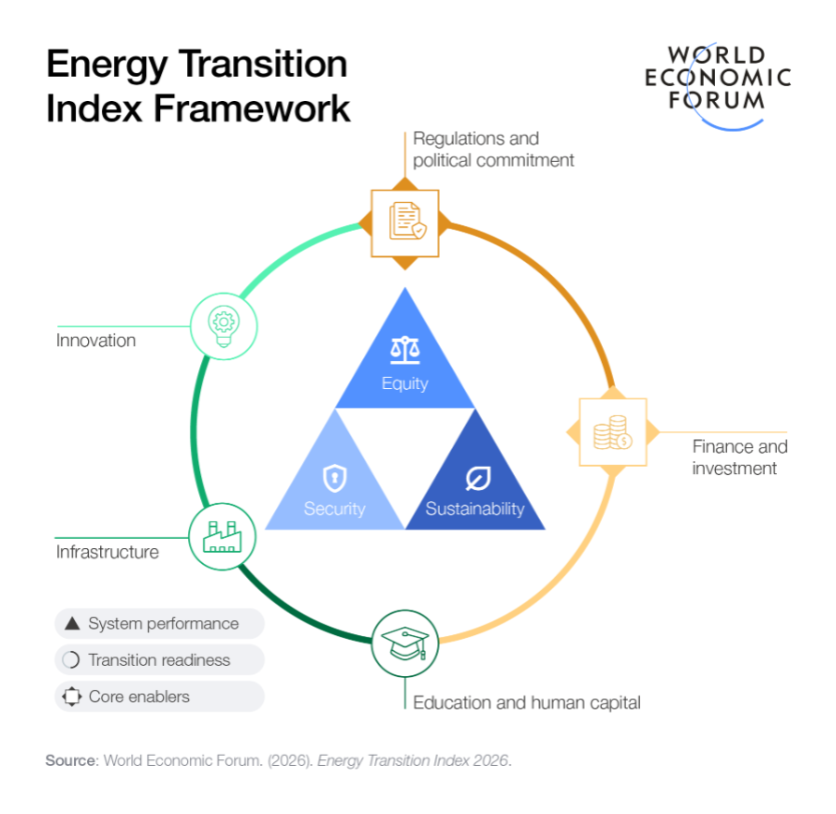
This interdependence requires more integrated ways of working that align decisions across industries, infrastructure and supply chains to scale transformation faster and generate value for all. This requires ecosystem collaboration.
To support more effective cross-sector collaboration on industrial transformation, the World Economic Forum hosted a series of dialogues across the energy, chemicals, metals, transport and infrastructure industries in 2025. These curated dialogue sessions focussed on the energy ecosystem from both supply and demand perspectives.
Participants identified six industry-agnostic enablers that are also explored in more detail in the Collective Ecosystem Brief. These elements are essential to scaling transformation in a pragmatic and resilient way:
1. Encourage technology neutrality and energy diversity
A resilient, affordable and sustainable industrial system depends on a diverse mix of technologies and energy sources.
And as technologies and geopolitical conditions evolve, every sector will need different combinations of energy sources and technologies to propel competitiveness, security and decarbonization. This could include traditional fuels, clean hydrogen, sustainable aviation fuel (SAF), carbon management or electrification.
Policies that keep technological options open can enable different transformation pathways, helping industries adapt to evolving markets, infrastructure and investment realities.
2. Make lower-carbon products more affordable
Technology diversity alone will not determine success. The ability to scale lower-carbon solutions ultimately depends on affordability and access across industrial value chains.
But the cost gap between conventional and lower-carbon products remains significant, particularly for tight-margin industries facing rising energy costs. SAF, for example, typically costs more than conventional jet fuel, depending on regional and market circumstances. Similar green premiums exist in chemical value chains.
That’s why many lower-carbon technologies require substantial upfront investment before economies of scale can reduce costs. Without targeted incentives, shared infrastructure and clearer long-term demand signals, industrial transformation will struggle to move beyond pilot projects into large-scale deployment.
3. Create a balanced, inclusive and regional industrial transformation
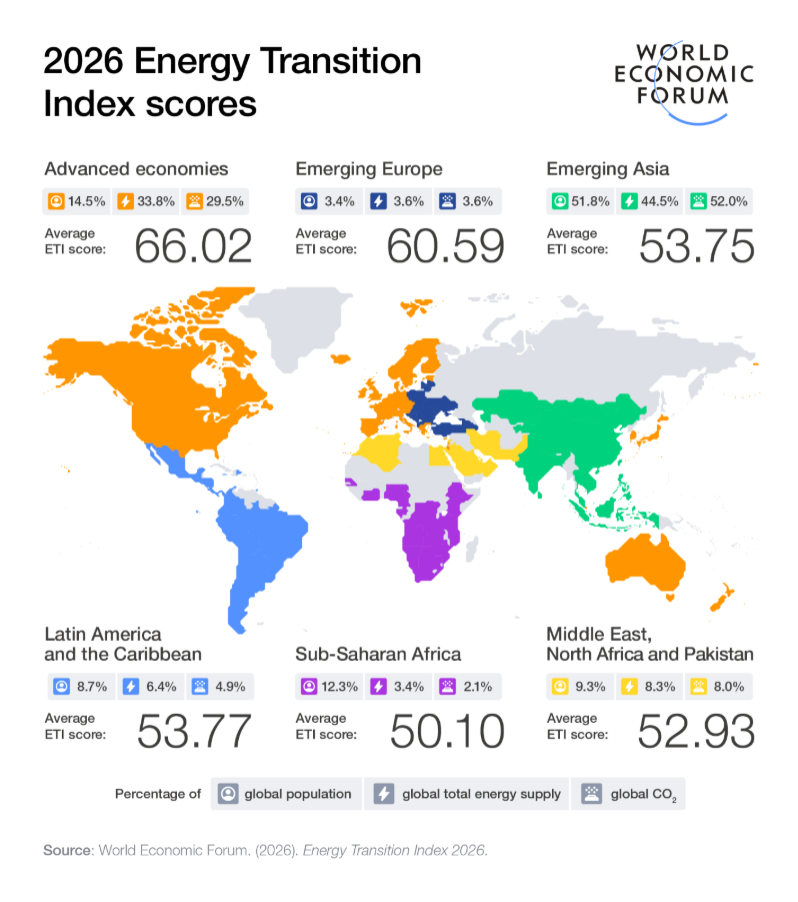
Even where technologies are available and investment conditions improve, industrial transformation will not follow a single global pathway. Regions differ in terms of infrastructure maturity, energy systems, industrial capacity and access to finance. This makes region-specific approaches essential to long-term industrial transformation.
These differences are also reflected in investment patterns. Emerging economies excluding China received less than 10% of the growth in global clean energy investment between 2015 and 2024, according to the International Energy Agency, despite being expected to drive much of the future energy demand.
Transformation strategies that ignore regional realities risk creating fragmentation rather than resilience because solutions that work in one context may not be viable in another.
4. Design stable and consistent policies
Industrial transformation depends on investment cycles that can extend across decades. But companies are increasingly being asked to make long-term investment decisions amid rapidly shifting policy environments. This uncertainty can deter investment and raise financing costs, according to the Organisation for Economic Co-operation and Development (OECD).
“Industrial transformation requires major investment in new technologies, infrastructures and competences,” explains ENI’s CEO, Claudio Descalzi. “Long-term, technology-neutral policies can unlock capital, boost competitiveness and accelerate innovation across value chains and energy ecosystems, enabling industry to deliver security, resilience and sustainable growth.”
5. Develop more effective market mechanisms for decarbonization
Stable policy frameworks create the conditions for effective market mechanisms that accelerate adoption of lower carbon solutions and enable collaboration across value chains.
But decarbonizing one part of a value chain and not others risks shifting emissions and costs rather than reducing them. “If you want to decarbonize a complete value chain, it’s very hard for one player in the industry to do that alone,” says Conrad Keijzer, CEO of Clariant AG. He adds that collaboration is therefore “very critical” in industries such as chemicals.
More coordinated market mechanisms, supported by enabling policy frameworks, can improve transparency around product carbon intensity, align incentives across value chains and support shared infrastructure. This helps industries to invest and scale together, rather than in isolation.
6. Transform energy infrastructure
All of these efforts ultimately depend on reliable multi-energy infrastructure.
Infrastructure such as ports, grids, pipelines and logistics networks form the backbone of industrial transformation, but much of this was designed for older energy systems and supply chains.
As industries adopt alternative fuels, lower-carbon feedstocks and new technologies, infrastructure must evolve alongside them. Without coordinated public and private investment, even ambitious transition strategies will struggle to move beyond isolated projects into large-scale deployment.
This is why governments play a critical role in planning, permitting and investing in the energy infrastructure needed to enable industrial transformation at scale.
Industrial transformation: from fragmentation to coordination
These six enablers point to a broader shift in how organizations are approaching industrial transformation. Success increasingly depends on how industries, governments and infrastructure providers coordinate across interconnected value chains.
The real opportunity now is to accelerate change that is aligned across industrial ecosystems.
Don't miss any update on this topic
Create a free account and access your personalized content collection with our latest publications and analyses.
License and Republishing
World Economic Forum articles may be republished in accordance with the Creative Commons Attribution-NonCommercial-NoDerivatives 4.0 International Public License, and in accordance with our Terms of Use.
The views expressed in this article are those of the author alone and not the World Economic Forum.
Stay up to date:
Cross-Industry Outlook
Related topics:


Forum Stories newsletter
Bringing you weekly curated insights and analysis on the global issues that matter.
More on Energy TransitionSee all

Philip Christiani
September 1, 2026