Ageing is often seen as a challenge for the developed world. In fact, the burden of global ageing may fall disproportionately on lower- and middle-income countries. Here's what can be done.
With the ageing of the global population, an unprecedented demographic transition is underway. For the richer, developed world, the potential impacts of this are well-known: increased pension burdens, healthcare systems under strain and shrinking workforces.
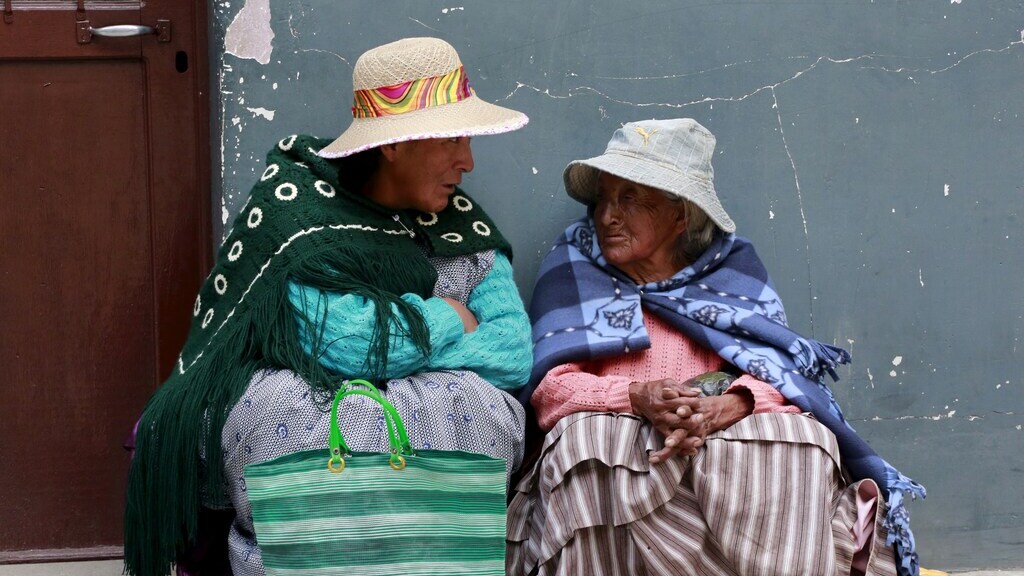
But for lower- and middle-income countries (LMICs) global ageing represents a particularly acute challenge. It is estimated that about 80% of the world's over 60s will live in LMICs by 2030.
Large numbers of older people in these settings live in rural and underserved areas amid poverty and are deprived of care and support, and they also face additional health challenges. The coexistence of non-communicable and communicable diseases adds to the complexity of older care and put strain on healthcare systems.
In many LMICs, cultural practices can also expose older women to gender-based discrimination. Limited health resources and social services safety nets, as well as competing budgetary priorities at the state level, further complicate the care of older people in LMICs.
The good news is that the problem is already being taken seriously by some actors at the international level.
The World Health Organization (WHO), for example, coordinates the Decade of Healthy Ageing platform, that brings together stakeholders for knowledge exchange and management on healthy ageing. HelpAge International, a global network of organizations working on ageing, has implemented various healthy ageing programmes in over 100 countries. The International Federation on Ageing coordinates research and advocacy at a global level.
These efforts are a good start, but to ensure that the millions of older people living in LMICs can live their later years in a dignified and happy way, more needs to be done.
Three ways to deliver healthy ageing worldwide
Three areas of focus can help guide international programmes and national priorities when it comes to caring for older populations – in LMICs and elsewhere.
1. Pool resources to scale the responses
The response to global ageing is currently insufficient compared with the need, and there is a shortage of organizations, individuals and human resources working on healthy ageing. This is particularly true in LMICs.
There is a pressing need to invest in strengthening local organizations to enable greater ownership of initiatives. LMICs are unlikely to have huge pools of money available for this purpose, though, so pooling of resources can serve as a cost-saving and efficiency measure. This is already happening.
HelpAge International’s Healthy Ageing Platform, for example, provides a shared platform for 181 organizations from 66 countries to communicate and exchange ideas and experiences.
This allows organizations in the programme to adopt best practice from elsewhere, eliminating a cost – preliminary research – and skipping straight to the delivery.
It also pools resources, meaning each organization that is a part of the programme does not need its own access to certain crucial tools and subscriptions, allowing more resources to be dedicated towards scaling real impact.
2. Align strategies at international and national levels
Fragmented action across stakeholders and programmes limits the effectiveness of healthcare for older people.
Take, for example, how in the delivery of integrated care for older people, very little emphasis is given to communicable diseases and related needs such as HIV and ageing. A lack of alignment or limited integration on these issues risks reducing the effectiveness of interventions. This friction is particularly acute where national and subnational programmes meet.
One way to effectively bridge this gap is by empowering and training local people to participate in community-based healthcare. GRAVIS, an India-based healthcare NGO covers over 400,000 older people through a holistic community-based approach that integrates locally led interventions and government programmes on healthy ageing. It does this by helping older people, often in remote areas, to participate in designing healthy ageing interventions. They are then trained to lead the planning, implementation and monitoring of village level community development projects with an emphasis on person-centric care.
When associations act as bridges between national-level objectives and communities on the ground, those communities themselves can become active in their own healthcare.
3. Transfer knowledge to where it can be replicated
The export and replication of successful local interventions to other regions remains a challenge, partially due to limited documentation and scientific validation of the evidence.
The replication of successful innovations and ideas in new geographical contexts would help to reach the unreached, and should not be delayed further.
HelpAge International’s Healthy Ageing Platform is one example of an organization pushing for improved knowledge sharing. The WHO, too, has its Global Health Library, which documents initiatives all over the world for exchange of learning and best practices.
Broadening participation and uptake of these platforms is a crucial aspect of improving older person care, particularly in LMICs. In transferring knowledge between these sometimes underserved contexts, providers on the ground can significantly expand their knowledge base despite having limited access to resources.
Societies globally face one of the most significant demographic and societal transformations of our time. There appears to be very little we can do to change this trajectory. But longer lives don’t need to be framed exclusively as a challenge to be overcome. In LMICs, there is an opportunity to enrich the lives of older people with effective care – doing so will have positive knock-on effects for everyone.