The International Day of Peace is an opportunity to come together and reflect on the work that needs to be done to attain sustained and sustainable peace. As the news demonstrates, this is a tall order, but crucial.
My work as UN Assistant Secretary-General for Peacebuilding Support revolves around bridging the gap between political efforts to achieve and maintain peace, and the challenge of building the foundations for lasting stability and prosperity.
Equitable development and prosperity are only possible if there are institutions, regulations, and a basic political and social compact to guide society. Similarly, any political agreement remains fragile unless the resultant dividends reach the wider population.
It is at this crossroads that the United Nations’ peacebuilding efforts are most acute and relevant. And it is at this crossroads that the private sector has a key role to play.
For a long time, peacebuilding was not a primary concern for the business community. But, this is changing. Everyone realizes that conflict is costly; in terms of the toll fighting takes on people and also with regard to economic opportunity.
For that reason, all relevant actors – government, civil society, international donors and organizations as well as the private sector – have a stake in supporting peacebuilding. They also have a stake in trying to prevent conflict from occurring in the first place.
Most conflicts nowadays are intra-state conflicts, and it is in these countries that the risk of relapse is highest. The private sector can be an essential partner for sustainable peace by providing economic opportunities and employment, by supporting the development of strong institutions for governance, and by engaging with the communities where their operations or products have an impact.
It is against this background that I accepted the role of chairing the Global Agenda Council on Conflict Prevention this year. The Council brings together tremendously diverse expertise spread across sectors and continents, which challenges us to think beyond our usual comfort zones.
We have set ourselves the goal of promoting greater involvement of companies in the business of peace. I am thrilled to have been given this opportunity and hope that by the next International Day of Peace we will have moved towards our ultimate goal: changes on the ground where it really matters.
Judy Cheng-Hopkins is the UN Assistant Secretary-General for Peacebuilding Support, overseeing the activities of the UN Peacebuilding Commission and Peacebuilding Fund. She is also Chair of the World Economic Forum’s Global Agenda Council on Conflict Prevention.
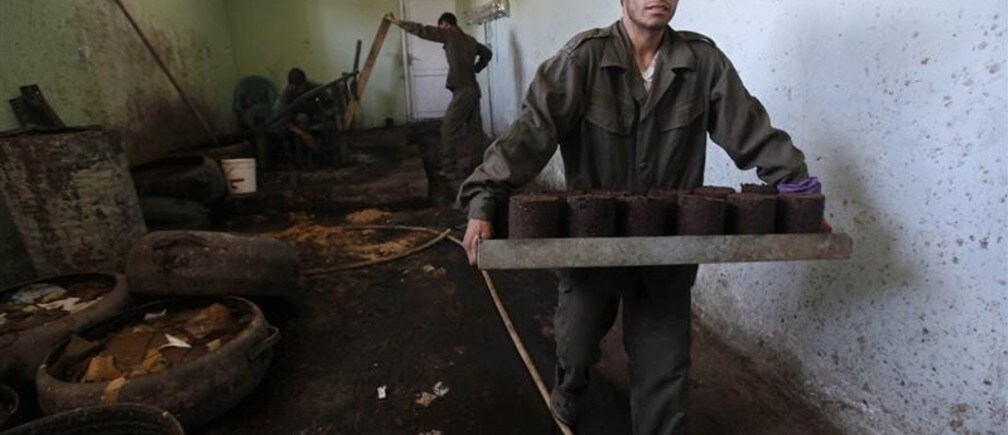
Image: Afghan men work to make briquettes. REUTERS/Omar Sobhani