As governments place greater emphasis on resilience and sovereignty, the post-war multilateral order is giving way to a more multipolar and fragmented landscape. Rebuilding dialogue is a necessary first step towards renewed trust, stability and practical collaboration.
This article is part of the Connecting the Dots series, which examines how the defining challenges of our era are practically interconnected.
Countries face an increasingly complex world with multiple centres of power, a digital economy, intricate supply chains and frontier technologies that advance faster than the rules designed to govern them. As a result, they are placing ever greater emphasis on their own security and resilience, testing the ability of multilateral institutions to respond to a changing geopolitical landscape.
Our Global Cooperation Barometer 2026 reveals that despite these tensions, global cooperation is not retreating but evolving. Countries may be reassessing longstanding dependencies, but they remain connected through trade, technology and environmental challenges.
The question is how cooperation can accommodate changing national priorities while continuing to address shared challenges. As national security takes centre stage, sustaining practical cross-border collaboration requires new frameworks that balance sovereign resilience with collective action.
How are countries balancing resilience and interdependence?
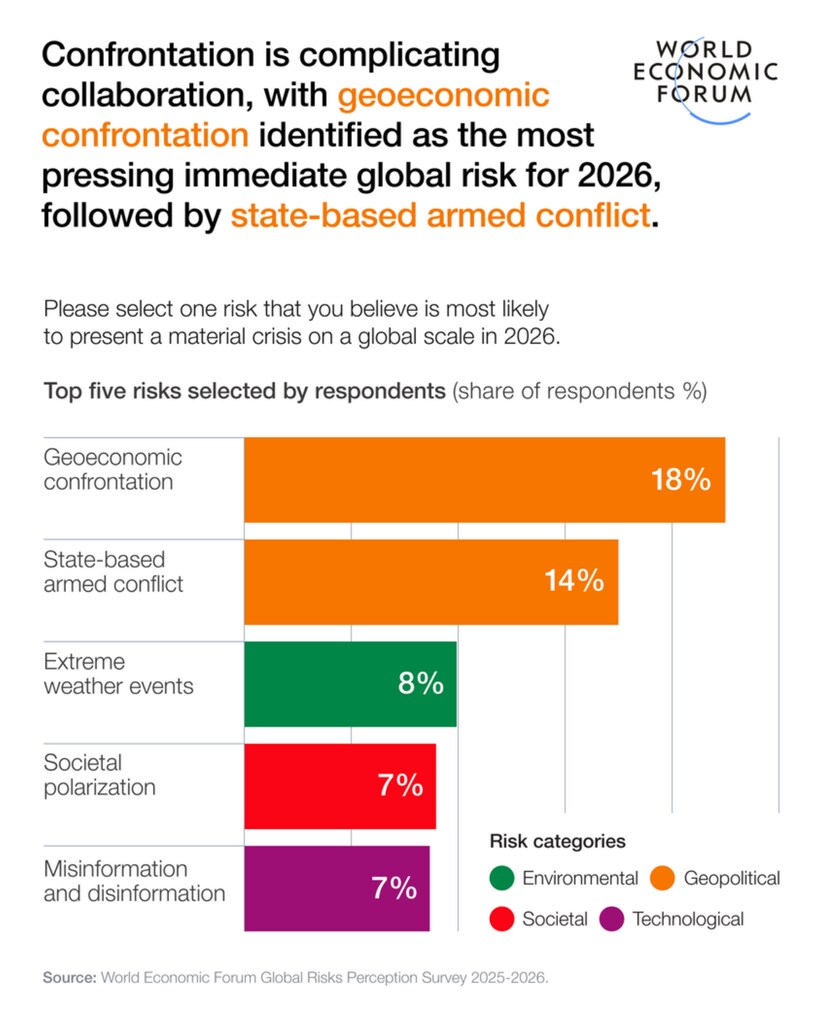
As our Global Risks Report 2026 shows, geoeconomic confrontation has emerged as a defining risk of our era, accelerated by a series of systemic shocks. The pandemic, wars in Ukraine and the Middle East and the energy crisis have led countries to refocus on domestic markets, emphasizing preparedness and energy independence.
Trade, finance, digital infrastructure, and technologies such as AI have become levers of geoeconomic strategy. Competition over semiconductors and strict export controls show that much of what we once traded relatively freely across borders is now instrumentalized by countries of origin. We have also seen more traditional economic tools, such as tariffs and sanctions, reemerge in the headlines, alongside supply-chain disruptions, including the blocking of critical maritime corridors.
Governments are competing to define who gets access to advanced AI. US and allied officials have been discussing a “trusted partners” scheme to open restricted US frontier models to vetted countries and companies. This echoes wider debates in the EU and around the world about AI sovereignty as governments seek to reduce dependence on AI trailblazers like the US and China. For smaller states and developing economies in particular, being tied into relationships that can be cut off at any time carries significant risk.
Our recent modelling indicates that trade restrictions in place as of March 2026 could reduce global growth by around 0.2 percentage points compared with baseline projections. In a severe escalation – where the global economy splits into two fully severed economic blocs – fragmentation could reduce overall growth by as much as 6.4 percentage points relative to baseline expectations.
Such barriers can cascade, disproportionately affecting workers and communities most reliant on open trade, putting jobs at risk and raising living costs. As economic growth slows and access to critical technology becomes restricted, a weakening rules-based system undermines the very mechanisms that enable nations to innovate and expand.
Fracturing traditional trade frameworks means businesses and governments must jointly establish their own rules of engagement to keep pace with geoeconomic change. The Global Cooperation Barometer 2026 shows that while some measures of multilateralism are weakening, smaller and more flexible forms of cooperation are gaining ground, with growth across data flows, services trade and capital flows.
How are forms of cooperation changing?
In an increasingly multipolar world, international institutions are struggling to adapt as their rules and norms come under attack. These tensions are mounting just as global challenges demand more coordinated responses.
A recent example is the UN Security Council’s draft resolution on the Strait of Hormuz, which proposed coordinated defence efforts, but was vetoed by China and Russia. It is not the first time the five permanent members’ veto rights have stalled UN action, and it exemplifies the gridlock multilaterals face as members’ interests continue to diverge.
As multilateral frameworks erode, the rights and standards they uphold – human rights, labour standards, refugee and social protection – also risk being dismantled.
Part of the response may lie in complementing the post-war model of multilateralism with “minilateral” or “plurilateral” arrangements – smaller groups targeting specific problems. While these flexible coalitions enable faster progress, they also prompt critical questions about governance: who gets to participate, and who risks being excluded?
What does conflict mean for recovery and development?
The Global Risks Report 2026 rates armed conflict as the second most likely risk to present an immediate material crisis, after geoeconomic confrontation.
In this increasingly volatile environment, 2025 marked a post-WWII peak in state-based conflicts, according to data from the Peace Research Institute Oslo. Direct interstate conflicts doubled year-on-year to eight active cases – a trend that has escalated further with direct state-level hostilities involving Iran.
Active conflicts disrupt trade, aid and human development. They can damage healthcare and education systems, undermine livelihoods and disproportionately affect vulnerable populations, driving displacement, supply-chain disruption and energy shocks. Recent conflicts have had major implications for global food and energy security; the conflict in Sudan since 2023 has led to one of the largest refugee crises to date.
Conflict and climate interact, with climate change acting as a “threat multiplier”. It can worsen shortages of water, land and food, heightening resource scarcity as a conflict risk. Moreover, climate displacement can push people fleeing natural catastrophes or severe weather into overpopulated areas, adding pressure and fuelling social tensions.
There are also wide-ranging repercussions for digital infrastructure. Ukraine’s digital transformation is credited as being key to its resilience. Yet attacks on these systems can expose cybersecurity vulnerabilities: according to Microsoft's 2022 threat intelligence report, the share of detected nation-state cyberattacks targeting critical infrastructure rose from 20% to 40% following the invasion.
And AI is increasingly being deployed in warfare – for example, to analyze reconnaissance data and support operational decision-making.
After a war, rebuilding a country can take many years, and the costs fall on economies whose finances are already weakened. Iran’s central bank estimates that the country’s recovery will take more than a decade. For Ukraine, joint UN and World Bank estimates calculate that reconstruction will require more than half a trillion dollars over the next 10 years, nearly three times its estimated GDP.
Rebuilding at this scale cannot rely on public finance alone. Mobilizing recovery efforts requires de-risking mechanisms that bring businesses and governments together to attract private capital. The Forum’s Humanitarian and Resilience Investing (HRI) Initiative exemplifies this approach – using blended finance like the HRI Roadmap for Africa to direct private investment into fragile economies and help close Africa's ~$400 billion annual financing gap.
Why do shared resources need a coordinated response?
Geopolitical fragmentation affects more than just the relationships between countries. Space, the deep sea, the atmosphere and global data infrastructure have long been treated as shared commons. Increasingly, however, they are becoming arenas of strategic competition among governments and companies.
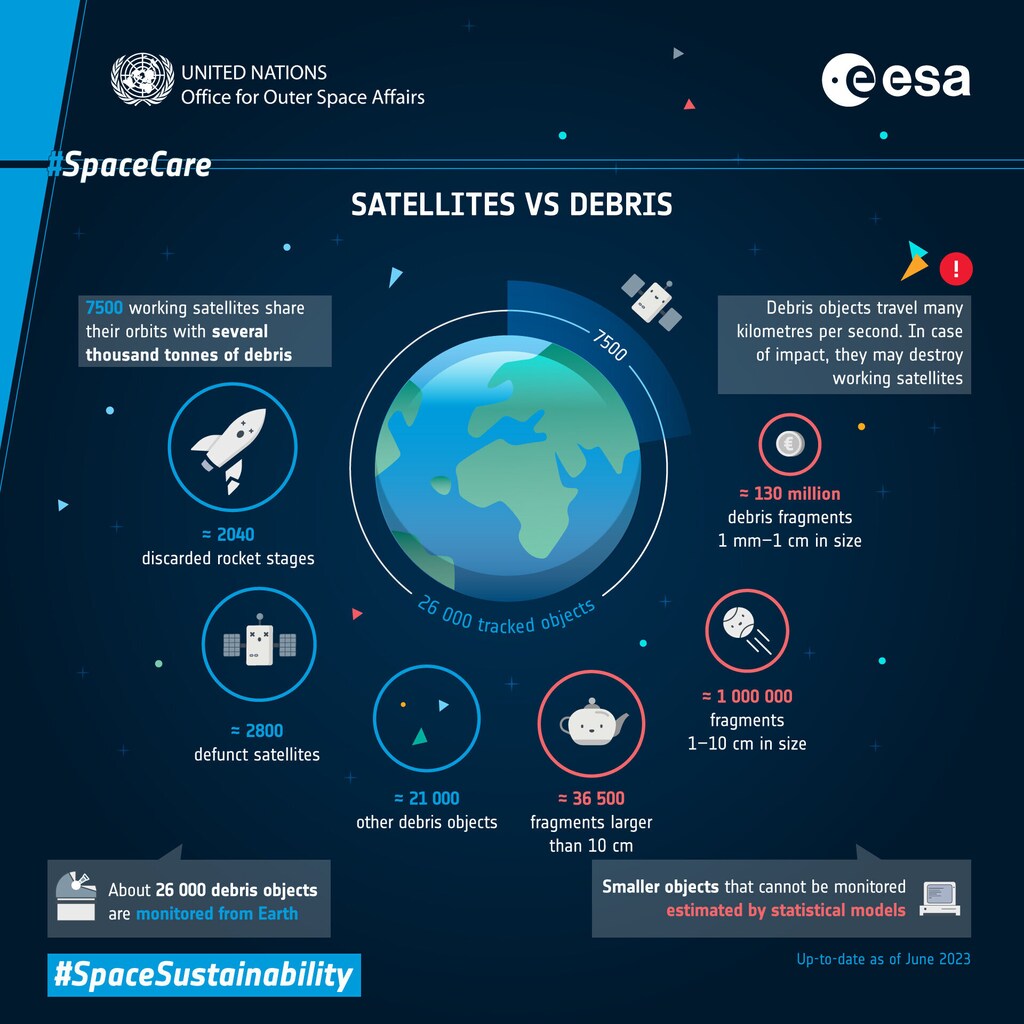
Low-Earth orbits, for example, have become highly congested. Commercial space operators vying for the most valuable orbits are driving others into higher orbits, where crashes with space debris and other satellites are more likely.
Geoeconomic fragmentation also directly threatens the future of the planet. Protecting global ecosystems – biodiversity, the ocean and the climate – requires effective international action, yet governance is under severe strain as climate change increasingly intersects with geopolitical security risks. Initiatives such as the Paris Agreement and COP meetings are struggling to maintain momentum in an increasingly fragmented world order.
Central to this tension is the economic rivalry between the US and China, which makes coordinated action on the energy transition far more difficult. As national budgets tighten and protectionist trade barriers mount around critical technologies, multilateral climate finance faces severe pressure, leaving global funding far short of mitigation and adaptation needs.
Just as orbital congestion threatens satellite networks, national fragmentation can undermine the protection of planetary resources. While countries may compete over energy supplies and clean technologies, they share an interest in limiting environmental damage. National action alone cannot safeguard these commons; common rules and coordinated governance are essential.
What can help cooperation move forward?
Sustaining global cooperation in a changing world does not require returning to old models, but adapting to new realities. Driving economic growth is essential to addressing these challenges. Improving material circumstances and levelling inequalities has the potential to reduce social polarization, as well as foster renewed openness to cooperation.
At the same time, growth itself depends on collaborative approaches. Governments, businesses, civil society and academia need to create shared frameworks that enable trade and technology to flow across borders. This is the consensus-building the Forum's Global Cooperation Barometer is designed to guide, tracking where international cooperation is advancing, identifying critical blind spots and highlighting where smaller nations risk being left behind.
Ultimately, national choices directly shape economic opportunity, technological access, human livelihoods and planetary stability – creating a continuing need for practical, cross-border cooperation.
No single institution, sector or country can solve these challenges alone – because they do not exist alone. The economic, technological, social and planetary forces shaping our future are deeply interconnected, and so too must be the responses. At the World Economic Forum, we bring together the leaders, ideas and partnerships needed to turn shared understanding into collective action. Because moving the world forward starts with seeing the whole picture.