European leaders find common ground on ways to sharpen the region’s competitive edge
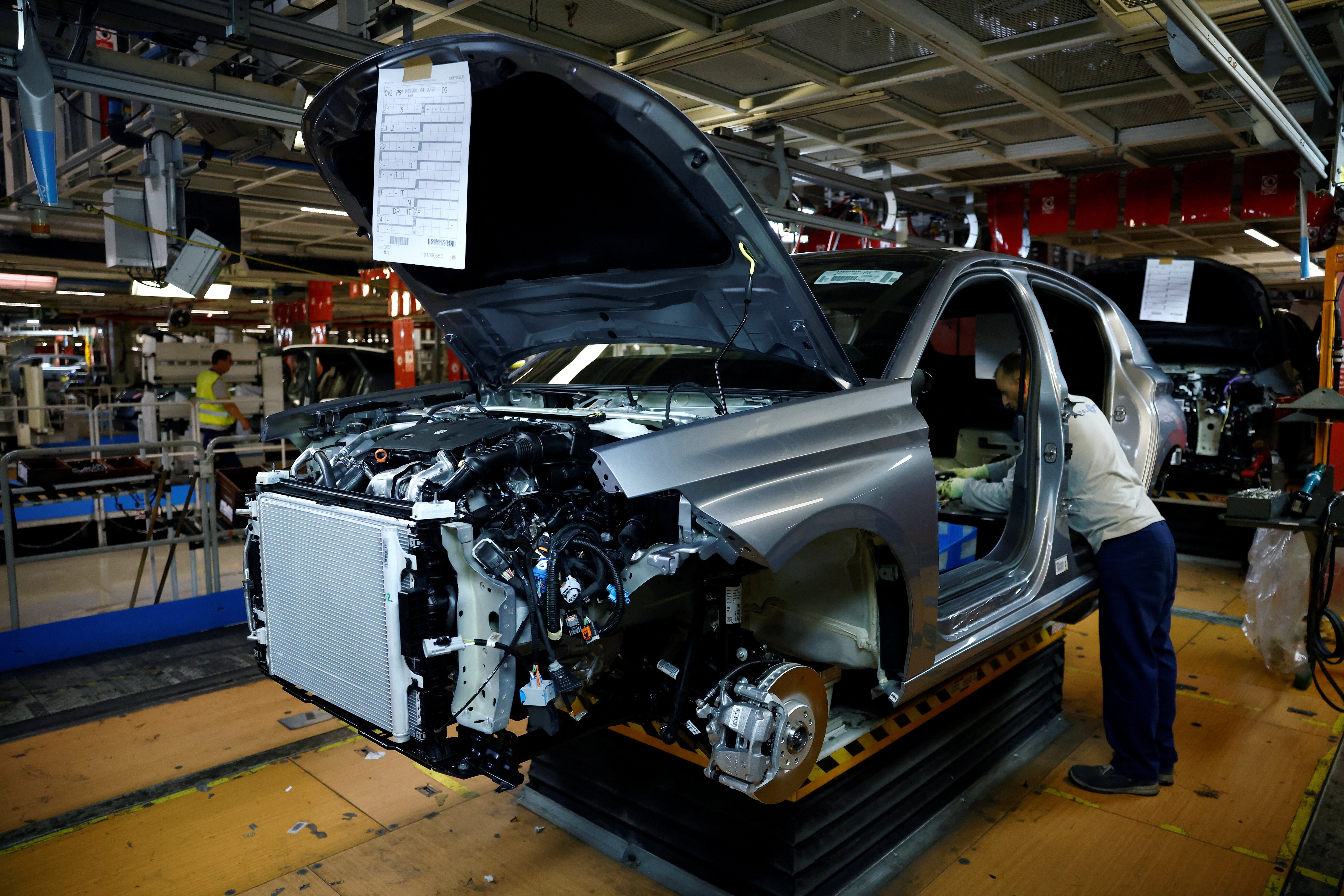
For Europe, moving its economy forward might start by harnessing existing strengths like its manufacturing base. Image: REUTERS/Alice Sacco
- The World Economic Forum’s Leaders for European Growth and Competitiveness initiative recently convened senior leaders in Dublin and Berlin to take stock of progress over the past year, and agree on specific ways to spur the region’s economy forward.
- The initiative’s upcoming report synthesizes a year’s worth of work on addressing bottlenecks related to clean and competitive energy, artificial intelligence, strategic alliances, and making better use of financial resources.
It’s a defining moment.
The geopolitical uncertainty, technological disruption, and energy challenges confronting Europe have reached a fever pitch. It must now fully harness existing strengths like the world’s largest single market, trusted institutions, formidable industrial capacity, world-class talent, and vast potential financial resources if it wants to retain and expand its influential role in the global economy – and, maybe even more importantly, ensure continued prosperity and a high standard of living for its 450 million citizens.
The World Economic Forum’s Leaders for European Growth and Competitiveness (LGC) initiative brings together senior leaders representing governments, businesses, think tanks, civil society and international organizations to help accelerate progress. It recently hosted two high-level meetings to advance its goals.
In Dublin, more than 100 members convened ahead of the Irish Presidency of the Council of the EU to take a hard look at Europe’s competitiveness challenges – and to evaluate emerging solutions. A subsequent Berlin gathering hosted by German Federal Chancellor Friedrich Merz last month presented these solutions, and fostered discussions on how to implement them consistently across member states.
The meetings will shape a report from the initiative slated for publication in September.
Problems understood
European leaders understand the issues at hand.
That might not sound like much, but it’s an essential starting point. A long-simmering debate about the region’s competitiveness has already identified underlying problems, Irish Taoiseach Micheál Martin said during the Dublin event. The priority now should be to implement fixes.
Of course, that desire to implement comes at a delicate juncture. The energy supply shock generated by the conflict in the Middle East lowered the IMF’s expectations for euro area economic growth this year to 0.9% (compared with 2.3% for the US, 4.6% for China and 6.4% for India). Inflationary pressure triggered by the upheaval has pushed the cost of living higher. While overall inflation in the euro area eased last month, energy costs in particular have continued to spike.
All the more reason to double down on structural reforms that can transcend short-term pain.
Some of the biggest priorities for enabling innovative, homegrown ideas to hit the market outlined at the gathering include reducing the complexity of Europe’s still-fragmented market to help companies expand across borders, and moving people beyond the basic adoption of artificial intelligence to using it in new and productive ways.
To that end, more data centres, cloud computing capacity, and access to serious computing power is in order. So is a reevaluation of how the youngest companies are financed.
The necessary capital exists, but there is a need to get more of what is currently sitting in European savings accounts flowing out into the economy – in particular, into productive investments that both help the newest European companies grow and bolster the wealth of more Europeans for decades to come.
One key question is how to better leverage long-term savings, including what is held by pension funds and insurers (it’s worth noting that the venture firms behind OpenAI and Anthropic, which are both now expected to go public in the US, have received backing from pension funds).
Public-private scale up funds and incentivized procurement will likely play a more prominent role in boosting the available capital for higher-risk investments in Europe’s start-up ecosystem.
The trick will be to inject more competitiveness into Europe, without imperiling its stability.
Transforming industry, bolstering energy security
One particular avenue for AI impact has captured Europe’s imagination.
The region’s strong manufacturing base makes it a prime candidate for the adoption of industrial AI, which makes use of sensor data and machinery to automate and optimize on factory floors. The groundwork needed to transition from industrial AI invention to actual deployment includes unifying standards and getting factory workers sufficiently trained up.
Always looming in the background of everything: energy.
Europe’s energy security has perhaps never come into sharper focus. There’s the fossil fuel side of things following Russia’s invasion of Ukraine, which has been further aggravated by the closure of the Strait of Hormuz. Then there’s the renewable-energy buildout, which runs the risk of an overreliance on China.
The consensus in Dublin was that continued dependence on fossil fuels has made the region particularly vulnerable. Steadfast focus on decarbonization can be a source of growth and competitiveness, but it will require developing the means for countries that are lagging behind to catch up.
On to Berlin
The Berlin meeting was a clear signal of consensus among leaders on the need to work together on competitiveness. It was not just about diagnosing, but recommending specific action.
In particular, the gathering was designed to take stock of related efforts to date and to present the technical solutions workshopped in Dublin. It was held in Europe’s largest economy, and included a lengthy discussion on how to balance efforts between the EU and its individual member states – in ways that ensure the region leverages its primary asset: the single market.
The solutions that were discussed will shape the final recommendations to be spelled out in the initiative’s forthcoming report in September.
Ultimately, economic competitiveness should not be viewed as a single policy challenge. It’s a shared project, in a region that is by now intimately familiar with the benefits of building internal bridges and reducing barriers.
Europe's ability to compete in the future will depend on starting to deliver new opportunities now.
Don't miss any update on this topic
Create a free account and access your personalized content collection with our latest publications and analyses.
License and Republishing
World Economic Forum articles may be republished in accordance with the Creative Commons Attribution-NonCommercial-NoDerivatives 4.0 International Public License, and in accordance with our Terms of Use.
The views expressed in this article are those of the author alone and not the World Economic Forum.
Related topics:

Forum Stories newsletter
Bringing you weekly curated insights and analysis on the global issues that matter.
More on Geographies in DepthSee all

Karikari Achireko
October 2, 2026


