The Houthis' growing power – and sway over the Bab el-Mandeb Strait – highlights the failure of the international community to implement a long-term solution that aids ordinary Yemenis, as well as the surrounding troubled region.
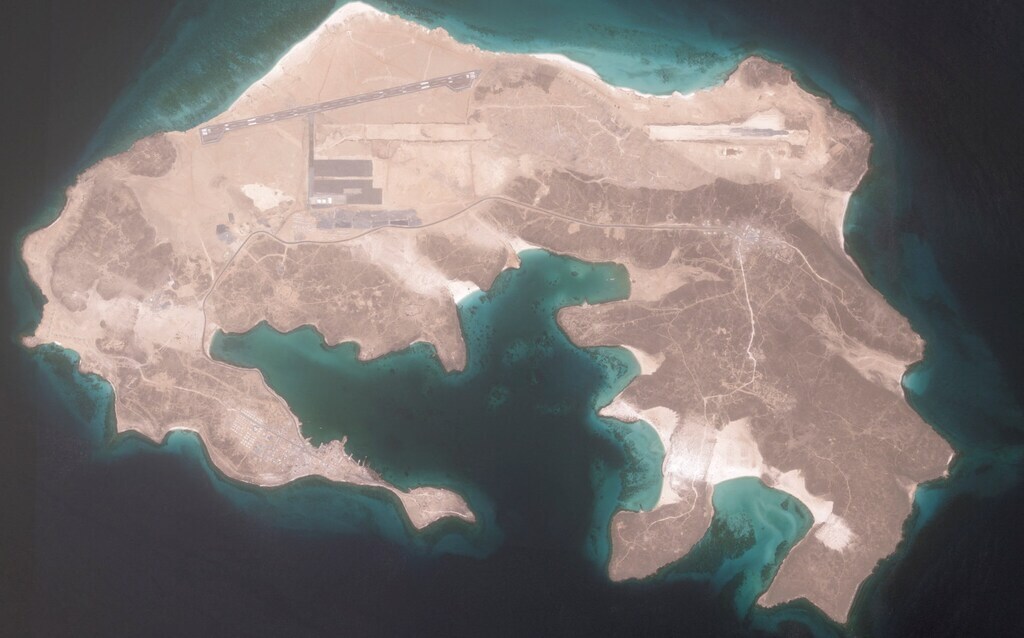
At the end of August, I finally got to Perim Island – a tiny, parched and barren volcanic outcrop rising from the Red Sea on Yemen’s south-western tip. In an age of social media and its seemingly insatiable supply of must-see video from all corners of the planet, few places remain that feel truly unfamiliar, but this was one of them.
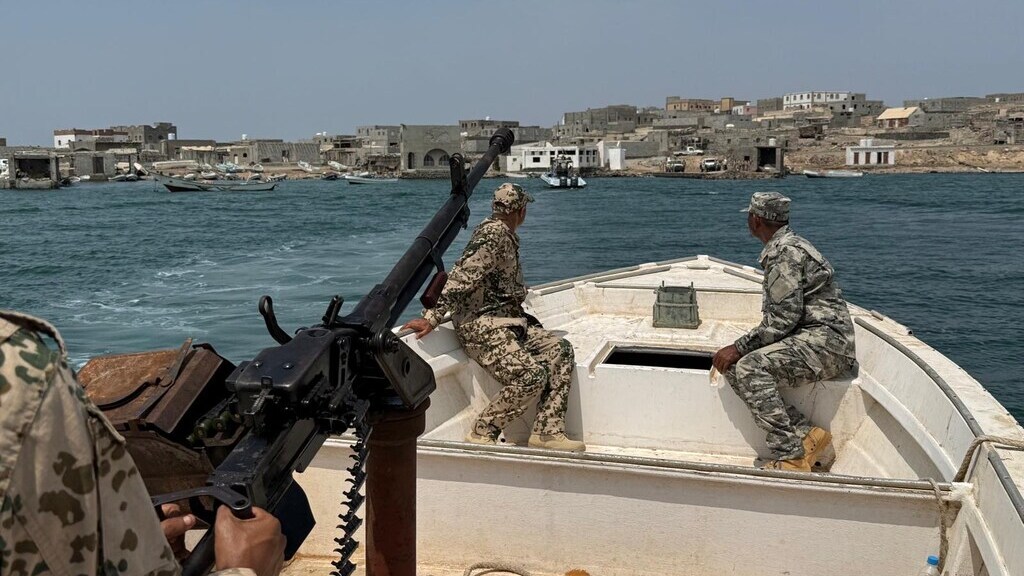
Accompanied by Yemen’s military, we were the first journalists to visit in years. Even in the context of a region neglected by progress, Perim felt truly forgotten. A left-behind in an already marginalized country, disregarded and desolate, littered with crumbling buildings and long-abandoned vehicles. Devoid of life essentials like water, it has resisted successive attempts to inhabit and fortify it for centuries.
Perim’s position, adrift from the mainland in the Bab el-Mandeb Strait, makes it a significant asset for exerting control over this vitally important stretch of water. Anyone looking to ship goods expediently from Asia to Europe will take this route – the alternative is a weeks-longer trip of thousands of miles around the Cape of Good Hope, with all the cost, rough seas and inconvenience that entails. Prior to the US and Israel’s war with Iran as much as a third of global maritime containers passed through it. Despite this, it could scarcely feel less policed.
Bad el-Mandab means “Gate of Tears” or “Gate of Grief” in Arabic. Both translations feel equally apposite. Its waters contain both natural perils in the form of treacherous waters and hidden reefs, to man-made hazards posed by mines left over from a past haunted by conflict. These days the dangers in the strait are also overhead. Despite an armed escort, our trip to Perim Island was fraught. We were halfway across from the mainland when warnings of Houthi drones in the area forced our guides to turn us back.
When we finally came ashore, our tour was brief, our military companions warily eyeing the skies, listening to their radios for any indication of approaching drones. The government force on the island seemed small and ill-equipped to hold its ground; the area’s commander told me of his fears for the future, his sense of isolation, and his frustration at the lack of international support for his forces. It felt as though an assault on the lonely outpost was imminent; sure enough, just days after our visit, it came.
Houthis ascendant
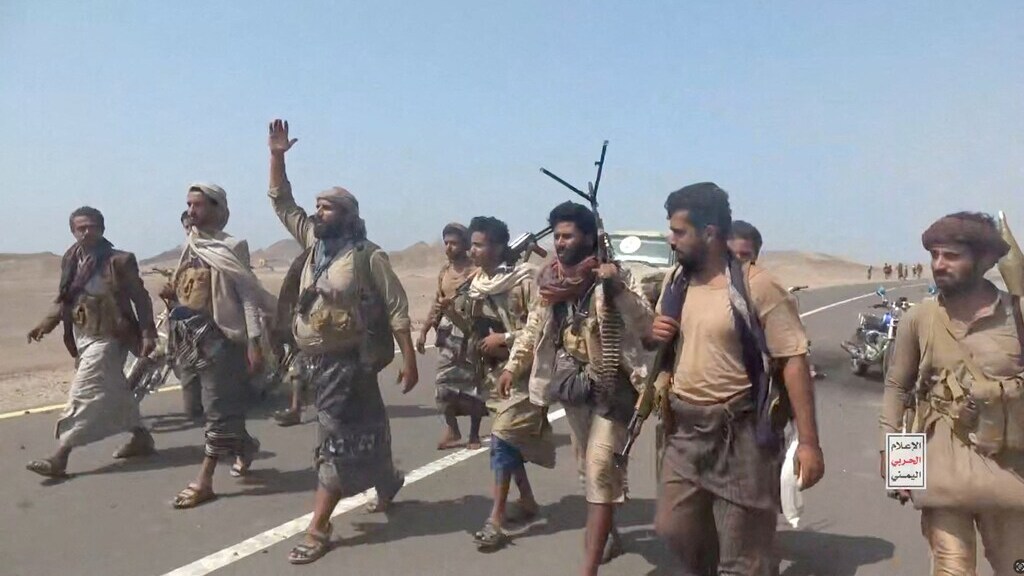
Houthi forces swept onto Perim Island on 11 September, not long after they took the vitally important port of Mocha further north up the Red Sea coast. Their hold on these gains was contested in the weeks after, Perim and the Strait returning to the Saudi-backed pro-government forces, before falling, more decisively under consolidated Houthi control two months later, as they continued to expand their grip in the south, advancing towards the government’s de facto capital, Aden.
I visited Yemen back in 2018 and wrote about my experience there for the World Economic Forum. At the time, I described the wariness of potential investors in Saudi Arabia’s long-term vision, and the concern that Iranian-made Houthi missiles might one day land in its capital, Riyadh. That reality has now come to pass.
Since their ambitious assault on Perim, the Houthis have used their long-range weaponry and alarmingly precise targeting ability to wreak havoc across both Yemen and its government’s Saudi backers, including an audacious attack on Riyadh airport in October that left at least 13 dead.
The Houthis of today are a far cry from their roots as one of Yemen’s powerful families, dislodged decades ago from influence by modernizing politicians, evolving at first into an intellectualist movement that sought to protect Zaydi Shia Muslim traditions from what they saw as state-supported Salafist Sunni interlopers. Even since the group turned to arms to take on the government in 2004, its transformation into a modern and well-organized military machine has been dramatic.
Where once they were a somewhat ragtag band of rebels, the Houthis are now a sophisticated fighting force, bristling with high-tech weaponry including hypersonic and ballistic missiles, and deeply entrenched in their rugged mountainous heartland – into which its fighters have carved networks of tunnels and cleverly utilize caves to hide their weaponry and deliver surprise attacks. They are also ruthless, recruiting by force and unflinching at civilian casualties.
The Houthis’ dependence on Iran for support and basic war-fighting equipment has also diminished to the point where they are increasingly seen as masters of their own destiny – even manufacturing weapons such as high-tech attack drones and supplying them to Islamists in East Africa, according to the Yemeni government.
The price of strife
The cost of that rise, and attempts to tamp it down, has been profound for ordinary Yemenis. As many as 5.2 million have been internally displaced in the country, according to the UNHCR, and the number grows by the week. But the country’s problems are so deep and manifold that this stark figure tells just a part of a desperate crisis. The same agency reports that more than 22.3 million, at least half the population, are in dire need of humanitarian assistance and protection. Disease, particularly cholera, is rife, and medication desperately scarce.
Across the water from Perim, easily visible on our trip, is Djibouti. At the beginning of October, the UN’s Institute of Migration (IOM) briefed that 3,700 Yemeni refugees had fled their crisis-ridden home across the dangerous waters of Bab el-Mandeb to their neighbour on the Horn of Africa. Astonishingly, however, Djibouti is also receiving an influx of migrants from Ethiopia – as many as 20,000 since 10 September, according to the IOM – who plan to cross Bab el-Mandeb in the opposite direction for Yemen on their way to seek work in the Gulf.
This blending of crises seriously complicates the challenges of delivering aid, let alone coming up with a long-term solution to decades of regional struggle. Yemen’s central bank split in two a decade ago, with one half operated by the Yemeni government, the other by the Houthis. Since that time hyperinflation has effectively set the country’s currency, the rial, ablaze – wiping out as much as 90% of its worth in government-controlled areas.
What several current conflicts have also underscored is a sharp shift in military tactics. The United States has shown – not for the first time in its history – that its vast resources can only go so far in achieving its aims (especially when those aims are in themselves unclear); while the war in Ukraine has accelerated the development of low-tech weaponry and highlighted Russia’s military limitations.
Asymmetrical tactics allied to cheap, easily manufactured weapons like fiber-guided First Person View (FPV) drones – heavy payload drones capable of precise targeting over 1,000km from launch – have proven remarkably effective, especially when objectives are simply to disrupt.
The absent solution
The consequences of disruption in Bab el-Mandab go far beyond the region, of course. But even if a solution to this perpetual crisis would benefit the world, the problem at its heart feels more fiendishly complex than ever. Regional players in Yemen have had competing interests and divergent agendas. International players offer relatively little towards building peace beyond words and largely ineffective, uncoordinated support. Privately, some even warn of a wider regional war along religious lines emerging from the conflict.
The UN’s roadmap for Yemen offers a credible plan for the country, combining economic and humanitarian measures with diplomacy, maritime security guarantees and development goals focused on delivering resilient infrastructure. But even a first step along its path right now feels narrow – proscribed by the still-competing interests of differing agendas inside Yemen’s internationally recognized government – and hopelessly distant.
Whatever solution can be found may also be doomed to failure if it cannot take a holistic approach to this entire troubled region. Ethiopia, Sudan, Eritrea, Djibouti and Somalia each have multiple competing challenges and desires, often intertwined with one another’s troubles – the Houthis making money and cementing military alliances by selling weapons into East Africa’s conflicts being one obvious example. Without stability and economic opportunity, this region will surely continue to stumble from one crisis to another.
During my 2018 visit to Yemen, I met two young students at the University of Aden, who were making 3D-printed prosthetic limbs. They had run out of materials to complete one of their projects, and – despite their clearly vibrant intelligence and resourcefulness – appeared destined to seek a future outside the country.
I often wonder what became of them; doubtless many others like them across this region have been lost to their homelands – or worse – to the world. The international community will only benefit from a committed, coordinated effort to give those like them a future worth staying for; as it knows, and falling maritime traffic in the Red Sea tells us, such an effort cannot come soon enough.