
As investors managing trillions of dollars, pension funds can wield significant influence over how companies tackle challenges such as antimicrobial resistance.
Who is capable of tackling antimicrobial resistance (AMR)? Governments, health authorities, scientists and pharmaceutical companies are most likely to come to mind. Pension funds may not, but they actually offer a critical opportunity.
Pension funds in the world’s largest markets collectively manage tens of trillions of dollars. Widen the lens to include sovereign wealth funds, insurers, endowments, foundations and mutual funds, and the pool of capital controlled by asset owners globally becomes even more enormous.
This matters because that money does not simply sit in bank accounts. It is invested across the global economy, including in the shares and bonds of thousands of companies.
For a large global investment manager, that can mean holdings in thousands of publicly listed companies from across the technology and financial services sectors to pharmaceuticals, agrifood and water utilities. Through corporate governance processes, investment managers (often very large shareholders in individual enterprises) can express a point of view on how these companies manage responses to challenges like AMR.
The connection between your pension and AMR may therefore be much closer than it first appears. This is why investors have a critical and often under-appreciated role to play in tackling AMR.
AMR is an investment issue
Health and economic prosperity are intimately connected. Poor health affects productivity, labour participation, consumption and, ultimately, economic growth. McKinsey estimated in 2020 that poor health costs approximately 15% of global GDP each year through premature deaths and the lost productivity potential of workers. For long-term investors, the implications are significant.
AMR occurs when microbes such as bacteria, viruses, fungi and parasites no longer respond to medicines, making infections harder to treat. The consequences of AMR do not remain confined to hospitals or pharmaceutical companies. They can ripple across economies, businesses and investment portfolios.
In other words, AMR is a systemic risk. The COVID-19 pandemic demonstrated just how quickly a health crisis can become an economic and financial one. But AMR is different because it develops more gradually and is therefore easier to overlook. That should not make investors complacent, however. The possibility that treatments on which modern medicine and our economies depend may become progressively less effective presents a profound long-term risk.
This risk is particularly acute in cancer, which depends on effective surgery, chemotherapy, radiotherapy and innovative targeted and immune-based therapies – and is now increasingly threatened by drug-resistant infections.
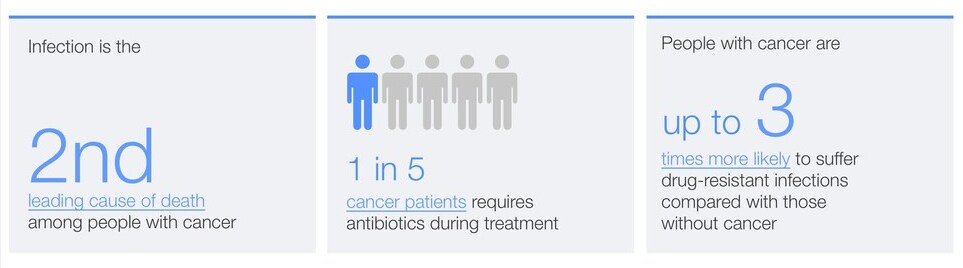
Understanding how AMR is eroding the effectiveness and value of cancer treatment, and how we tackle this is critical. The Forum’s Global Future Council on Antimicrobial Resistance briefing paper, Reaching the Breaking Point of Modern Medicine: Why Antimicrobial Resistance Is Undermining Cancer Care, explores how to understand – and mobilize – the full ecosystem of solutions, including pension funds.
Following the investment risk
Investors must ask a practical question about AMR: Which companies in my portfolio either contribute to the problem or help solve it?
The answer reaches across sectors. Pharmaceutical companies have a critical role in developing new antibiotics, diagnostics and alternative treatments. Among utilities, water companies face the challenge of antimicrobial residues and resistant organisms entering and moving through their systems.
In agrifood, companies can influence how antibiotics are used throughout agricultural supply chains. Antibiotics are given to animals around the world and inappropriate or excessive use can contribute to the emergence and spread of resistance. Large food companies can influence these practices far beyond their own operations.
A global restaurant business purchasing significant quantities of beef, chicken or pork can set requirements for its suppliers, for example. Those requirements can, in turn, influence farms, veterinary practices and pharmaceutical supply chains. This is precisely how investors can use stewardship to tackle AMR.
Legal & General, for example, co-filed a shareholder proposal to McDonald’s, with the French asset manager Amundi , seeking compliance across its supply chain with World Health Organization guidance on the use of medically important antimicrobials in food-producing animals. The objective was not to eliminate antimicrobials from McDonald’s supply chain, but to ensure the appropriate use of antibiotics. This was about protecting the effectiveness of this medicine by encouraging responsible use and reducing practices that accelerate resistance.
Investors cannot solve AMR alone
Engagement and shareholder voting is no substitute for effective public policy, surveillance, scientific research or appropriate incentives for antibiotic development, however. Governments and international organizations remain indispensable in the fight against AMR.
But, in many markets, public awareness, monitoring and incentives remain insufficient. Addressing AMR in areas such as water systems is particularly complex and requires collaboration among companies, policymakers, scientists, investors and international organizations.
AMR does not fit neatly within the boundaries of a single company, industry or country. Neither do the portfolios of large institutional investors. Pension funds and other diversified asset owners are exposed to the health of the wider economy over decades.
Their interest is, therefore, not simply in protecting one pharmaceutical company, one restaurant chain or one water utility, but in protecting the economic system on which the value of their investments ultimately depends.
An overlooked source of influence
The fight against AMR will require scientific innovation, effective regulation, the involvement of affected communities and international cooperation. It also requires capital and influence at enormous scale. The pension and investment industry has both.
Millions of people may think of their pension simply as money being put aside for retirement. Collectively, however, those savings make pension funds some of the most significant owners of companies in the global economy.
This creates an opportunity. By mobilizing more of that capital, stewardship and shareholder influence behind efforts to address AMR, the pension industry could become one of the most powerful allies in protecting global health.
Alison Holmes and Jeffrey L. Sturchio have contributed to this article in their capacity as GFC co-chairs.