How protecting eye health can support older talent in an ageing global workforce
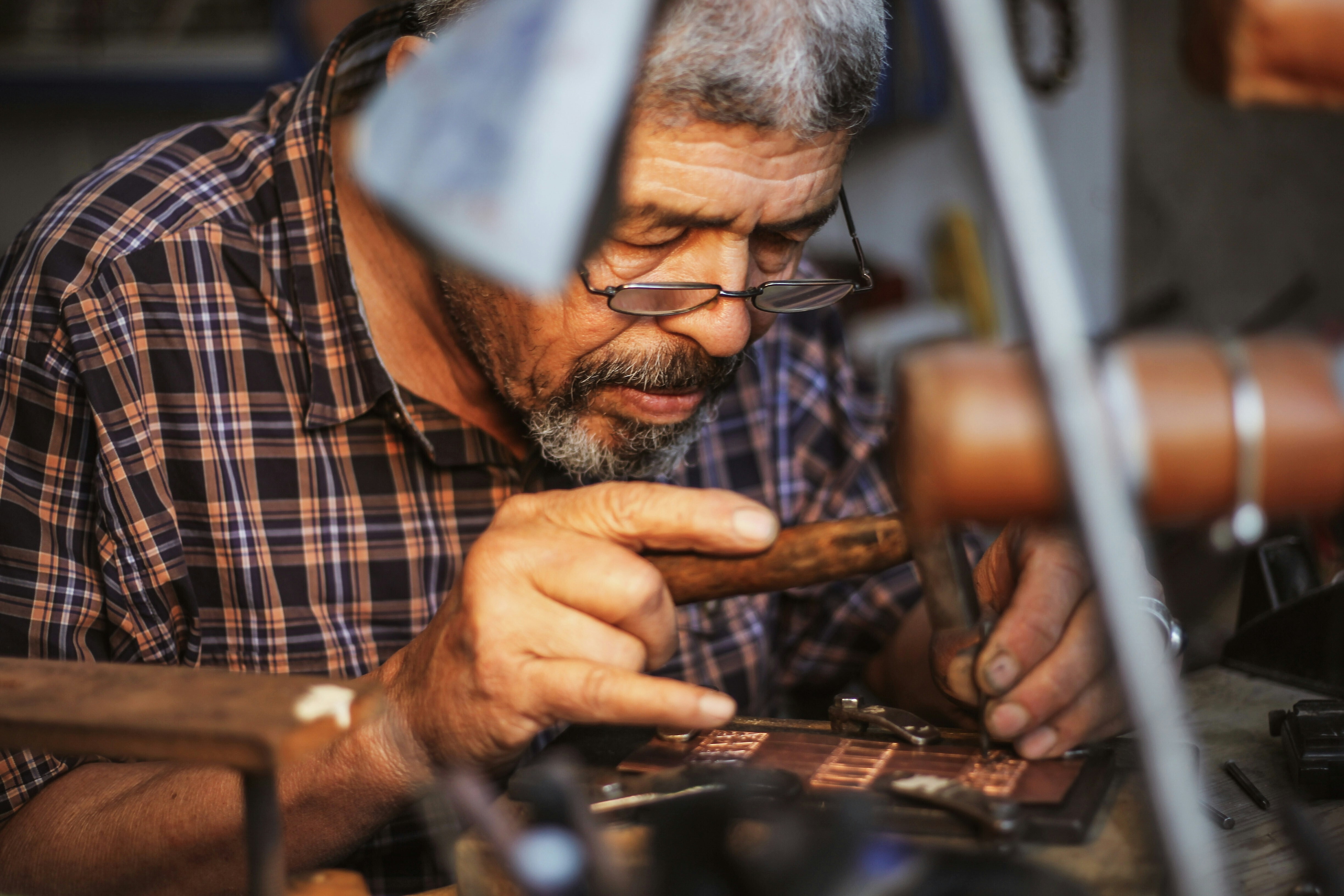
Protecting eye health can help older employees and create benefits for the 'silver economy'. Image: Unsplash/HasanMrad
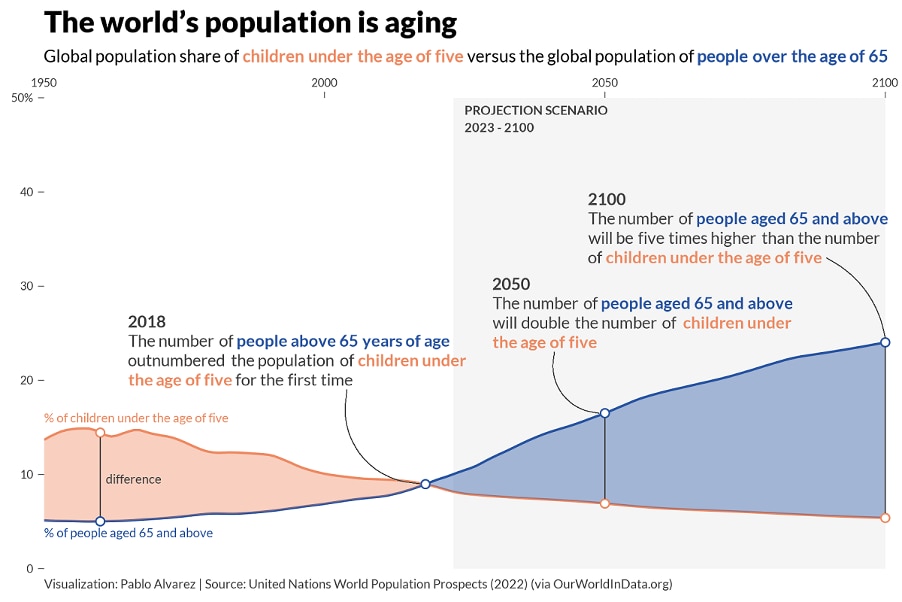
- By 2050, the number of people around the world aged over 60 is projected to double to more than 2 billion, according to the World Health Organization.
- As some of these people work for longer – creating a "silver economy" – unmanaged vision loss is costing the global economy over $411 billion annually in lost productivity.
- Some governments and businesses are starting to do more to help protect sensory health, particularly vision, which will also support the silver economy.
Across both developing and developed nations, falling birth rates and longer life expectancies mean that the global workforce is growing older. As a result, longevity is becoming a major economic engine, according to The World Economic Forum’s Longevity Economy initiative.
As governments worldwide raise retirement ages in response to these demographic changes, they are creating a “silver economy”. This economic approach treats healthy ageing as a driver of labour participation, innovation and institutional knowledge retention.
As business leaders restructure workplaces to keep experienced employees on board, many overlook the challenge of natural age-related vision loss. For the silver economy to thrive, eye care must move from an individual medical task to a top-tier corporate governance and economic strategy.
Demographics and the longevity economy
For decades, traditional economic models assumed that most people would stop working around age 65. Today, that assumption is obsolete. The total global population over age 60 is projected to double by 2050, reaching over 2 billion people according to the World Health Organization (WHO).
Retaining these experienced professionals will help preserve vital industry knowledge, emotional stability and complex problem solving abilities within organizations.
But as the body ages, the eyes are among the first organs to reveal the effects of ageing, with measurable changes in visual function emerging as early as mid-life. Because vision underpins so much of how people interact with their surroundings and perform their work, even gradual deterioration can have consequences far beyond simply seeing less clearly.
Without proactive eye care, the physical reality of sight loss creates a hidden bottleneck for healthy ageing initiatives.
Common eye conditions for older employees
Around age 40, almost everyone begins to experience presbyopia, which is the natural loss of the eye's ability to focus on close objects, such as computer screens, fine print or handheld devices.
Beyond standard reading difficulty, older professionals also face an increased risk of other major ocular conditions. While presbyopia makes reading, digital navigation and detail-oriented work exhausting, cataracts – which cause a gradual clouding of the eye’s natural lens – cause hazy vision, poor contrast sensitivity and severe discomfort. The latter is particularly challenging under overhead office lighting.
Glaucoma is a condition that damages the optic nerve and steals peripheral vision. It often progresses in older adults without pain or obvious warning symptoms until permanent damage occurs. Finally, age-related macular degeneration (AMD) is a leading cause of central vision loss, making it difficult to recognize faces, process detailed text or perform precision tasks.
Unaddressed vision loss costs the world economy an estimated $411 billion in lost productivity every year, according to global health research published in The Lancet Global Health. A significant share of that stems from simple, treatable near-vision impairment among workers.
How sight loss weakens workplace productivity
In today's screen-heavy work environment, older eyes can struggle under continuous digital strain. Reduced tear production causes chronic dry eye syndrome, while natural changes in the pupil make it harder to adapt to low or harsh artificial lighting.
When an employee lives with uncorrected vision loss, the economic impact shows up in several areas. Work speed can slow and error rates can increase as falling visual clarity directly affects how quickly someone can process digital text, review financial spreadsheets or inspect goods.
Employees suffering from vision issues can also feel physically and mentally exhausted because poor vision forces the brain and body to work harder. As employees lean forward or squint, it can lead to severe neck pain, posture problems and daily visual headaches. All of these issues can cause an employee to retire early.
Vision loss during the working years can alter employment and retirement decisions. Research following workers who developed vision loss between ages 44 and 64 found it was associated with leaving the labour force. Those who did leave were more likely to report involuntary retirement and less favourable financial circumstances.
For older workers, recognizing changes in vision early may therefore be important to remaining in the workforce.
Making eye health a priority
Unlocking the full value of older talent in the silver economy requires recognizing eye care as a fundamental part of workplace wellness – and of national economic policy. Forward thinking policy bodies and global health alliances are already showing how this can work in practice:
1. Corporate health policies and preventative workplace coverage
Some employers are moving beyond basic health coverage by implementing structured occupational vision programmes aligned with the International Agency for the Prevention of Blindness (IAPB) “Love Your Eyes at Work” initiative. These models fund routine comprehensive eye exams and advanced diagnostic screenings for employees over 40. This can help catch sight threatening conditions like glaucoma years before symptoms appear.
2. Inclusive workplace ergonomics and digital standards
Workplace safety standards are evolving to support the ageing eye, guided by occupational health frameworks from the International Labour Organization (ILO). This includes adjustable ambient lighting, anti-glare screen configurations, customizable default text sizes across enterprise software and structured visual micro-breaks to prevent cognitive and visual fatigue during long shifts.
3. Government ageing and labour policies
The WHO's framework for integrated eye care provides strategies for how public health systems can provide accessible community eye checks and subsidized corrective lenses. Governments using such strategies are able to keep older citizens in the workforce by integrating eye health into national active-ageing agendas. This will ensure functional sight never becomes an artificial barrier to remaining gainfully employed.
Protecting eye health and the economy
The future of the global economy will depend on how well experienced older workers are supported, valued and retained. It’s unsustainable to push for longer career spans without protecting the vision people need to continue to do their work.
By making high-quality, routine eye health care a foundational pillar of the silver economy, political and business leaders can prevent billions in lost economic output, keep skilled professionals in their careers for longer and ensure that living longer means living and working well.
Don't miss any update on this topic
Create a free account and access your personalized content collection with our latest publications and analyses.
License and Republishing
World Economic Forum articles may be republished in accordance with the Creative Commons Attribution-NonCommercial-NoDerivatives 4.0 International Public License, and in accordance with our Terms of Use.
The views expressed in this article are those of the author alone and not the World Economic Forum.
Stay up to date:
Longevity Economy
Related topics:


Forum Stories newsletter
Bringing you weekly curated insights and analysis on the global issues that matter.
More on Health and Healthcare SystemsSee all

Hong Yew Lim
October 7, 2026


