What skills do employers want from young people entering the workforce in the age of AI?

More than one in three young workers are in occupations with medium to high exposure to AI-driven change. Image: REUTERS/Hannah McKay
- Many junior roles are exposed to AI, which is also changing the skills mix employers are seeking, a World Economic Forum report finds.
- Employers increasingly prize learning agility, emotional intelligence and human qualities AI can't replicate over a degree alone.
- Work-based learning can offer a practical way to build both technical and soft skills, but beyond employability, young people's skills – particularly digital ones – can also drive social impact.
"Talent is universal, but opportunity is not."
As founder of the Young Business Agency, a business mentor and growth organization focused on youth empowerment, Olajumoke Adekeye is well-versed in the challenges of the modern workplace.
From the growing use of AI to the evolution of worker expectations, the future of work – and the skills needed to do it – are in a phase of rapid change.
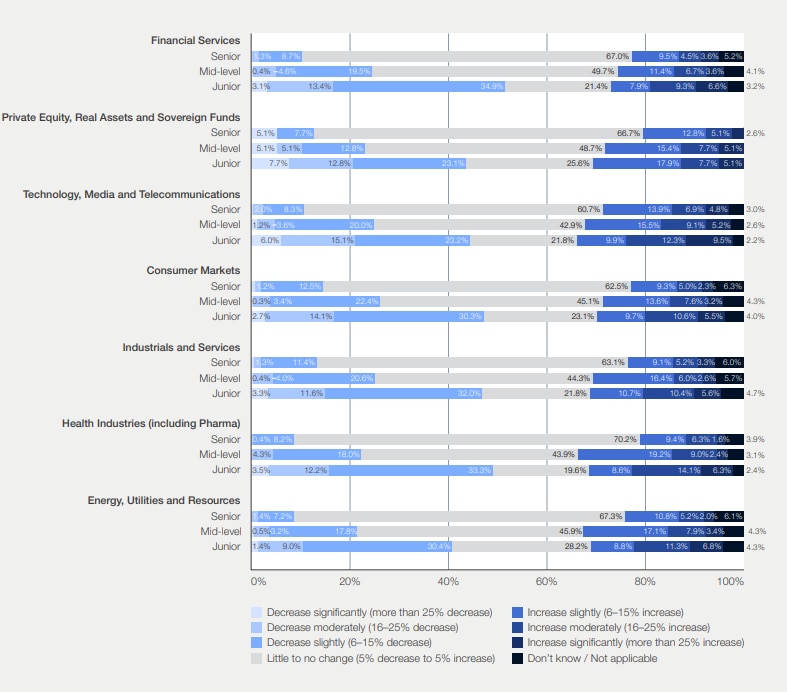
For the younger generation entering the workforce, that means leaning into the things AI can't replicate: curiosity, resilience and the ability to connect with people. It is rarely a shortage of talent that holds young people back, but a shortage of access to the skills that let that talent be seen, she believes. As the chart below shows, well over a quarter of entry-level workers think that, at most, half of their current skills will still be relevant in three years' time.
The skills employers actually look for
Getting ahead in this competitive environment means mastering more than technical know-how; it takes communication, curiosity and the humility to keep learning long after graduation. So, given what skills employers are actually looking for now, a university degree is no longer enough, Adekeye says.
"Employers are looking for talent that have learning agility. They are willing to learn new things, and they are willing to sit with the discomfort of ambiguity... Especially in the age of AI, it's incredibly important to show how human one is. Your certificate, your diploma, only shows that you have the ability to learn. After you have earned your degree, what else are you learning?"
AI is increasingly disrupting entry-level roles, particularly in jobs with routine tasks – for example, the most AI-exposed junior roles are seven times more likely than the least-exposed roles to demand skills previously associated with senior roles, such as leadership, research by PwC finds. And more than one in three young workers are in occupations with medium to high exposure to AI-driven change, the World Economic Forum report with PwC, Artificial Intelligence and the Future of Entry-Level Work, finds.
Skills mismatches have been a top concern for executives in the 10 years that the Forum's Future of Jobs Report has been published, but it is clear that AI has widened the gap.
As a result, Adekeye sees employers increasingly asking for emotional intelligence, grit and resilience to help them navigate the complexities of this change.
However, demonstrating these skills on a CV or resume can be a real challenge, Adekeye acknowledges.
Which skills can be developed
Given the skills required, fellow World Economic Forum Global Shaper Kathryn Rowan, executive director of Global Apprenticeship Network, argues that university isn't the only route that young people should consider.
"Most young people, pressured to some extent by their parents, want to go the university route. And that isn't necessarily going to provide them in today's world with the options that they need in order to be able to succeed in life. The world of work is changing at an extremely rapid pace," she says.
Rowan highlights apprenticeships as an increasingly relevant choice for young people, allowing them to test and learn about the type of jobs that are available. As well as allowing young people to be paid while they learn, they help companies build talent pipelines.
"Work-based learning is really the ticket nowadays in order to be able to upskill individuals and bring individuals into the workforce," Rowan says.
"[They] have a chance to learn both technical skills and soft skills at the same time, so they become very relevant and acclimatized to the culture of the company."
Reshaping the education system to enable meaningful skills development through things like apprenticeship programmes requires governments, employers and educational institutions to all work together, she says.
Why skills matter beyond getting hired for a job
Molly Bevan runs Impactic, a social enterprise that brings professionals together with charities to volunteer their expertise. She argues that young people often underestimate the skills they have – and those skills can be used to help others without having to choose between a career and making a difference.
"The next generation have the most incredible digital skills, and I think it is really important that they see the value of that and how they can bring that to the charity sector, even if they might be working in more traditional corporate roles," Bevan says.
"They don't need to choose between having a job and giving back. You can do both at the same time and integrate them together."
As AI continues to reshape what employers value, there is a common thread all three Global Shapers agree on for young people entering the workforce – curiosity, adaptability and a willingness to learn will be key to thriving.
License and Republishing
World Economic Forum articles may be republished in accordance with the Creative Commons Attribution-NonCommercial-NoDerivatives 4.0 International Public License, and in accordance with our Terms of Use.
The views expressed in this article are those of the author alone and not the World Economic Forum.
Related topics:

Forum Stories newsletter
Bringing you weekly curated insights and analysis on the global issues that matter.
More on Jobs and the Future of WorkSee all


