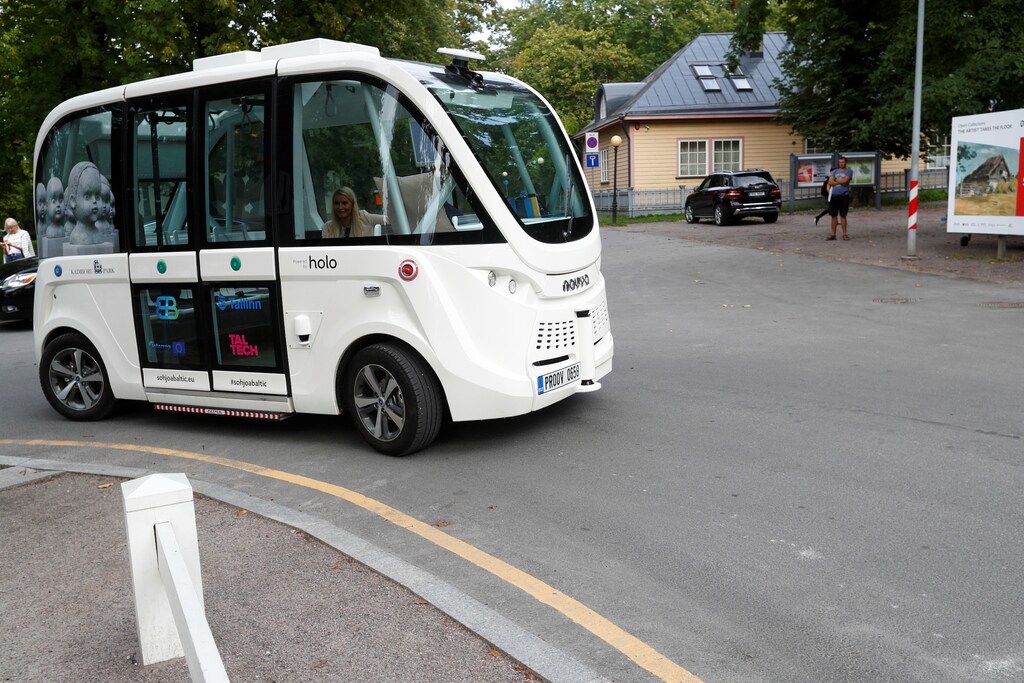
A project to test a new autonomous bus service in three European cities is underway.
15 electric driverless minibuses will be programmed to run 24 hours a day in the Swiss city of Geneva in 2025.
Yet the wider adoption of autonomous transportation has stalled, mainly due to safety concerns.
Despite the hurdles still hindering the development of truly autonomous vehicles, the technology has advanced in many ways.
In Europe, for example, a new consortium is developing an automated electric minibus service called the Horizon Europe ULTIMO project.

Driverless buses in 3 European cities
The project has a budget of almost $60 million over the course of four years and in 2025, 45 driverless electric minibuses will be programmed to run for a year in three European cities: Geneva, Switzerland; Kronach, Germany; and Oslo, Norway.
This pilot follows on from the University of Geneva's AVENUE project (Autonomous Vehicles to Evolve to a New Urban Experience), which ran between 2018 and 2022 and was conducted at eight test sites in Europe.
‘‘The aim of AVENUE was to study the technical and economic feasibility of an automated on-demand transport service as well as the potential psychological obstacles to its use,” explained Dimitri Konstantas, technical director of ULTIMO. “ULTIMO’s goal will be to develop a real business model that addresses the concrete economic, legal and security issues of such a service.’’
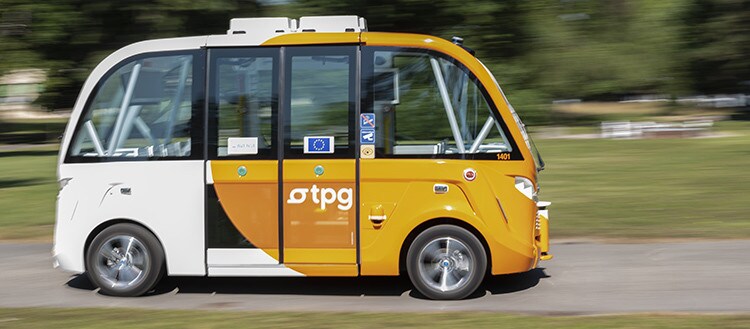
On-demand public transport
The first stage of the pilot will look to answer questions like how much tickets should cost, what the minimum and maximum distances should be, and how to adapt the legal framework, which currently does not allow automated buses to travel at more than 30km/h.
Konstantis describes the introduction of autonomous public transport as a paradigm shift for public transportation. ‘‘By offering door-to-door, on-demand, 24-hour transport, the service would be of higher quality,” he said. “It would also avoid empty trips during off-peak hours and thus reduce some costs. Finally, by responding to demand in real time, queuing and congestion around stations could be avoided.”
Safety is, of course, a paramount concern. The ULTIMO project will focus on the issue of “how to ensure the safety of passengers and react, for example, in the event of accidents”.
This is essential to the project’s success because, as Forbes pointed out in 2022, “the world’s biggest auto manufacturers have poured billions of dollars into trying to perfect the technology [but] despite impressive results, autonomous driving technology still can’t be relied on to handle really complex situations.”
How is the World Economic Forum promoting sustainable and inclusive mobility systems?
The World Economic Forum’s Platform for Shaping the Future of Mobility works across four industries: aerospace and drones; automotive and new mobility; aviation travel and tourism; and supply chain and transport. It aims to ensure that the future of mobility is safe, clean, and inclusive.
Through the Clean Skies for Tomorrow Coalition, more than 100 companies are working together to power global aviation with 10% sustainable aviation fuel by 2030.
In collaboration with UNICEF, the Forum developed a charter with leading shipping, airlines and logistics to support COVAX in delivering more than 1 billion COVID-19 vaccines to vulnerable communities worldwide.
The Road Freight Zero Project and P4G-Getting to Zero Coalition have led to outcomes demonstrating the rationale, costs and opportunities for accelerating the transition to zero emission freight.
The Medicine from the Sky initiative is using drones to deliver vaccines and medicine to remote areas in India, completing over 300 successful trials.
The Forum’s Target True Zero initiative is working to accelerate the deployment and scaling of zero emission aviation, leveraging electric and hydrogen flight technologies.
In collaboration with the City of Los Angeles, Federal Aviation Administration, and NASA, the Forum developed the Principles of the Urban Sky to help adopt Urban Air Mobility in cities worldwide.
The Forum led the development of the Space Sustainability Rating to incentivize and promote a more safe and sustainable approach to space mission management and debris mitigation in orbit.
The Circular Cars Initiative is informing the automotive circularity policy agenda, following the endorsement from European Commission and Zero Emission Vehicle Transition Council countries, and is now invited to support China’s policy roadmap.
The Moving India network is working with policymakers to advance electric vehicle manufacturing policies, ignite adoption of zero emission road freight vehicles, and finance the transition.
The Urban Mobility Scorecards initiative – led by the Forum’s Global New Mobility Coalition – is bringing together mobility operators and cities to benchmark the transition to sustainable urban mobility systems.
Contact us for more information on how to get involved.