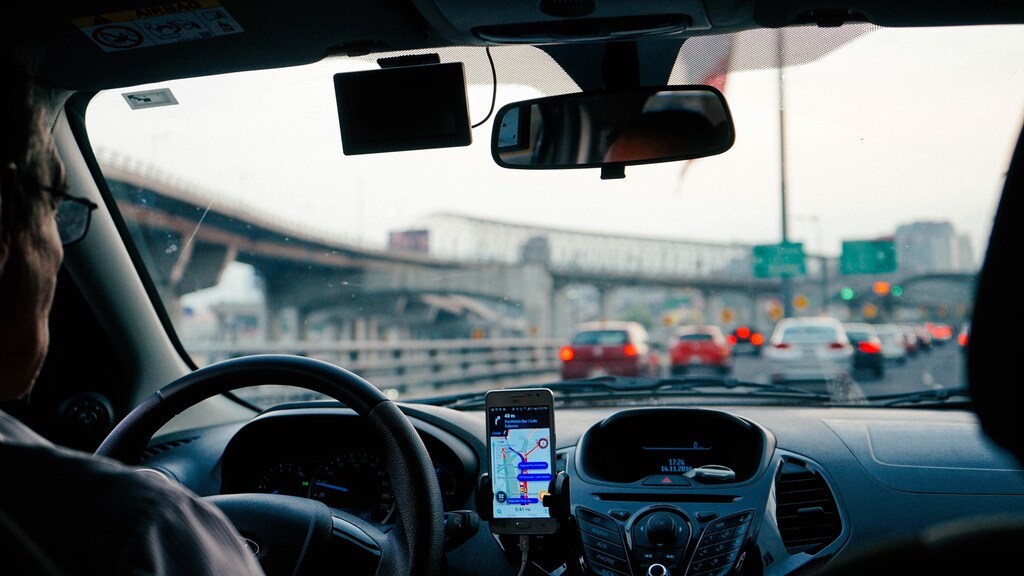
The UK unveiled a new roadmap to usher in self-driving cars by 2025.
The plan details liability protections, an issue area that regulators are continuing to develop worldwide.
“It is not surprising to see the UK, a global leader in inclusive AV policy making, released an informed liability update," said the Forum's head of automotive and new mobility.
Most drivers are well aware of the unpleasant experience of assessing blame and navigating insurance claims after a car accident. But what if an accident occurs and there is no driver involved?
This hypothetical is quickly approaching as the technology behind self-driving cars advances and countries worldwide prepare for more automation on the roads. This month, the United Kingdom unveiled a new roadmap to usher in self-driving cars by 2025. The plan makes clear that the manufacturer of an automated vehicle (AV)—not the driver—will be held liable for accidents that might occur when the car is in self-driving mode.
“We want the UK to be at the forefront of developing and using this fantastic technology,” said Grant Shapps, the UK transport secretary. “That is why we are investing millions in vital research into safety and setting the legislation to ensure we gain the full benefits that this technology promises.”
The UK’s plan, which will consist of new legislation, comes as a global patchwork system of regulations emerges, with various countries enacting different policy frameworks.
France, for example, was one of the first countries to approve a nationwide regulatory regime for self-driving cars. The policy, set to go into effect in September, waives liability exposure for drivers when vehicles are self-driving. Germany and Japan have also legislated various levels of liability protections for users of automated vehicles.
In the United States, regulation is fractured as policy-making has largely been delegated to state governments. This has allowed liability concerns to remain rather ambiguous, with drivers being held responsible at times. In 2019, for instance, two people were killed in an accident that involved a self-driving car. In January of this year, the man in the vehicle at the time of the accident was charged by the state of California with vehicular manslaughter, the first criminal prosecution of its kind.
However, there is a push for the US federal government to create a universal framework for self-driving cars that will update regulations, enshrining safety standards and various legal responsibilities like liability protection. In April, a dozen lawmakers sent a letter to the US Department of Transportation, urging the agency to develop a comprehensive federal policy for AVs.
“Removing scaling barriers, such as outdated regulations, will speed positive impact,” said Maya Ben Dror, the World Economic Forum’s industry manager for automotive and new mobility. “It is not surprising to see the UK, a global leader in inclusive AV policy making, releasing an informed liability update.”
Car manufacturers have also taken steps to address liability concerns. In 2015, Volvo announced that it would accept liability for its cars when they operate in self-driving mode. The Swedish car maker was one of the first major producers to make such a pledge.
The question of who should be held liable is also influenced by the growing consensus that self-driving cars are expected to be safer than traditional human-driven cars. In fact, nearly 80% of road accidents today occur because of human error.
Advocates hope that with proper development and safety guardrails, self-driving cars can make streets significantly safer, for both drivers and pedestrians. The new UK framework allocates £34 million for more safety research.
“Assisted driving systems, for example, autonomous emergency braking and adaptive cruise control, are already helping millions of drivers stay safe on the roads,” said Edmund King, president of the Automobile Association, an industry organization in the UK. “The ultimate prize, in terms of saving thousands of lives and improving the mobility of the elderly and the less mobile, is well worth pursuing.”
Yet as with liability protections, self-driving car safety standards are also instituted in a more patchwork fashion.
“Globally, there is limited consensus on how to define milestones for AV safety, since the problem of defining safety invariably becomes a function of the operating environment,” the World Economic Forum’s Safe Drive Initiative notes in its report Creating Safe Autonomous Vehicle Policy.
How is the World Economic Forum promoting safer, cleaner and more inclusive transportation systems?
The World Economic Forum’s Platform for Shaping the Future of Mobility works across four industries: aerospace and drones; automotive and new mobility; aviation travel and tourism; and supply chain and transport. It aims to ensure that the future of mobility is safe, clean, and inclusive.
Through the Clean Skies for Tomorrow Coalition, more than 100 companies are working together to power global aviation with 10% sustainable aviation fuel by 2030.
In collaboration with UNICEF, the Forum developed a charter with leading shipping, airlines and logistics to support COVAX in delivering more than 1 billion COVID-19 vaccines to vulnerable communities worldwide.
The Road Freight Zero Project and P4G-Getting to Zero Coalition have led to outcomes demonstrating the rationale, costs and opportunities for accelerating the transition to zero emission freight.
The Medicine from the Sky initiative is using drones to deliver vaccines and medicine to remote areas in India, completing over 300 successful trials.
The Forum’s Target True Zero initiative is working to accelerate the deployment and scaling of zero emission aviation, leveraging electric and hydrogen flight technologies.
In collaboration with the City of Los Angeles, Federal Aviation Administration, and NASA, the Forum developed the Principles of the Urban Sky to help adopt Urban Air Mobility in cities worldwide.
The Forum led the development of the Space Sustainability Rating to incentivize and promote a more safe and sustainable approach to space mission management and debris mitigation in orbit.
The Circular Cars Initiative is informing the automotive circularity policy agenda, following the endorsement from European Commission and Zero Emission Vehicle Transition Council countries, and is now invited to support China’s policy roadmap.
The Moving India network is working with policymakers to advance electric vehicle manufacturing policies, ignite adoption of zero emission road freight vehicles, and finance the transition.
The Urban Mobility Scorecards initiative – led by the Forum’s Global New Mobility Coalition – is bringing together mobility operators and cities to benchmark the transition to sustainable urban mobility systems.
Contact us for more information on how to get involved.