Designed for circularity: How AI and biorecycling can revitalize European manufacturing
Existing infrastructure can lay the foundations for advanced chemicals recycling. Image: Shutterstock
- With the European chemical industry in crisis, manufacturers must look to alternative sources to secure their supply chains.
- For circularity to work commercially, it must be able to integrate the complexity of modern materials.
- Backed by AI, enzyme-based recycling and polymerization can help ensure the continuity of chemical supply chains.
It's no secret that Europe's chemical industry is in trouble. Since 2022, closures have risen sixfold, taking out 37 million tonnes of production volume, roughly 9% of total installed capacity. The political instinct is to defend what's left with import duties and subsidies. That leaves the core problem untouched. The continent still imports its hydrocarbons and converts them into finished goods using the most expensive energy in the world.
This matters well beyond the sector. Chemicals sit upstream of everything. Without consistent flows of chemicals, plastics, materials and gases, everything from car manufacturing to medicine production grinds to a halt. But these resources already exist in Europe. They are just locked away in used products at end-of-life, without a recycling solution to bring the value of their raw materials back into the local supply chain.
The European Commission estimates that up to 80% of a product's environmental impact is determined at the design stage. The figure is now foundational to EU policy, and rightly so. If a garment, a car part, or a piece of packaging is built from materials that cannot be recycled, no amount of downstream collection will rescue the resources locked inside.
Designing for recyclability is harder than the figure suggests, and what about the products that already exist? Mono-materials are not sufficient for most applications. Decades of research and industrial development have perfected material mixes to hit specific performance targets, and solving the waste crisis cannot come at the cost of that performance. The technology has to handle the complexity rather than wish it away. Circularity is the answer to Europe's imported hydrocarbon problem, but it has to be competitive to count.
Nylon 6,6 illustrates this precisely. The industry produces over 3 million tonnes each year for high-performance technical, safety and industrial applications that depend on consistent quality. That material is also blended, laminated and coated with other products, which is why almost none of it is recycled today. Two challenges stand in the way.
The first is chemistry. The bonds holding nylon 6,6 together are strong, which is exactly what it was designed for. Brute-force thermal and chemical approaches can break them, but they do so at high cost, produce low-quality outputs, and cannot cope with blended materials.
The chemistry of life offers a better route. Enzymes are biological machines that carry out complex reactions at incredible rates, all at room temperature and atmospheric pressure: the conditions of life. Harnessing that atom-scale precision at industrial scale will unlock breakthroughs in sustainable manufacturing.
The obstacle has always been the search. A single enzyme has more possible variants than there are atoms in the universe. Advances in AI and computational biology have changed the maths of that search.
Epoch's models, trained on the language of life, are fine-tuned using proprietary data from our own wet lab. Combining generative design with that data across iterative cycles lets us compress billions of years of evolution into a matter of weeks. This step-change in catalyst development delivers the performance that makes circularity competitive.
The second challenge decides whether the technology scales. Returning a polymer to its building blocks is only useful if those building blocks can be dropped into existing supply chains, and that means putting them back together through polymerization. Polymerization, like most chemical processing, is capital-intensive, permit-heavy and slow to build. Europe's shift to a circular, resilient chemical base cannot wait on greenfield construction.
Which brings us back to those 37 million tonnes. The infrastructure is already built. Our belief in repurposing industrial assets isn't just talk. In July 2026, Epoch brought the chemistry and scale challenges together and acquired a nylon 6,6 polymerization facility. Overnight, we gained world-scale capacity, decades of manufacturing expertise and an experienced team, becoming vertically integrated.
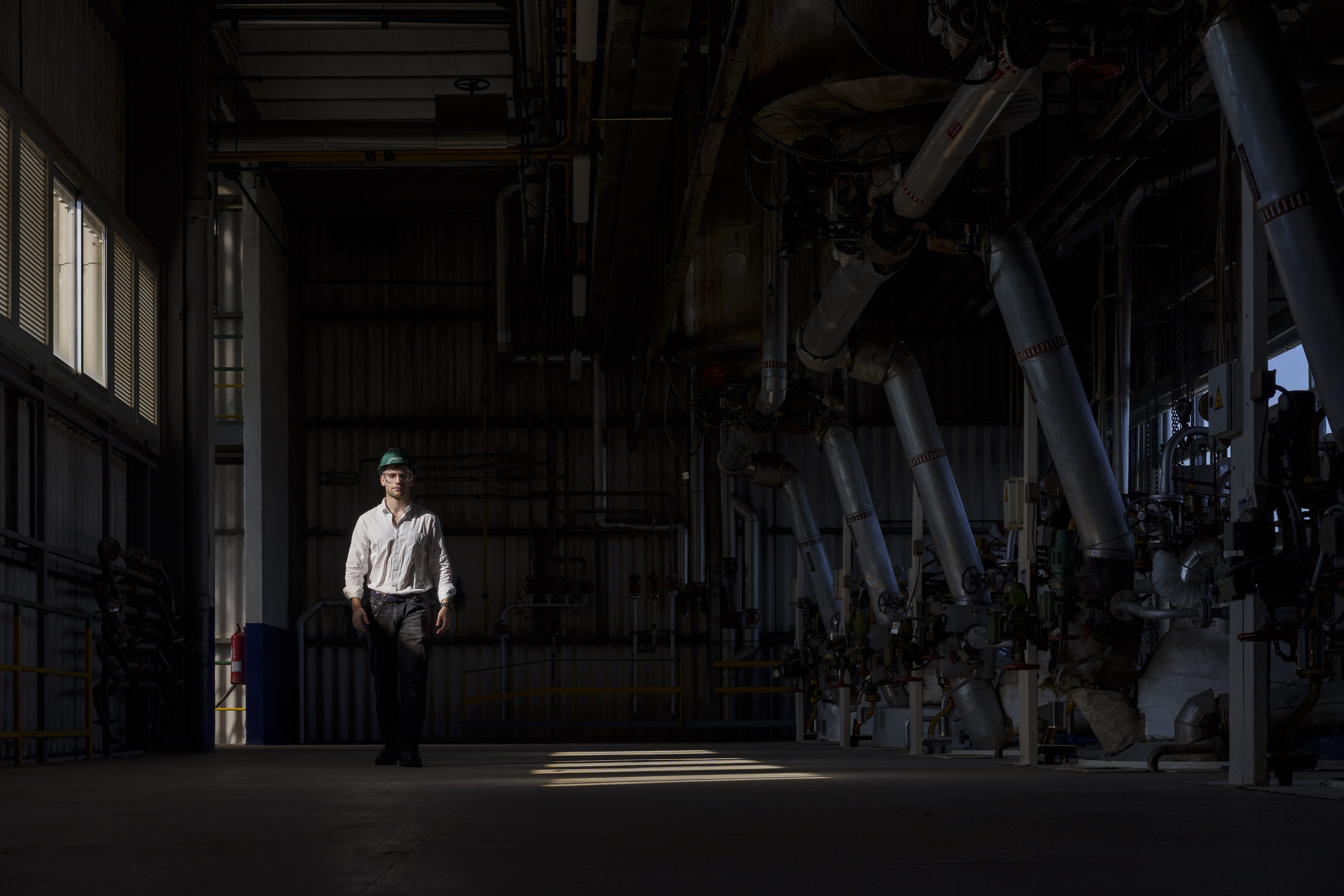
That integration matters to nylon buyers as much as it does to us. It lets them separate supply chain risk from technology risk. By utilizing material from the site today, the foundations are laid for seamless onboarding of drop-in recycled product over the coming years. At a moment when consumers and policy-makers alike are demanding circularity, the ability to deliver scale and manage risk is what separates an innovator from a pitch deck.
This is a template for the future. Europe's industrial base is being written off at the exact moment circular producers need these assets. The source of the molecules running through the reactors can change. The factory steel, permits and knowledge on site do not have to.
These assets will not wait. Once a chemical plant is decommissioned, the permits lapse, the workforce disperses, and the opportunity disappears. Enzymatic recycling still has plenty to prove – but hydrocarbon independence, sustainability, and the revival of a dying industry can be the same project. Europe already has the tools it needs. It just needs to start using them.
Don't miss any update on this topic
Create a free account and access your personalized content collection with our latest publications and analyses.
License and Republishing
World Economic Forum articles may be republished in accordance with the Creative Commons Attribution-NonCommercial-NoDerivatives 4.0 International Public License, and in accordance with our Terms of Use.
The views expressed in this article are those of the author alone and not the World Economic Forum.
Stay up to date:
Circular Economy
Related topics:


Forum Stories newsletter
Bringing you weekly curated insights and analysis on the global issues that matter.
More on Technological InnovationSee all

Allison Dadoun
September 24, 2026