Top leaders share trends from the recent World Economic Forum Chief Sustainability Officer’s Outlook and their take on what real change for the climate needs next.
Sustainability is moving out of the strategy deck and into the operating plan. In this episode, chief sustainability officers from Ant Group, Heidelberg Materials and Mastercard explain how the profession is evolving - and how it has navigated a challenging environment beset by geopolitical uncertainty, shifting regulation, infrastructure gaps and pressure to prove measurable business value.
Katharina Beumelburg, Heidelberg Materials The roles around sustainability have undergone a huge change in the last years.
Linda Lacina, Meet The Leader Welcome to Meet the Leader, the podcast where top leaders share how they're tackling the world's toughest challenges. In today's episode, we talk to sustainability leaders, all about what's needed to really drive change for the climate.
Subscribe to Meet The Leader on Apple, Spotify, and wherever you get your favorite podcasts. Don't forget, rate and review us. I'm Linda Lacina from the World Economic Forum, and this is Meet the Leader.
Ellen Jackowski, Mastercard I think the speed with which the world is moving is only increasing. And it’s important to stay very focused on what is your goal, what is your objective, and how do we get there together.
Chief Sustainability Officers on the Business Case for Climate Action
Linda Lacina, Meet The Leader World Economic Forum published its first ever Chief Sustainability Officer's Outlook earlier this fall. This report dug into survey responses from over a hundred global CSOs and sustainability leaders, all to better understand how sustainability is progressing and what leaders are prioritizing.
Work for nature and climate has seen its fair share of challenges, especially in the last few years but the survey has some bright spots. 64 percent surveyed cite a stronger commercial business case as a big driver for progress over the next few years, and 85 percent expect adaptation to become a bigger global focus.
To better understand these trends and others, we caught up with several sustainability leaders during UN General Assembly Week in New York. They shared the trends they're seeing.
We'll get started with the top line, how CSOs reacted to the numbers. Sabrina Peng is the first-ever CSO of Ant Group. She said the survey signaled some encouraging signs, especially on what's really driving sustainability.
Sabrina Peng, Ant Group Yeah, I actually find a lot of numbers are pretty encouraging for the CSO community. Especially like the 41% of the companies or CSO they think sustainability has become the key drivers of company’s growth and it's just a second to the compliance, because in the past maybe a lot roles about CSOs. It's about compliance, because the regulations, a lot of things ask us to do this. This can see a big change. I think that is really very positive.
Why Sustainability Progress Is Fragmenting Across Industries
Linda Lacina, Meet The Leader We also asked sustainability leaders about a special trend from the survey, the green divergence, the idea that momentum hasn't stalled, just fragmented. Sabrina spoke to the distractions that contribute to this fragmentation.
Sabrina Peng, Ant Group It's very different in different companies and the different industries. Some areas may be because of their geopolitical influence and also because of climate change or the technology disruption. A lot of reasons. We do see a lot of companies, they are actually pushing forward. I think the only difference is the outside or the external challenges is the things we cannot control. Right? It's happening, either way.
But what we can control, I think, it's the very decisive leadership. It's the leadership for a country and also leadership for corporate. So, I think this is the key, the core thing. Really to help those companies there even push forward in this very fragmented and also very diverse changes.
Why Sustainability Needs a Clear Business Case
Linda Lacina, Meet The Leader When it comes to that green divergence, Katharina Bumelberg of Heidelberg Materials found a key difference in companies that had established a business case. Here's Katharina on that and other trends that she sees.
Katharina Beumelburg, Heidelberg Materials I think what we currently see is a big difference between those industries and those companies that can make a business case out of sustainability, so that are able to come up with business that does create positive momentum in terms of result for the companies and those parts of the industry that cannot. And so, where we see business cases, I think a lot is possible and sustainability became far more hands-on and far more in a pragmatic implementation.
Whereas on the other hand, some of the real headwinds are topics like infrastructure, financing, frameworks and depending on how much your industry depends on that you are able to really progress or kind of are in a waiting position.
Sustainability Leadership Is Shifting From Ambition to Execution
Linda Lacina, Meet The Leader So the outlook also finds that leadership now depends less on stated ambition and more on the ability to implement change. Execution is always the only thing that matters. But what's different now? What's making execution challenging now?
Katharina Beumelburg, Heidelberg Materials You know what, I think the roles around sustainability have undergone a huge change in the last years. I think we are coming out of a period where a lot of topics in sustainability were about creating ambition and setting targets and then got into a more strategic role. And I think now we are really into a very pragmatic operational phase where to drive sustainability, you discuss a lot about investment and CapEx investment every year. You discuss operating plans. You discuss how you get the right people to be able to run different processes. You discuss a lot what needs to happen in terms of regulation. We talk a lot to our customers, because first of all, we partly are addressing new customer groups that we have not addressed in the past. And then even with our traditional customers, we have to find out which are those that really benefit from decarbonization. And what does it take for them to benefit? What accounting do they need? So, it's very much a process that asks for partnerships with customers, partnerships with industry partners, that all of that was not necessarily needed before. So, I think what we see in the area of sustainability is really a huge shift towards operational business ownership.
What Is Slowing Corporate Decarbonization?
Linda Lacina, Meet The Leader What makes that hard right now?
Katharina Beumelburg, Heidelberg Materials So obviously, there are different topics that slow that down. If you think about deep decarbonization, one topic that does make it difficult is how fast are we able to get access to infrastructure. So, in our specific case, if we want to do carbon capture and storage, obviously, we do need the infrastructure to be able to transport the CO2 to an area where it can stay under the ground. Then we do need stable regulation. And I can tell you it's the investment that you need to take for decarbonization. And that does not always have to be breakthrough technologies like carbon capture and storage. It can as well be investments into less breakthrough technologies that still need certainty about the regulation and the frameworks around. And I think that's something that is really making it difficult to implement sustainability or decarbonization faster, because whenever the framework shifts, you have a change in the business case. I think overall it's all asking for stable business cases to be able to invest. And if you don't get the stable business cases, because of changes in regulation, because of missing infrastructure, then it gets really difficult.
The CSO Role: Influencing Technology, Marketing and Business Strategy
Linda Lacina, Meet The Leader To make an impact, how sustainability leaders approach their role is critical. Ellen Jackowski, the Chief Sustainability Officer at MasterCard likens her job to that of an influencer. She explains what she means by that.
Ellen Jackowski, Mastercard I think if you're in this role, one of the key skills is influencing. Now I know there's a whole ecosystem of social media influencers out there, so it's perhaps a similar type of influencing, but it's really within the corporate ecosystem. I don't make a lot of big decisions per se for the company, but I need to be working very closely with our chief technology officer, who by the way, technology is the biggest piece of MasterCard's carbon footprint. I also need to be working closely with our marketing function, marketing being the second piece of MasterCard's carbon footprint. So, lots of unusual relationships that you might not initially think about when you think about what is the role of the CSO? Who do you need to be working closely with, influencing, understanding, and collaborating and innovating with?
Should Every Leader Become a Chief Sustainability Officer?
Linda Lacina, Meet The Leader Ultimately, sustainability is a sensibility that needs to be embedded into every role at every level. Sabrina shares her surprising hope for the CSO role.
Sabrina Peng, Ant Group Maybe in 10 years, for really good companies or great companies, I think they do not need the CSOs. That is my answer. Why? Because if this kind of philosophy needs a role to keep emphasizing, that means this is not really in the blood of the company, in the culture of the companies, in the key decision-making process of the company. If all the company senior leaders, CEOs, they have these shared values, so no need for this role. Everybody is a CSO. Because they see the business value and the social value, these two values create together and make the best result. Maybe not a short-term profit but must be a long-term growth. So, this is the key to this concept.
What Sustainability Leaders Want COP31 Leaders to Take Forward
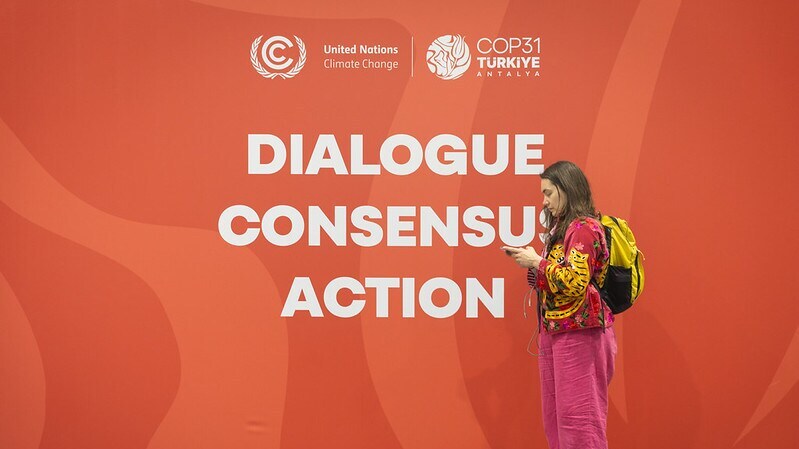
Linda Lacina, Meet The Leader As the UN climate conference COP31 is winding down, we end this episode with messages to COP leaders on what's needed to drive change now and in the months and years to come.
Katharina will get us started.
Katharina Beumelburg, Heidelberg Materials Taking into consideration where we are, my message would be, let's focus on creating real long-term business cases. Let's partner to work with governments to create stable framework conditions that enable these business cases and that give the opportunity to invest. And let's really operationalize sustainability in all the different functions that we have in the company.
How AI Could Accelerate Sustainability Progress
Linda Lacina, Meet The Leader Sabrina Peng talked about the impact that AI can bring to supercharge progress. Here's Sabrina.
Sabrina Peng, Ant Group Let's really think deeply about AI, what AI can really influence your work and bring the change you will never imagine to your business and to your work. I think it's really needed to see deeper and deeper -- really deep about that. Because AI is not just a tool. And a lot of people talk about AI they will say, okay, so it's about efficiency. About [whether] we use less people or less other resources. This is just a very tiny part of AI really can do. What does AI bring to all of us? It's not just efficiency. It's actually -- you can view as scale the intelligence of the whole society. In the past, we have top scientists, maybe very few top scientists could work with very top companies on some issues. Imagine in one or two years, hundreds of top scientists can work with one company in one area with a very low cost because AI actually scales the intelligence. So, this is a fundamental revolution, and this will bring a significant change to every industry, because a lot of innovations will happen. Will change the landscape, will change the way of doing business, will change the way our total lifestyle. So, at that time, what is your company's purpose?
What is the value you bring to the market? You need to rethink about it, not just at present, or this week, or next month, or at the end of this year you want to achieve this. That is too short term. You need to think about AI that way. Then you start to find the new opportunities of your company and solve the real problems of society.
Why Sustainability Leaders Need to Move Faster Together
Linda Lacina, Meet The Leader COP31 is an implementation COP. Ellen Jackowsky reminds us that action remains critical.
Ellen Jackowski, Mastercard I think in this year of extraordinary shifts geopolitically as well as from a technology point of view, how do we move faster together? I think the speed with which the world is moving is only increasing. And it’s important to stay very focused on what is your goal, what is your objective, and how do you get there together.
Thanks so much to the leaders who spoke to us about this episode. Thanks so much to you for listening.
To read our recent Chief Sustainability Outlook, go to the show notes of this episode, we'll make sure to have a link. And for more podcasts, including my colleague's podcast, Radio Davos, go to wef.ch/podcasts.
This episode of Meet the Leader was produced and presented by me with Yves Schaeffner as a studio engineer in New York, Taz Kelleher as editor, and Gareth Nolan driving studio production.
That's it for now. I'm Linda Lacina with the World Economic Forum. Have a great day.