Whether a climate hazard becomes a catastrophe is decided long before disaster strikes. Survival depends on updating infrastructure baselines for a warming world, strengthening public trust and delivering timely warnings that put human security at the centre.
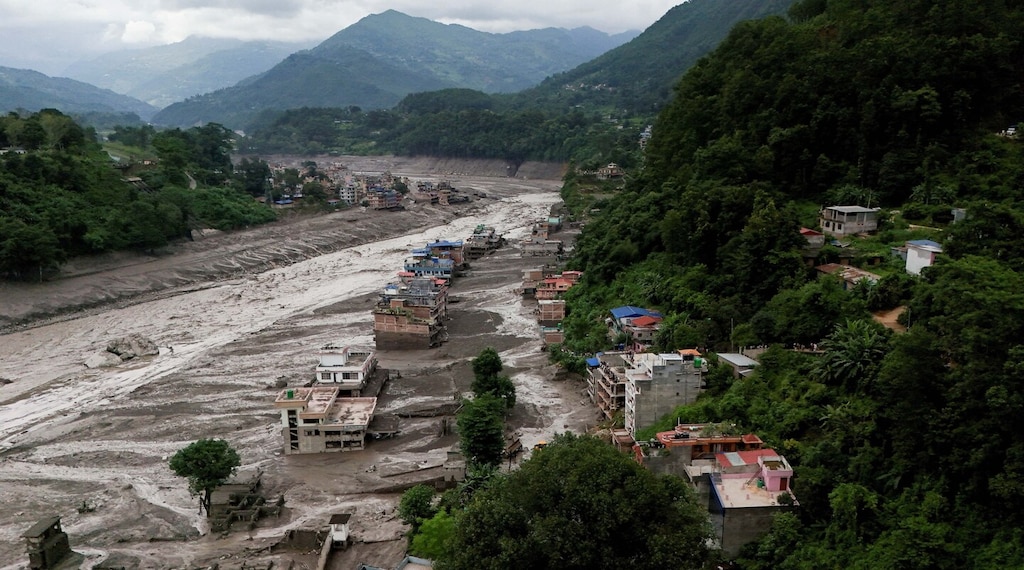
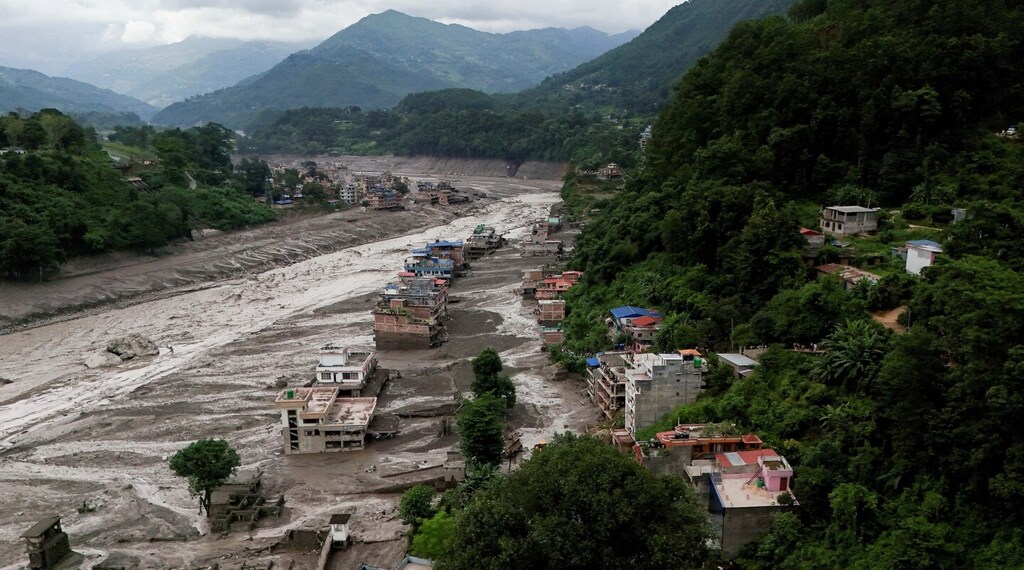
On 26 August, Rajendra Dawadi, the headteacher of a school in Nepal’s Trishuli valley, sent some 900 pupils up a hillside before floods swept away his school building. The warnings reached him through a teacher’s phone call and a parent who came to pick up her child.
Upstream, a massive section of ice and rock had broken away from Langtang Lirung, a Himalayan peak near the border with Tibet. The torrent that followed killed more than 1,400 people in Nepal and Tibet, with about 5,000 still missing. A preliminary study by World Weather Attribution and glaciologists calls the glacier disaster a compound crisis. Rising temperatures had gradually thinned the ice on the mountain and thawed the permafrost that binds the rock face.
Disasters on this scale expose human vulnerability and force a hard question: what turns a physical hazard into a catastrophe for the people in its path?
Why early warning systems alone cannot prevent climate disasters
The signs were already there. In the three days before the collapse, daily temperature highs ran about 5°C above average. The valley had an early-warning system, but it was designed for monsoon floods and glacial lake outbursts. Climate change clearly contributed to the mountain collapse in August. But the human toll of any disaster depends on the buffers between the ice and the villages – warnings, institutions and, not least, the trust that makes people act.
In June 2013, one of us travelled up the Bhote Koshi towards Kodari, on the road that then carried most of Nepal’s overland trade with China. The 2015 earthquake shut that road and trade moved west to Rasuwagadhi, the crossing the flood destroyed in August. Scientists suspect that the same earthquake also weakened the part of the mountain that broke off. One earthquake moved Nepal’s trade and may have helped destroy its new route 11 years later.
Updating infrastructure baselines for a rapidly warming world
What happened in Nepal is likely to happen elsewhere. The valley has already warmed by about 2°C, well ahead of the global average of about 1.4°C. The engineering baselines behind mountain roads, hydropower dams and trade corridors in the Hindu Kush Himalaya rest on assumptions that no longer hold.
Warming across the region also jeopardizes the water supply of nearly 2 billion people. A glacier expert at the World Meteorological Organization has warned that similar collapses could happen in places from the Andes to the Alps; wealthy countries in the Global North are not immune.
Ultimately, it is human systems – warnings, institutions and trust – that determine whether a hazard becomes a catastrophe. Those foundations are built through peace, development and respect for human rights. As one of us often said during his years at the UN: there is no peace without development, there is no development without peace, and there is no lasting peace or sustainable development without respect for human rights. In today’s geopolitical environment, that mantra, which puts human security front and centre, is no longer in vogue. But it is ever more important. Climate change does not add a fourth clause to it – it moves the ground beneath all three.
Why trust, governance and timely alerts determine disaster survival
When the ground gives way, the question becomes who absorbs the loss. This is where peace matters. In September 2023, Storm Daniel killed more than 20 people in Greece, Türkiye and Bulgaria before hitting eastern Libya, where two ageing dams burst overnight, killing an estimated 11,000 to 24,000 people. Years of conflict had left the country unable to maintain critical infrastructure or warn residents in time.
Survival during a crisis depends on timely communication, too. In Valencia in October 2024, Spain’s weather agency issued a red warning in the morning, yet the regional government’s alert reached phones more than 12 hours later, after water had already started entering homes.
Yet speed alone is not enough if warnings come from a source people distrust. In Nepal, a social media ban sparked last year’s uprising, fed by anger at corruption. After the flood in August, rumours quickly spread online blaming Chinese dams for events that actually happened inside Nepal. Others claimed that China failed to warn Nepal. These claims were false. Misinformation travels because it attaches to pre-existing distrust in political elites. Simply debunking it does not resolve the underlying governance problem.
Investing in prevention before disasters hit
Following the August disaster, Nepal asked the UN’s loss and damage fund for $20m in help, a fraction (roughly 0.7%) of the estimated damage and losses. In October, the fund agreed to set the full amount aside. Nearly four years after its creation, the fund remains short of money despite increasing climate losses. Post-disaster payouts are important, but they cannot bring back lost lives.
Prevented deaths do not appear in public balance sheets, so we must start from the people at risk and price what early intervention saves. That requires a shift in mindset: while defence ministries routinely design budgets around adversaries with intent, climate hazards rarely command the same preventive urgency. A collapsing glacier has no strategy and is not an enemy, yet it is just as lethal. Governments must therefore reassess the climate baselines behind every infrastructure project and state the climate extremes it is built for. This is a practical discipline any country can adopt – and one that puts people at the centre.
Nine hundred children in the Trishuli valley survived because their headteacher acted before the danger was confirmed. He acted on a warning that reached him through people he trusted. Those pupils now have a chance to grow up free from fear and want. As the glaciers in the Himalayas keep thinning, another mountain wall will fail.
Whether the next collapse becomes a catastrophe will once again be decided long before the flood reaches the valley.