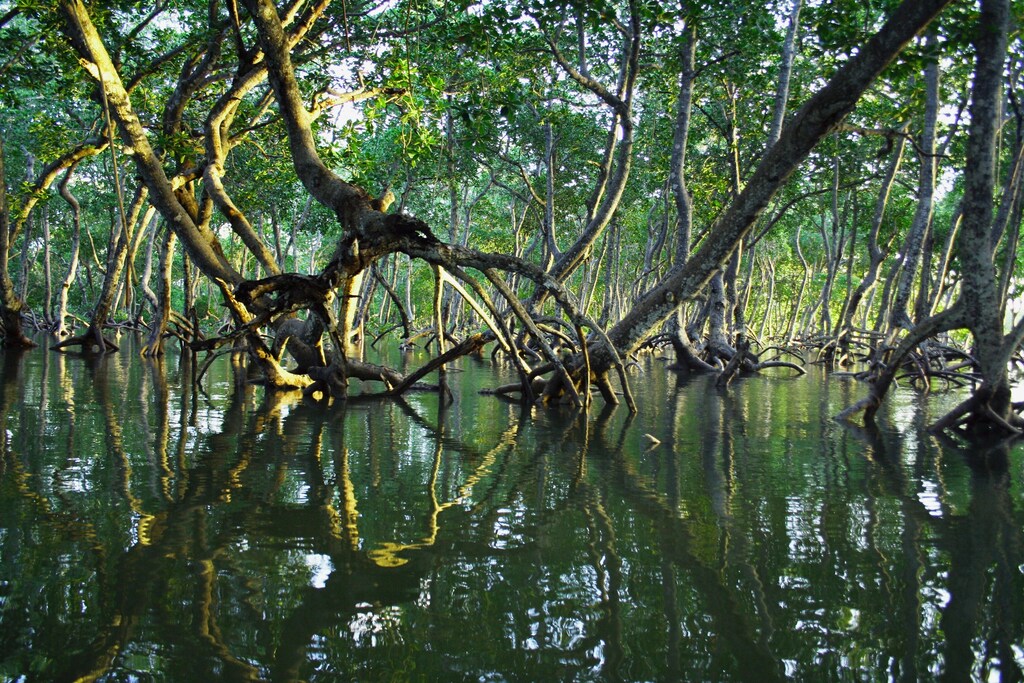
Mangroves, seagrasses and tidal wetlands capture more carbon than terrestrial forests, help protect shorelines and support livelihoods for millions. A new report outlines different approaches to turning blue carbon ambition into durable coastal investment and lasting national impact.
Mangroves, seagrasses and tidal wetlands are among the largest untapped opportunities in climate and nature. Restoring and protecting them could unlock an estimated $11.8 billion in carbon finance by 2040, while the present value of mangroves’ flood-reduction benefits is said to stand at $855 billion.
These coastal ecosystems are often referred to as “blue carbon” ecosystems because they capture carbon and store it in marine vegetation, soils and sediments, which hold significantly more carbon per unit area than many terrestrial forests.
They also support coastal economies in multiple ways, including protecting 15 million people from storms and flooding, providing nursery grounds for fisheries that support the livelihoods of an estimated 4.1 million mangrove-associated, small-scale fishers and and supplying a critical habitat for approximately 230 species threatened with extinction.
Supporting blue carbon ecosystems
Political attention to blue carbon ecosystems is growing. As of October, 50 national and subnational governments had endorsed the Mangrove Breakthrough, representing jurisdictions that together contain more than 60% of the world’s mangrove extent.
The initiative has set a shared goal of mobilizing $4 billion in finance to protect and restore 15 million hectares of mangroves by 2030. This momentum is also reflected in national climate plans, where at least 60 countries include the conservation or restoration of blue carbon ecosystems in their nationally determined contributions (NDCs), according to the Global Mangrove Alliance and International Union for the Conservation of Nature (IUCN) .

A key region is Southeast Asia, which contributes to almost a third of the world's mangrove extent, where the Blue Carbon Action Partnership has been working with governments to translate blue carbon ambition into practical, coordinated frameworks for action.
Along with increased political attention, corporate demand for high-quality blue carbon credits is beginning to take shape.
In March, the Symbiosis Coalition, an advance market commitment launched by Google, Meta, Microsoft, and Salesforce to contract up to 20 million tons of nature-based carbon removal credits by 2030, expanded its procurement to mangrove projects for the first time and began piloting a pre-purchase track for up to 1 million tons of credits, signalling demand for projects with credible carbon accounting, strong community benefits and pathways to scale.
From coordination to scaling investment
The demand from companies and the interest from governments are clear. The challenge is creating the conditions that enable finance to restore and protect coastal ecosystems at scale and over the time horizons required.
Coordination is one of the first and hardest challenges in turning blue carbon potential into action and investment. Managing blue carbon ecosystems often sits across environment, fisheries, land use, finance and local governance, where no single institution holds every mandate. Responsibility for protecting, restoring and financing these ecosystems is distributed across ministries, local authorities, communities, scientists, businesses and finance providers.
Today, the barriers to blue carbon investment are often coordination challenges. Rights to manage coastal areas, reliable measurement, reporting and verification, clear institutional responsibilities and fair benefit-sharing arrangements often depend on cooperation among ministries, local authorities, communities and technical partners.
More effective coordination brings these elements together, linking national climate and nature goals with local priorities for community development, while giving investors greater clarity about who is responsible, how results will be measured and how benefits will be shared.
Yet the private sector and investors still need structured opportunities to invest with confidence in blue carbon: what the practical next steps look like and what it will take to scale.
Site visits, learning events and clear guidance can help companies assess the realities of restoration, community stewardship and long-term delivery. The World Economic Forum white paper Turning the Tide: A Financier’s Guide to Investing in Blue Carbon Ecosystems sets out how investment through credit markets, infrastructure, supply chains and insurance can all support blue carbon ecosystems and communities.
Coordination key to a credible investment ecosystem
As coordination strengthens, and public and private partners gain a clearer understanding of responsibilities and financing options, countries and their partners can build stronger pipelines of investable coastal ecosystem opportunities.
In this way, coordination helps move from isolated activities towards a more credible investment ecosystem. Enabling investment will look different in each context. The country examples below are practical illustrations of how governments and their partners are using coordination to support blue carbon policy and finance.
In Indonesia, cross-government coordination provides the foundation for coherent action. The National Blue Carbon Action Plan 2025–2030 (RENAKSI) aligns mandates across five ministries, helping turn fragmented responsibilities into more coherent planning and stronger shared delivery.
In the Philippines, private-sector learning helps translate corporate interest into practical understanding. A non-governmental organization–government collaboration showed how practical engagement can help investors and businesses understand restoration, community stewardship and the conditions required to scale action.
In Viet Nam, high-level leadership is being linked to technical delivery. The National Blue Carbon Action Leadership Board, supported by technical task forces, connects policy direction with work on data, finance and implementation.
In Kenya, costed investment planning connects ambition with implementation. The national implementation and investment plan uses technical data and community-led pilot experience to link ecosystem priorities with expected costs, financing needs and delivery responsibilities.
In Costa Rica, national climate planning connects ecosystem data with long-term finance. The 2025–2035 NDC links coastal ecosystem inventories and measurement systems with national climate commitments and plans for a long-term financing mechanism.
A blueprint for action on blue carbon
Developed by the WEF in collaboration with the Mangrove Breakthrough and the Global Mangrove Alliance, the recently published Blueprint for Coordinated National Blue Carbon Action brings together practical country experiences.
It provides an overview of the opportunities to improve collaboration across government, communities, technical organizations, civil society and finance and how to avoid the coordination challenges that can slow blue carbon action.
The blueprint is not a single country solution; it offers a suite of practical approaches that governments, communities, investors and technical partners can adapt to their own circumstances.
Governments and their partners can use the blueprint to explore coordination structures, identify enabling conditions and consider how finance can be matched to their country context.
The countries and partners that build these enabling conditions now will be best positioned to turn blue carbon ambition into durable coastal investment and lasting national impact.
James Tops, who led coordination for the Blue Carbon Action Partnership (BCAP) at the World Economic Forum, also contributed to this article. As coordinator, he worked with governments on building their national blue carbon action plans.