This round-up contains the key nature and climate news from the past month.
Top news: UN says world set to overshoot 1.5°C goal; Air pollution and climate crisis must be tackled together; Nepal demands $20m in compensation following floods.
1. New approach to global 1.5°C climate target – UN
For the first time, the United Nations (UN) has acknowledged that the world is set to overshoot its target of limiting global warming to 1.5°C above pre-industrial levels. And it will happen in the next few years, according to a new UN Environment Programme (UNEP) report, Limiting Overshoot: Navigating exceedance of 1.5°C and pathways towards return.
It follows a summer in which temperature records were broken across Europe, wildfires raged, and deadly floods swept through the Himalayas.
Even if all climate commitments are met, the world is expected to warm to a minimum of 1.8°C, says the report.
"Every fraction of a degree will cost lives, destroy livelihoods, deepen inequality, and push ecosystems closer to irreversible damage," said UN Secretary-General, António Guterres at the report's launch.
Despite the sobering projection, Limiting Overshoot sets out a strategy that could see temperatures return to or below 1.5°C by the end of the century.
Its 'overshoot, peak, decline' pathway is seen as "the best remaining option", in which the world must work to keep the temperature exceedance as short-lived as possible, eventually enabling temperatures to come back down. To do so would involve immediate cuts to all greenhouse gas emissions, alongside carbon dioxide removal processes, as well as rapid adaptation and mitigation strategies.
The UNEP report states that "there are no good outcomes" if the world remains above 1.5°C and that no one can know what the world will look like once the climate has restabilized. But it also makes the point that "every fraction of a degree avoided reduces risks" and therefore must be urgently pursued. It calls for "collective and global action to get on an overshoot, peak and decline pathway".
2. Joined-up strategy for air pollution and climate change
Tackling the climate crisis and air pollution together would reap more benefits than addressing these issues separately, according to two new reports from the World Meteorological Organization (WMO) and UNEP alongside the Climate and Clean Air Coalition (CCAC).
“For too long, we have treated climate action as a cost to be managed and air pollution as the unfortunate outcome of development,” said Inger Andersen, Executive Director of UNEP. “This report shows the opposite: clean air is a key driver of development, health, food and energy security, and climate stability – an asset we must invest in.”
UNEP's assessment, Hidden assets: The economic health case for climate and clean air action, examined 25 solutions across energy, industry, transport, agriculture, cooking and waste, concluding that integrated action could avoid 144 million premature deaths by 2050 and hundreds of millions of cases of chronic disease. Currently, 7 million people a year die prematurely from air pollution, and the World Health Organization (WHO) estimates that around 250,000 additional deaths will occur annually between 2030 and 2050 as a result of the climate crisis.
Implementing the measures identified by UNEP and CCAC, which include using electric vehicles, clean fuel sources for cooking, and renewable energy, could benefit global GDP by the equivalent of 2.8% in 2035, reaching 11.4% in 2100. Immediate implementation would cost around 0.7% of GDP over the coming decade, says the report, which compares favourably to fossil fuel subsidies of over 2% of GDP in 2022 and healthcare spending of over 9% in 2023.
With climate change exacerbating wildfires, air quality is also being impacted, as the above graphic demonstrates. The WMO's annual report, released on the International Day of Clean Air for blue skies on 7 September, finds that fire-related particulate matter levels have increased in Europe and North America.
Not only that, but current air quality risk assessments "fail to adequately capture the enhanced toxicity of wildfire smoke" and may be underestimating deaths linked to wildfires by up to 93%.
The WMO says this is all further evidence that air quality and climate change must be treated as related, interconnected issues.
3. News in brief: Other top nature and climate stories
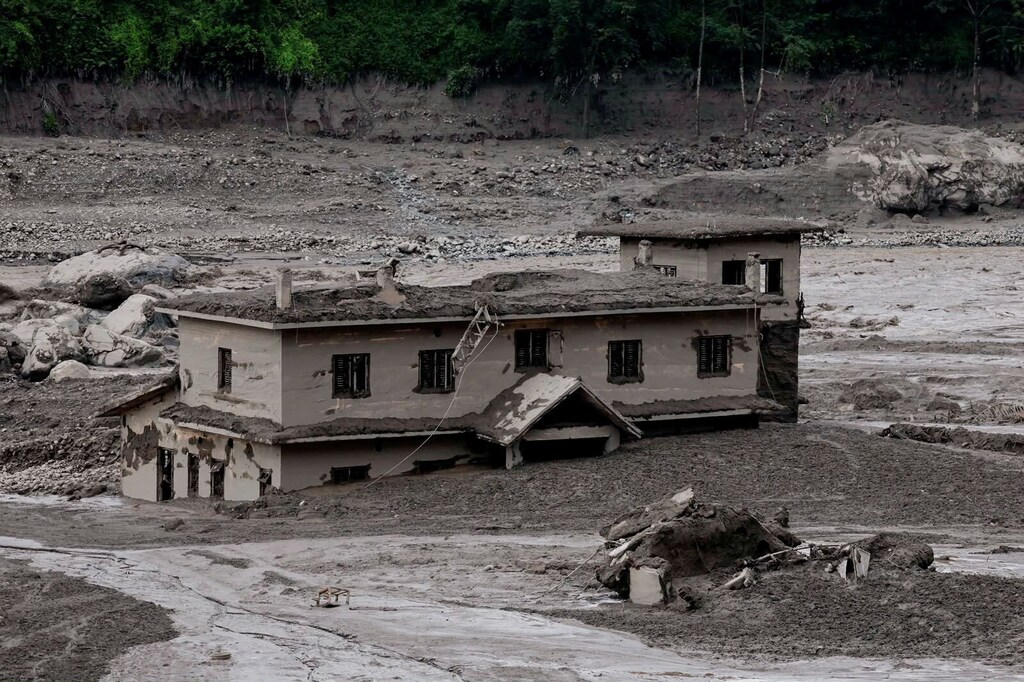
In the wake of the devastating floods that swept through Nepal in late August, killing at least 1,300 people and destroying around 20,000 homes, the country is demanding $20 million in climate compensation, reports The Guardian. Nepal’s foreign minister, Shisir Khanal, told the paper: "It is imperative for those in the global community who benefit from larger, much more polluting economies, and whose historical contribution to greenhouse gases is much bigger than ours, to accept a shared responsibility."
UN head António Guterres has warned that El Niño, the natural weather phenomenon set to have its strongest season in 70 years, is being "supersized before our eyes". The WMO predicts a 100% chance that the extreme weather will persist through to February 2027 and calls on governments to step up preparedness.
Already, the UK, France and Spain have experienced unseasonably hot Septembers, while large swathes of Southeast Asia are currently blanketed in toxic haze from Indonesian and Sumatran wildfires that have been burning since mid-July, reports the BBC. Emissions from the wildfires are currently the highest in the world.
Countries are unprepared for the seismic social and economic shifts of the global transition to renewable energy, according to think tank E3G. Combined with the impacts of the climate crisis, destabilization is imminent unless governments work with organizations like the World Bank and the private sector to address the situation.
Most of Israel's desalination plants were taken offline in early September as a result of a roughly 12-mile-long microalgae bloom in the Mediterranean Sea, reports CNN. Five of the country's six plants, which convert seawater into drinking water, were affected, with the issue attributed in part to warmer temperatures as a result of climate change.

4. More on the nature and climate crisis from Forum Stories
The ongoing Strait of Hormuz disruptions have shown the world that the global economy depends on interconnected systems. As both climate and geopolitical volatility persist, resilience itself is being redefined, with food, energy and materials all in urgent need of security, say experts at Kearney and the World Economic Forum in this article.
Up to 40% of the world’s land is degraded, affecting more than 3.2 billion people and heightening risks for businesses and economies that depend on healthy soils. A new report from the Forum, The Hidden Economic Power of Healthy Soils, makes the business case for investing in soil health to support productivity, resilience and long-term value.
The latter part of 2026 sees three Conference of the Parties (COP) events taking place, including the recently held UNCCD on desertification, followed by the Convention on Biological Diversity in Armenia in October, and the main UN climate conference in Türkiye in November. This piece explores what governments, businesses and civil society groups aim to achieve as these three pressing issues converge.