Strong El Niño could deepen hunger crisis – and other climate and nature news
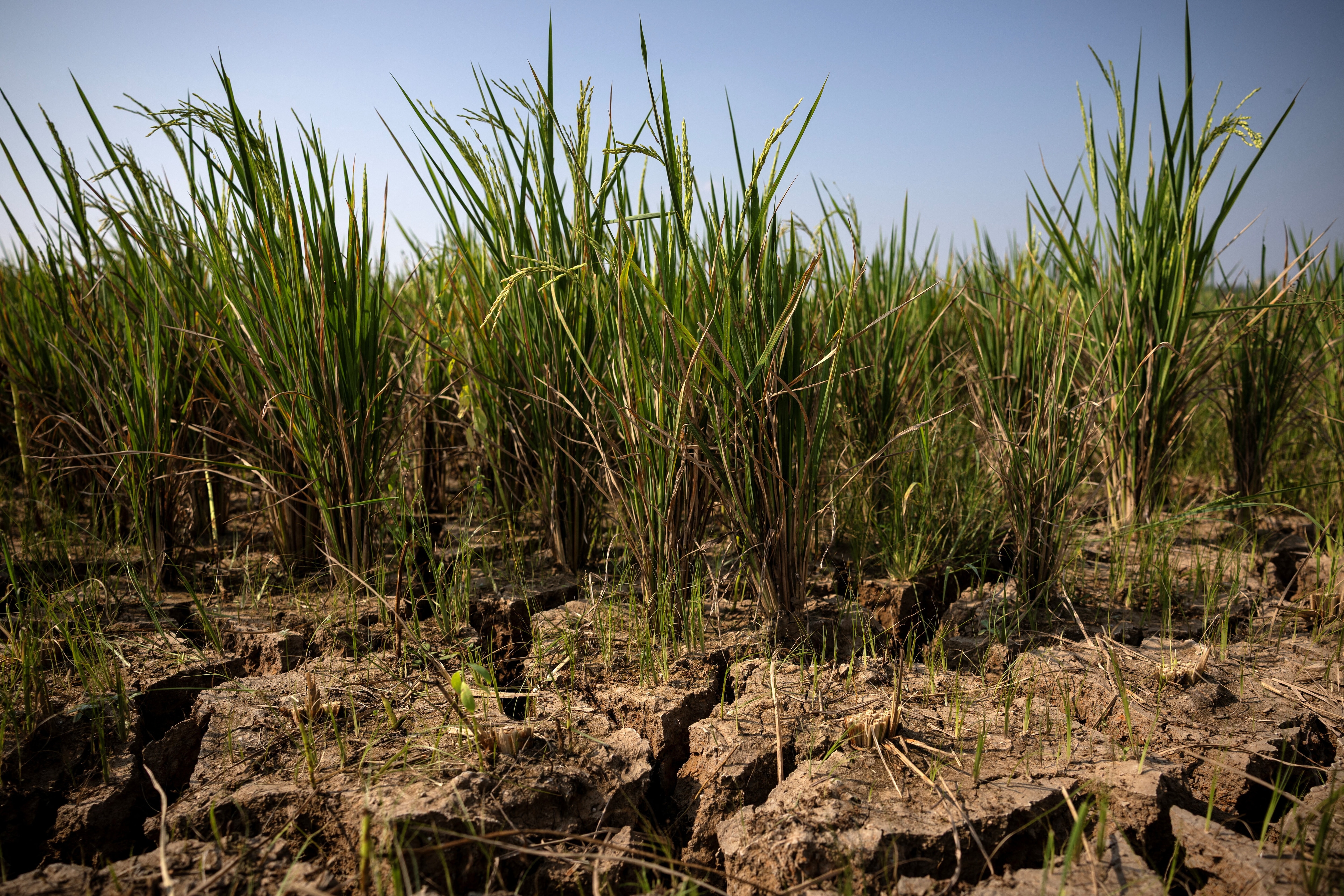
El Niño can disrupt weather across continents, bringing drought to some regions, delayed rains elsewhere and flooding in others. Image: REUTERS/Willy Kurniawan
- This round-up contains the key nature and climate news from the past month.
- Top news: El Niño could deepen hunger crisis; Extreme heat and drought strain global systems; $20bn US clean energy fund restored.
1. El Niño raises global food security risks
A powerful El Niño could push nearly 49 million more people into acute food insecurity by the end of next year, according to World Food Programme (WFP) analysis. That would bring the total number of people facing crisis-level hunger or worse to 274 million across 45 vulnerable countries.
El Niño can disrupt weather across continents, bringing drought to some regions, delayed rains elsewhere and flooding in others. The WFP expects Central America and Southern Africa to be among the hardest hit, with food insecurity projected to rise sharply if crops, incomes and local food supplies are disrupted.
Those climate pressures are arriving at a difficult moment for global food systems. In Latin America, Máximo Torero, Chief Economist of the Food and Agriculture Organization (FAO), has warned of a potential "double blow": severe El Niño impacts combined with reduced access to fertilisers and hybrid seeds, linked to disruptions around the Strait of Hormuz.
His message was simple: do not wait. Governments can reduce the damage by investing early in resilient seeds, stronger transport infrastructure and harvest planning that helps farmers move before the worst weather arrives.
El Niño could, however, reduce hurricane risk around North America, potentially limiting some insurance losses, according to Zurich Insurance. But that does not remove the danger that even quieter storm seasons can still be costly when more people, homes and infrastructure are located in exposed coastal areas.
For leaders, the priority is preparedness. The WFP says it has expanded anticipatory action in 18 countries, reaching more than 1.3 million people this year with cash and other support.
2. Heat and drought strain global systems
Extreme heat and drought are increasingly becoming system-wide risks, affecting food production, water supplies, power systems, transport and trade. Recent events around the world show how hotter, drier conditions can quickly move from environmental stress to economic disruption:
- Europe’s record heat: Western Europe recorded its warmest June-July period on record, according to the EU's Copernicus. Heat and drought helped fuel extreme wildfires, while July globally was the second-warmest month ever recorded.
- Rivers under pressure: Low rainfall and soil moisture pushed major European rivers, including the Rhine and Danube, to record low levels.
- Food production hit: Britain’s cereal harvest is on track to be the worst since comparable records began in 1984. Extreme heat and drought may have cut up to 2.5 million tonnes from cereal and oilseed production, costing farmers up to $526 million.
- Water rationing in Puerto Rico: Puerto Rico is introducing rotating water rationing after an intense drought left the Carraizo reservoir at critically low levels. The nation's capital, San Juan, had its driest July on record, with nearly 68% of the island experiencing drought.
- Power demand surges in China: A heatwave pushed electricity demand across China to record highs as air-conditioning usage spiked.
- Panama Canal tightens limits: The Panama Canal is reducing the maximum draft for large ships as water levels remain under pressure. Draft is the depth of water a ship needs to float safely, meaning some vessels may need to carry less cargo to pass through.

3. News in brief: Other top nature and climate stories
US court ruling preserves climate grant funding: A US appeals court reinstated an injunction preventing the Environmental Protection Agency (EPA) from withholding an estimated $20 billion in clean energy grants awarded under the Greenhouse Gas Reduction Fund. The EPA says it is reviewing next steps, while funds will not be distributed immediately to allow time for a potential appeal to the US Supreme Court.
Morocco advances waste-to-energy project: A consortium plans to build a $1.5 billion waste-to-energy plant in Casablanca, processing around 1.5 million tonnes of waste annually by mid-2030. The facility aims to generate 115MW of electricity while reducing methane and pollution from the Médiouna landfill.
India considers shift in ethanol feedstocks: India is weighing up limits on using sugarcane for ethanol from October, as weak rainfall in key cane-growing states raises concerns over sugar output and record-high domestic prices. The move could add around 3 million tonnes of sugar to domestic supplies, but India may need to use more corn and rice to keep its 20% ethanol-blending target on track.
$200m pledged for endangered species: The Bezos Earth Fund and Re:wild have pledged an initial $200 million to support the recovery of critically endangered species. The initiative aims to preserve 100 species across 30 countries, combining long-term funding with locally-led conservation, habitat restoration, breeding programmes and scientific support from the International Union for Conservation of Nature.
4. More on the nature and climate crisis from Forum Stories
What is the 'Year of Water'? Life depends on the water cycle – from ocean to freshwater. However, today, there is too much water in some places, too little in others, and for many communities, it is too polluted to use. The Forum’s 'Year of Water' aims to keep the global water crisis high on the agenda throughout 2026, connecting freshwater and marine systems as one shared blue thread. The Forum is focusing on practical pathways for action, including fit-for-purpose finance, basin-level partnerships, innovation, emerging technologies and collaboration on ocean health. Read the full article to learn why 2026 is a critical year for action on water, ahead of the United Nations (UN) Water Conference in December.
What are fire clouds? As France and Spain battle severe wildfires, experts believe they may have spotted a phenomenon new to the region: fire clouds. These occur when a wildfire becomes so large and intense that it generates its own weather system, including gusts of wind, lightning, hail and even tornadoes. Watch the video below to learn how fire clouds form and why they could be aggravating Europe’s wildfires.
How is AI helping cut methane emissions? AI and satellites are helping turn methane detection into faster climate action. A new UN Environment Programme report shows how the Methane Alert and Response System is using AI to process far more satellite data and identify major methane leaks before human experts review them. That matters because methane is one of the fastest levers available to slow near-term warming. Once a leak is detected, governments and companies can be alerted directly, cutting the time between detection and response. Learn how AI-powered Earth observation could help make methane reduction one of the clearest climate wins still on the table in this article.
License and Republishing
World Economic Forum articles may be republished in accordance with the Creative Commons Attribution-NonCommercial-NoDerivatives 4.0 International Public License, and in accordance with our Terms of Use.
The views expressed in this article are those of the author alone and not the World Economic Forum.

Forum Stories newsletter
Bringing you weekly curated insights and analysis on the global issues that matter.
More on Climate Action and Waste Reduction See all

Daniel Mahadzir
September 24, 2026