Its position at the centre of ancient global trade routes has defined Egypt for centuries, but innovative technology and shifting geopolitical trends are transforming how the country connects with the rest of the world.
For centuries, Egypt's geography has been one of its greatest economic assets. From the ancient trade routes of the Nile and the Silk Road to the Suez Canal, its position at the intersection of Africa, Asia and Europe has made it central to global trade and connectivity.
Few nations possess such a natural advantage. But the world in which Egypt built its economic significance is changing. Global supply chains are being redrawn, geopolitical fragmentation is challenging established trade routes and technology is transforming how and where economic value is created.
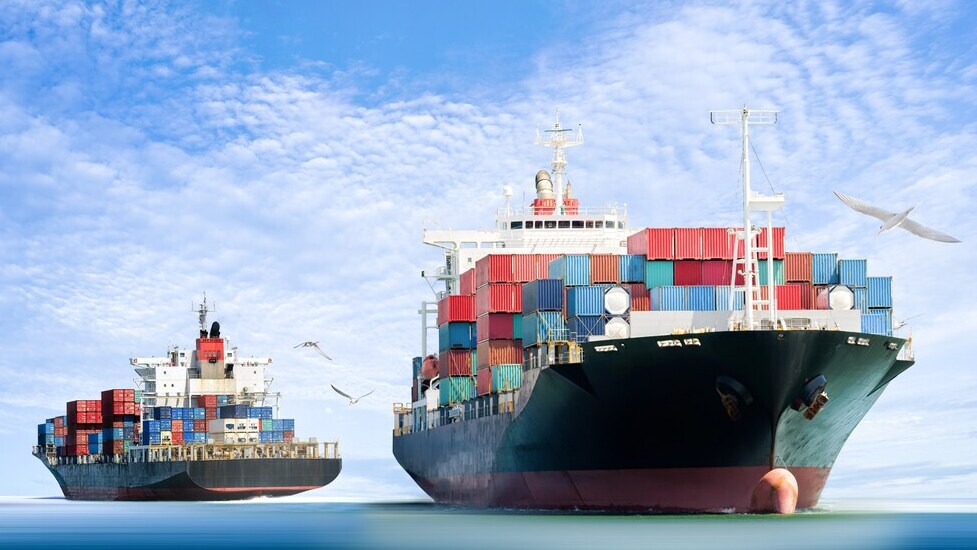
The disruption to Red Sea shipping in 2024 brought this into sharp focus. As the shortest maritime route between Europe and Asia, approximately 12% of global maritime trade, 7 to 10% of the world’s seaborne oil trade and 8% of LNG currently passes through the Suez Canal. But trade volumes fell by 50% year-on-year in early 2024 due to attacks on vessels in the Red sea area, at the southern end of the canal. This contributed to an approximately $6 billion decline in Egypt's annual canal revenues compared with 2023.
These events did not diminish Egypt's strategic importance. Rather, they underscored the need to build greater economic resilience by capturing more value from its unique position in global trade.
According to Majid Al Futtaim's analysis of current IMF figures, Egypt could become a G20-scale economy based on its share of the global population, with its economic output potentially quadrupling to $1.5 - 2 trillion over the next three decades under the right conditions. Realizing this potential will require a shift in how Egypt creates value, attracts capital and competes globally, however. A broader understanding of connectivity must be central to this transformation, extending beyond the movement of goods to encompass digital infrastructure, technology, investment and global value chains.
From trade corridor to value creation platform
A vessel passing through the Suez Canal generates revenue for Egypt. But when trade networks connect Egyptian manufacturers, agricultural producers and exporters to international markets, they create value far beyond the waterway.
McKinsey estimates that Egypt's transport and logistics sector could grow from $26.9 billion in 2023 to $37 billion by 2028. But the greater opportunity lies in stronger domestic industries, competitive exports and greater market access, all enabled by efficient logistics.
The same applies to digital connectivity. An estimated 17% of global internet traffic passes through Egypt, including more than 90% of data traffic between Asia and Europe. Just as the Suez Canal connects global trade routes, Egypt's subsea cables connect the digital economies of three continents.
But carrying this data is only the beginning. The opportunity lies in translating this connectivity into a thriving digital economy. Egypt's digital exports, such as outsourcing services, reached $7.4 billion in 2025, highlighting the sector's potential. As artificial intelligence (AI) reshapes industries, Egypt can move beyond traditional outsourcing towards higher-value services built on its greatest asset: its people.
Rather than measuring connectivity by the volume of goods or data passing through Egypt, it should be measured by the industries, capabilities and opportunities it creates.

From infrastructure investments to connected ecosystems
Egypt's investments in transport networks, industrial zones and logistics infrastructure have laid the foundations for growth. The next opportunity is to connect these assets into an integrated economic system.
Imagine an Egyptian agricultural producer reaching neighbouring Gulf markets through reliable cold-chain infrastructure, or a manufacturer sourcing and distributing products across Africa and Europe. In both cases, connectivity opens markets that would otherwise be beyond their reach.
The same applies to digital infrastructure. High-speed networks, data centres, secure cross-border data flows and clear regulation can position Egypt as a competitive destination for AI-driven industries and technology investment. Combined with digital skills, these foundations can help businesses move up the value chain.
Foreign direct investment (FDI) will be critical. Egypt remained Africa's largest FDI recipient in 2025, attracting approximately $15.5 billion. While the country must continue to attract more capital, opportunity also lies in channelling that capital into sectors that create jobs, transfer technology, expand exports and strengthen local supply chains.
Economic impact extends beyond physical assets. Behind every supermarket or quick commerce order is a network of farmers, manufacturers, distributors and suppliers, helping local businesses build capabilities, respond to demand and access new opportunities.
This is the multiplier effect of long-term investment. It connects international capital and expertise with domestic enterprise to build lasting capabilities.
From domestic strength to multi-regional integration
Egypt's manufacturing and agricultural capabilities, consumer market and strategic location complement the Gulf region's investment capital, commercial networks and international reach. Together, these strengths can elevate Egypt from a destination for investment and consumption to a major source of goods and services for the region.
But predictable regulation, digital trust, skills development and private-sector participation are all also essential to attracting international partners and helping local businesses scale. Regional partnerships must go beyond facilitating trade to strengthen Egypt's position within the value chains that underpin it. This will bring more Egyptian products, businesses and industries to the world.
Realizing this vision will require sustained collaboration between governments, investors and businesses with a shared focus on strengthening productive capacity, supporting local enterprise and expanding access to regional and global markets. In an increasingly fragmented global economy, countries that connect production, capital, technology and markets efficiently will be better positioned to navigate disruption and sustain growth.
Egypt has a rare opportunity to build that capability at the intersection of three continents. It can become a place where global trade fuels domestic industry, digital connectivity drives innovation, foreign investment strengthens productive capacity and regional partnerships create lasting prosperity.
Having spent centuries connecting the world, Egypt’s next economic advantage will come from ensuring those connections create even more value.