This monthly round-up brings you a selection of news and updates on the latest geopolitical developments.
Top international stories: Iran war enters new phase; US-Canada trade spat deepens; UN chief warns superpowers 'things have changed'.
1. Iran war hostilities renewed
The Iran war has entered a new phase as the conflict returned to direct hostilities. A late-August lull in fighting has given way to the most dangerous escalation since July, exposing the fragility of diplomacy centred on the Strait of Hormuz.
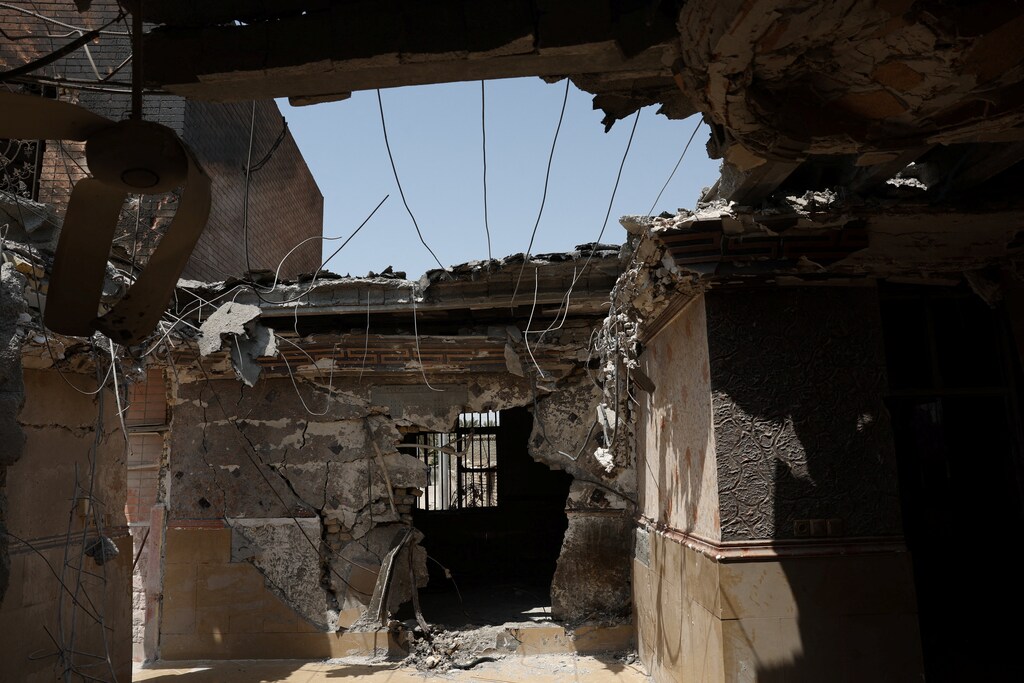
After a period of relative calm, Washington and Tehran have exchanged attacks, with the US striking Iran’s southern coast and Iran firing at US bases across the region.
The recent strikes could deepen the conflict that began in February, raising fears that war across the Middle East could be renewed. Iran hit what it claimed were US assets in Bahrain, Jordan, Kuwait and Iraq, stating its aim was to drive US forces from its military bases across the region.
At the time of writing, no diplomatic talks to end the conflict were being held. In a press conference, US Vice President JD Vance ruled out talks unless Iran halts targeting commercial shipping in the Strait of Hormuz. Iran’s Vice President Mohammad Reza Aref said the country’s response to attacks would be “asymmetrical” and “multi-layered”.
Six months on from the start of the war, its underlying disputes remain unresolved: the Strait of Hormuz is still contested, the US’ partners across the region remain exposed, and each escalation of the conflict leaves mutual compromise looking more unlikely.
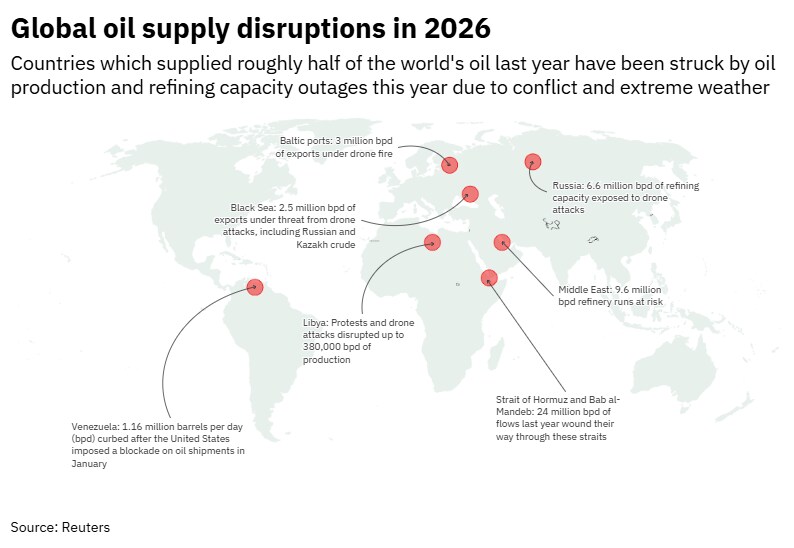
The wider impact of the war on oil production also continues, with data showing far fewer vessels recorded as transiting the strait than before the conflict. Reuters analysts estimate 5 to 7 million barrels of Gulf oil a day are currently being disrupted. According to Reuters, conflicts – including the US-Iran and Russia-Ukraine wars – now affect more than 43% of global oil production, leading to global fuel stocks running low and pushing up inflation and government debt.
2. US-Canada trade dispute deepens
US-Canada trade tensions are becoming more structural rather than temporary as the collapse of talks reopened a tariff confrontation between the two countries.
The US imposed 50% duties on about $20 billion of Canadian goods after negotiations failed in late August. Canada responded with matching tariffs on around 700 US products, alongside C$7.5 billion in support for affected workers and businesses.
While the measures affect roughly 5% of Canadian exports to the US, analysts say they could have significant effects on sectors that are already struggling, such as wood products. Canada’s Prime Minister Mark Carney has said his government is ready to sign a deal that benefits both countries and that is in the interests of Canadian workers, families and businesses.
The US is Canada's biggest export partner, and the tit-for-tat measures represent a new low in one of the world’s deepest trading relationships, which appears to be moving from rules-based integration towards recurring economic coercion. Other US partners will be watching closely for clues on how to respond to tariff pressure.
3. News in brief: geopolitical developments from around the world
The situation in the Middle East and Russia’s ongoing invasion of Ukraine show that great powers are discovering the limits of unilateral power, according to Secretary-General of the United Nations António Guterres. In an interview as he nears the end of a decade leading the UN, Guterres said “superpowers need to understand that things have changed” and warned that a more multipolar world could slide into confrontation unless global institutions adapted to it.
Is diplomacy returning to the Korean peninsula? There are signs, according to South Korea’s intelligence agency. A lawmaker briefed by the agency told reporters that a North Korea-US summit could be possible at any time, although there had been no confirmation of specific contact between Pyongyang and Washington. Last month, US President Trump said he planned to meet with North Korea’s leader Kim Jong Un later this year.
Syria has taken a significant step towards restoring central authority after the Kurdish-led Syrian Democratic Forces was dissolved as an independent military force. Under the integration agreement, agreed earlier in the year, SDF personnel and senior figures are joining Damascus-led institutions. The merging brings much of the northeast further under Damascus’ control, but analysts have raised questions around the finer details of the integration and warned that the divisions Syria has experienced since the war that began in 2011 in the country have not been totally eradicated.
Washington has unveiled an energy agreement that gives a US-backed venture 100-year rights over 17 Venezuelan oil fields containing an estimated 65 billion barrels of reserves. The Pentagon will hold a 35% stake in the venture, while the US will be guaranteed the right to purchase 20% of its output at cost. The US has been pushing to increase oil production in Venezuela since its military mission to capture the country’s then-President in January.
How the Forum helps leaders make sense of regional, trade and geopolitical shifts
The Centre for Regions, Trade and Geopolitics provides a trusted space for leaders to understand evolving trade dynamics, regional developments and geopolitical fragmentation.
By fostering dialogue across sectors and regions, the Centre helps partners navigate uncertainty and explore cooperative approaches to shared challenges.
4. More on geopolitics on Forum Stories
As a new competitive landscape based on technological acceleration, geoeconomic fragmentation and shifting energy appetites emerges to reshape global industries, a World Economic Forum report explores four possible futures for how growth and economic advantage could be redefined by 2035. We asked business leaders to identify the biggest uncertainties and the related strategies they’re adopting in this increasingly complex operating environment – read more here.
The Asia-Pacific region shows how “minilateral” cooperation can strengthen resilience in a fragmenting world, offering agile, pragmatic frameworks for cross-border exchange that connect with wider global networks. The Annual Meeting of the New Champions highlighted three key priorities for this approach, outlined in this article.