3 lessons from Asia-Pacific on regional cooperation in a fragmented world
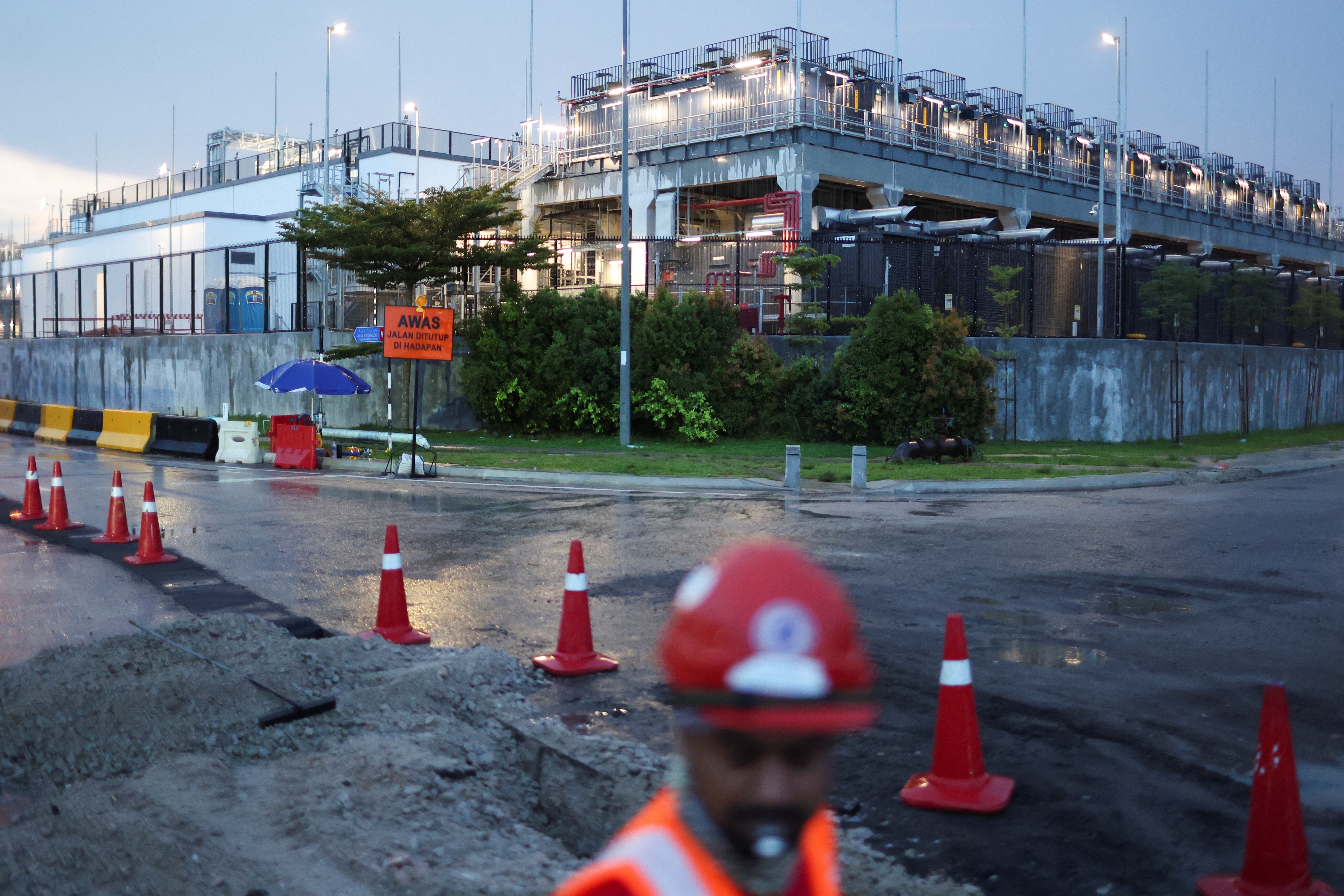
A data centre in Johor state, Malaysia, part of the Asian push for technological interoperability. Image: Reuters/Hasnoor Hussain
- The Asia-Pacific region demonstrates how 'minilateral' cooperation can build resilience in a fragmenting world.
- Such regional collaboration can provide more agile, pragmatic frameworks for cross-border exchanges that can also plug into wider global networks.
- The recent Annual Meeting of the New Champions highlighted three main thrusts of Asia-Pacific cooperation.
“Fragmentation” has become a geopolitical watchword in recent years, with global institutions such as the International Monetary Fund warning of the increasing danger and costs (over $7 trillion) of a more segmented and fractious global landscape.
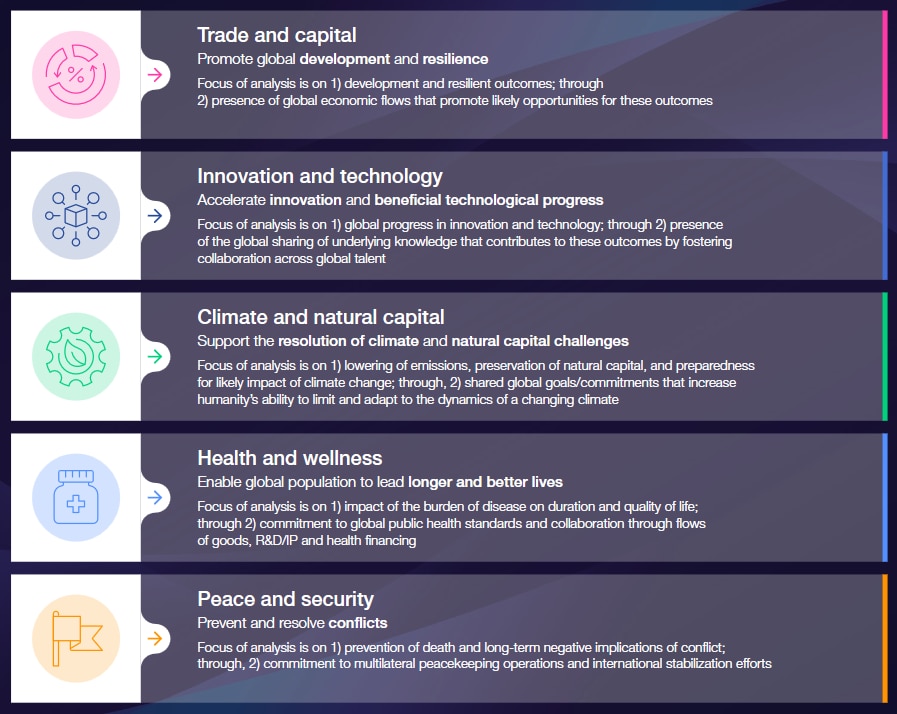
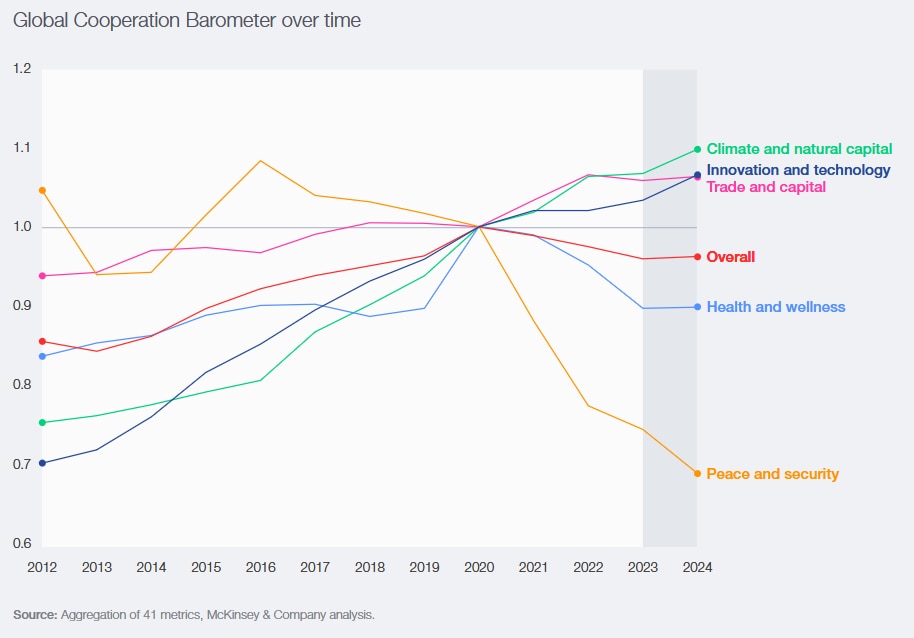
While the forces of fragmentation have intensified in recent years, especially regarding technology, finance and trade, cooperation has not ended. This is one of the central issues explored in the World Economic Forum and McKinsey’s 2026 Global Cooperation Barometer. The barometer assesses cooperation across five key pillars: trade and capital; innovation and technology; climate and natural capital; health and wellness; peace and security. Its findings indicate how cooperation is evolving from multilateral toward minilateral arrangements, highlighting how “cooperation among smaller groups of countries has persisted as economies continue to find value in working with each other through pragmatic, agile, interest-based partnerships”.
The Asia-Pacific region is one of the clearest examples of this shift, where regional cooperation is increasingly taking a practical form. Despite the headwinds to global economies, the region is expected to grow by 4.4% this year. This resilience is in part driven by strong intra- and inter-regional cooperation. Last year, intraregional trade accounted for 53% of the region’s merchandise exports and 56% of its imports, with Asia-Pacific Economic Cooperation’s 21 member economies accounting for around half of world trade. Integration in Asia-Pacific makes the region a crucial test case of how cooperation is being reconfigured towards more regional and flexible forms of collaboration.
Against this backdrop, the World Economic Forum convened senior leaders and experts in June at the Annual Meeting of New Champions (AMNC) to discuss cooperation across the region and whether there are broader lessons for the rest of the world. The discussion pointed to three key lessons:
1. Regional partnerships are a foundation of cooperation
In Asia-Pacific, regional architectures allow a diverse set of economies to work together, even when strategic alignment may be imperfect. Frameworks such as Asia-Pacific Economic Cooperation (APEC), Regional Comprehensive Economic Partnership (RCEP) and ASEAN (Association of Southeast Asian Nations) matter. They not only reduce uncertainty, but also maintain dialogue and keep trade and supply chains moving, even when broader consensus becomes harder to achieve. This flexibility can accommodate for political differences, while creating shared economic value.
APEC and RCEP illustrate the two sides of a framework that operate in different, yet complementary ways. APEC provides a voluntary yet consensus-based approach that gives economies a platform for dialogue and agenda-setting, without the formalities of legally binding agreements. RCEP, in contrast, provides more formal and structured architecture allowing companies to leverage diverse supply chains across the member countries. RCEP itself reflects ASEAN’s ability to develop a regional architecture. The original negotiating principles explicitly recognized "ASEAN centrality", with the FTA being conceived at the 2011 ASEAN Summit in Indonesia, and formal negotiations being launched the following year at the 2012 ASEAN Summit in Cambodia.
Taken together, these mechanisms reflect a practical operating system that sustains cooperation where interests align. The result has been a region that is attractive to business and investment flows: In 2024, APEC attracted more than $950 billion in FDI inflows, up 5.2% from the previous year and accounting for more than three-fifths of global FDI flows. This held even as global FDI fell for a second consecutive year, with South-East Asia's inflows rising about 10% to $225 billion.
2. Interoperability as a basis of cooperation
Technology is often viewed as a factor driving strategic competition: experts surveyed for the Global Cooperation Barometer saw innovation and technology as the area least likely to see cooperation.
But Asia-Pacific shows where technology cooperation can thrive. ASEAN’s Digital Economy Framework Agreement (DEFA) provides an example of overcoming national regulations to translate digital interdependence into digital cooperation. In May 2026, ASEAN concluded its negotiations for the DEFA to unify rules across technology and digital trade; a step towards the first regional digital economy agreement in the world, estimated to unlock a technology ecosystem worth up to $2 trillion by 2030. This build-out is already visible on the ground: Malaysia's Johor state has become South-East Asia's leading data-centre hub, accounting for over two-thirds of the region's capacity under construction.
The broader lesson is how technology cooperation is not dependent on identical national regulations but can be based on frameworks that enable a diverse set of regulatory models to connect.
3. The growing role of regional resilience in a contested world
Regional cooperation is needed to buffer against shocks, enabling countries to be better equipped to absorb them when they occur.
The International Energy Agency (IEA) estimates nearly 80% of oil transiting the Strait of Hormuz is destined for Asia. The region’s import bill is projected to rise by more than 200% by 2035 in the absence of broader changes to energy consumption – substantially increasing the region’s exposure to global price volatility.
Because of this exposure, ASEAN’s 2026-2030 Plan of Action for Energy Cooperation (APAEC) provides the strategic blueprint to guide regional, inclusive energy development. This is already taking shape on the ground: the Laos-Thailand-Malaysia-Singapore Power Integration Project (LTMS-PIP), the first multilateral, cross-border electricity trade among four ASEAN countries, began moving up to 100MW of renewable hydropower from Laos to Singapore in 2022 using existing interconnections; it doubled to 200MW in 2024 with added supply from Malaysia – an early step towards a broader ASEAN Power Grid (APG), a flagship initiative designed to bolster energy security, resilience and connectivity by enabling greater cross-border electricity trading across ASEAN. This underlines how regional cooperation can help countries move from shared vulnerability to collective resilience in managing future energy shocks.
Cooperation still requires bridges
Asia-Pacific has highlighted that regional cooperation can advance shared objectives in a fragmented geopolitical environment – but with the proliferation of new arrangements, new challenges arise. If every regional or minilateral arrangement creates its own standards, frameworks and market signals, cooperation can in fact reproduce the very fragmentation it seeks to address.
Carbon markets, in particular, highlight this. With the expansion of global emissions trading systems – 41 systems now covering more than a quarter of global GHG emissions – and new national-level systems across the East Asian economies, the absence of comparative or connected frameworks creates fragmented market signals for businesses and investors. The objective does not need to be a single carbon market, but instead one that is sufficiently comparable and compatible to facilitate various systems across borders.
How the Forum helps leaders make sense of regional, trade and geopolitical shifts
The Asia-Pacific example does not suggest that regional cooperation replaces multilateralism. Instead, it showcases how the most valuable frameworks can be built when channels are kept open, practical solutions are tested in diverse environments, and geoeconomic models are crafted in a way that can be plugged into wider global systems. Cooperation must be built to withstand mistrust and absorb shocks, while identifying innovative solutions to deliver practical benefits.
Don't miss any update on this topic
Create a free account and access your personalized content collection with our latest publications and analyses.
License and Republishing
World Economic Forum articles may be republished in accordance with the Creative Commons Attribution-NonCommercial-NoDerivatives 4.0 International Public License, and in accordance with our Terms of Use.
The views expressed in this article are those of the author alone and not the World Economic Forum.
Stay up to date:
ASEAN
Related topics:


Forum Stories newsletter
Bringing you weekly curated insights and analysis on the global issues that matter.
More on Geo-Economics and PoliticsSee all

John Letzing
October 13, 2026


