In Asia, governments and businesses are collaborating across the region to create more resilient industrial ecosystems.
Industrial transformation is increasingly shaped by the connections between energy, materials, infrastructure, transport and supply chains. At a time of growing geopolitical uncertainty, shifting trade patterns and rising pressure on energy systems, resilient industrial ecosystems have become essential for business competitiveness, as well as for economic security, jobs, and sustainable growth.
As explored in the World Economic Forum's Collective Ecosystem Brief, successfully transforming industries means acknowledging and reflecting the differences in energy resources, industrial capabilities, infrastructure and investment risks across regions. But in Asia, two distinct parts of one global value chain – energy and shipping – are collaborating to develop an integrated ecosystem spanning emission sources, transportation, terminals and permanent storage.
Industrial transformation in Asia
Asia is characterized by extraordinary diversity in economic development, energy systems, resource endowments, industrial maturity and infrastructure readiness. In Southeast Asia, for example, energy demand is expected to grow proportionally with rising population, GDP growth and accelerating urbanization, to account for nearly 20% of global demand growth by 2035.
Government priorities, therefore, often include emissions reduction while also ensuring affordable and reliable energy that supports long-term development. On the other hand, Japan, a country with mature and advanced industries, is prioritizing carbon emissions reduction from hard-to-abate sectors and innovation based on its advanced technological capabilities.
As different countries pursue several objectives simultaneously, it makes industrial transformation in Asia particularly complex. But this diversity can also enable countries to combine complementary strengths.
In many ways, Asia offers a preview of the transition challenge facing the world: the need to balance growth, energy security, affordability and decarbonization simultaneously. And so, success in the region has implications well beyond its borders.
Policy that unlocks collaboration
What enables successful cross-border collaboration? Projects must be able to rely on long-term, upfront investments, infrastructure development and coordination across jurisdictions. Beyond policy clarity, predictability and continuity within individual markets, successful cross-border collaboration requires regional regulatory compatibility.
For emerging solutions that enable decarbonization such as carbon capture and storage (CCS), this means providing a clear framework for cross-border transportation of CO2, which unlocks opportunities to jointly implement mitigation outcomes. A project can stall if transport, storage, regulatory approvals and market demand do not develop at the same pace.
Regional platforms and policy frameworks such as the Asia Zero Emission Community (AZEC), which brings together Japan and Southeast Asian countries, such as Malaysia, can support such alignment. In fact, at the 3rd AZEC Ministerial Meeting in Kuala Lumpur, around 50 new MOUs were announced for decarbonization of power, transportation and industrial sectors – including one for Japan-Malaysia CCS cooperation. These governments were able to translate intent into investment frameworks and new market creation at scale to create cross-regional carbon abatement.
As governments design frameworks, companies can share technical expertise, project development capabilities and commercial experience. For cross-border CCS, for example, private-sector input can help align projects with national climate targets such as Nationally Determined Contributions, while clarifying allocation of risks and liabilities.

Collaboration in practice
In addition to enabling policies, complementary capabilities across industries and countries are essential to accelerating a resilient industrial transformation.
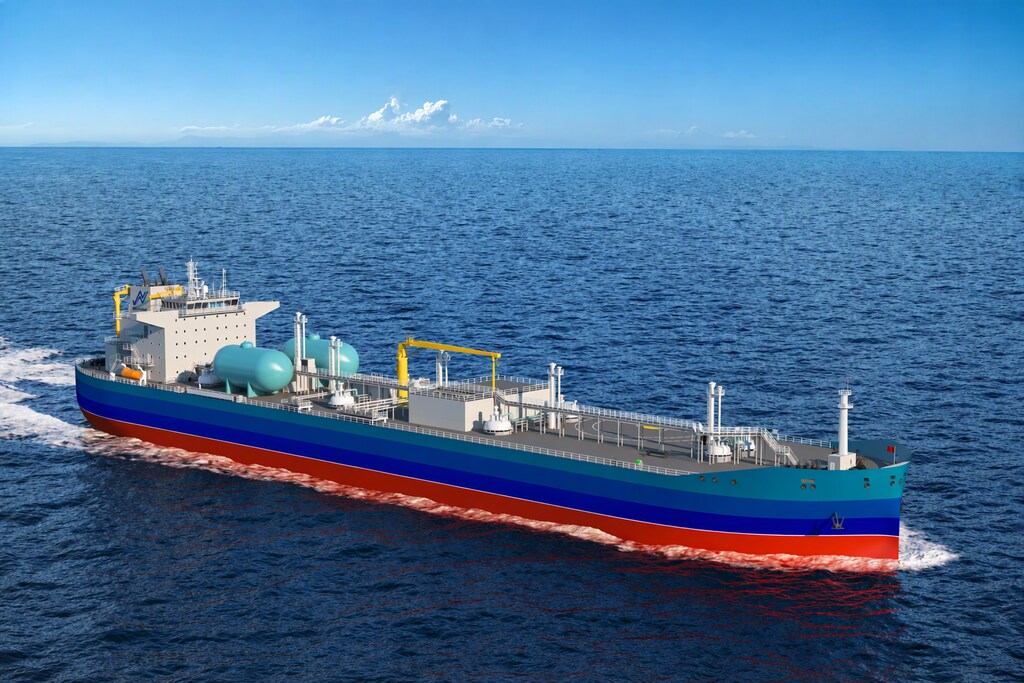
The Jules Nautica joint venture to advance maritime transportation of liquefied CO₂, for example, was designed to support the evolving needs of regional CCS value chains. It brings together PETRONAS’ expertise in CCS development and Malaysia’s favourable geological conditions and carbon storage potential, with Mitsui O.S.K. Lines' (MOL) global transport capabilities.
To achieve its carbon neutrality target by 2050, Japan needs to explore cross-border CCS opportunities due to limited storage capacity within the country. Malaysia offers significant potential storage capacity through its depleted gas fields and saline aquifers offshore. Building on its capabilities and extensive industrial network in Japan, MOL can connect emitters, transportation infrastructure, terminals and storage providers, helping to develop a commercially viable cross-border CCS value chain.
By connecting emission sources in one country with transportation infrastructure and potential storage sites in another, such projects demonstrate how complementary capabilities across companies, industries and countries can become an integrated regional system. Rather than a transportation or storage project, such collaborations can span the value chain, from industrial customers and maritime transport to terminals, carbon management and storage.
Detailed information exchange based on trust and transparency is also an important component. Hard-to-abate sector companies, governments, financial institutions, insurers, and transportation and storage infrastructure developers can build a shared understanding of responsibilities, risks and liabilities. This can help mitigate risks across the value chain and support more coordinated responses to crises.
Building resilient industrial ecosystems
Industrial transformation for resilience requires collective effort from both the public and private sectors. Governments can create enabling conditions through stable policy frameworks and regional cooperation. Businesses can accelerate progress by investing beyond traditional boundaries and building partnerships across value chains.
The future will not be shaped by countries or companies attempting to do everything alone. It will be shaped by ecosystems that connect complementary strengths across industries and borders.
Resilient industrial ecosystems support long-term economic opportunity, skilled employment and sustainable development for communities. Regions that turn their individual differences into collective advantage recognize that resilience does not come from uniformity, but from the ability to build shared prosperity and sustainability through complementary strengths.