The debate over flexible work has moved beyond remote versus office schedules. Paired with AI, changing skills and shifting careers, the future of work hinges on job design. True sustainability requires shared responsibility to build fair, inclusive and equitable systems for all workers.
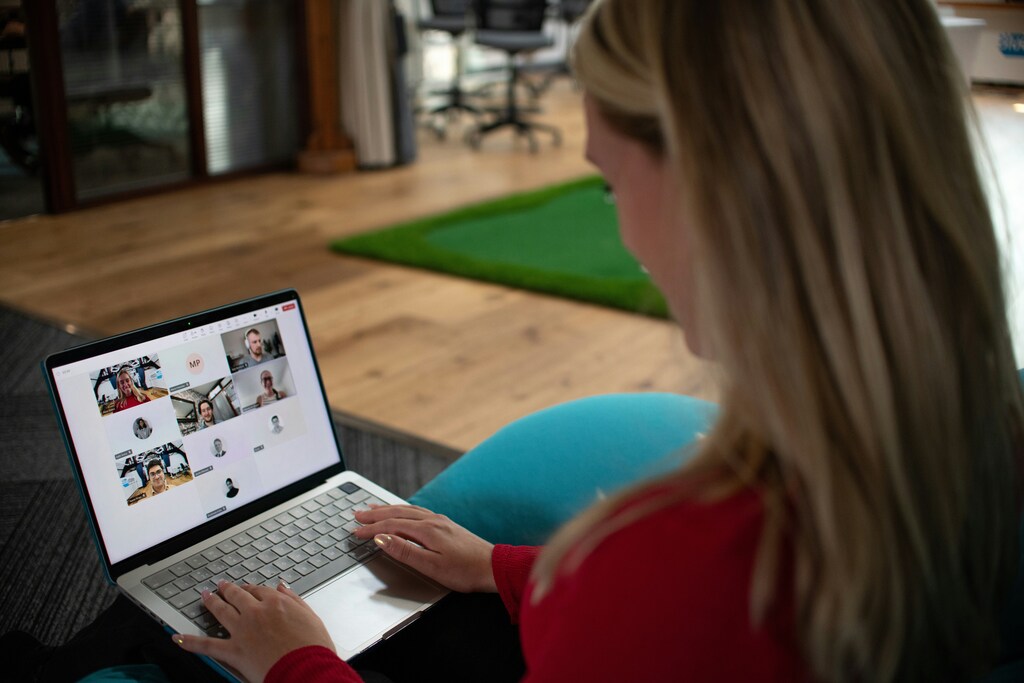
Over recent decades, flexible work has grown steadily, yet the debate surrounding it often gets trapped in narrow binaries. Since the pandemic, discussions have centred largely on where people work – with employers and employees at odds over home versus office, even as remote roles draw massive applicant pools. Meanwhile, AI has introduced another apparent binary into the future-of-work debate: will it destroy jobs or create them?
Both debates are important, yet they threaten to hide a larger transformation. Hybrid, freelance, project-based and digitally mediated forms of work are already established features of labour markets, and AI is simultaneously reshaping tasks, skills and career pathways. The central question is no longer where people work, but how work is designed, and how autonomy, opportunity and risk are distributed.
Nor is this issue confined to offices. The World Economic Forum expects that AI and information-processing technologies will transform most businesses by 2030, with a substantial share of current skills potentially becoming outdated.
As a major economic sector, media and communications work provides an early picture of broader labour market changes, especially in this context. Three priorities stand out from studies conducted across the UK, Latin America and the Caribbean, Central and Eastern Europe, Singapore, and digital labour platforms.
Priority 1: Design flexible work around job quality, not location
Flexibility can deliver real gains; greater autonomy and better work-life balance can coexist with productivity and job satisfaction. Yet better work does not follow automatically from flexibility. Extensive research points to isolation, blurred work-life boundaries, weaker informal knowledge exchange and employment insecurity. In creative teams, for instance, remote working may supply autonomy and room for individual work, but face-to-face contact retains its value for spontaneous ideas and informal collaboration. A study covering 20 Latin American and Caribbean countries underscores the point: as flexible work expanded, income conditions for most communication professionals did not improve, and empathetic leadership proved important for making flexible arrangements sustainable.
Measuring flexibility by counting days at home or in the office therefore misses what matters. Instead, organizations should align place with purpose and ask whether arrangements support good work: inclusion, learning, wellbeing, collaboration and career development.
AI raises the stakes further; as the Forum’s 2026 research on entry-level work contends, technological adoption must come with deliberate job redesign. Making work more flexible or technologically enabled is not enough; it has to be designed well.
Priority 2: Build portable skills for increasingly fluid careers
Careers, not just workplaces, are being reshaped by flexible labour markets. In places like Romania and Poland, for example, research shows media and communication professionals increasingly move between sectors in search of stability and growth.
While technology and flexible working can ease these transitions – helping workers build broader, transferable skill sets – it also creates a new demand: workers must constantly make those skills visible. Indeed, an analysis of 444 public freelancer profiles found that digital labour markets require workers to frame and market technological, creative and personal skills as part of professional self-presentation.
This matters all the more as AI speeds up skills change. By 2030, the Forum expects 39% of workers’ existing skill sets to change or become outdated. Employability rests increasingly not only on having skills but on the capacity to develop, transfer, translate and demonstrate them across shifting contexts. Employers, universities and workforce-development systems must therefore prepare people for continuous learning and career mobility, rather than for fixed occupations alone.
Priority 3: Share responsibility for making flexibility sustainable
As is clear, there is a danger in letting adaptability become an unlimited obligation borne by workers. Flexible workers may already have to manage their own skills, networks, professional visibility, wellbeing and economic security. AI, however, adds a further responsibility: learning new technologies continually and proving one’s value alongside them.
The limits of individual coping are clear in recent research into Singapore’s media and communication freelancers. The study distinguishes short-term adaptation from “transformative resilience” – fixing the structural causes of insecurity rather than expecting workers to simply absorb the risk. Crucially, the research asks: where should the burden of adaptation fall?
The study shows how freelancers lean heavily on professional networks and digital platforms to secure work and stay visible, while those lacking established connections may turn to high-effort, low-return strategies. Narratives that celebrate autonomy and entrepreneurship can thus conceal how much risk workers are being asked to absorb.
Resilience certainly matters, but it cannot make up for poorly designed systems. Responsibility should be shared among employers, clients, platforms, educators and policy-makers to ensure that flexibility does not simply shift organizational and labour-market risks onto individuals. Gender and inequality cut across all three priorities. In 2024, women made up 49.6% of EU cultural employment, up from 46.8% in 2015. Even so, greater representation has not removed inequalities in pay and career outcomes.
Flexible work can expand opportunity, but workers do not arrive in flexible labour markets with equal financial resources, caring responsibilities, professional networks or bargaining power. Other studies likewise identify gender differences in professional self-presentation and a wider feminization of freelance media and communication work.
From where we work to how we work
Flexible work is no longer an exceptional arrangement at the margins of labour markets. Combined with AI, changing skills and increasingly fluid careers, it forms part of a broader transformation in how work is organized. The future of work should ultimately be judged not by how flexible it becomes, but by whether that flexibility is fair, sustainable and inclusive.