How to solve sustainable fashion's innovation problem and tackle textile waste

The textile sector is reaching a turning point when it comes to innovative sustainable fashion. Image: Unsplash/VitalyGariev
- Sustainable fashion often asks consumers to do the work by buying less or donating more.
- But the textiles industry could also become more circular through extended producer responsibility, better standards and trade systems.
- This would require the right combination of policy, inclusion and innovation, however.
Organic cotton, recycled polyester, capsule wardrobes, secondhand marketplaces – the fashion industry has come up with many “green alternatives” to fast fashion. And yet, only 1% of used textiles are recycled back into textile products globally, while the industry continues to rely heavily on virgin materials with nearly nearly two thirds derived from oil-based polymers.
Sustainable fashion, as currently defined, is not solving the textile waste crisis.
The dominant narrative in sustainable fashion asks consumers to do most of the work: buy less, buy better, donate more. But even the most environmentally conscious consumer base cannot drive systemic change without the infrastructure required to close the loop.
Such systems remain largely absent across the Global South, for example, where fast fashion waste continues to accumulate in places such as the Atacama Desert in Chile, Kantamanto Market in Ghana or Panipat in India. These places are stark examples of the textile industry's waste footprint.
Sustainable fashion at a turning point
Fortunately, the textile sector is reaching a turning point.
In June, the first Global Textile Ministerial and Industry Summit took place in Santiago, Chile. Organized by Ambition Loop in collaboration with the UN Environment Programme and the ZDHC Foundation, the summit focused on four pillars that could make the circular economy a reality in the textiles market:
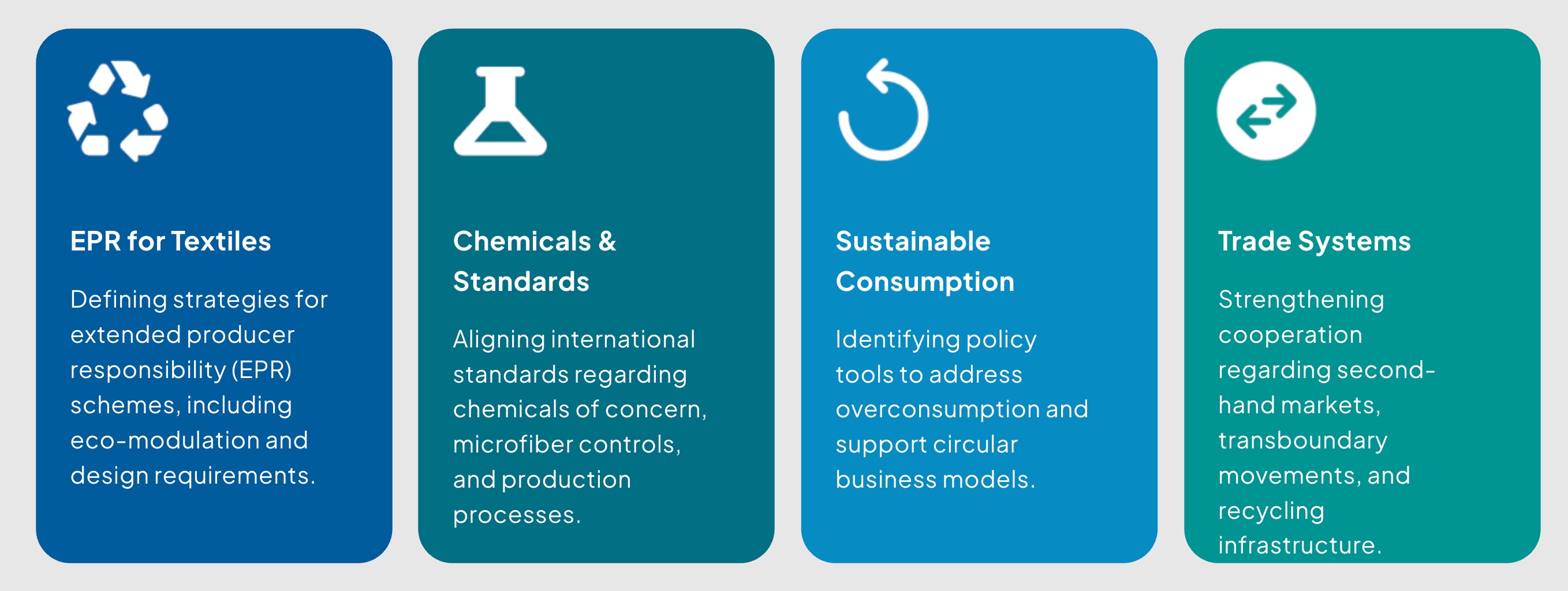
Turning these pillars into reality requires rethinking what happens to clothes at every step of their value chain – from the materials chosen when they are made, to what happens to them once their use comes to an end.
So, what can we do to solve this problem? Here are three ideas to help tackle the textile waste crisis:
1. Make circular models cost-competitive
An environmental policy known as extended producer responsibility (EPR) can help incorporate the costs and effects that a product has on the environment and society into the design process and its final price.
But, compared to other EPR products such as packaging or tires, the costs of recovering and reprocessing the material used in textiles, do not generate economies of scale as easily. This is because strategies such as resale, repair and upcycling of clothing usually occur at the individual level, which is very labour-intensive.
So, a circular economy for textiles needs a broader policy mix to make it more cost-competitive. The Ellen MacArthur Foundation has proposed reducing VAT or sales tax on resale and repair and adjusting labour taxation for the industry. This could improve gross profit margins as well as the market share of clothing resale and repair business models.
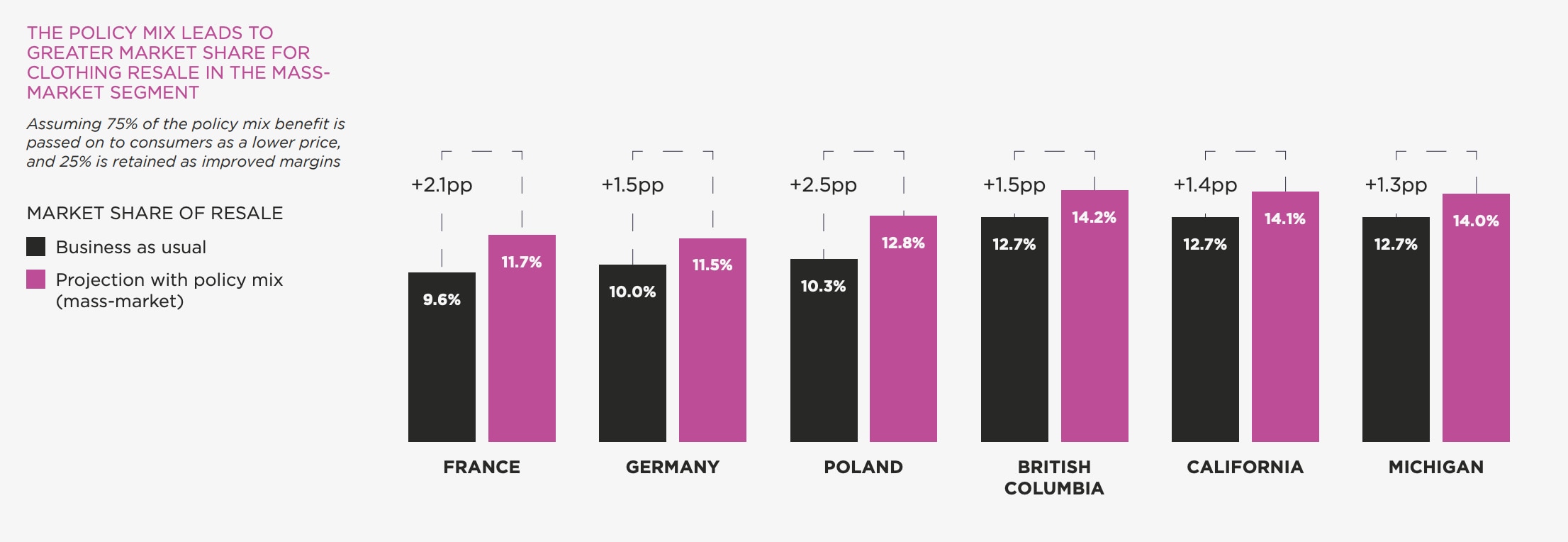
Traceability is key here. Authorities need to know the origin of a garment to track its flow, brands need to know its material composition for repair work and consumers need to know how to manage its end of life.
A digital product passport is a great solution that's already being implemented in Europe.
2. Ensure a just transition
The cost-competitiveness of textile recycling services is important, but so is a just transition for the millions of entrepreneurs doing this work – particularly in the Global South, where many of these jobs are informal.
In these countries, the circular economy clothing value chain operates mainly through small-scale networks, foundations and ventures. Textile collection typically occurs through campaigns by motivated municipalities and brands, and repair and upcycling facilities may be located in people's homes without safety and health protocols. This often results in information asymmetries and poor working conditions.
But Chile, for example, is implementing an EPR and a National System for the Certification of Labor Competencies called Chile Valora. People who learned through practical experience rather than formal studies can validate their knowledge on this platform and appear in an official catalogue of experts.
This gives workers state accreditation and identifies them as trusted suppliers because the country's EPR specifies that collection and recycling companies can only use grassroots recyclers listed in this catalogue. For this mechanism to work, however, the cost of training should not fall on the worker.
3. Develop new bio-based textiles
Bio-based materials are a promising solution to the challenge of making fashion more sustainable – but only under the right conditions.
Textiles must come from regenerative sources and secondary stream feedstocks. They should also be designed for durability, reuse and value retention, as well as being free from substances of concern for people and the planet.
Entrepreneurs are already working on real alternatives. Spora Biotech is a biotech startup making textiles using fungi. It has discovered, cultivated and preserved wild fungal strains from different ecosystems. Its first product, Sporatex, is a mushroom-based leather that’s already being used around the world.
Desserto is a Mexican startup that has created a vegan leather based on nopal, a succulent plant from the cactus family. The plant is native to the Americas and serves as a natural carbon sink. The company uses rainwater and locally abundant minerals to care for its nopal plants, only selecting and harvesting mature leaves every 6-8 months.
Encouraging more sustainable fashion
None of these solutions will work in isolation. A bio-based material without a policy framework to make it cost-competitive remains a niche product. And an EPR without traceability is a compliance exercise, not a circular system.
The textile industry is now at a turning point. The right combination of policy, inclusion and innovation can finally close the loop on circular economy solutions that will tackle the textile crisis and make fashion more sustainable.
Don't miss any update on this topic
Create a free account and access your personalized content collection with our latest publications and analyses.
License and Republishing
World Economic Forum articles may be republished in accordance with the Creative Commons Attribution-NonCommercial-NoDerivatives 4.0 International Public License, and in accordance with our Terms of Use.
The views expressed in this article are those of the author alone and not the World Economic Forum.
Stay up to date:
Circular Economy
Related topics:


Forum Stories newsletter
Bringing you weekly curated insights and analysis on the global issues that matter.
More on Climate Action and Waste Reduction See all

Pim Valdre and Joy Shumake-Guillemot
September 17, 2026