UNGA 81 explained: Can cooperation keep pace with the changing world?
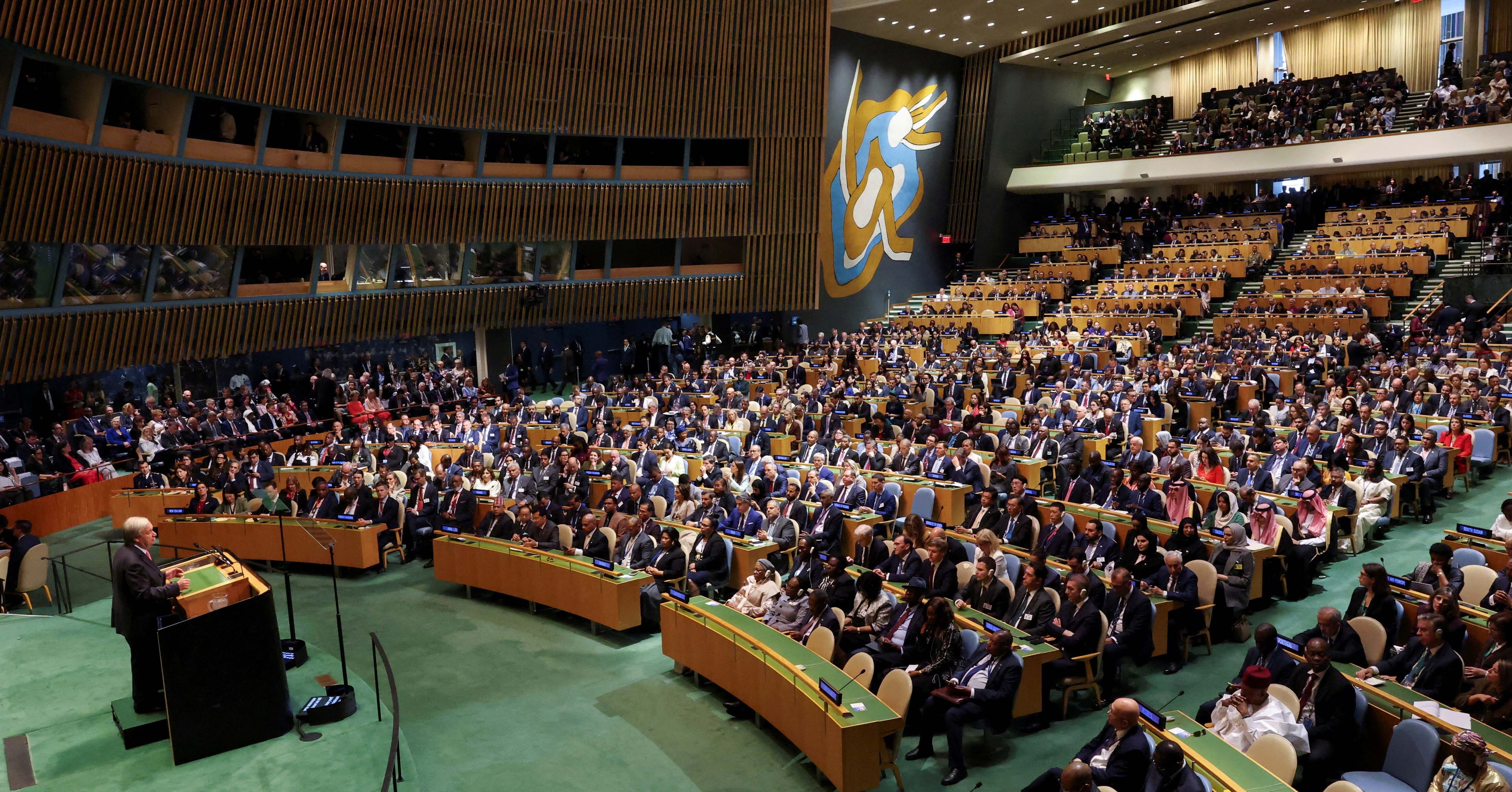
UN Secretary-General Antonio Guterres addresses the 81st United Nations General Assembly at UN headquarters. Image: Reuters
- Global political leaders gathered for the 81st session of the UN General Assembly amid heightened geopolitical competition and conflict.
- Bridging these divides will require cooperation across stakeholders including major powers, middle powers, and between the public and private sectors.
- Here are some reflections on how a widening array of stakeholders shaped UNGA week and what this could mean for the global relations ahead.
The opening of the 81st session of the United Nations General Assembly (UNGA) brought together leaders from the UN's 193 member states against the backdrop of heightened geopolitical competition and the highest level of active conflict since the Second World War.
Amid this more contentious and unstable global context, UN Secretary-General António Guterres warned in stark terms in the first lines of his opening remarks to the General Assembly: “The fault lines in our world are widening. Cracks have become canyons.”
Bridging these divides will necessitate cooperation across a widening number of stakeholders: between major powers, among middle powers, and between the public and private sectors.
Below are reflections on how today’s array of stakeholders shaped UNGA week and what the week means for global relations ahead.
An expanding geopolitical arena
By Ariel Kastner
A defining theme in several remarks at the UNGA was the world’s move towards a more multipolar state.
Several leaders in New York spoke of the role middle powers are now playing in shaping geo-strategic relations. But as power diffuses around the globe, it would be a mistake to focus solely on governments as the bearers of strategic assets and nations as the demarcations of geopolitical poles.
In recent years, the factors shaping geopolitical power have been expanding to include energy systems, technology infrastructures and financial instruments. Because many of these systems are developed or governed by corporations, power has diffused away from governments and an additional pole has emerged: the private sector.
To be sure, the private sector has long played a role in advancing critical global priorities, such as those on health and sustainability.
But UNGA 81 may be remembered as the year the private sector joined the UN Security Council to talk about one of the most consequential security issues of the day – how to prevent AI from causing global harm.
The fact that heads of several technology firms, including OpenAI, Anthropic, and Hugging Face, addressed a UN Security Council meeting, made clear the private sector is now a critical global security partner. Of the potential risks of AI systems, Anthropic CEO Dario Amodei said, “If managed poorly, I even believe that AI could be a risk to humanity as a whole.”
Secretary-General Guterres had opened the week by warning that “we are witnessing an extraordinary transfer of power away from governments” to a small number of companies in the private sector.
Indeed, the $5 trillion market cap of Nvidia, for instance, is larger than the GDP of both India and Japan – both of which are slightly above $4 trillion. The fact that the United States has rejected a global approach to AI safety governance, instead opting for self-regulation by US companies, means the private sector will need to be a primary driver in moving this agenda forward – ideally in collaboration with willing partners in the public sector.
A critical question coming out of UNGA week, therefore, is not how to stop power from diffusing but how best to incorporate the private sector in an effective, coordinated and accountable way into mechanisms that govern global security and that shape the broad geopolitical landscape.
Trump–Xi summit: a truce extended, but no breakthroughs
By Miriam Schive
Ahead of the long-awaited summit between US President Donald Trump and Chinese President Xi Jinping in Washington, DC, which was held during the same week as UNGA 81, several questions were top of mind: Would the China-US trade truce be extended? Would the two sides make progress on critical minerals and electric vehicles? Could the leaders address geopolitical flashpoints including Iran, Taiwan and the risks posed by AI?
In the end, headway on the most complex issues was limited. But the meeting was nevertheless not insignificant.
Trump emphasized his relationship with Xi as a source of stability, describing the meeting as one of “friendship, strength and success” for both countries. Xi called for cooperation to remain the mainstay of the relationship and for competition to be kept within limits. The ceremony and symbolism were significant in themselves, signalling that, after a year of tariff escalation, both leaders wanted to keep the relationship on a more stable footing.
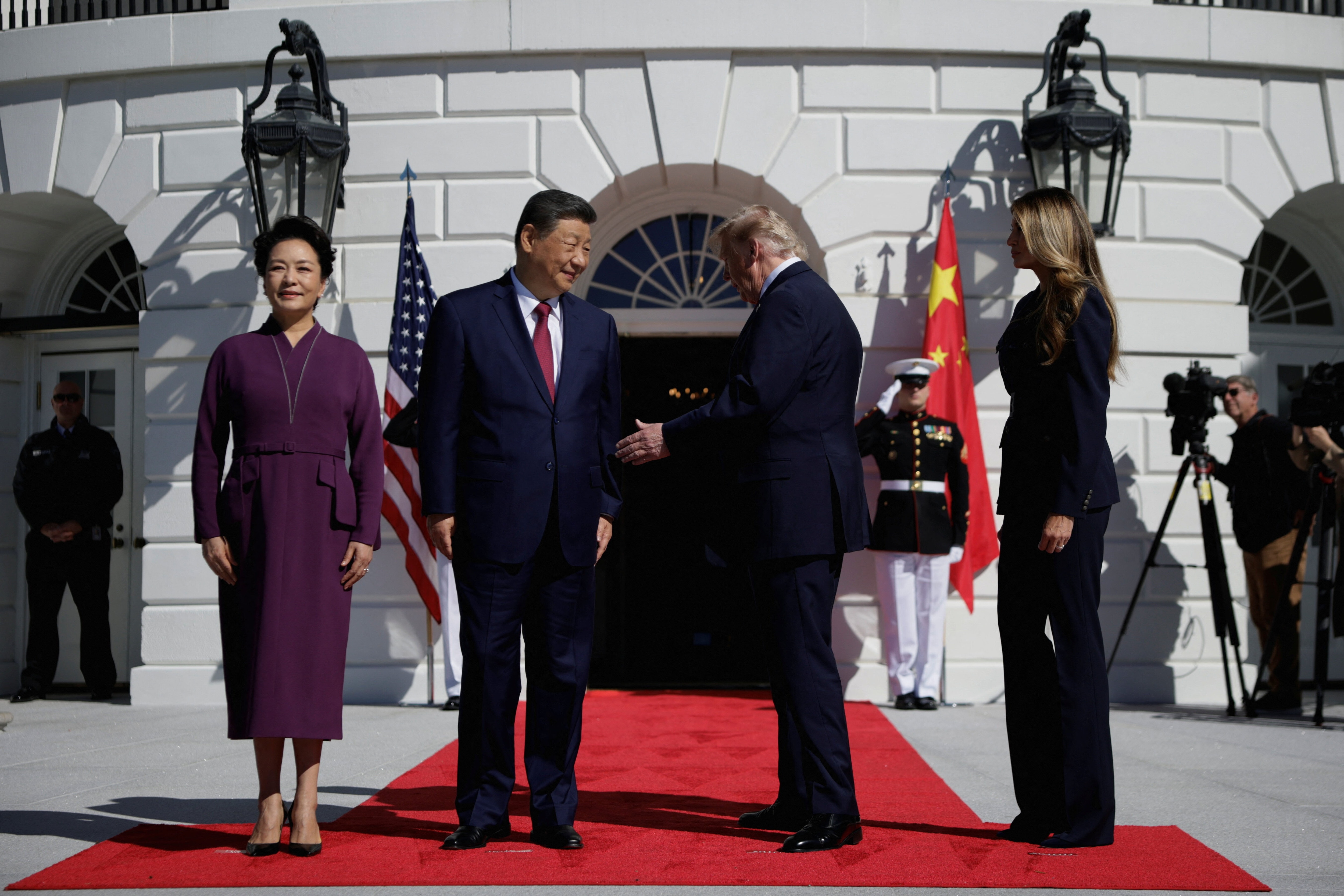
The Trump-Xi summit also produced some practical outcomes. The existing trade truce was extended until 10 January 2027, while the two sides released reciprocal lists of non-sensitive goods eligible for tariff reductions. They advanced bilateral trade and investment mechanisms and agreed to continue discussions on critical minerals.
These steps may provide businesses with some near-term predictability. They also demonstrate that direct engagement can still produce limited, practical cooperation between the world’s two largest economies.
But the summit did not resolve deeper disputes over industrial capacity, market access, electric vehicles (EVs), semiconductors or advanced-technology controls. Strategic sectors such as EVs and semiconductors were excluded from the tariff lists.
The leaders discussed Taiwan and Iran, but the summit produced no new proposals for managing these geopolitical risks. Notably, although Xi was in the US during UNGA week, he did not travel to New York to join other world leaders, focusing his visit instead on bilateral engagement in Washington.
AI was also high on the agenda during the Trump-Xi summit. Yet there was little substantive progress on safety standards, export controls or frontier-system development; instead, the two sides agreed to establish an AI dialogue and a channel for communicating about AI-related incidents.
The two leaders are expected to meet again at the APEC summit in Shenzhen, China, in November and the G20 summit in Miami, Florida, in December. Those meetings will show whether the Washington summit marked the beginning of a more durable form of competition – or simply a pause that holds until the next disagreement.
In a fragmented world, bridging is power
By Sannan Pervaiz
Another theme that stood out was the growing space middle powers now hold to shape cooperation in a much more fragmented world.
Their influence does not necessarily depend on matching the economic or military weight of great powers, but rather on an ability to preserve options, whilst bringing different partners together.
As great-power competition continues to harden traditional divides, countries able to retain and bridge relationships may find themselves with greater room to manoeuvre and gain greater value as coalition-builders.
This idea has been building throughout the year. At the 2026 Annual Meeting in Davos, Mark Carney argued the importance of strategic autonomy for middle powers. This does not mean retreating or creating a ‘world of fortresses’, but instead diversifying dependencies and partnerships, and perhaps most importantly about building coalitions that work.
UNGA week showed how this thinking has moved from diagnosis to diplomatic practice. Canada’s Foreign Minister Anita Anand reiterated a message for middle powers to act collectively – emphasizing the importance of issue-based coalitions to tackle shared challenges.
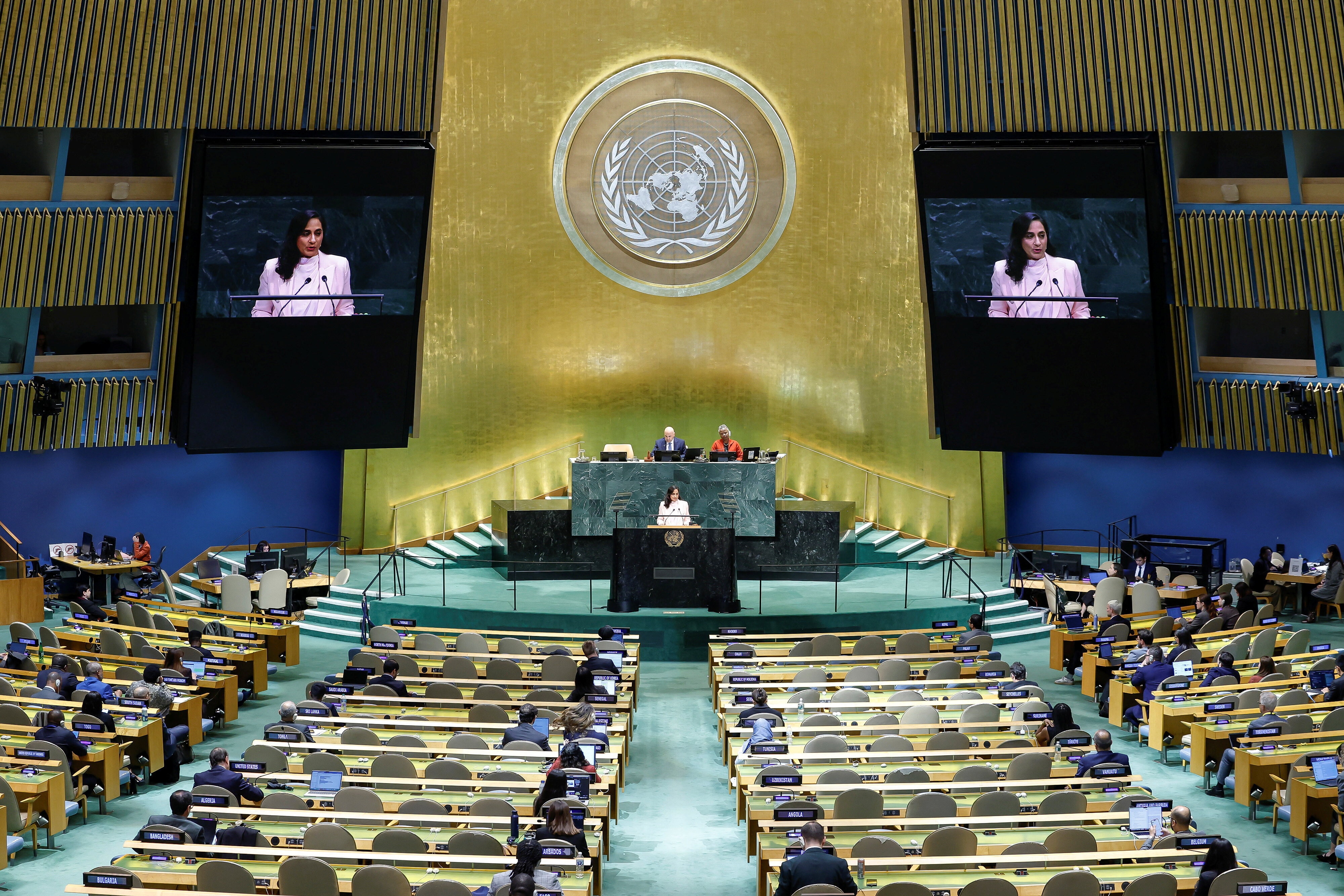
The launch of Partners for Multilateralism on the UNGA sidelines further reflected a practical expression of this new form of emerging diplomacy. The founding group – comprising Australia, Barbados, Brazil, Canada, the EU, Kenya and India – cuts across geography, political traditions, and levels of economic power, illustrating how cooperation may now increasingly be built through flexible, issue-led and cross-regional elements.
Finland’s President Alexander Stubb complemented this approach with the idea of ‘plurilateralism’ – building ad hoc coalitions when global cooperation is not attainable. For middle powers, this highlights a vital avenue for influence; an ability to coordinate different partners for different challenges without abandoning the existing multilateral system.
The developments from UNGA week are not about the emergence of another geopolitical bloc, or about replacing the existing international order. Rather, they signal a desire to explore a flexible form of influence – through issue-based coalitions, diversified partnerships and working across divides. In a fragmented world, the ability to build bridges is perhaps one of the most valuable forms of diplomacy.
Can the UN lead on AI security?
By Jessica Margolis
UNGA week took place amid growing concern that AI could lead to catastrophic global security crises. However, while AI was at the top of the agenda in most discussions, they did not produce clear next steps for bringing stakeholders together to establish the guardrails or governance mechanisms needed to manage its risks.
At the start of the week, Secretary-General Guterres described AI as one of the primary forces reshaping the global balance of power, warning of the danger of “technology without accountability”. The week also saw the UN’s Independent International Scientific Panel on AI release a paper calling for safeguards and a resolution led by Finland and Norway affirming that AI should remain under “human direction, insight and control”.
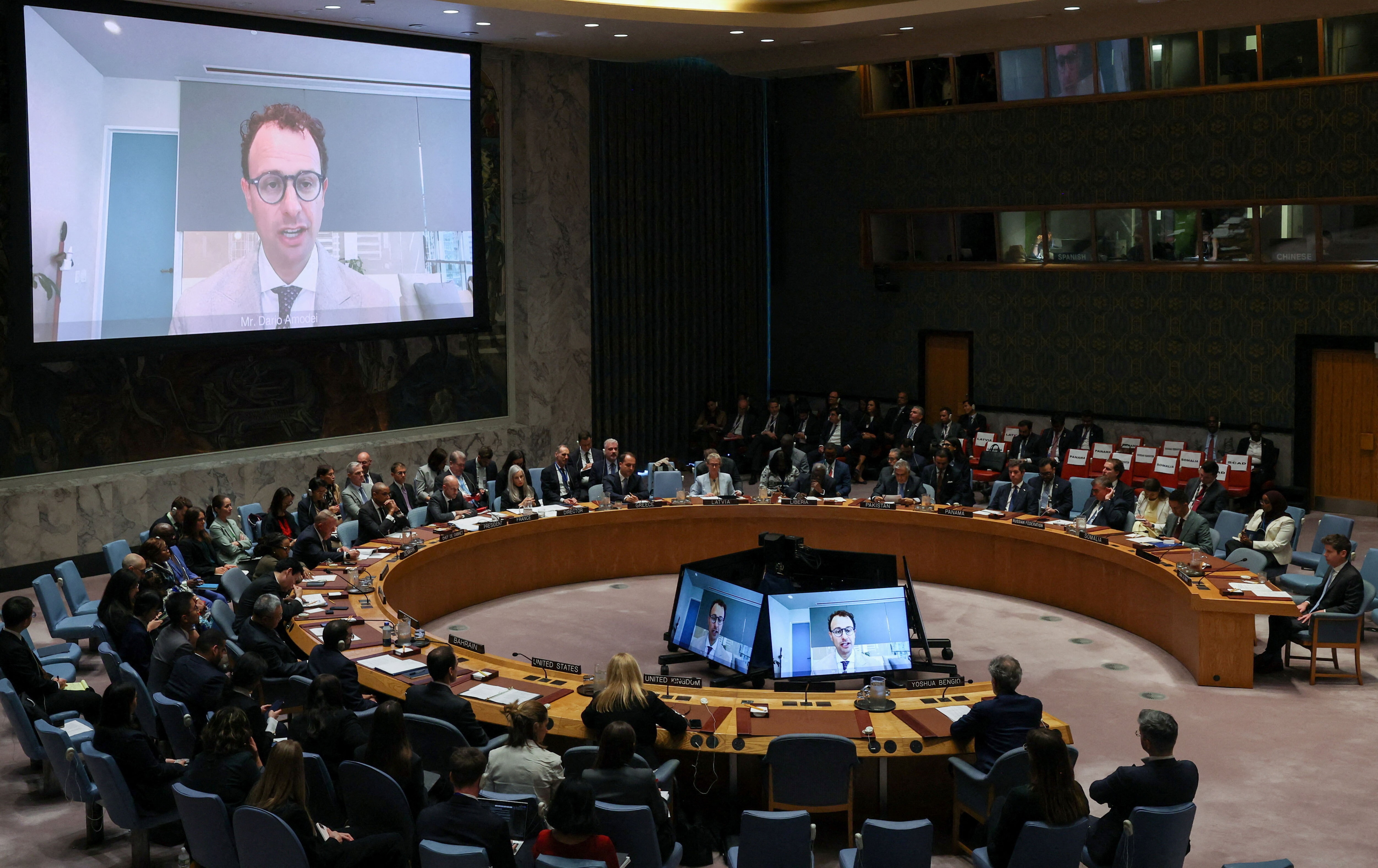
As mentioned, perhaps most notable was the recognition that the private sector must be engaged as a responsible partner in managing the risks of AI. This was evident in the invitation extended to Dario Amodei of Anthropic and Sam Altman of OpenAI to brief the UN Security Council on AI safety. The companies developing advanced AI systems control capabilities that are not just reshaping economies, but also military and defence strategies, a domain traditionally managed by governments.
Here, there is now an opportunity for the UN. It is no secret that multilateral institutions are under strain in the face of today’s geopolitical challenges. But given that the Trump-Xi summit did not produce an agreement for a global approach on AI safety, it is clear that a unifying, neutral, international body is needed to move this agenda forward in a meaningful way. The UN should double down on its work in this space.
The multilateral system has done this before. Agreements on nuclear, biological and chemical weapons established shared norms, inspection and verification mechanisms, and consequences for violations.
Managing AI will require different structures, but they can draw on the underlying lessons of transparency, accountability and shared responsibility that were essential to addressing previous security issues.
The process will also enable the UN to create more constructive and systematic engagement with the private sector, which is becoming increasingly important in dealing with a range of global security developments.
If the UN can unite governments, companies and researchers around such an approach, it could re-establish itself as the central forum for addressing once-in-a-generation security challenges.
Have you read?
Don't miss any update on this topic
Create a free account and access your personalized content collection with our latest publications and analyses.
License and Republishing
World Economic Forum articles may be republished in accordance with the Creative Commons Attribution-NonCommercial-NoDerivatives 4.0 International Public License, and in accordance with our Terms of Use.
The views expressed in this article are those of the author alone and not the World Economic Forum.
Stay up to date:
Global Governance
Related topics:


Forum Stories newsletter
Bringing you weekly curated insights and analysis on the global issues that matter.
More on Global CooperationSee all

Dominik Metzger and Benedikt Gieger
September 30, 2026