Trump-Xi summit: What to expect from the Washington meeting
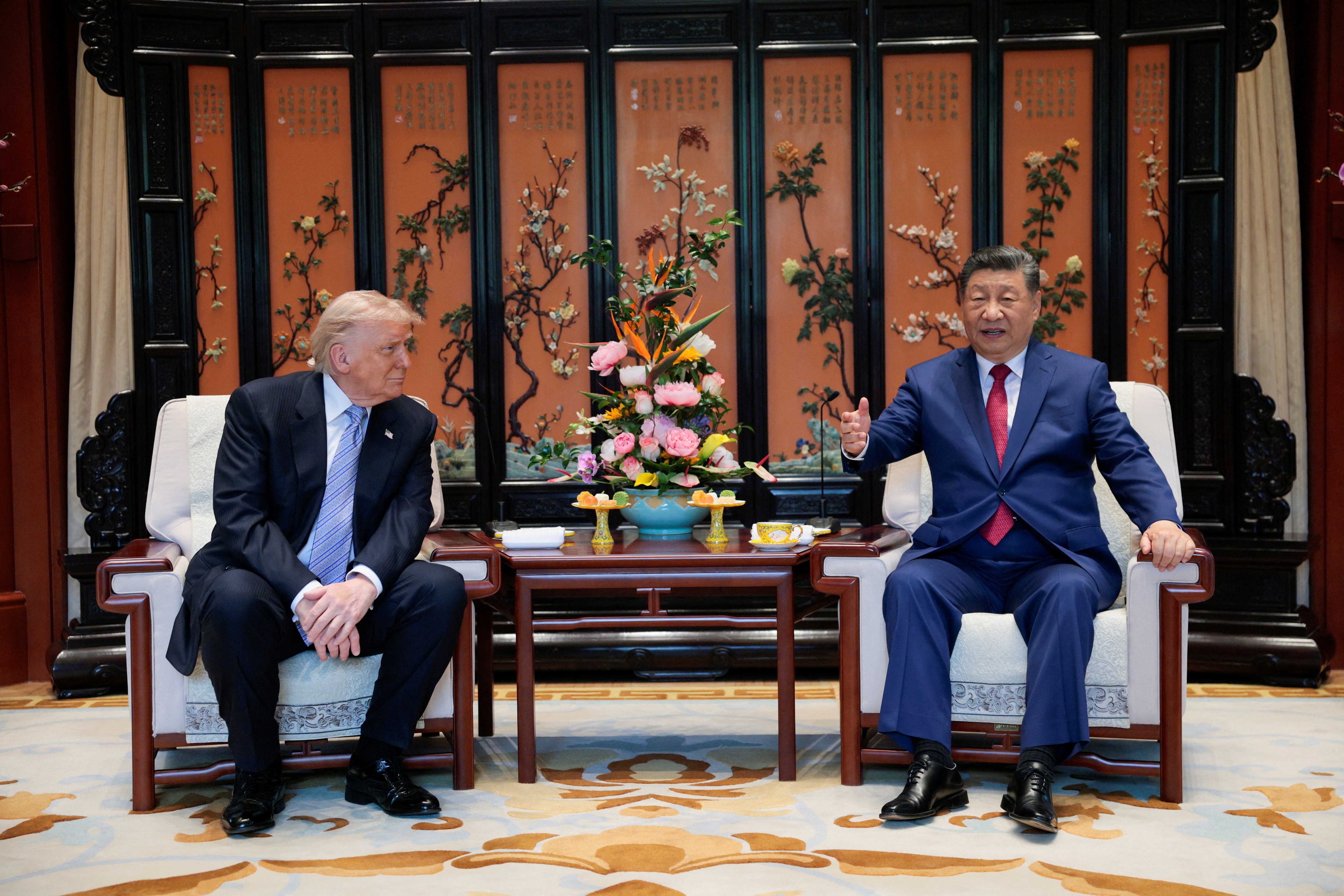
What will be the outcome of the latest Trump-Xi summit? Image: REUTERS
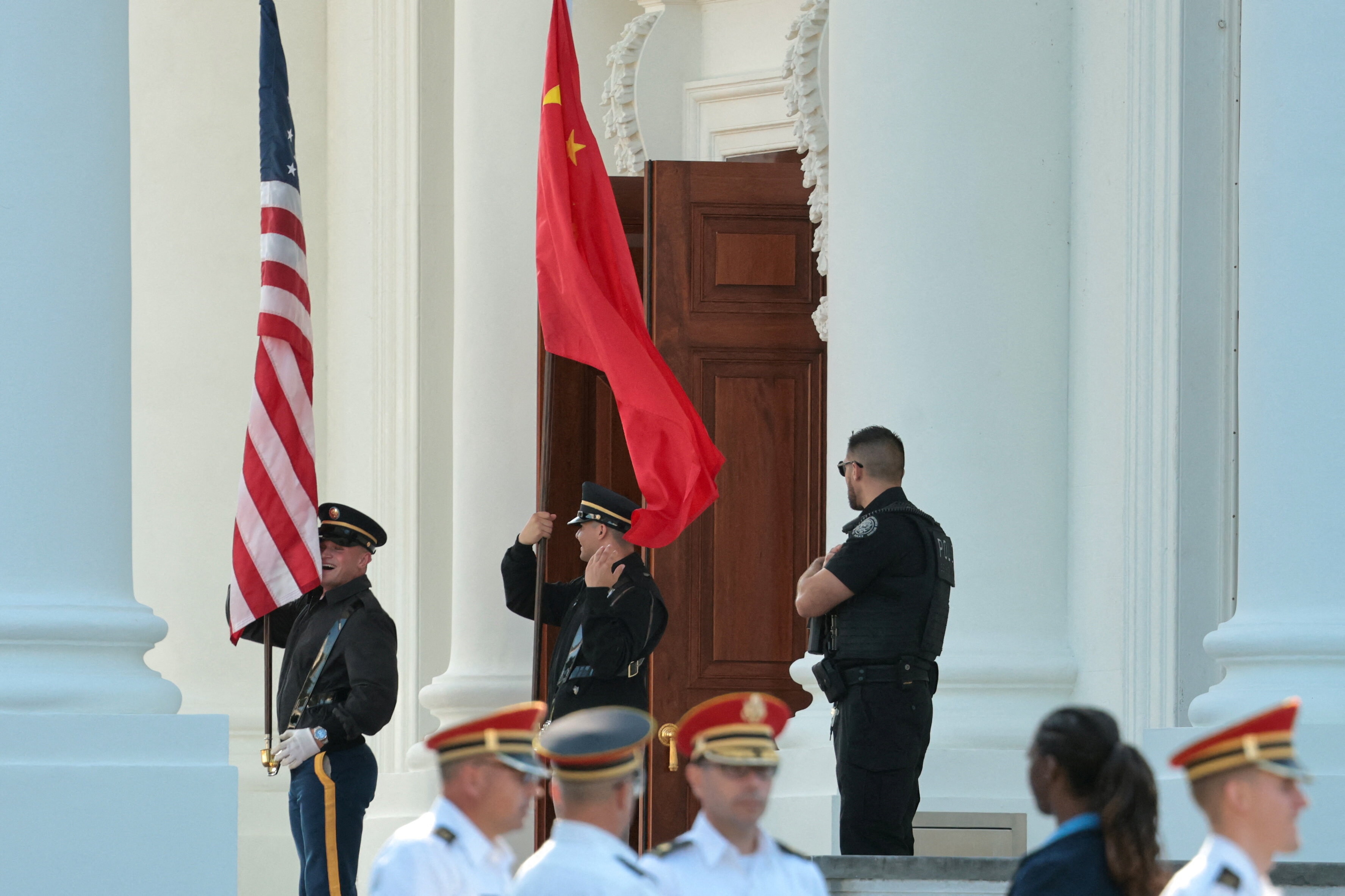
- US President Donald Trump and Chinese President Xi Jinping are preparing for a summit in Washington DC on 24 September.
- Since the leaders' last meeting in Beijing in May, China's exports have surged, the AI race has intensified and the war in the Middle East has persisted.
- Critical minerals, technology and Taiwan are likely to be top of the agenda when the two leaders meet.
The upcoming meeting between US President Donald Trump and Chinese President Xi Jinping in Washington DC is expected to stabilize a fragile trade détente, rather than deliver a grand reset.
It comes, once again, amidst a turbulent geopolitical, technological and economic global situation. Since the leaders' last meeting in Beijing in May, China's exports have surged, the AI race has intensified and conflict in the Middle East has escalated further.
With the leaders' 2025 Busan truce due to expire in November, both sides are under pressure to extend the pause on major tariff escalation and rare‑earth export controls while signalling progress on trade, AI and critical minerals.
Here is what’s likely to be on the table on 24 September and the possible outcomes to watch for.
What's on the agenda in Washington?
1. Trade and investment
China’s export-led economy will be high on the agenda. Last month, China saw a 25% year-on-year jump in exports, with the country selling $119 billion more in goods than it bought. Much of the increase has been driven by global AI demand.
While this gives China leverage, Beijing has been accused by Washington of intentionally maintaining trade imbalances and the US will likely push ahead with the so-called Board of Trade for non-sensitive goods established at the May talks.
Yet the mechanism remains under development. The two sides are still working to define the roughly $30 billion basket of goods that could qualify, with disagreements over its scope and around 10 product categories under discussion.
Meanwhile, discussions on a separate Board of Investment have stalled as its purpose and remit remain unclear. US officials have also signalled that the relationship may not yet be ready for major investment programmes.
What to watch:
- Whether the leaders endorse extending the Busan truce beyond 2026, expand the Board of Trade's remit, and set quantified purchase targets for agriculture, energy and aircraft.
- Whether Chinese business executives accompany Xi, as a signal of momentum behind the Board of Trade's remit and broader commercial engagement.
- Any progress on defining the roughly $30 billion “non‑sensitive” goods basket for the Board of Trade; around 10 product categories are under discussion, but both sides remain divided on scope.
2. Critical minerals and supply-chain security
With China dominating global critical mineral refining – essential for everything from AI to the energy transition – access to these materials remains an ongoing point of tension. The US continues to seek secure access to critical and rare earth elements, while China wants assurances that export controls will not be used as blunt instruments.
The issue is closely connected to the wider trade relationship. Restrictions on rare-earth exports have become one of the most visible points of leverage between Washington and Beijing, and any agreement on supply security could help stabilize the broader détente.
What to watch:
- Any language on critical mineral supply security, additional rare‑earth export licences for US companies and guardrails on future export‑control use.
- Whether China receives assurances on the future use of US export controls.
- Whether the two sides establish a working group on minerals, refining capacity and supply-chain resilience.
3. AI and technology competition
AI was already moving to the centre of US-China relations before the May summit, when the two sides discussed the need for formal channels of communication and unofficial Track II dialogue on AI safety.
Since then, progress has remained limited and tensions around AI have intensified. In the US, leaders from frontier-AI companies and the semiconductor industry are now divided over whether the rapid development of advanced systems should be slowed to allow safety measures to catch up.
Anthropic CEO Dario Amodei has called for a coordinated effort to “pace the frontier”, while NVIDIA CEO Jensen Huang has rejected a broad slowdown. Their disagreement reflects a wider debate over whether AI safety can keep pace with capability development, and whether efforts to manage risk could become another arena for US-China technological competition.
While AI safety talks are slated to be part of the summit, President Trump has pushed back against calls for additional AI regulation, arguing that slowing the technology could benefit China.
The US is pushing for further restrictions and export controls around advanced chips, AI models and related infrastructure. China, meanwhile, wants to protect its firms from what it sees as extraterritorial overreach.
The two countries therefore face a difficult dual challenge: managing AI as a source of strategic competition while establishing enough communication to reduce the risk of cyberattacks, miscalculation or unintended escalation. The question is no longer simply whether Washington and Beijing should cooperate on AI, but whether they can do so while each side increasingly views the other’s technology ecosystem as a security risk.
What to watch:
- Whether the two sides revive or formalize an AI-safety channel, including a mechanism for communicating about AI-enabled cyber incidents.
- Whether export controls remain unchanged—or become linked to wider discussions about AI safety and strategic stability.
4. EVs and auto access
China supplied 60% of electric vehicles (EVs) to the global market in 2025, leading the sector.
Currently, Chinese vehicles are shut out of the US market by 100%-plus tariffs, but President Trump recently indicated a softening of his position, saying he'd be open to Chinese automakers opening factories in the US, as long as they utilized American workforces.
Given that China has successfully exported EVs to Europe and Asia, some analysts say it's inevitable that it will also enter the US market in the next few years, despite strong pushback from the US automobile sector.
What to watch:
- Whether Trump follows through with Chinese EV factories on US soil.
- How both sides address subsidies and regulations.
- Any linkage between EV market access and broader non‑tariff barrier reductions.
5. Geopolitical flashpoints
Taiwan remains the most sensitive bilateral security issue. In recent days, China has threatened to pull out of the summit if the US approves new arms sales to Taiwan, underscoring how quickly military and political issues can disrupt economic diplomacy.
Meanwhile, the conflict with Iran and the persistent disruptions in the Strait of Hormuz continue to enflame trade tensions. Last month, the US unveiled plans to target Iran’s “enablers” with secondary sanctions, a move that could implicate Chinese firms given Beijing’s deep trade ties with Tehran.
Ukraine is a less direct but still significant part of the geopolitical picture. China’s relationship with Russia, its position on the war and its potential role in any future diplomacy all affect the wider US-China relationship. The conflict also shapes European security, sanctions policy and the strategic calculations of both Washington and Beijing.
What to watch:
- Whether the leaders agree to working groups on Iran‑related trade, sanctions and maritime security.
- Whether the leaders reaffirm existing understandings on Taiwan and avoid steps that further raise tensions.
- Whether Ukraine is discussed in the context of China’s relationship with Russia, future diplomacy or broader global stability.
- Whether geopolitical disagreements are kept separate from the trade and technology negotiations—or allowed to derail them.
The Washington summit will not end the strategic rivalry between the US and China, but it could define whether the next phase is characterized by managed competition within guardrails or by renewed escalation and fragmentation.
The next likely opportunity for the two leaders to meet will be the APEC Economic Leaders’ Meeting in Shenzhen on 18–19 November. That gives Washington and Beijing only a short window to translate any commitments made in Washington into practical arrangements before they meet again.
License and Republishing
World Economic Forum articles may be republished in accordance with the Creative Commons Attribution-NonCommercial-NoDerivatives 4.0 International Public License, and in accordance with our Terms of Use.
The views expressed in this article are those of the author alone and not the World Economic Forum.

Forum Stories newsletter
Bringing you weekly curated insights and analysis on the global issues that matter.
More on Geo-Economics and PoliticsSee all

Akanksha Khatri
September 15, 2026