The Fourth Industrial Revolution represents a fundamental change in the way we live, work and relate to one another. It is a new chapter in human development, enabled by extraordinary technology advances commensurate with those of the first, second and third industrial revolutions. These advances are merging the physical, digital and biological worlds in ways that create both huge promise and potential peril. The speed, breadth and depth of this revolution is forcing us to rethink how countries develop, how organisations create value and even what it means to be human. The Fourth Industrial Revolution is about more than just technology-driven change; it is an opportunity to help everyone, including leaders, policy-makers and people from all income groups and nations, to harness converging technologies in order to create an inclusive, human-centred future. The real opportunity is to look beyond technology, and find ways to give the greatest number of people the ability to positively impact their families, organisations and communities.

Africa’s big banks are betting on fintech startups and bitcoin, writes Elizabeth Gould.

Researchers at the University of Washington have created a robotic hand that moves far more realistically compared to the average robot hand.

Alphabet’s Captain of Moonshots discusses the company’s experimental lab X.

A new system could help prevent robots from overwhelming human teammates with information.

Researchers have developed a new way to store data that can keep your digital information safe for an estimated 13.8 billion years.

Refugees consider smartphones as their main lifeline to the wider world, writes Bassam Sebti.
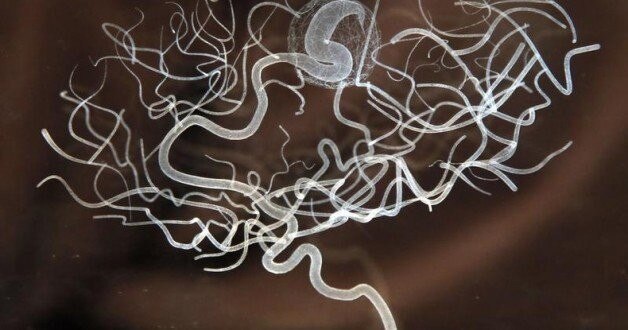
Scientists have grown “mini-brains” that could dramatically change brain research and drug testing, replacing hundreds of thousands of animals used in neurology labs.

Researchers at the Georgia Institute of Technology believe there’s a way to make AI more sympathetic to humanity, and therefore, less likely to kill us.

Binary black holes come in a variety of forms, but they are all astounding, writes David Blair.

Researchers say they have created a 3D printer that can produce organs, tissues, and bones that could theoretically be implanted into living humans.

You don’t have to be a scientist to get excited about breakthroughs in theoretical physics, says Alexander Lenz.

Charities in South Asia are piloting new software which aims to speed up the repatriation of rescued victims of human trafficking.