

The Fourth Industrial Revolution represents a fundamental change in the way we live, work and relate to one another. It is a new chapter in human development, enabled by extraordinary technology advances commensurate with those of the first, second and third industrial revolutions. These advances are merging the physical, digital and biological worlds in ways that create both huge promise and potential peril. The speed, breadth and depth of this revolution is forcing us to rethink how countries develop, how organisations create value and even what it means to be human. The Fourth Industrial Revolution is about more than just technology-driven change; it is an opportunity to help everyone, including leaders, policy-makers and people from all income groups and nations, to harness converging technologies in order to create an inclusive, human-centred future. The real opportunity is to look beyond technology, and find ways to give the greatest number of people the ability to positively impact their families, organisations and communities.

Authorized Public Purpose Access (APPA) is a new framework for data governance that could help tackle privacy issues related to COVID-19 contact tracing.

In South Korea, robot baristas, remote medicine and self-driving cars are becoming more and more normal as society changes to intentionally limit physical human contact for the post coron...

There is huge potential for digitization and innovation to add value to society and to contribute to public health, the environment, and biodiversity.

Through public-private partnerships, the world can embrace quantum computing to accelerate material discovery and address our most pressing challenges.
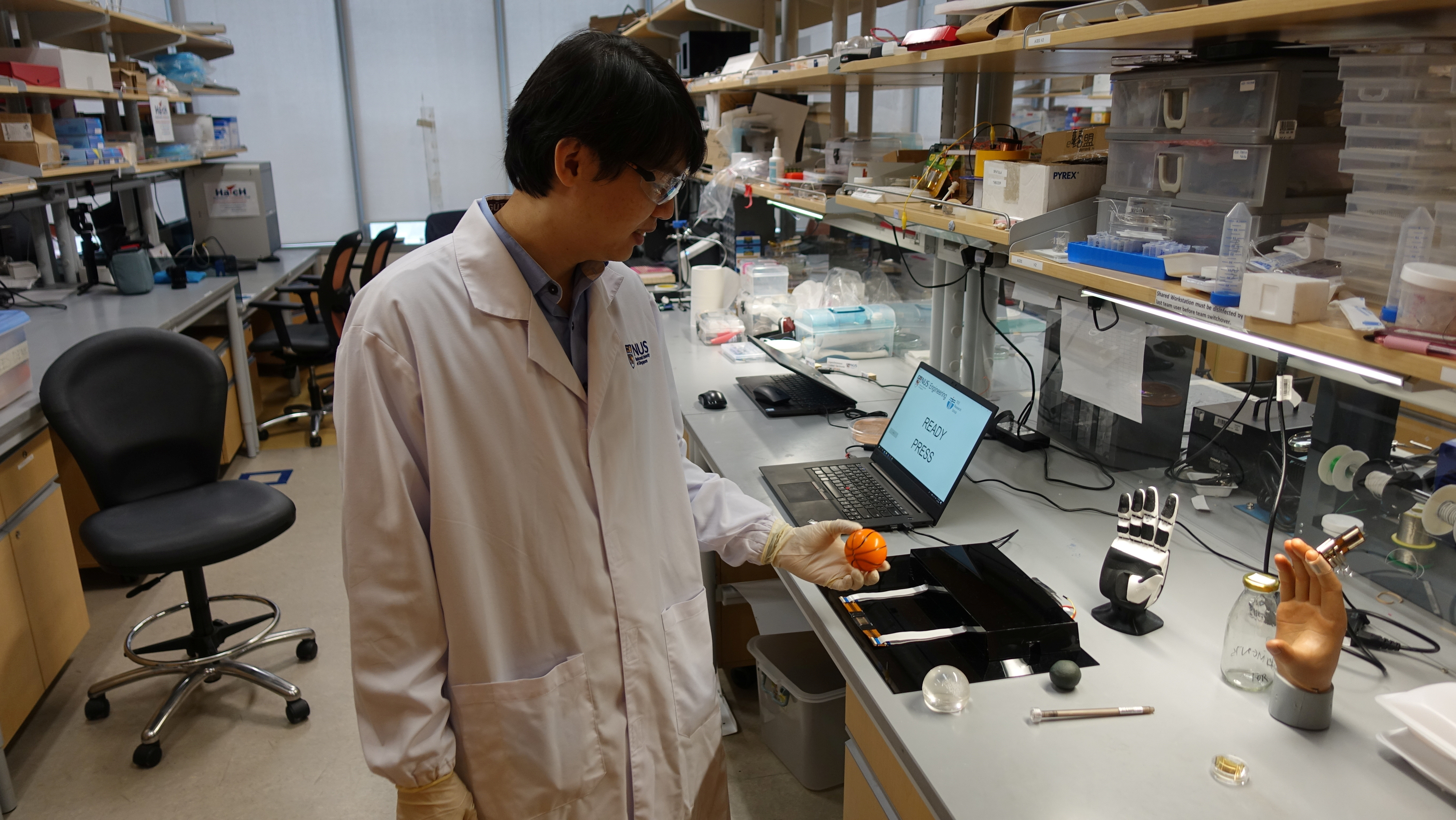
Researchers from the National University of Singapore have developed an 'electronic skin', capable of recreating a sense of touch thanks to more than 100 small sensors.

COVID-19 is a threshold moment in the alignment of words with deeds. Stakeholder capitalism and sustainable finance are gathering steam - are you on board?

Artificial intelligence (AI) models and algorithms can save time and money in the search for drug candidates for emerging diseases, including COVID-19.

This car factory robot could be used in the fight against coronavirus. University of Liverpool researchers reprogrammed the robot to do experiments while scientists work from home due to ...

'Fluffy' the robot is helping Ford redesign workspaces in its factories.

An intelligent robot that works independently 21.5 hours a day is helping scientists at the University of Liverpool with their research using AI, its flexible arm and a customised gripper.

Researchers have designed a new type of prosthetic limb built with parts originally intended for the International Space Station.

The National Technical University of Athens has developed a camera that will enable public access to the ancient 'Acropolis of sea wrecks', using artificial intelligence to make sure it ...


