Prajin Juntong, Thailand's Deputy Prime Minister, said that in his country, "we believe that water is life."
Every country in the world is grappling with the impact of pollution, and Asia in particular is a major source of plastic waste. More than half of the plastic waste in the ocean comes from just five Asian countries. Original ideas for tackling the blight include an Indonesian start-up that makes a plastic substitute out of red seaweed.
Accept our marketing cookies to access this content.
These cookies are currently disabled in your browser.
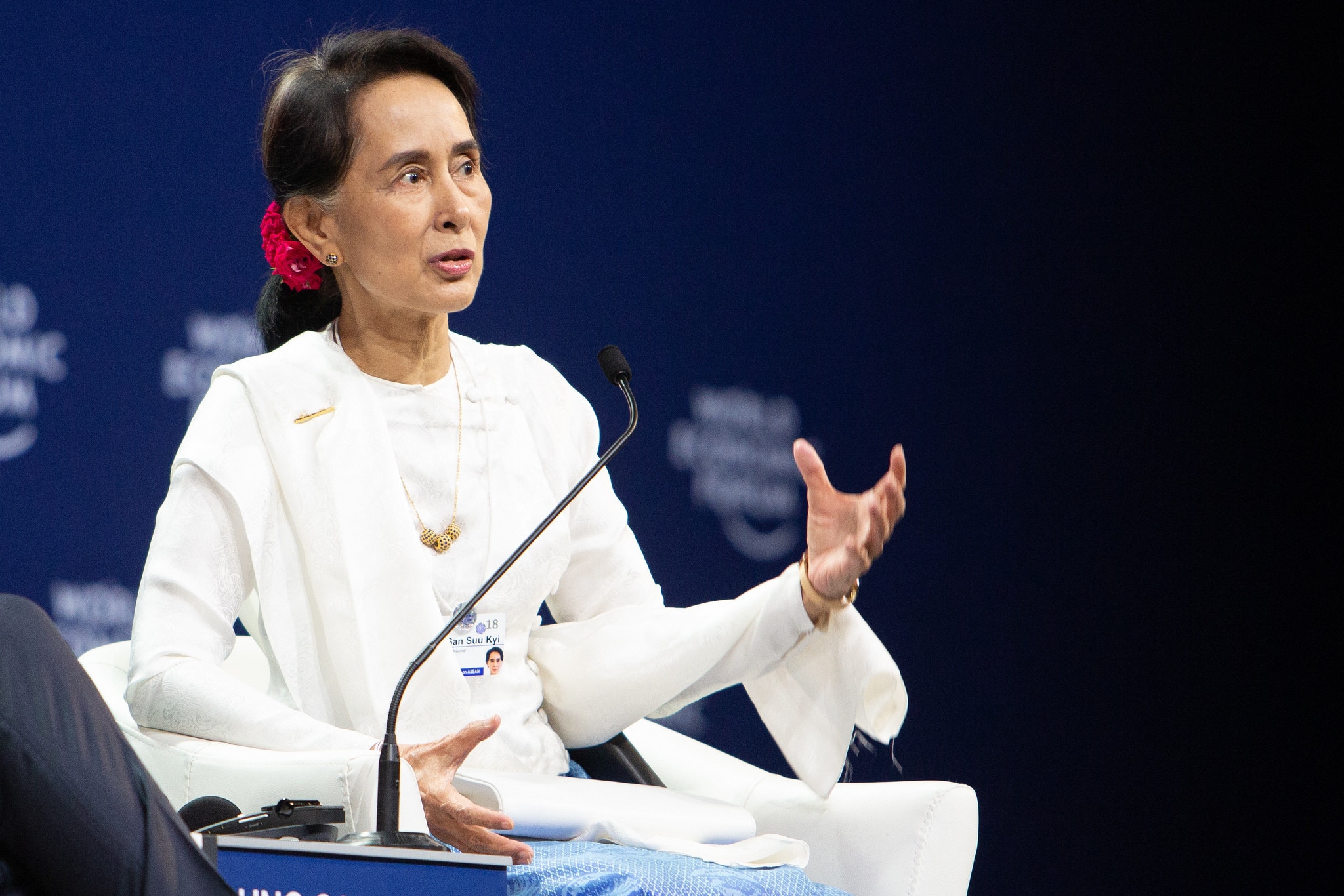
Myanmar's leader Daw Aung San Suu Kyi addressed the situation in Rakhine State, the arrest of two journalists and the transition of her country in an in-depth conversation with Børge Brende, president of the World Economic Forum.
There are around one million citizens of Rakhine State currently living in Bangladesh and hoping to return home to Myanmar. In November 2017, Suu Kyi signed an agreement with the government of Bangladesh to resettle them.
Accept our marketing cookies to access this content.
These cookies are currently disabled in your browser.
"There are of course ways in which we with hindsight might think the situation might have been handled better," Daw Aung San Suu Kyi said.
"We believe that for the sake of long term stability and security we have to be fair to all sides, that rule of law must apply to everybody."
She explained the background in the region:
"In the Rakhine there are many small ethnic and religious groups, not just Muslims and Rakhines. There are very small ethnic groups who are fast disappearing and could disappear altogether. We have to be fair to all of them even if the rest of the world is not interested in the smaller groups."
Daw Aung San Suu Kyi said that prior to the escalating violence of the last two years, she had attempted to establish a body to address deep-rooted tensions in the province and promote peace.
"We organised a central committee for rule of law in the Rakhine... But after the first terrorist attacks on October 2016 some of our plans had to be postponed because we had to deal with the immediate problems."
Counsellor Suu Kyi also addressed the arrest of two Reuters journalists who had been investigating the killing of Rohingya men in the province.
"If anyone feels there has been a miscarriage of justice I would like them to point it out... The judgement has nothing to do with freedom of expression but with the Official Secrets Act."
"If we believe in the rule of law, they have every right to appeal the judgment and to point out why the judgment was wrong."
02:16 UTC
Trade, nukes and the geopolitics of Asia
Leaders including the Prime Minister of Sri Lanka and foreign ministers from Japan, South Korea and Viet Nam discuss the future as global power tilts towards Asia.
"Nationalism, protectionism and strategic competition" were all worrying trends, said Taro Kono, Japan's foreign minister.
However, he also spoke of efforts to push forward on the TPP trade pact, despite the withdrawal of the United States under President Trump.
"We believe the TPP is still the best option for the United States. It will go into effect at the end of this year. Indonesia, Thailand, Taiwan, probably South Korea, other Latin American countries plus the UK are all interested in joining too, it will create a large free trade regime based in Asia Pacific. It will be very attractive for American industries. We’re still hoping the Trump administration or the administration after that will be interested or will come back to the TPP."
South Korea's Kang Kyung-Wha expressed her support for the pact.
"I certainly hope my country will be able to join sooner rather than later... It's not all protectionist trends gathering steam, there are also lots of efforts to protect and expand the free and fair space."
Minister Kyung-Wha also spoke of the easing of relations with North Korea, especially compared with the situation a year ago, when the northern state was conducting missile tests.
Accept our marketing cookies to access this content.
These cookies are currently disabled in your browser.
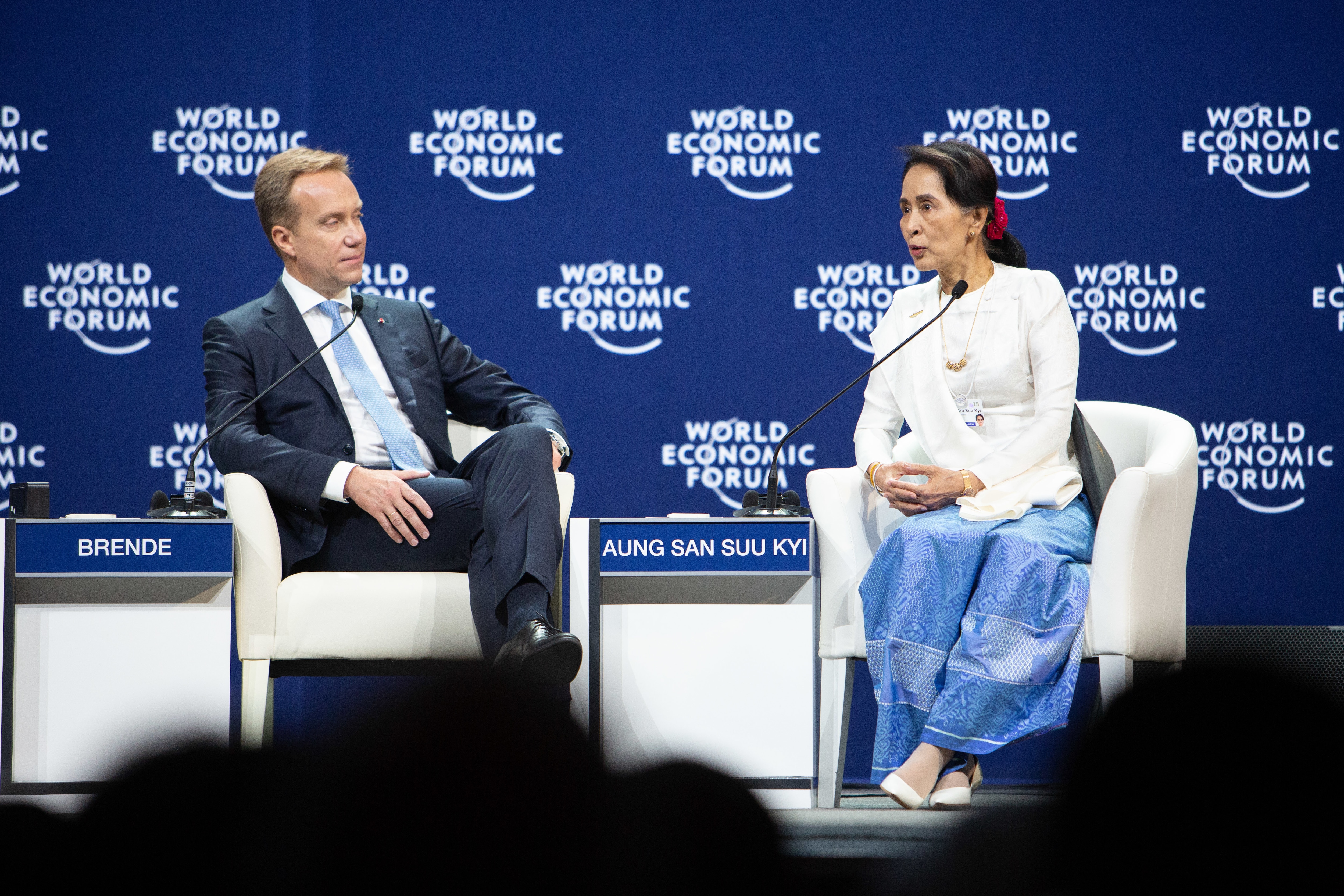
Børge Brende, President, World Economic Forum; and Daw Aung San Suu Kyi, State Counsellor of Myanmar capture during the one-on-one session in ASEAN 2018 in Ha Noi, Viet Nam
Image: Sikarin Thanachaiary
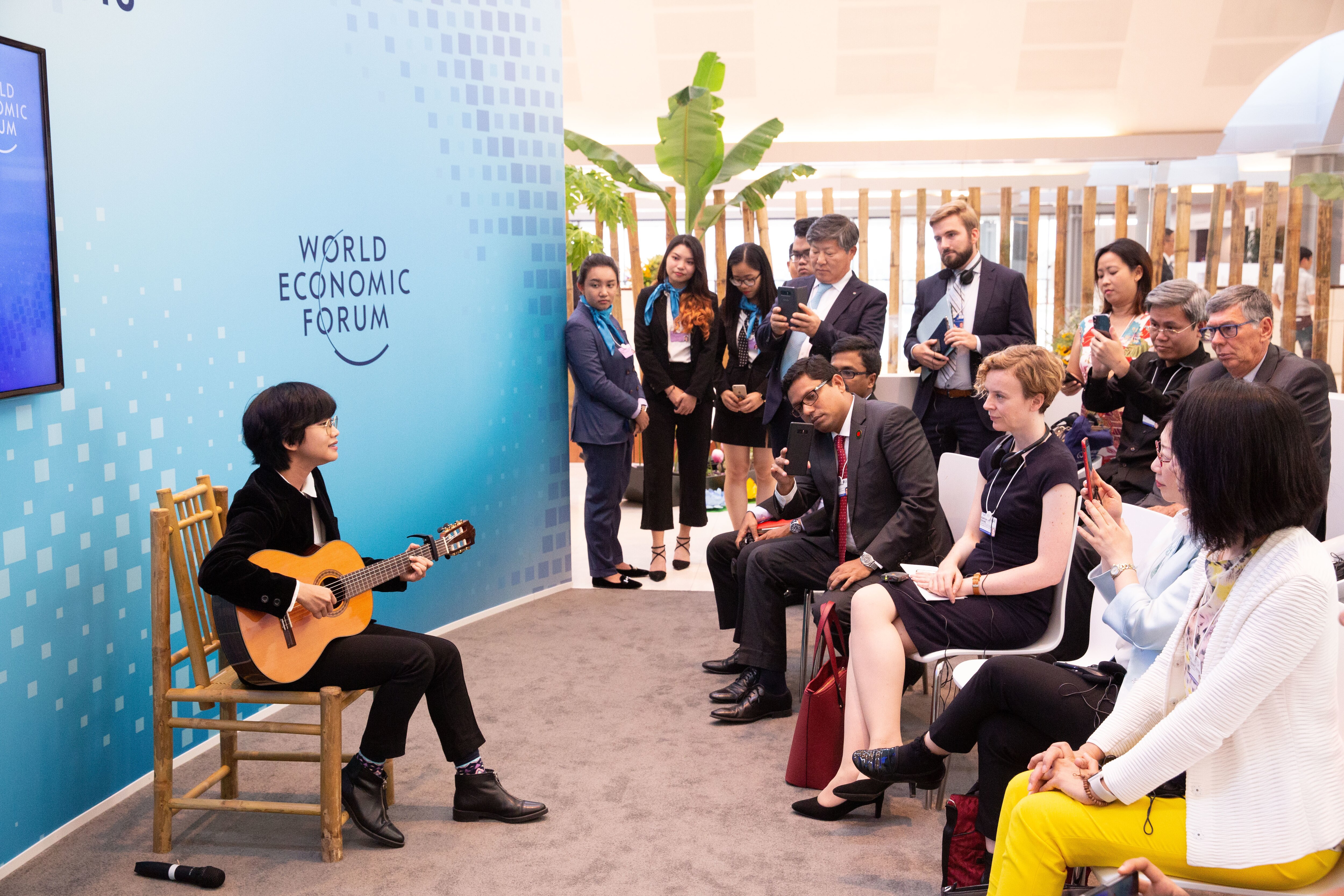
Le Cat Trong Ly, Singer, Viet Nam; Cultural Leader capture during the session: Music: A Mirror of Society? at the World Economic Forum on ASEAN 2018 in Ha Noi, Viet Nam. Copyright by World Economic Forum / Hoang Nguyen
Image: Sikarin Thanachaiary
Impressions at the World Economic Forum on ASEAN 2018 in Ha Noi, Viet Nam. Copyright by World Economic Forum / Sikarin Thanachaiary
Image: Sikarin Thanachaiary
06:12 UTC
Live now - closing plenary
"The underlying fundamentals for this part of the year remain positive," said Kevin Sneader, Managing Director at McKinsey and one of the Co-Chairs of the meeting. For all the headlines of trade wars and the challenge of a strengthening dollar, he said he was optimistic for the future.
"650 million people and a market that's rapidly moving towards consumption" was cause for confidence, he said.
Leaders including Truong Hoa Binh, the Deputy Prime Minister of Viet Nam, discussed the biggest stories of the week.
In case you missed it, here's Nazir Razak's op-ed on what has driven ASEAN's success to date and how it should evolve in the future. He's the Chairman of CIMB Group Holdings, Co-Chair of the ASEAN summit and one of the participants in the closing plenary.
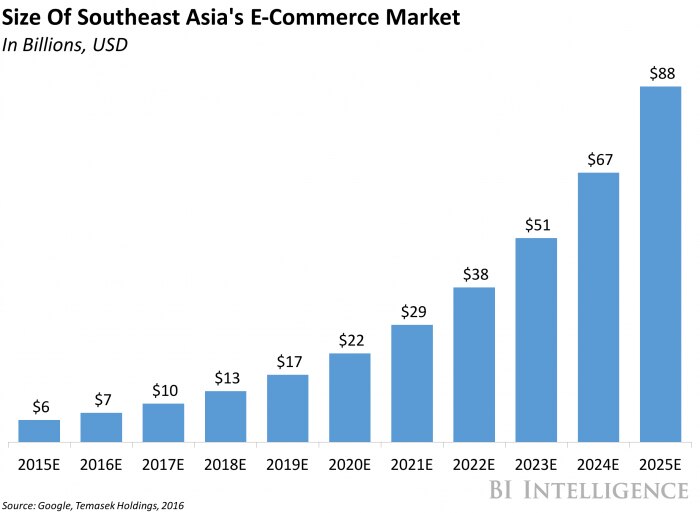
This chart shows the scale of the shift underway as leaders adapt to the Fourth Industrial Revolution.
08:24 UTC
Top photos from our World Economic Forum on ASEAN 2018
Here are some photo highlights from the #asean18 meeting in Ha Noi, Viet Nam.
What just happened? 5 top stories from our ASEAN summit 2018
From trade to humanitarian tragedy, nukes to unicorns, the World Economic Forum on ASEAN 2018 covered a swathe of topics in three hazy days in Ha Noi, Viet Nam.