How Africa's social economy is shaping its development
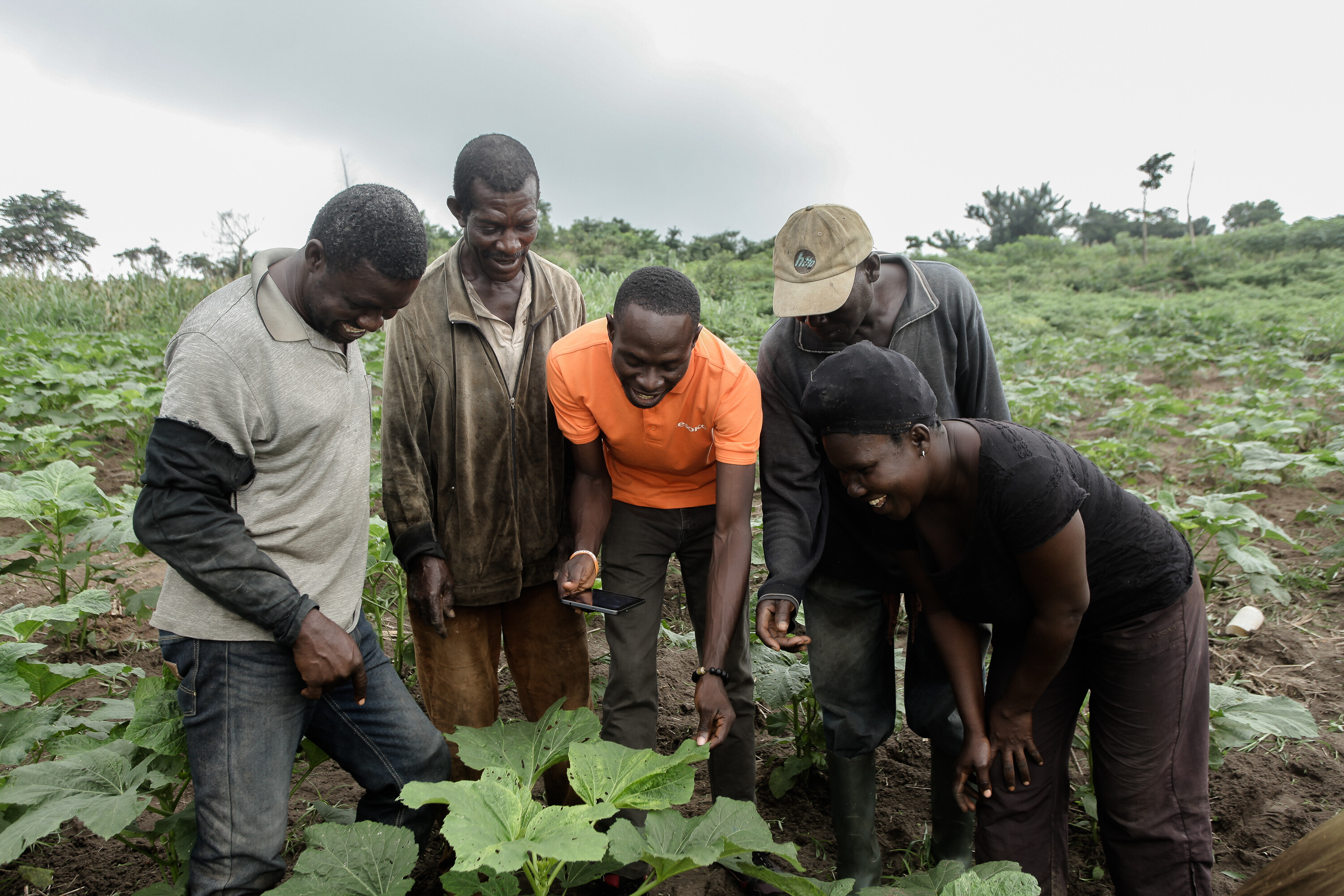
In a landmark move, African Union Heads of State adopted the continent’s first 10-Year Strategy on the Social and Solidarity Economy. Image: Babban Gona
Susan Mang'eni
Principal Secretary, Ministry of Co-operatives and Micro Small and Medium Enterprises (MSMEs) DevelopmentMamadou Ndiaye
Director of the Cabinet, Ministry of Microfinance, Social Economy and Solidarity (MMESS) of Senegal- In a landmark move, African Union Heads of State adopted the continent’s first 10-Year Strategy on the Social and Solidarity Economy.
- As aid declines and fiscal space tightens, social enterprises across Africa are already filling critical gaps – creating jobs, improving services and driving inclusive growth in underserved communities.
- Unlocking the Social and Solidarity Economy at scale requires aligning policy, capital, infrastructure and global influence to support inclusive, impact-driven models.
In February 2025, the African Union (AU) Heads of State adopted the continent’s first 10-Year Strategy on the Social and Solidarity Economy (SSE), a landmark commitment to institutionalize inclusive, community-embedded economic models across Africa. It signals a shift from piloting to policy and from recognition to implementation.
In May the same year, a high-level roundtable took place in Nairobi on "Unlocking the Social and Solidarity Economy in Africa," bringing together leaders from African governments, the South Africa G20 Presidency, the private sector and civil society. It focused on the implementation of the AU 10-year strategy.
This step comes amid a storm of structural challenges.
For example, Africa has the world’s youngest population, but over 53 million (more than one in five) young people are neither in work nor in education. The wealthiest 10% control more than 55% of income in sub-Saharan Africa, with many of its countries among the world’s most unequal.
Climate risks, from droughts to floods, are growing, and the continent faces escalating climate shocks, often in areas underserved by formal systems.
Meanwhile, the international development system is facing significant shocks. Global overseas development assistance declined by 7.1% this year and multiple African countries are now contending with debt distress and less flexibility in government budgets.
Private capital, while growing, remains risk-averse and concentrated in urban centres and within high-return sectors.
This is more than a funding crisis; it is a systemic inflection point. The limitations of traditional, top-down, donor-led models are becoming increasingly clear. Africa’s growing embrace of the social economy reflects a deliberate and strategic shift toward scalable, inclusive and future-oriented systems.
Moreover, Africa’s shift to the social economy isn’t simply nostalgia; it’s a strategic move toward scalable, inclusive and future-ready systems.
What’s needed isn’t just more funding but a fundamental rethink of how capital is structured, deployed and measured.
”A structurally distinct development model
SSE comprises social enterprises, cooperatives, mutuals and mission-driven organizations pursuing social, environmental and economic goals in tandem, rather than as a trade-off.
These actors often operate in fragile, rural or underserved areas where traditional public and private systems are limited or absent.
The structural advantages of SSE models include:
- Inclusive job creation: SSEs generate employment for youth and women, particularly in sectors that rely on human-centred services and are less susceptible to automation – expanding opportunities where they are most needed.
- Community-driven capital flows: Unlike extractive business models, SSEs reinvest surpluses locally, further enhancing economic resilience.
- Systems alignment: Work often spans multiple goals – job creation, service delivery and climate adaptation, for example – suiting them for complex development environments.
Locally rooted, systemically aligned
A report from the Schwab Foundation for Social Entrepreneurship and the World Economic Forum estimates there are 10 million social enterprises globally, generating $2 trillion in revenue and employing over 200 million people. One in two are led by women.
These enterprises are more likely to employ young people, reach underserved populations and reinvest their profits locally. Across Africa, social enterprises are already operating at scale and delivering measurable outcomes/
Babban Gona, in Nigeria, is a farmer-owned cooperative model serving more than 38,000 smallholders, has doubled yields, tripled incomes and created over 82,000 jobs – 69% for youth. Its 98% loan repayment rate outperforms most banks.
South Africa's BroadReach and its AI-driven data platforms, scaled with government partners, have improved HIV and tuberculosis care for millions, boosting efficiency and service quality across the public health system.
Esoko in Ghana uses mobile technology to deliver real-time market and climate data to 2 million farmers across more than 20 African countries, boosting income stability and climate resilience.
These organizations are not dependent on perpetual grants. They operate under challenging environments, leverage digital tools, generate revenues and produce public value at scale.

From recognition to institutionalization
The AU’s strategy builds on growing momentum across Africa:
- Morocco, Senegal, Tunisia, Cameroon, Djibouti and Cape Verde have already adopted national SSE policies.
- Kenya and Senegal have established dedicated government bodies to support SSE, integrating social economy actors into youth employment and financial inclusion agendas, and with high-level political commitments to institutionalize SSE.
- South Africa is placing “solidarity, equality and sustainability” at the heart of its presidency of the Group of 20, embedding inclusive economic models in global macroeconomic dialogues.
Africa is now one of the only regions, alongside the European Union, to have regional policy alignment around the SSE. The challenge ahead lies in moving from policy signals to systems change.
Aligning capital with impact
Despite political momentum, financing remains the weakest link for scaling SSE. Proven SSE actors still lack access to growth capital, as traditional aid shrinks and new funding streams remain misaligned with their needs.
What’s needed isn’t just more funding but a fundamental rethink of how capital is structured, deployed and measured.
The social and solidarity economy isn’t a side story; it’s a scalable, proven response that now needs serious backing through policy, capital and political will.
”While aid flows decline, alternative forms of capital are increasingly flowing into Africa that also align with SSE’s strong mission alignment and high-impact, cost-effective delivery.
For example, Impact investment surpassed $1.5 trillion globally in 2024, with over 50% of investors planning to expand their African portfolios. Blended finance and social bonds are on the rise, using public or philanthropic capital to de-risk and attract private investment. Outcome-based funding is also gaining traction for linking payments directly to outcomes in employment, education and health.
5 system-level priorities for 2025
To unlock SSE’s full potential, five systemic interventions are critical:
1. Anchor SSE in national development policy and delivery
Governments must move from recognition to full integration by defining SSE actors in law, offering tax incentives and creating dedicated ministerial units.
Crucially, SSE actors should be embedded in youth employment, healthcare and green economy programmes via social procurement, preferential contracts and co-financing that incentivizes local innovation.
2. Align capital flows with social value creation
Philanthropy, development finance institutions and governments must shift from fragmented grant-making to capital tailored to SSE needs – patient, flexible and impact-driven.
This includes working capital and blended finance suited to low-collateral, high-impact models. Success should be measured by public goods delivered, not just financial return.
3. Invest in ecosystem infrastructure and evidence
Just as markets rely on credit bureaus and logistics systems, the social economy needs data observatories, capacity hubs and outcome tracking tools. Governments and partners should invest in shared infrastructure – digital platforms, legal toolkits and impact metrics – to enable scale.
The forthcoming State of Social Enterprise in Africa report is a crucial step in building the evidence base for smart policy and investment, and will be launched in 2025 – a collaboration between the Schwab Foundation, World Economic Forum, Motsepe Foundation and other partners.
4. Leverage global platforms such as the G20 to shape policy and global financing norms
Africa’s leadership in 2025, through South Africa’s G20 Presidency and the AU’s new permanent seat, creates a significant opportunity to influence global economic governance.
SSE models should be featured in global macroeconomic discussions, from climate finance to debt reform, as viable solutions for delivering inclusive and sustainable development. View here to see five ways governments can unlock the social economy.
5. Harness technology to accelerate social and economic inclusion
Technology is a key enabler for SSE in Africa. From mobile tools reaching last-mile communities to data platforms improving public service delivery.
Investments in Africa’s tech ecosystem must be directed toward SSE organizations and inclusive innovations that scale social value, strengthen digital public infrastructure and expand access in underserved areas.
From ambition to action
Africa’s development challenges are deep-rooted and demand systemic solutions. As public finances tighten and aid declines, a new development logic is emerging, driven by local ownership, financial viability and real outcomes.
The social and solidarity economy isn’t a side story; it’s a scalable, proven response that now needs serious backing through policy, capital and political will.
Additional contributors to this article include Dr François Bonnici, Director, Schwab Foundation for Social Entrepreneurship and Head of Foundations, World Economic Forum; and Danson Gichini, Africa Specialist, Schwab Foundation for Social Entrepreneurship, World Economic Forum.
Don't miss any update on this topic
Create a free account and access your personalized content collection with our latest publications and analyses.
License and Republishing
World Economic Forum articles may be republished in accordance with the Creative Commons Attribution-NonCommercial-NoDerivatives 4.0 International Public License, and in accordance with our Terms of Use.
The views expressed in this article are those of the author alone and not the World Economic Forum.
Stay up to date:
Africa
Related topics:


Forum Stories newsletter
Bringing you weekly curated insights and analysis on the global issues that matter.
More on Sustainable DevelopmentSee all

Mona Mourshed and Nalini Tarakeshwar
April 7, 2026