Heightened heatwave risks for the elderly, and other health stories
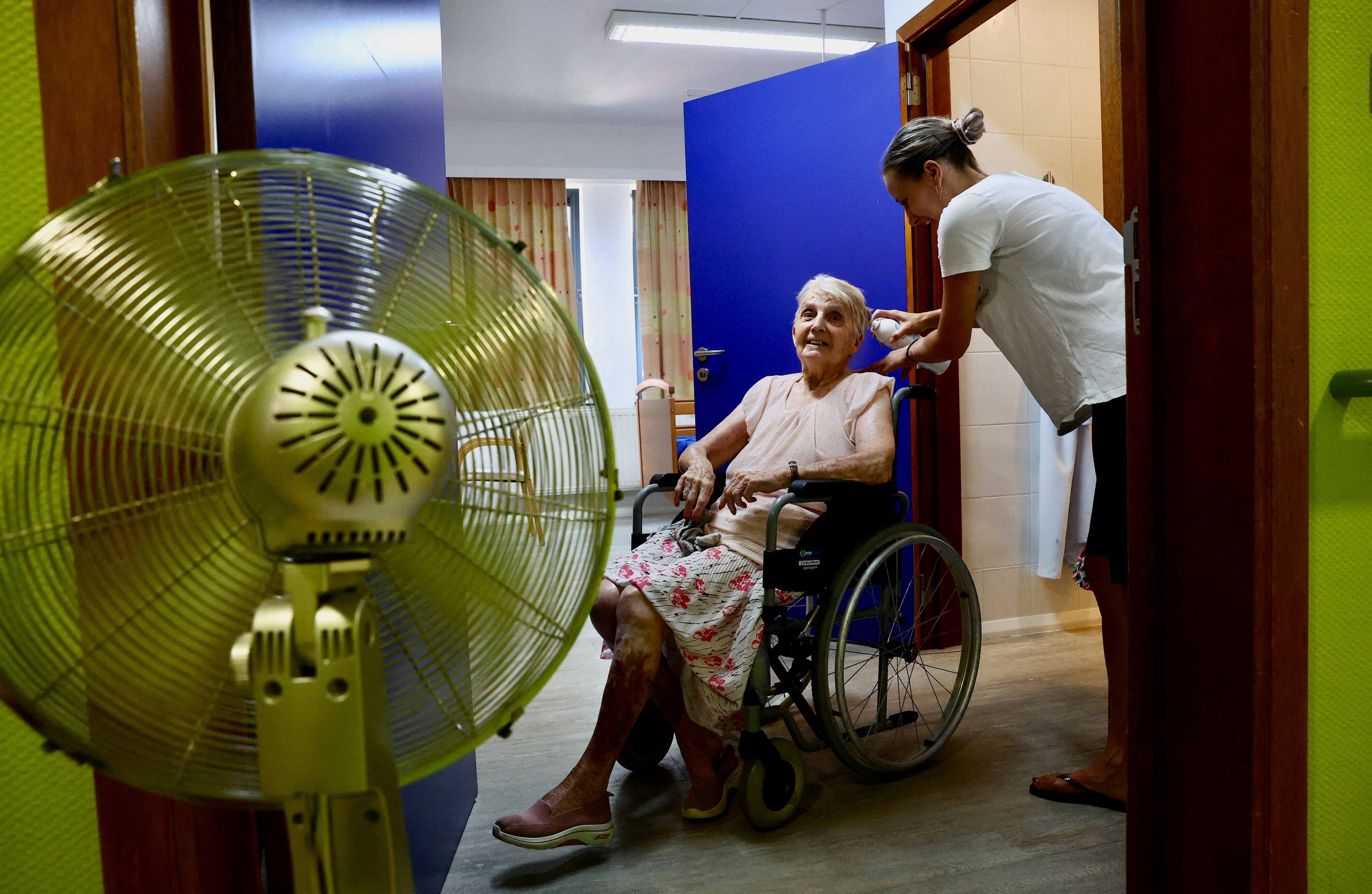
Annual heat-related deaths among older persons have risen by an estimated 85% since the 1990s. Image: REUTERS/Yves Herman
Shyam Bishen
Head, Centre for Health and Healthcare; Member of the Executive Committee, World Economic Forum- This global round-up brings you health stories from the past fortnight.
- Top health news: Greater heatwave risk for the elderly; First malaria vaccine for babies; Robot performs unassisted surgery.
1. Heatwaves put older persons at high risk, warns UN report
Heatwaves are becoming the new normal. June 2025 was the third-warmest June on record globally, with temperature extremes experienced across both hemispheres.
As global temperatures continue to rise, so do health risks, warns the United Nations. In its Frontiers 2025 report, the UN Environment Programme highlights older people as particularly vulnerable, especially during extreme weather events.
The threat increases in urban areas, where the built environment traps, retains and re-radiates heat, known as the urban heat island effect.
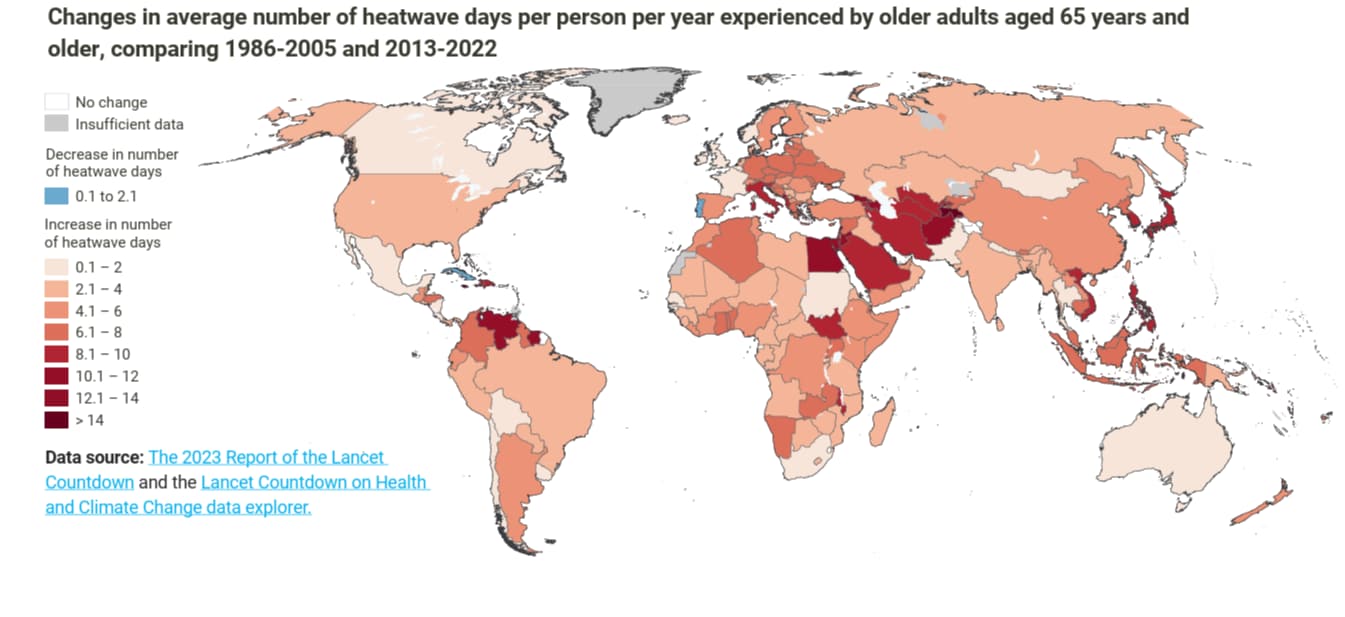
Heat waves are among the most frequent and deadly impacts of climate change, along with floods and shrinking ice cover.
—Inger Andersen, Executive Director of UNEP
”Annual heat-related deaths among older persons have risen by an estimated 85% since the 1990s, the report finds.
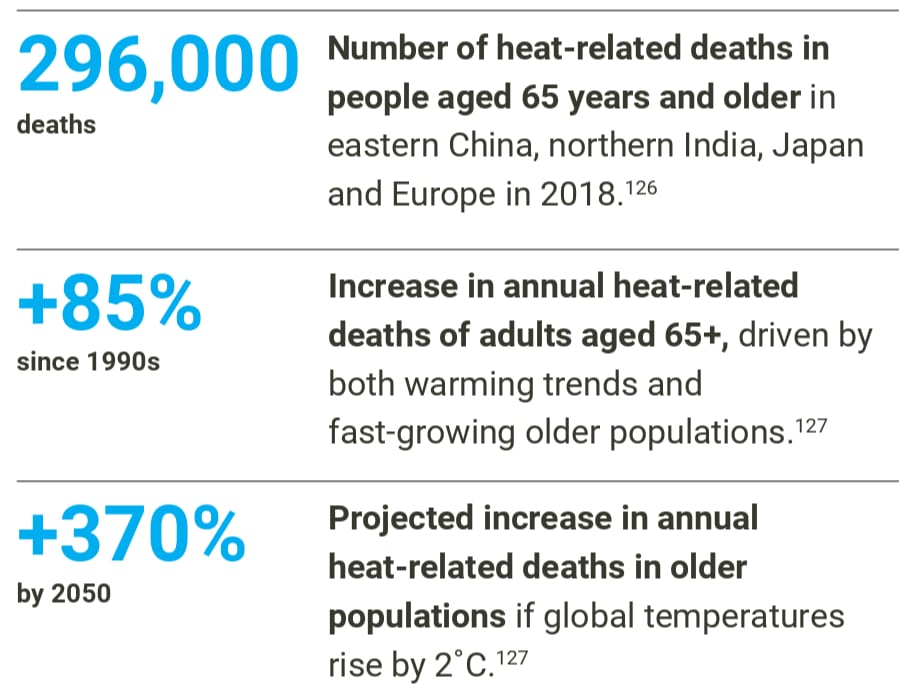
Older persons are less resistant to heat-stress, as the authors state: "Acute and prolonged exposures to intense heat and cold put a significant strain on the heart, increasing the risk of illnesses and death from common cardiovascular, cerebrovascular and respiratory conditions, such as stroke, myocardial infarction, heart failure, asthma and pneumonia."
To combat this growing risk, the report recommends better urban planning, community-based disaster risk management, and improved access to climate information for older populations.
2. First malaria treatment for babies approved
The first-ever malaria treatment for babies and young children has been approved for use.
Developed by the drug company Novartis and approved by Swiss authorities, it is expected to be rolled out in African countries within weeks.
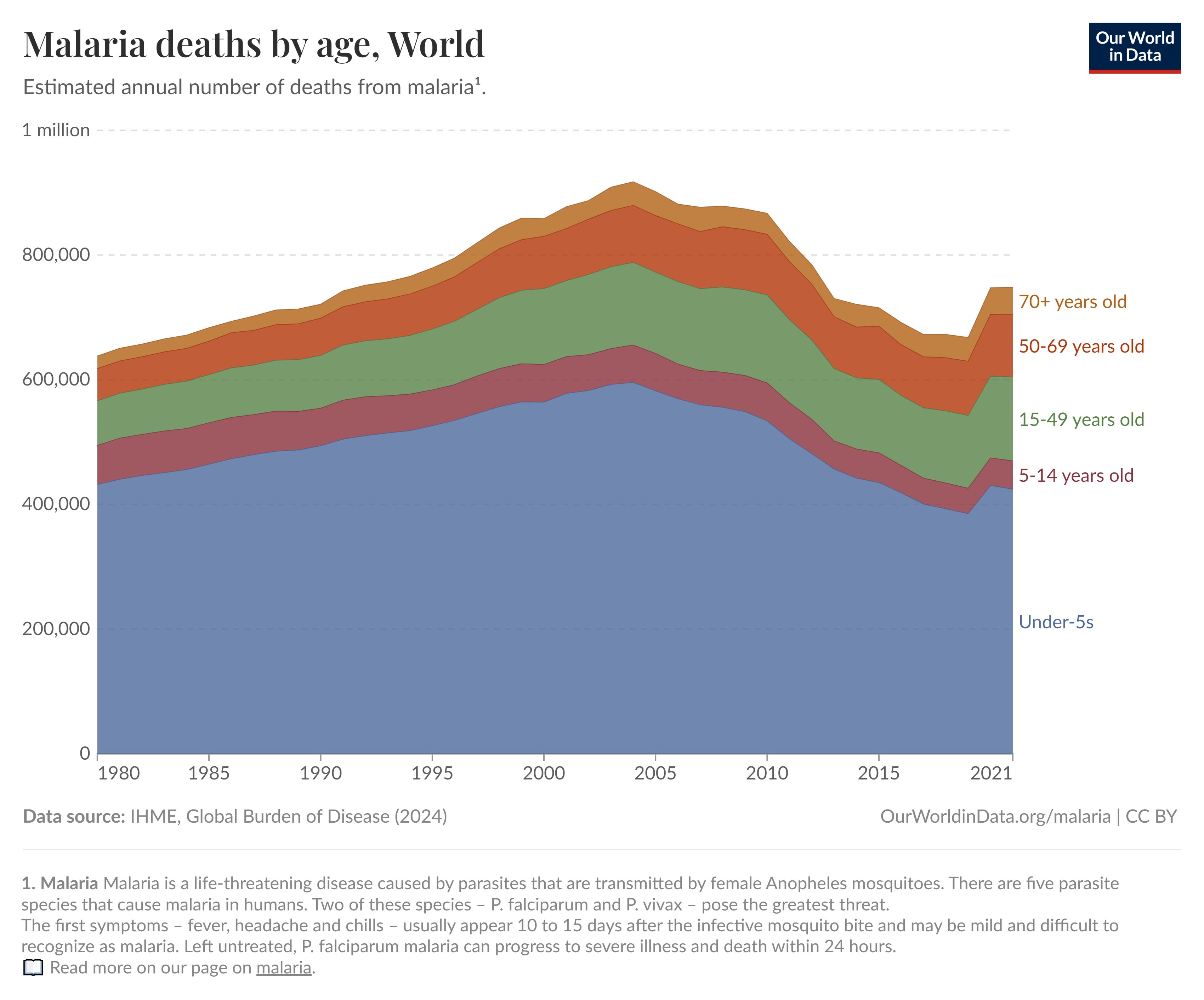
In recent years, the majority of malaria-related deaths have occurred on the African continent, according to Our World in Data. Most of these deaths were among children under the age of five, as the chart below shows.
This breakthrough marks a major step forward for the continent, as there have been no treatments until now specifically designed for the youngest babies and small children weighing under 4.5 kilograms.
Together with our partners, we are proud to have gone further to develop the first clinically proven malaria treatment for newborns and young babies, ensuring even the smallest and most vulnerable can finally receive the care they deserve.
—Vas Narasimhan, CEO of Novartis
”Novartis plans to introduce the treatment on a largely not-for-profit basis to increase access in areas where malaria is endemic.
3. News in brief: Health stories from around the world
The US Food and Drug Administration has approved Moderna's COVID-19 vaccine, Spikevax, in children aged 6 months through 11 years who are at an increased risk of the disease. "COVID-19 continues to pose a significant potential threat to children, especially those with underlying medical conditions. Vaccination can be an important tool for protecting our youngest against severe disease and hospitalization," said Stéphane Bancel, Chief Executive Officer of Moderna.
Antimicrobial resistance is a cancer care delivery crisis, warns a medical oncologist. "An upper respiratory infection might be an inconvenience for a healthy adult. For an immunocompromised person living with cancer, it could be fatal," Yehoda Martei, Assistant Professor of Medicine at the University of Pennsylvania writes. We need to break down silos across healthcare and draw on experts from across disciplines to develop strategies for educating patients on this emerging risk, Martei argues.
In a world first, a robot has performed a surgical operation without direct human assistance, researchers from Johns Hopkins University have announced. Trained on videos of past surgeries, the system was able to carry out the procedure autonomously, while still monitoring inputs and conditions provided by the surgical team.
Scientists are just years away from creating viable human eggs and sperm in the lab, opening new frontiers in reproduction, says Prof Katsuhiko Hayashi, a leading developmental geneticist at the University of Osaka. Speaking to The Guardian, he said his team aims to achieve this within seven years using in vitro gametogenesis. The breakthrough is seen as a potential solution to population decline and a step towards advancing gene editing.
New research reveals "significant inequalities" in UK paediatric intensive care outcomes. A study published in The Lancet found that minority ethnic and deprived children found that minority ethnic and deprived children are more likely to arrive at the ICU severely ill and experience worse treatment outcomes.
More children are limiting their smartphone use to protect their mental health. A survey of 20,000 young people and their parents across 18 countries found that the number of 12- to 15-year-olds taking breaks from smartphones, computers, and iPads rose by 18% to 40% since 2022.
The role of chronic stress in accelerating cognitive decline may put global dementia risk higher than originally anticipated, researchers warn. Recent studies show that older Americans are experiencing more frequent stressful events than previous generations, from economic insecurity to extreme weather.
4. More on health from Forum Stories
How does the CEO of an organization tackling fast-moving health crises like Mpox and other infectious diseases plan for the unexpected? In this episode of Meet The Leader, Gavi's CEO, Sania Nishtar, talks to the World Economic Forum about the planning, mindsets, technologies and scenario planning her team uses to be ready for any emergency. Watch the full episode below:
Artificial intelligence is accelerating the elimination of infectious diseases, from increasing testing volumes to guiding health workers to where their work is most needed. Michael Johnson, CIO of the Global Fund to Fight AIDS, Tuberculosis and Malaria, explains key principles for harnessing technology to build smarter, more equitable healthcare systems and help end major diseases worldwide.
The ubiquitous term 'private sector' is used often in global health, yet rarely interrogated with precision, writes Sharmishta Sivaramakrishnan, Senior Manager of Global Operations at the Clinton Health Access Initiative. To move from transactional inputs to systemic outcomes, private-sector engagement must be rooted in clarity of function, alignment with public priorities and shared accountability. Here are four key priorities for redefining the sector's role in global health.
License and Republishing
World Economic Forum articles may be republished in accordance with the Creative Commons Attribution-NonCommercial-NoDerivatives 4.0 International Public License, and in accordance with our Terms of Use.
The views expressed in this article are those of the author alone and not the World Economic Forum.
Related topics:

Forum Stories newsletter
Bringing you weekly curated insights and analysis on the global issues that matter.
More on Health and Healthcare SystemsSee all

Shyam Bishen
April 9, 2026


