Opinion
Why you must master the circular economy and AI by 2030 to stay competitive
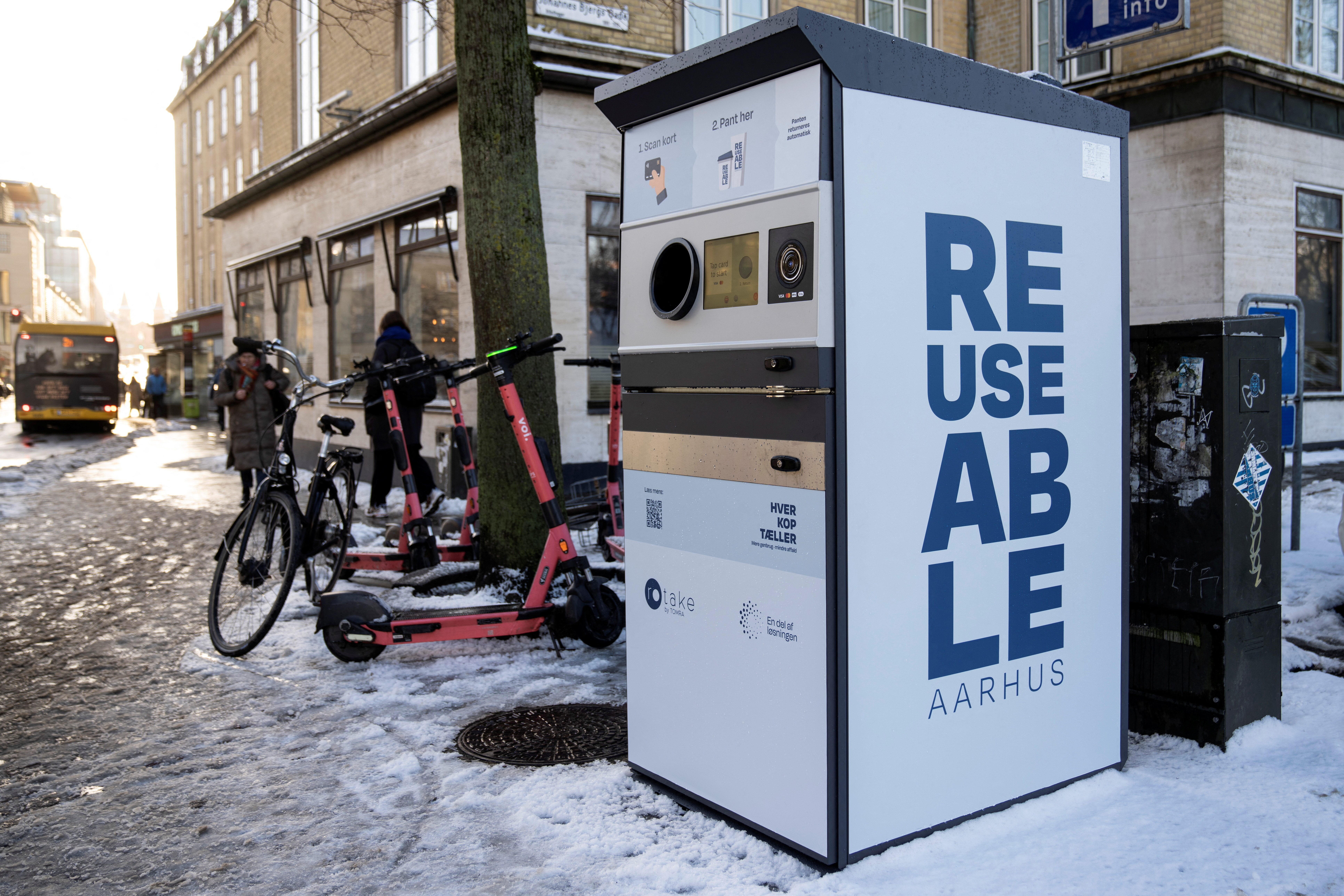
Can AI boost the global circular economy? Image: REUTERS
- The shift to circular economy business models and the rise of artificial intelligence can reshape the foundations of industrial success.
- Soon, supply chains that deplete limited resources, generate excess emissions and discard value after use will no longer be socially or economically acceptable.
- By 2030, circular intelligence will be the standard for staying in the game; the earlier you start, the further ahead you’ll be.
By 2030, the competitiveness of manufacturers and global businesses will be measured by more than just product quality, pricing or speed. Instead, it will be determined by how intelligently and sustainably they operate. Two forces — the shift to circular economy business models and the rise of artificial intelligence (AI ) — are reshaping the foundations of industrial success.
Each trend is disruptive on its own. But together, they create a powerful opportunity to reinvent value creation, rewire supply chains and redefine how businesses engage with customers, regulators and resources.
The future will belong to those who embrace both. Companies that resist or delay adapting risk facing a harsh new reality: higher costs, lower margins, declining revenue streams and a loss of customer trust and relevance.
Why circular business models are a prerequisite for 2030 competitiveness
Circularity is no longer just a niche sustainability idea. It's quickly becoming a core requirement for doing business. Customers, regulators and investors are converging on a shared expectation: products and services must be designed and delivered without creating unnecessary waste. Supply chains that deplete limited resources, generate excess emissions and discard value after use will no longer be socially or economically acceptable.
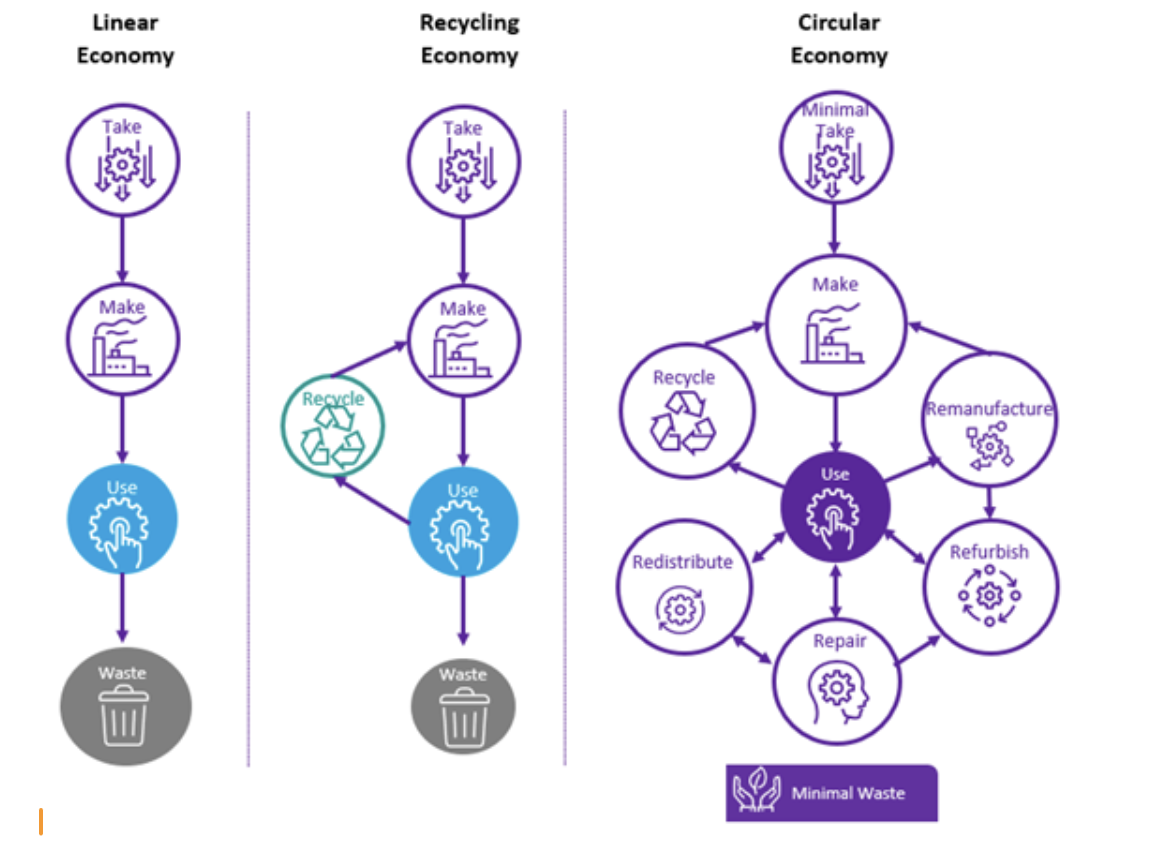
But beyond regulatory pressure, there is a strong business case for circularity. Companies adopting circular models lower their risk from raw material price swings, improve profits by extending product value and generate recurring income through repair, refurbishment and product-as-a-service offerings.
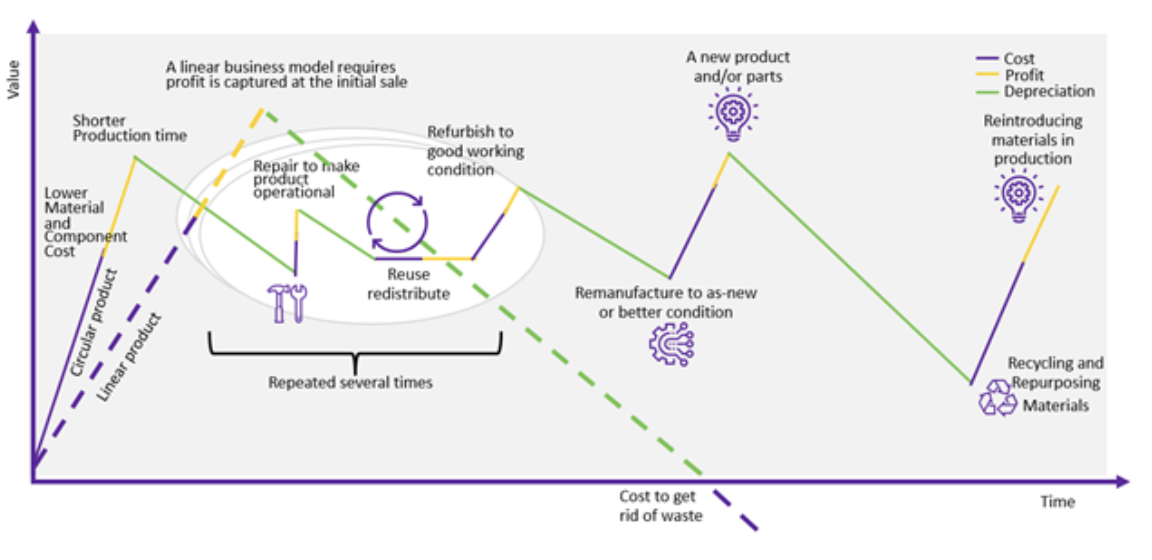
Conversely, businesses that remain tied to traditional linear 'take-make-waste' models will find themselves increasingly outpaced. As raw material prices fluctuate and regulations tighten, their cost structures will become more burdensome. Without mechanisms for retaining value — like repair, reuse or remanufacturing — they’ll miss opportunities to generate ongoing revenue and reduce dependency on virgin inputs. These companies will struggle to meet ESG-linked procurement standards, risk exclusion from high-value contracts and lose relevance among customers who expect more than one-time transactions. In 2030, being non-circular won't just be perceived as environmentally irresponsible; it will expose operational weaknesses and erode competitiveness.
The most competitive companies in the coming decade will not be those that sell the most products. They will be those who extract and maintain the most value from each product throughout its complete lifecycle. That is the core of the circular economy and it's rapidly becoming the standard for modern industrial performance.
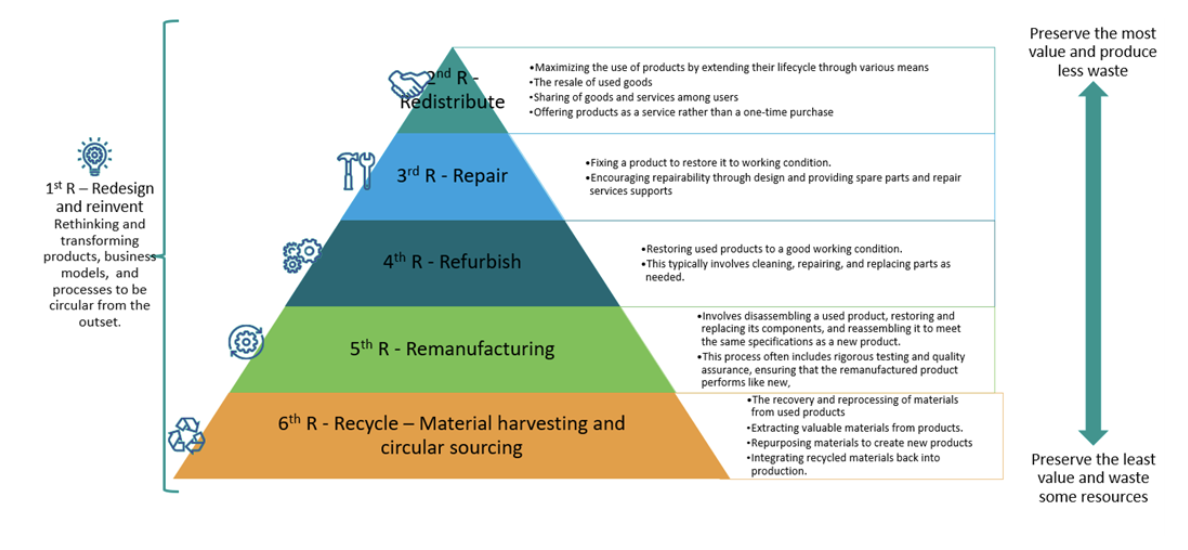
AI is the engine that will get us there
If circularity is the goal, AI is the driving force to achieve it. AI is changing every aspect of business, from product design and operational management to service delivery.
Manufacturers are already using AI to optimize supply chains, predict maintenance needs, automate production planning and personalize customer interactions. But by 2030, AI will no longer be just a tool for improvement. It will be the foundation for how decisions are made, how processes adapt in real time and how companies stay competitive in a world of constant change.
AI offers speed, intelligence and scale that surpass human abilities. It converts data into insights. It changes generic processes into responsive, personalized workflows. And it helps organizations handle complexity with agility, which is especially important in the circular economy, where reverse logistics, shared ownership and lifecycle management increase operational challenges.
Companies that ignore developing internal AI capabilities risk falling behind in efficiency and innovation. Without AI, their ability to recognize patterns, respond to market shifts and automate more complex tasks will be limited. Businesses that don't adopt AI will grow more slowly, face higher costs and deliver less value to their customers.
Together, AI and circularity create a powerful cycle
While each of these transformations is powerful on its own, their convergence is what truly unlocks a competitive advantage. AI and the circular economy are not separate paths. They are mutually reinforcing strategies for creating the intelligent, resilient and sustainable business of the future.
Consider how AI enhances product lifecycles by analyzing sensor data from connected devices. With this knowledge, manufacturers predict when a product will need servicing, automatically schedule maintenance and identify the best time to reclaim or remanufacture a component. This results in fewer failures, longer asset life and greater customer satisfaction, while also reducing material use and waste.
In circular supply chains, which involve the return and redistribution of products and parts, AI removes friction and complexity. Intelligent agents automatically evaluate a returned item, decide its next life stage and trigger the appropriate actions — whether that’s refurbishment, resale or disassembly for material recovery. These same agents negotiate logistics, confirm availability and even execute contracts autonomously.
AI also plays a critical role in managing complex circular ecosystems. Unlike linear models with clear supplier-customer handoffs, circular systems involve collaboration among recyclers, repair services, logistics providers and users. AI serves as the digital glue between these actors, ensuring smooth coordination, real-time data sharing and adaptive decision-making.
And, at the strategic level, AI-powered analytics enable companies to continuously develop and improve circular business models. They simulate environmental impacts, estimate long-term value and test pricing in fluctuating markets, giving leaders the confidence to adapt faster and smarter.
Together, AI and circularity create a powerful cycle: AI supports scalable circular operations and circular models produce the data-rich environments where AI excels. Companies that combine both will see lower costs, stronger supply chains, better customer relationships and a clearer understanding of how to grow profitably while achieving sustainability goals.
The future won’t wait: Build circular intelligence now
The transformations ahead are not small. They require investment, new skillsets, cultural change and strategic vision. But the payoff is immense.
The leading businesses in 2030 won't just adopt digital tools or claim to be sustainable. They'll be companies that integrate intelligence and circularity into their thinking, working and growth practices.
The path forward begins with a clear understanding: if you are not circular, you will be less profitable, less resilient and increasingly irrelevant. If you are not intelligent and powered by AI, you will be too slow, too costly and too disconnected to keep up.
Now is the moment to act. Start redesigning your products for circularity. Begin developing the data infrastructure and AI capabilities to support lifecycle decisions. Shift your internal KPIs to measure recurring value, instead of one-time sales. Explore how automation and intelligence can transform your customer relationships, operations and ecosystems.
By 2030, circular intelligence won’t just be an advantage. It will be the standard for staying in the game. The earlier you start, the further ahead you’ll be.
Don't miss any update on this topic
Create a free account and access your personalized content collection with our latest publications and analyses.
License and Republishing
World Economic Forum articles may be republished in accordance with the Creative Commons Attribution-NonCommercial-NoDerivatives 4.0 International Public License, and in accordance with our Terms of Use.
The views expressed in this article are those of the author alone and not the World Economic Forum.
Stay up to date:
Circular Economy


Forum Stories newsletter
Bringing you weekly curated insights and analysis on the global issues that matter.
More on Circular EconomySee all

Deborah Dull, Phil Brown and Judith Ketelslegers
March 3, 2026