The most affordable housing markets – and other urban transformation stories to read this month
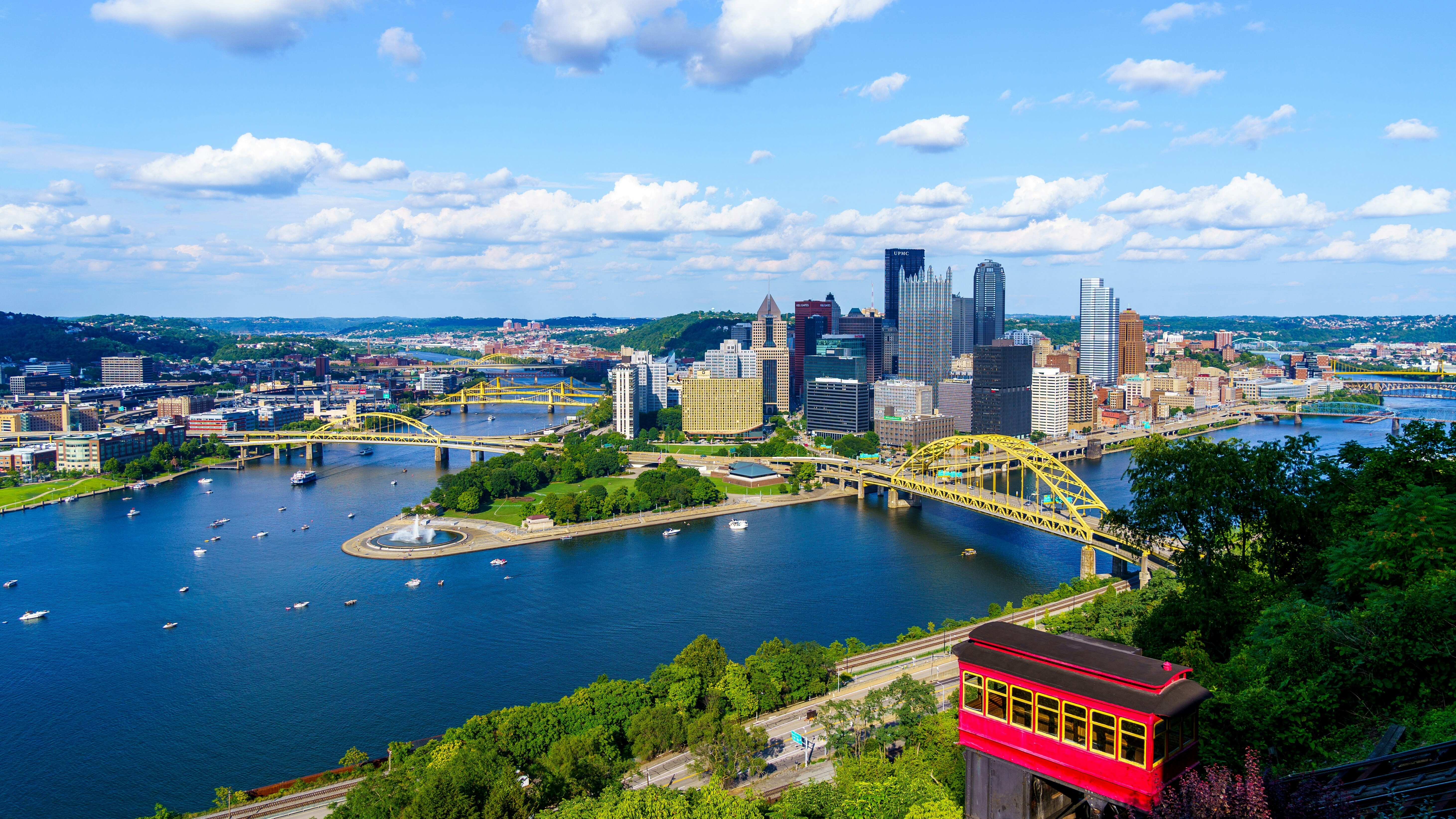
Pittsburgh has claimed the title of most affordable market for the fifth consecutive year in an annual report. Image: Unsplash/Yuhan Du
Jeff Merritt
Head of Centre for Urban Transformation; Member of the Executive Committee, World Economic Forum- This monthly round-up brings you some of the latest news on cities and urbanization.
- Top stories: Affordable housing markets amid a growing crisis; Berlin appeals to tourists looking for cooler climes; Geneva's free public transport.
- For more on the World Economic Forum’s city-focused work, visit the Centre for Urban Transformation.
1. The 10 most affordable housing markets – as the housing crisis deepens
For the first time in over two decades of tracking, not one of the major housing markets assessed by the Demographia International Housing Affordability report qualifies as "affordable".
The comprehensive study of 95 metropolitan areas across eight nations reveals an unprecedented crisis that has locked middle-income households out of homeownership globally.
Hong Kong remains the world's least affordable housing market with a median multiple of 14.4, meaning typical homes cost more than 14 times the median household income. In terms of countries, Australia dominates the unaffordable rankings, with Sydney taking second place overall with a median multiple of 13.8. Alongside it in the 'Impossibly Unaffordable' rankings are Adelaide (10.9), Melbourne (9.7) and Brisbane (9.3), with Perth (8.3) coming under the 'Severely Unaffordable' section.
At the opposite end, Pittsburgh, Pennsylvania claimed the title of most affordable market for the fifth consecutive year with a median multiple of 3.2, though even this falls into the 'Moderately Unaffordable' category. Other relatively affordable markets include Cleveland (3.3), St. Louis (3.5), and Middlesbrough & Durham in the UK (3.7).
The report attributes the crisis primarily to restrictive urban planning policies that limit peripheral development through greenbelts, urban growth boundaries and densification requirements.
"High housing prices, relative to incomes, are having a distinctly feudalizing impact," warned Joel Kotkin, director of Chapman University's Center for Demographics and Policy, noting that "restrictive housing policies may be packaged as progressive, but in social terms their impact could better be characterized as regressive."
The affordability collapse has triggered mass migration patterns, with middle-income households increasingly abandoning expensive markets for more affordable regions – a phenomenon the report terms "counterurbanization".
What is the World Economic Forum doing to promote sustainable urban development?
2. Berlin capitalizes on 'cooler', less crowded tourism
As Paris and Barcelona struggle with overtourism, heat and protests, Berlin is promoting itself as a cool, spacious and budget-friendly alternative for travellers.
The German capital, with 5.9 million tourists in the first half of 2025, has lower hotel occupancy than southern cities and highlights green spaces, water and shade.
“We really don’t face issues with overtourism,” Christian Taenzler of VisitBerlin told Reuters. "The city is large and people spread out. Especially in summer, when Berliners are away, there's quite a lot of space."
With temperatures generally peaking at 25C during the summer months, the city could appeal to tourists seeking cooler climes.
Industry experts see potential for growth as climate concerns and increased airfares shift tourists north, increasing Berlin’s appeal despite some recent cultural budget cuts.
3. News in brief: More top city stories
Geneva made all public transport temporarily free for the first time to tackle a spike in ozone pollution amid a heatwave. It aimed to cut traffic emissions by encouraging the use of buses, trams, trains and boats over cars until air quality improves.
China's new home prices declined again in July 2025, dropping 2.8% year-on-year, though the pace of decline slowed in major cities. Despite government stimulus measures, China’s property market remains sluggish, weighed down by weak demand and oversupply, but the downward trend is beginning to ease.
It comes as the country's once-dominant property developer Evergrande Group was delisted from the Hong Kong Stock Exchange. Hundreds of Evergrande’s projects remain unfinished, leaving creditors facing uncertain recoveries.
Hong Kong, meanwhile, faced unprecedented flooding with over 350mm of rain on 5 August, the heaviest for August since 1884. Schools, courts and hospitals closed, flights were delayed, and severe disruptions affected daily life. The city issued its fourth black rainstorm warning in eight days, highlighting climate change challenges.
4. More on urban transformation on Forum Stories
Ultra-fast delivery is outpacing the evolving infrastructure needed in cities for sustainability amid rising emissions. Cities need a standardized framework utilizing shared investment and data to manage the growth of this industry. The Forum’s Centre for Urban Transformation is coordinating cross-sector collaboration to scale solutions that make deliveries cleaner, safer and more integrated into cities.
The 'sponge city' concept, pioneered by landscape architect Kongjian Yu, uses natural and engineered systems to absorb rainfall and prevent flooding. Cities like Copenhagen are actively engineering solutions after climate disasters, while others like Auckland are recognized for their natural 'sponginess'. Mitigating urban flood risk is a vital climate adaptation strategy for the world's growing urban populations.
Cities are struggling to encourage their citizens to engage in sustainability – a gap bridged by the Sustainable Urban Behaviour (SUB) framework. SUB views behaviour change not as a matter of individual responsibility, but as part of urban systems design. Leading cities show how to design environments where sustainable decisions are the easiest, most convenient and most socially rewarded options.
License and Republishing
World Economic Forum articles may be republished in accordance with the Creative Commons Attribution-NonCommercial-NoDerivatives 4.0 International Public License, and in accordance with our Terms of Use.
The views expressed in this article are those of the author alone and not the World Economic Forum.

Forum Stories newsletter
Bringing you weekly curated insights and analysis on the global issues that matter.
More on Built Environment and InfrastructureSee all

Lin O’Grady and Alice Charles
April 7, 2026


