From crisis to confidence: Azerbaijan’s 10-year journey towards economic resilience
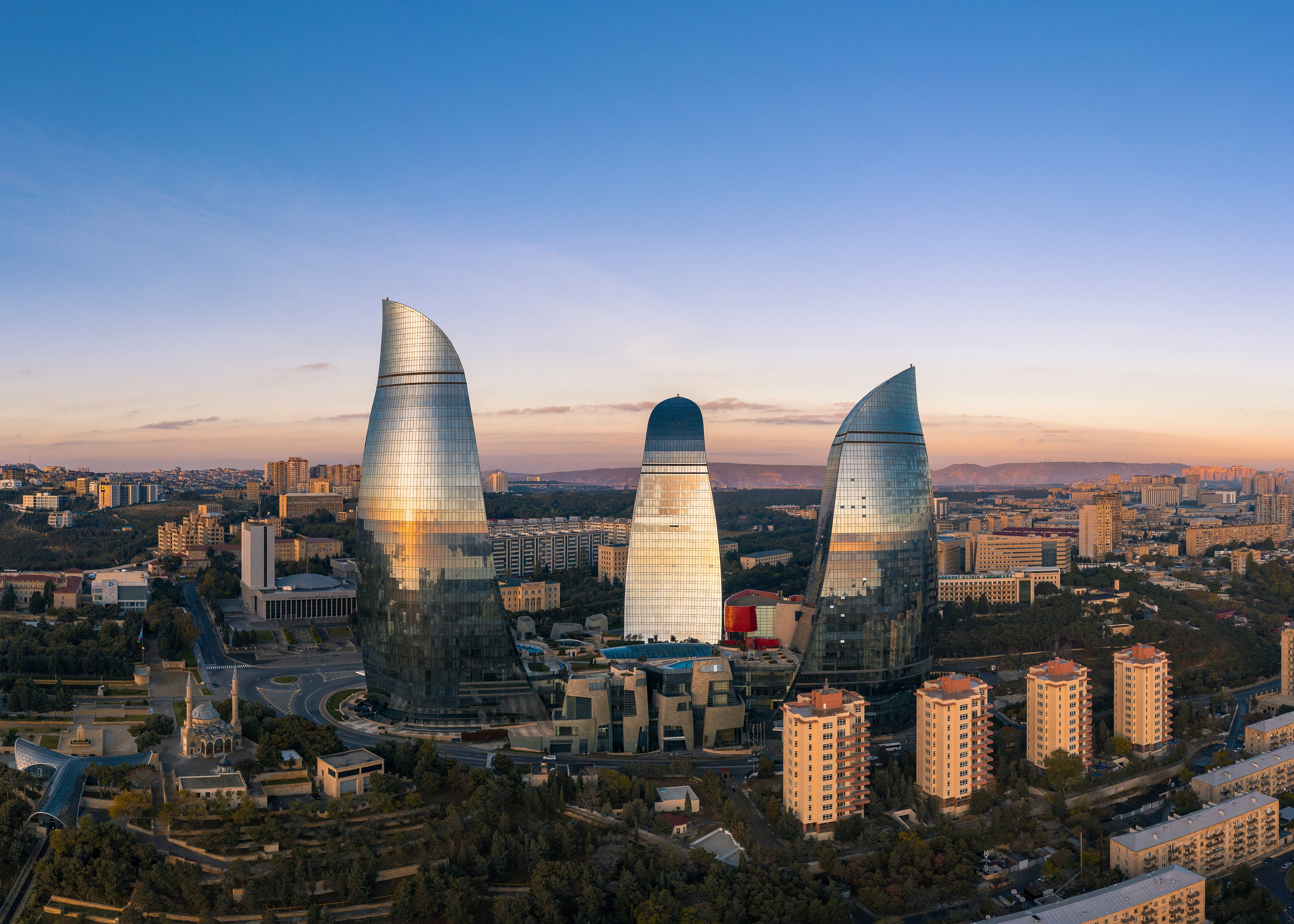
In a critical phase of economic reconstruction … Azerbaijan. Image: Unsplash/Lloyd Alozie.
- Following the 2015 oil price crash, Azerbaijan put in place a comprehensive programme designed to shore up its economic resilience.
- Immediate measures like tightened spending and risk-prevention have been supported by deeper institutional reform and economic diversification.
- The country's experience shows how resource-rich economies can develop resilience and adapt to today's turbulent global landscape.
After the 2015 oil price collapse shook Azerbaijan’s energy-dependent economy, policy-makers launched a far-reaching reform programme that has systematically transformed the country’s macro-financial landscape. A decade on, this journey holds new significance.
As global markets face renewed volatility – driven by geopolitical tensions, climate transitions and inflationary cycles – Azerbaijan’s experience offers a timely example of how resource-rich economies can evolve toward resilience. The country’s trajectory underscores a central lesson: institutional strength and sound policy frameworks are not just post-crisis remedies, but ongoing necessities in a world of compounding risks.
In 2015, Brent crude prices fell by more than 40%, slashing Azerbaijan’s fiscal revenues and exposing structural weaknesses in an economy where hydrocarbons accounted for roughly three-quarters of export income. Azerbaijan's currency, the manat, suffered two sharp devaluations, annual inflation briefly touched double digits and foreign exchange reserves dropped by a third. The crisis, though painful, became a catalyst for change: authorities moved the currency to a managed float (allowing the manat to move with market forces while still permitting central bank intervention when needed), tightened fiscal spending and – crucially – committed to comprehensive institutional reform.
1. Fortifying the banking system
The Central Bank of Azerbaijan (CBA) and the Financial Monitoring Service responded first. Adoption of Basel III capital and liquidity standards was accelerated; risk-based supervision replaced compliance box-ticking; legacy banks were consolidated or closed down if they could not meet requirements. The non-performing loan (NPL) ratio, which peaked at 21% in 2016, fell to 2.4% by the end of 2024; a dramatic improvement that shows banks were able to clean up bad debts and restore confidence in the system. Total capital adequacy – the cushion of capital that banks hold to absorb potential losses – now averages 17%, which is well above minimum requirements; regular stress testing informs prompt corrective action.
Technology has been another pillar. A regulatory sandbox opened in 2020 nurtured the country’s fast-growing fintech sector, while the newly launched instant payments platform processes more than a million retail transactions daily. These innovations support the government’s target of raising financial inclusion coverage from 66% to 80% of adults by 2026.
2. Recalibrating fiscal policy
On the public finance front, the Ministry of Finance introduced a Medium-Term Expenditure Framework (MTEF) and a fiscal rule capping the non-oil primary deficit at 17.5% of non-oil GDP by 2027. In 2024, the non-oil primary deficit stood at 20.6% – outperforming its target by 3.4 percentage points, showing that the government is reducing its reliance on oil revenues faster than expected and strengthening fiscal sustainability. Multi-year budgeting, complemented by conservative oil price assumptions, shields core programmes – even when markets fluctuate. Complementary reforms upgraded e-procurement, enhanced Treasury Single Account coverage and launched near real-time dashboards for spending agencies.
Azerbaijan’s commitment to fiscal responsibility has yielded measurable results. By the end of 2024, the public debt-to-GDP ratio stood at 21.7% – well below the medium-term ceiling of 30%. The country also advanced to 23rd place globally in the 2023 Open Budget Index, with a score of 67 out of 100 – 22 points above the international average.
Critically, the State Oil Fund of Azerbaijan (SOFAZ) tightened its investment mandate, diversifying into infrastructure, green bonds and private equity. Combined CBA and SOFAZ assets stood at $73 billion in June 2025 – equivalent to nearly two years of imports – providing a formidable external buffer.
3. Enhancing governance and transparency
Beyond fiscal and financial frameworks, institutional governance has seen marked improvement. The Azerbaijan Banking Association (ABA) has established over 15 technical working groups since 2020, covering areas such as risk culture, sustainable finance, fintech regulation and prudential standards. These platforms have facilitated regular dialogue between regulators and the private sector, helping to accelerate supervisory modernization and expand stakeholder participation.
Regulatory transparency has advanced significantly. The Central Bank now publishes semi-annual Financial Stability Reports, monthly monetary and macroeconomic bulletins and conducts regular forward guidance briefings. All commercial banks are required to publish standardized risk disclosures, including capital adequacy, liquidity and concentration metrics.
In 2024, Azerbaijan became one of the first countries in the region to publish a national green taxonomy aimed at mobilizing sustainable finance and aligning capital markets with ESG goals. Supervisory authorities have also implemented risk-based AML/CFT supervision across all Tier 1 financial institutions and completed full digitalization of regulatory filings for the banking sector, steps that strengthen safeguards against financial crime while making regulatory oversight faster, more transparent and less burdensome for banks.
This dual approach – closing historical gaps while embedding forward-looking risk tools – has positioned Azerbaijan to meet both domestic development needs and evolving international standards. Resilience is now reflected not only in fiscal buffers, but also in institutional transparency and the growing sophistication of policy coordination across economic sectors.
4. Joining forces on macro-financial risk
Since 2021, crisis response has been coordinated at the highest levels of economic governance. Joint scenario reviews – covering commodity shocks, regional conflict spillovers and global rate adjustments – inform cross-institutional measures such as liquidity support and targeted loan forbearance. A shared traffic-light dashboard enables timely, unified action across fiscal, monetary and regulatory authorities.
Tangible results and future challenges
The payoffs are visible. In 2025, Fitch and Moody’s upgraded Azerbaijan’s sovereign ratings to BBB- and Baa3 respectively, citing disciplined fiscal management and robust external buffers. Headline inflation stood at 2.2% in 2024, down from 12% in the immediate post-devaluation years. Real GDP expanded by 4.1% in 2024 – up from 1.4% in 2023 – with non-oil growth soaring 6.1% in sectors such as construction, ICT, transportation and tourism.
International investors have noticed. FDI inflows reached $4.1 billion in 2024, their highest level since 2013, with over one-third directed to renewable energy projects aligned with Azerbaijan’s 2050 net-zero pledge.
Despite the progress, challenges remain. Deepening local currency capital markets, aligning banking supervision fully with EU law and accelerating SOFAZ’s ESG transition will test policy-makers’ commitment. Yet the past decade’s record suggests that when confronted with a shock, Azerbaijan is prepared to adapt.
At the same time, the global decarbonization agenda may exert long-term pressure on energy revenues, reinforcing the urgency of economic diversification. Azerbaijan is now in a transition phase toward a more balanced growth model. Concrete measures are being taken to advance transportation, agriculture, industry, services and the digital economy. Infrastructure investment, regulatory reform and targeted spending on human capital underpin this shift.
Still, meaningful work lies ahead, particularly in expanding non-oil exports, deepening domestic markets and fostering globally competitive production. The country remains in a critical phase of economic construction, with resilience and transformation as its guiding principles.
With commodity-exporting economies facing a rapidly changing global landscape, resilience can no longer rely solely on buffers or short-term stabilization tools. Azerbaijan’s experience illustrates how a coordinated policy framework – linking fiscal rules, monetary flexibility and regulatory reform – can help manage volatility while laying the groundwork for more sustainable, diversified growth.
How the Forum helps leaders make sense of regional, trade and geopolitical shifts
Don't miss any update on this topic
Create a free account and access your personalized content collection with our latest publications and analyses.
License and Republishing
World Economic Forum articles may be republished in accordance with the Creative Commons Attribution-NonCommercial-NoDerivatives 4.0 International Public License, and in accordance with our Terms of Use.
The views expressed in this article are those of the author alone and not the World Economic Forum.
Stay up to date:
Economic Growth


Forum Stories newsletter
Bringing you weekly curated insights and analysis on the global issues that matter.
More on Economic GrowthSee all

Larry Fitzgerald Jr and Kelvin Beachum Jr
April 6, 2026