Born digital, built industrial: Why Gen Z is the perfect fit for smart manufacturing
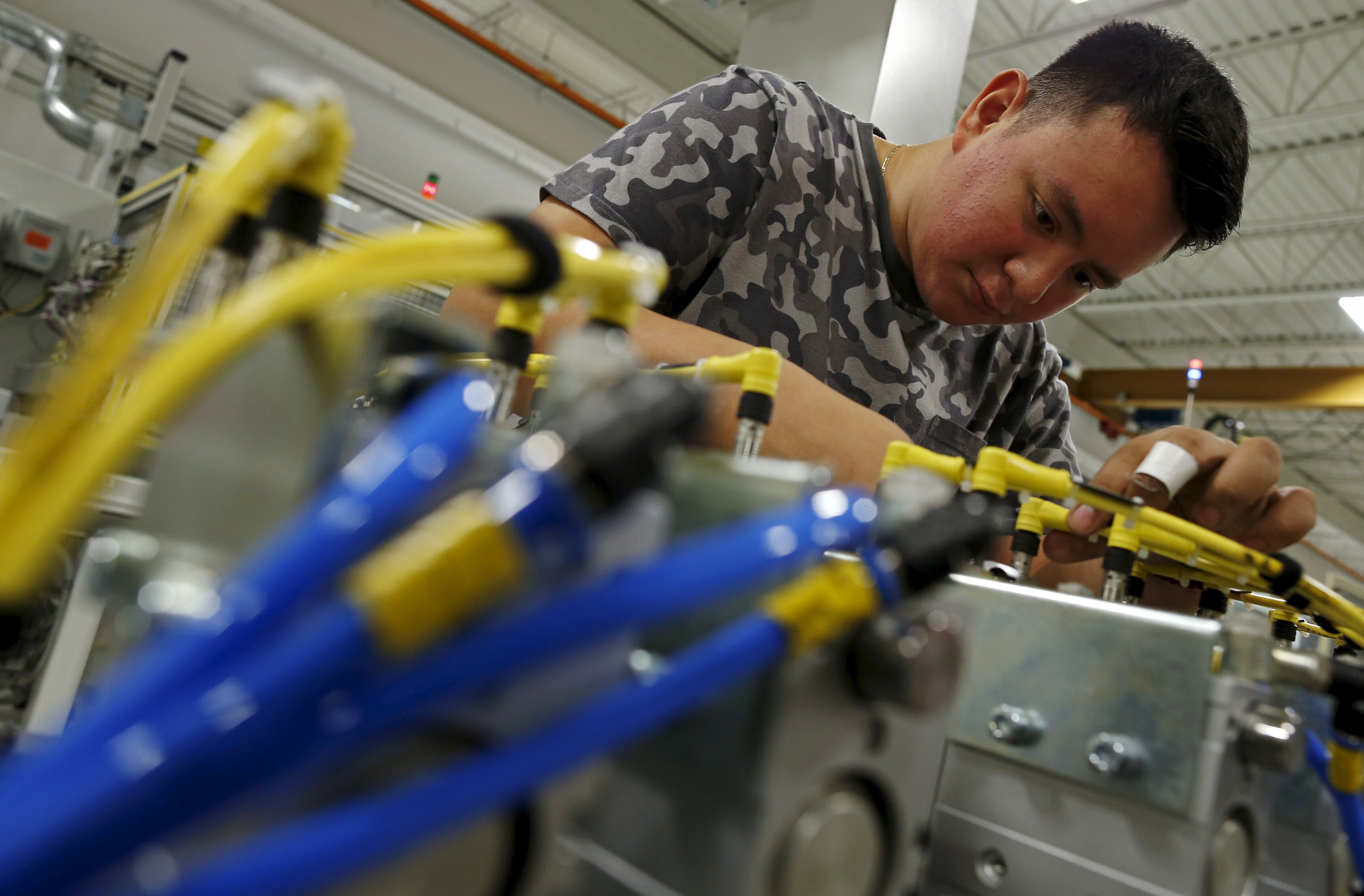
Gen Z’s talent profile is well-suited for modern manufacturing. Image: REUTERS/Jim Young
- Generation Z’s talent profile is well-suited for modern manufacturing, possessing digital fluency, artificial intelligence skills and a collaborative mindset, which align perfectly with smart factories.
- Equitable workforce strategies are essential for attracting the new generation to manufacturing, bridging skills, geographic and cultural gaps, and ensuring productivity, inclusion and global competitiveness.
- Hands-on training plus clear career pathways drive engagement with apprenticeships, micro-credentials and mentorships, translating digital skills into industrial impact.
From Detroit to Shenzhen, manufacturers face a critical challenge: replacing retiring workers fast enough to sustain productivity and competitiveness.
The solution may lie with Generation Z – digital natives fluent in artifcial intelligence (AI), data and collaborative platforms – bringing skills uniquely suited to modern manufacturing.
Yet this fluency raises key questions: how can it be harnessed equitably, translated into industrial productivity and leveraged to maintain global competitiveness in an era of rapid automation?
When digital meets industrial
Today’s smart factories mark a fundamental shift in production. AI predicts equipment failures, reducing downtime, while collaborative robots work alongside humans, creating roles that require both technological fluency and hands-on expertise.
This evolution is spawning new labour markets. Roles in AI, robotics and advanced manufacturing increasingly depend on daily human-machine collaboration. Workers with AI literacy report higher confidence and adaptability, while those without it face greater stress and uncertainty.
Demographic and technological shifts are reshaping manufacturing.
”Challenges remain, however, in the form of job displacement, wage inequality and uneven access to training. Even as Gen Z approaches AI as a collaborative tool, leaders must ensure that pathways for equitable participation are in place.
Global examples highlight the potential. In Germany, AI-assisted quality control lines staffed by digitally fluent youth have lowered error rates and boosted production speed. In Japan, electronics factories pair robotics technicians with university interns, rapidly upskilling young employees in human-machine collaboration.
The workforce mismatch problem
Gen Z currently face significant workplace pressures: 56% report high daily stress, nearly half anticipate job changes and 40% fear technological displacement, reflecting broader anxieties about economic stability in a rapidly evolving work environment.
Manufacturing offers a potential solution – tangible impact, structured advancement and the satisfaction of producing essential goods – yet cultural perceptions and geographic mismatches complicate recruitment. Industrial hubs often don’t align with urban centres where young talent resides and persistent stereotypes reduce manufacturing’s appeal.
Countries that fail to bridge it risk losing critical manufacturing capabilities, affecting everything from supply chain resilience to innovation capacity.
In the United States, regional clusters are partnering with community colleges to create dual-track apprenticeships, connecting Gen Z with high-tech roles. Early results show improved retention and measurable skills gains, demonstrating the potential of localized strategies.
Early indicators of success
Pilot programmes are already showing results. The Academy of Advanced Manufacturing, a ManpowerGroup and Rockwell Automation collaboration, has trained over 470 automation technicians while serving 100 employers across diverse segments.
Graduates often see wages grow (approximately 11%), underscoring the economic payoff of reskilling. Programmes that combine hands-on experience, accelerated learning and transparent financial progression appeal directly to Gen Z’s professional expectations.
Skills-based hiring is also gaining traction, with demonstrated capabilities increasingly outweighing traditional credentials. This shift expands opportunities for candidates with non-linear paths or alternative education. Yet implementation varies widely, leaving gaps in access and scalability.
Global examples highlight what’s possible. In Singapore, virtual simulations assess candidates’ technical skills before hiring, creating a more inclusive process. Across the Nordic countries, coding bootcamps are embedded into apprenticeships, bridging digital fluency with mechanical expertise. Together, these initiatives show how targeted investment in human capital drives both productivity and social mobility.
The policy imperative
Demographic and technological shifts are reshaping manufacturing. Experienced workers are retiring in record numbers, while 61% of manufacturers worldwide are accelerating automation. This dual pressure fuels immediate labour shortages and raises long-term questions about resilience.
Ageing populations in North America, Europe and East Asia must find ways to stay competitive, while emerging economies balance automation with job creation.
Gen Z’s digital fluency aligns with the manufacturing industry’s technological evolution, opening up unprecedented opportunities.
”Global coordination is critical: trade, immigration and education policies will shape how nations adapt. Aligning vocational training, upskilling and cross-border talent flows is key to sustaining industrial leadership.
Germany’s dual-education system, paired with regional industrial clusters, has kept youth unemployment low while supplying advanced plants with skilled talent, a model now drawing attention in Asia and North America.
4 critical areas for action
Addressing the workforce challenge requires coordinated intervention across multiple domains:
- Reimagine attraction: Traditional recruitment often overlooks the technological sophistication of manufacturing. To attract Gen Z, companies must showcase innovation, sustainability and skill growth while countering cultural biases. Early exposure to advanced tools and technology during recruitment is critical to engagement.
- Revolutionize development: Training should harness existing digital fluency, blending immersive virtual learning with hands-on practice to build adaptable, transferable skills. Micro-credentials and stackable certifications give workers clear markers of career progress.
- Restructure progression: Career paths must reflect Gen Z’s expectations for rapid growth and varied experiences. Hybrid roles that combine technical skills with innovation projects meet both worker and industry needs, while transparent promotion timelines and milestones boost retention.
- Rethink support: High stress among young workers calls for new approaches. Equipping supervisors to offer both technical guidance and authentic support fosters psychological safety, while feedback loops, mentorship and peer networks create conditions for young talent to thrive.
Broader economic implications
Bringing Gen Z into manufacturing has implications that extend beyond individual companies, shaping national security, economic resilience and innovation capacity.
Yet, workforce transformation must be equitable. High-tech manufacturing cannot benefit only already-advantaged populations. Policymakers must address urban-rural divides, educational access and social mobility. Mismanaging this transition risks deeper inequality, weaker supply chains and eroding global competitiveness.
Countries that succeed will strengthen resilience and sustain innovation leadership in an automated global economy.
The path forward
Gen Z’s digital fluency aligns with the manufacturing industry’s technological evolution, opening up unprecedented opportunities. But success demands more than potential; it requires strategies that address skills, career growth, workplace culture and inclusion. Programmes combining AI training, clear career pathways and supportive management are essential.
Now the factory floor has become a launchpad for innovation, powered by AI, robotics and smart systems. Visual storytelling – through VR tours, social media and interactive experiences – can showcase this shift, revealing a dynamic, creative and rewarding environment.
For Gen Z, these roles promise impact, rapid growth and a chance to shape the future of industry.
In an automated world, the best investment isn’t in machines that mimic humans but in people who make machines smarter. The opportunity lies in building pathways for Gen Z and future generations to thrive, ensuring manufacturing’s future is resilient, equitable and innovative.
Don't miss any update on this topic
Create a free account and access your personalized content collection with our latest publications and analyses.
License and Republishing
World Economic Forum articles may be republished in accordance with the Creative Commons Attribution-NonCommercial-NoDerivatives 4.0 International Public License, and in accordance with our Terms of Use.
The views expressed in this article are those of the author alone and not the World Economic Forum.
Stay up to date:
Future of Work


Forum Stories newsletter
Bringing you weekly curated insights and analysis on the global issues that matter.
More on Manufacturing and Value ChainsSee all


