How gender-intentional digital infrastructure can transform agriculture
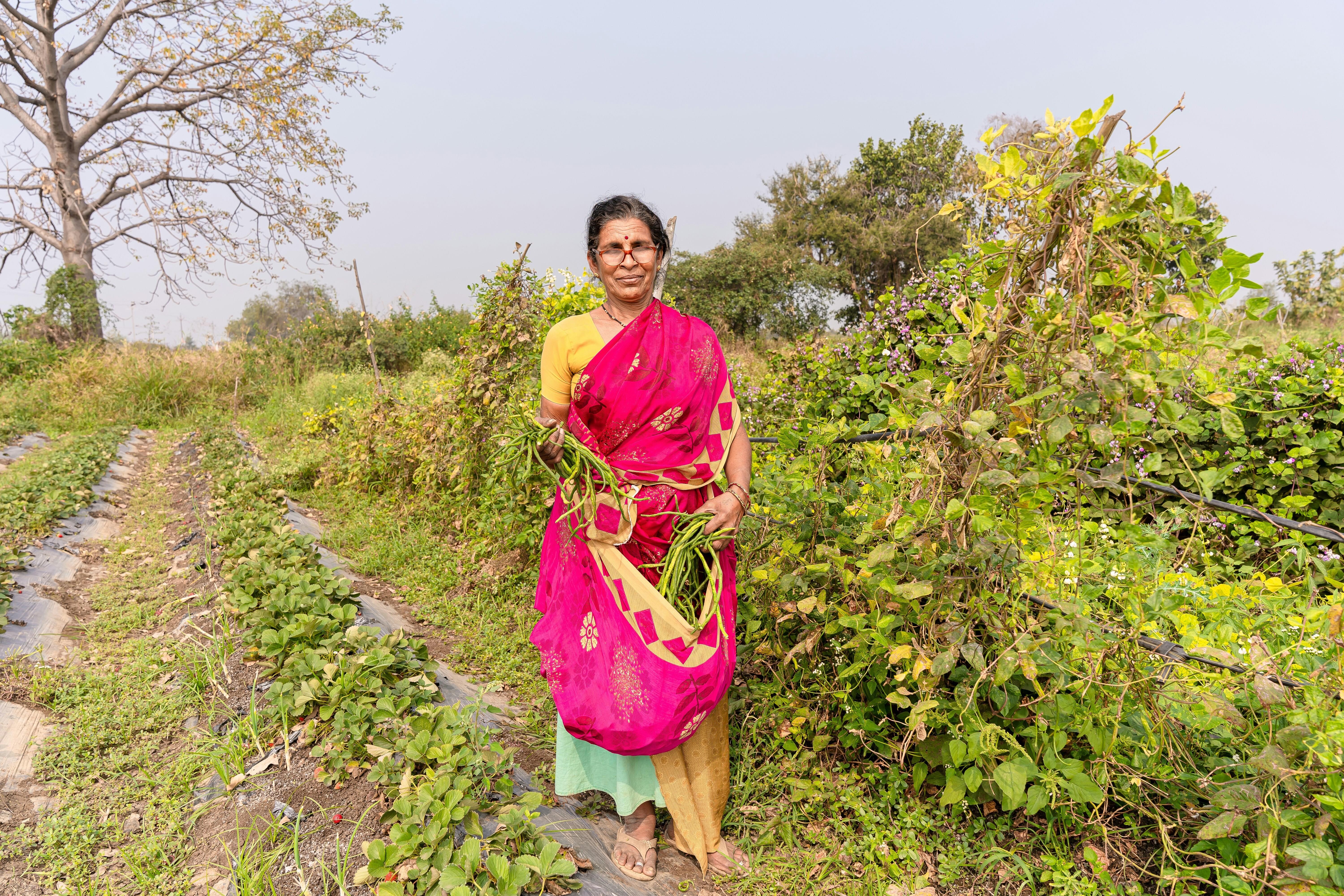
Globally, digital agriculture is seeing rapid growth. Image: EqualStock/Unsplash
- Policy-makers and businesses must adopt gender intentional Digital Public Infrastructure (DPI) in agriculture.
- Gender intentional agri-DPI includes inclusivity across the DPI lifecycle from conception to implementation, operations and ongoing maintenance.
- Building gender intentional agri-DPI requires sustained commitment and collective action from policy-makers and private organizations around the world.
Globally, digital agriculture is seeing rapid growth. The market is valued at $26 billion in 2025 and is expected to reach $44.4 billion by 2030. Within digital agriculture, Digital Public Infrastructure (DPI) presents a unique opportunity to scale digital agriculture services.
DPI is a collection of open, shared and interoperable digital systems that support innovation and service delivery. Examples include digital identity platforms such as Aadhaar in India or Nigeria’s Digital ID or payment platforms like UPI in India. Aadhar is India’s biometric digital ID system giving residents a unique identity to access public and financial services. Nigeria’s digital ID gives residents access to government services. UPI, on the other hand, is a real-time digital payments platform enabling instant money transfers via mobile phones.
DPI aims to benefit and ensure access to key digital services for all users. There are, however, significant gaps in terms of accessing DPI. This is particularly true for women. In India over 40% of all payments are now digital, with UPI alone driving 80% of these transactions. Women account for less than 30% of UPI users.
In agriculture, the gender gap is clearly visible. Women constitute 43% of the global agricultural workforce. Despite their major contribution, they are often excluded from digital and financial ecosystems. Globally, around 1.4 billion adults, most of them women, are excluded from digital and formal financial systems.
DPI can enable women’s access to digital identity, credit, information and agricultural opportunities. The UN DPI Safeguards Framework highlights inclusivity as one of the key principles for digital infrastructure.
Challenges women face in accessing DPI
The three main infrastructure layers of DPI are identity, payments and data exchange. Each layer presents unique challenges for women in agriculture.
- The primary challenge for women farmers is lack of formal identification. In many developing regions, women often lack critical documents such as land titles, national identity cards or bank accounts registered in their own name. In Low- and Middle-Income Countries (LMICs) 45% of women lack official ID compared to 30% of men. Evidence shows that individuals living in rural areas of low-income countries are approximately 10% less likely to have an ID than those in urban areas. Without official IDs, women remain invisible in the agriculture value chain.
- In rural areas, women have limited ownership of smartphones and access to mobile internet. In LMICs women are 14% less likely to own a smartphone. Even with a device in hand, unequal internet connectivity in rural areas poses a barrier. Many women farmers live in communities with limited network coverage or no broadband access. Globally, around 1.4 billion women lack access to high-speed internet needed for accessing DPI platforms.
- DPIs are often used to deliver customized products and services to farmers. However, women are unable to fully benefit due to lack of gender disaggregated data being analysed and used. One of the primary reasons for this gap is that many women are not officially recognized as farmers. Land titles and bank accounts are often in men’s names. Globally, less than 15% of all landholders are women. This leaves them underrepresented in land registries and agricultural databases.
- Other challenges include limited digital literacy, socio-cultural norms and time poverty that limits women’s confidence and ability to use DPI.
Building gender intentional agri-DPI
There is a pressing need for multistakeholder action across policy-makers, businesses and civil society to build and scale gender-intentional agri-DPI. Below are some strategies and recommendations to overcome the challenges outlined above:
1. Inclusion by design
To build gender intentional agri-DPI, it is important to first understand the unique needs and challenges of women, while serving society at large.
1.1. Policy-makers and development organizations should adopt privacy preserving approaches such as collecting anonymized data that is disaggregated by gender. Collecting data on mobile internet use, e-wallet accounts or ownership of smartphones can highlight the realities of women farmers and spotlight the barriers they face in accessing DPIs. Such data can provide critical insights into needs to enable policy-makers to design targeted interventions.
1.2. Policy-makers should design platforms that are inclusive and accessible to women farmers. For instance, India’s Bhashini platform, is a government led digital infrastructure that enables real-time translation across 20+ Indian languages. The Jugalbandi Chatbot (a collaboration between Microsoft and AI4Bharat) allows women farmers to ask questions in their own language (via text or speech on a basic phone) and get answers about government schemes like agriculture subsidies in the local dialect. Such platforms tackle digital literacy and language barriers affecting women farmers.
1.3 Policy-makers should ensure that women can access agricultural resources subsidies and welfare benefits through other mechanisms that go beyond DPI enrolment. This may include promoting alternative identity validation, special enrolment drives and legal recognition of women as co-owners of land.
2. Open access for all:
Gender intentional DPI should ensure that platforms are easily accessible and responsive to women.
2.1 Policy-makers can establish women-friendly access points in villages, at internet kiosks or helpdesks run by Self-Help Groups (SHGs). India’s Digital Sakhi Initiative trains SHG members as trusted “digital friends” who guide other women in using smartphones, government apps, Aadhaar-enabled services and UPI-based digital payments.
2.2 Women may still be left out if they lack the skills to use smartphones, navigate apps or trust digital system. It is essential for policy-makers and development organization to invest in capacity building trainings that ensures digital public goods such as UPI or Aadhar are not just available but also usable by women. Additionally, trainings should consider women’s time, mobility and learning needs.
2.3 Policy-makers should commit to regular monitoring and evaluation mechanisms to track women’s participation, identify gaps and integrate platforms with inclusive features as part of ongoing maintenance. This will ensure long term sustainability and scalability of DPI systems.
Hope for the future
These types of initiatives are already proving successful. The Microsoft Airband Initiative has committed to work with their partners to bring Internet access to 250 million people in unserved and underserved communities around the world, including 100 million Africans, by the end of 2025. Airband Initiative has helped more than 51 million people globally gain access to the internet and the economic and educational benefits that come with having affordable access.
Building gender-intentional digital public infrastructure (DPI) in agriculture is not a one-off intervention but a sustained commitment to inclusive innovation. When designed with women’s specific challenges and realities in mind, DPI can unlock transformative pathways toward achieving SDG 5 (Gender Equality). It can expand women’s access to digital financial services, from UPI-enabled payments to Aadhaar-linked benefits, giving them greater control over income, assets, and government subsidies. At the same time, DPI acts as a cornerstone for digital agriculture more broadly, fostering innovation, efficiency, and resilience while advancing SDG 9 (Industry, Innovation and Infrastructure).
Realizing this vision demands collective action across the ecosystem. Policy-makers must embed gender-intentional design principles at every stage of DPI development, ensuring equitable access to digital identities, payment systems, and agricultural services. Businesses, meanwhile, should commit to scaling inclusive solutions and investing in capacity-building initiatives that strengthen women’s digital skills and confidence, enabling them to fully participate in and benefit from the agricultural economy.
Don't miss any update on this topic
Create a free account and access your personalized content collection with our latest publications and analyses.
License and Republishing
World Economic Forum articles may be republished in accordance with the Creative Commons Attribution-NonCommercial-NoDerivatives 4.0 International Public License, and in accordance with our Terms of Use.
The views expressed in this article are those of the author alone and not the World Economic Forum.
Stay up to date:
Gender Parity
Related topics:


Forum Stories newsletter
Bringing you weekly curated insights and analysis on the global issues that matter.
More on Technological InnovationSee all

Tom Crowfoot
March 18, 2026


