Five years to go: Are we on track to meet the Sustainable Development Goals?
The United Nations checks on SDG progress annually. Image: Unsplash/John Cameron
- Only 18% of the Sustainable Development Goals (SDGs) are on track, with nearly half progressing too slowly and close to a fifth even regressing.
- Despite progress in health, education, and energy and digital access, significant challenges persist in poverty, gender equality, food security, and health outcomes.
- With many 2030 targets off-track, the World Economic Forum's Sustainable Development Impact Meetings will convene global leaders to accelerate progress.
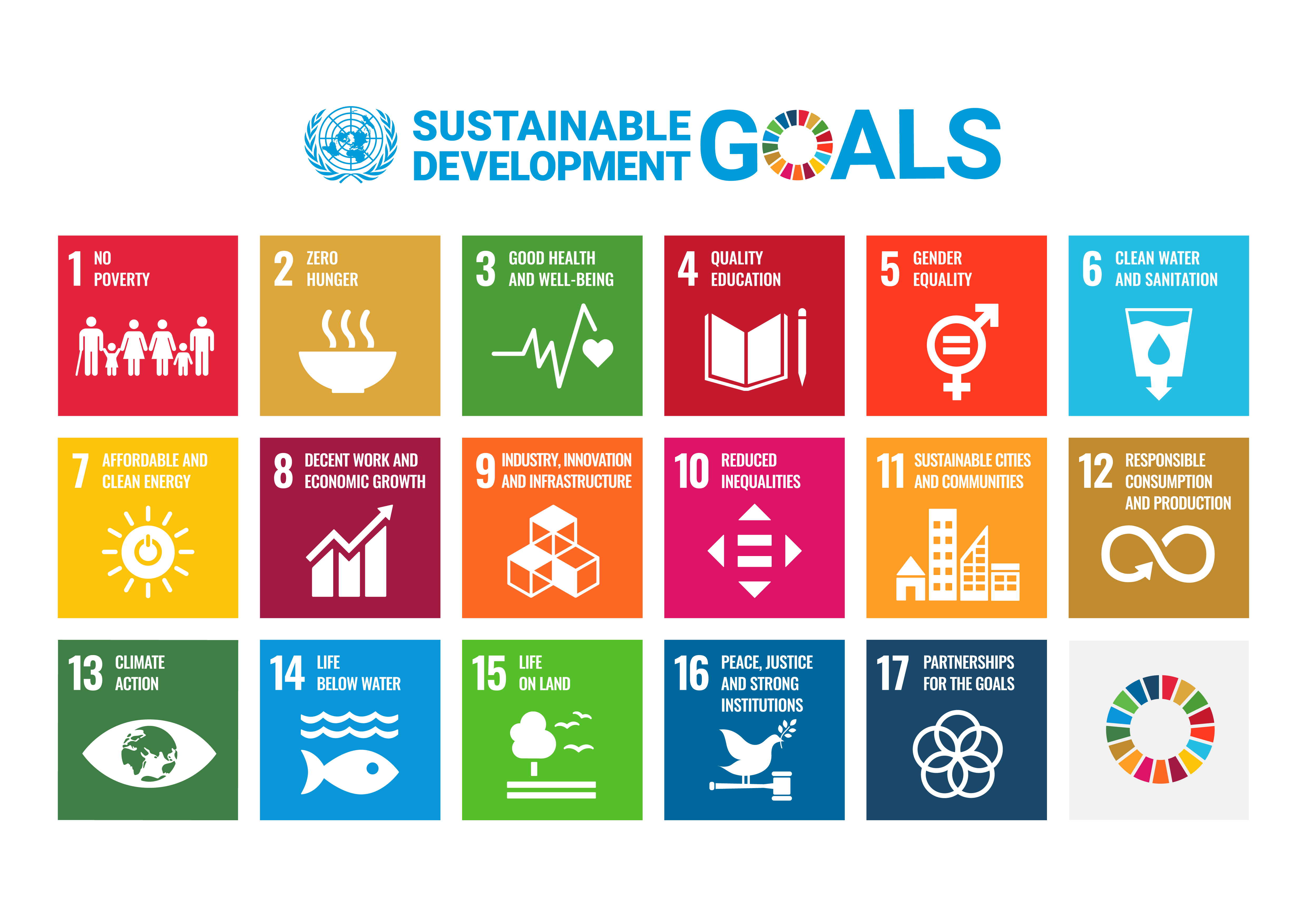
The year 2015 marked a turning point in global cooperation: not only was the Paris Agreement on climate change adopted, but the United Nations (UN) also endorsed its 2030 Agenda for Sustainable Development. The Agenda’s 17 Sustainable Development Goals (SDGs) became the rallying point for UN member states to improve “people, planet and prosperity”. Eradicating poverty was a particular focus, seen as indispensable to sustainable development and reaching prosperity.
With less than five years until the end of the decade, how are we doing relative to those 17 goals?
Progress, but not fast enough
The UN checks on SDG progress annually, with this year’s report reflecting both hope and concern.
It finds that while millions of lives have improved through progress in health, education, energy and digital access, the change is still not fast enough to fully reach the SDGs by 2030. Only 18% of SDGs are on track, with another 17% showing moderate progress. Nearly half are progressing too slowly, and close to a fifth are even regressing in a volatile environment marked by conflicts, climate change, geopolitical tension and economic flux.
Here are some of the key findings, based on data relating to 2023 and 2024.
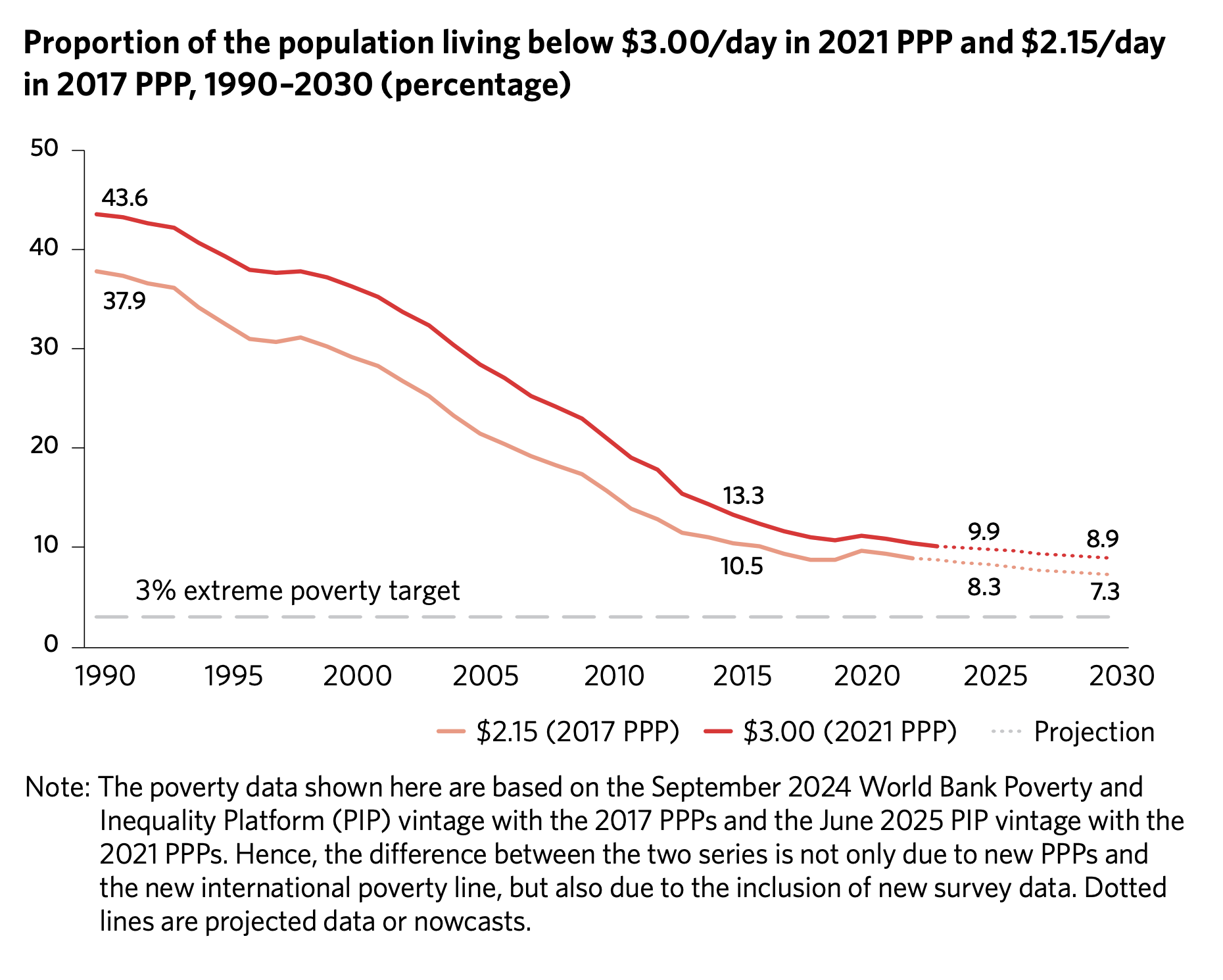
Major gaps remain in poverty and equality (SDGs 1, 5, 10)
Since 2015, around 60% of countries surveyed by the UN have achieved higher income and consumption has grown for the bottom 40% of their populations.
Yet, 6.9% – or 800 million people – still live in extreme poverty. This is only 1.5 percentage points less than in 2015 (8.4%) and predicted to virtually stagnate over the next five years.
The UN says that eradicating extreme poverty is unlikely due to a slow recovery from COVID-19, economic volatility, climate shocks and slow growth in regions like sub-Saharan Africa, where the majority of the world’s poor live.
However, social protection reached over half the world population in 2023, markedly up from 42.8% in 2015.
Momentum continued in gender equality legislation, and the share of women in national parliaments increased by 4.9 percentage points between 2015 and 2024. Similarly, the UN notes a 2.4 percentage point rise in women reaching management positions.
However, progress in gender equality remains slow, with women still underrepresented in decision-making, leadership roles and having limited access to education, careers and self-determination. This aligns with the World Economic Forum’s Global Gender Gap Report 2025, which found that it would take another 123 years to reach full parity globally.
Hunger impacts women's and children’s health (SDGs 2,12)
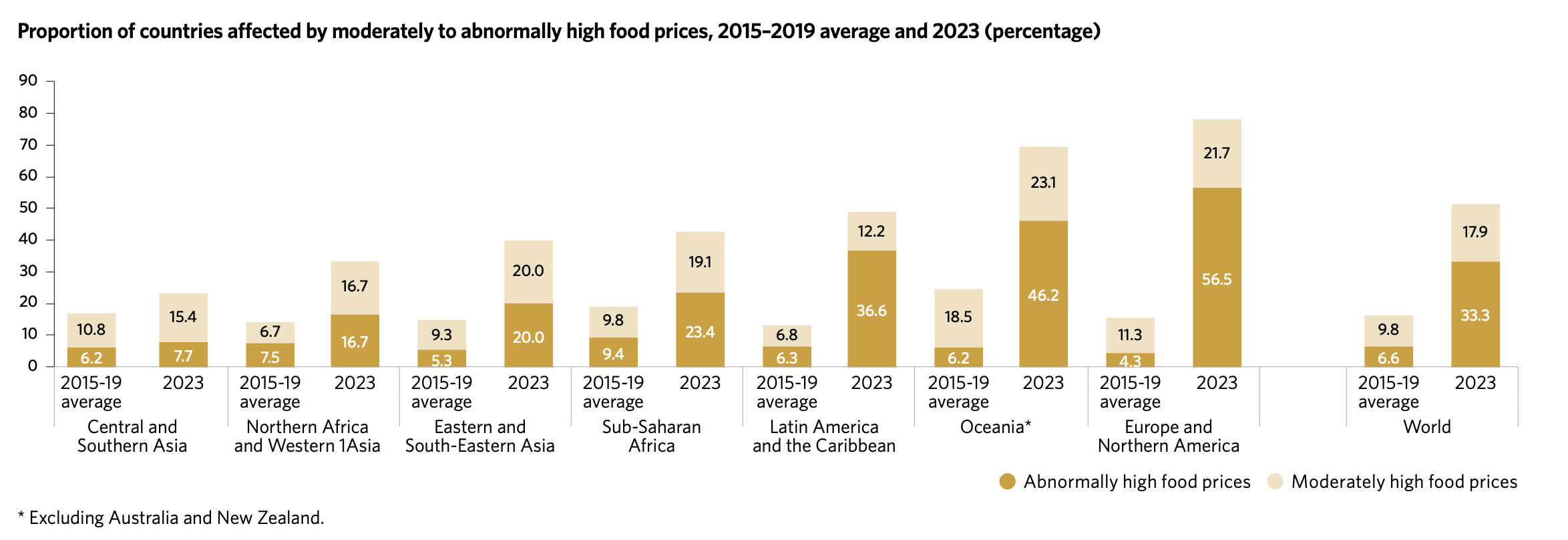
Almost 1 in 11 people faced hunger in 2023, and over two billion experienced moderate to severe food insecurity. This is despite global agricultural investments reaching a new record level of more than $700 billion in 2023.
While global food prices have eased, they remain three times higher than before the COVID-19 pandemic. Half of the countries surveyed reported moderately to abnormally high food prices – a drop of 10 percentage points since 2022.
While stunting in children under five due to malnutrition reduced by 3.2 percentage points, only 34% of babies between 6 and 23 months met the minimum standards of dietary diversity.
Similarly, only 65% of women aged between 15-49 years globally met the minimum dietary diversity.
Health expectancy and child mortality thrown off course (SDG3)
Healthy life expectancy had improved by five years between 2000 and 2019. However, some of this progress was reversed during the pandemic, reducing life expectancy by 1.8 years.
The global maternal mortality rate fell from 228 deaths per 100,000 live births in 2015 to 197 in 2023. However, over a quarter of a million women still die during pregnancy and childbirth.
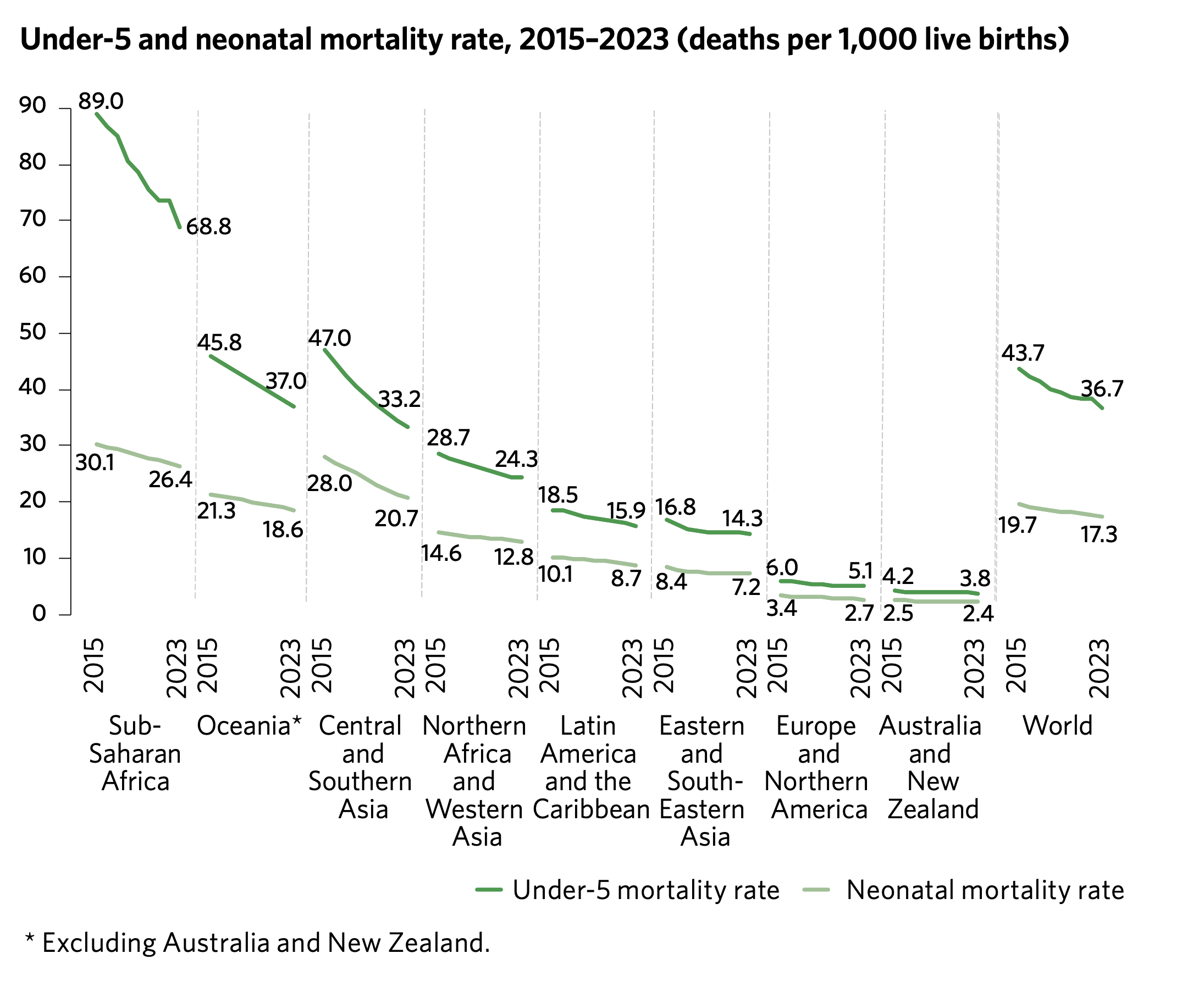
Mortality among children under five declined by 16% between 2015 and 2023. However, this still meant 4.8 million children died in 2023 – an increase to 30 million deaths is predicted by 2030 based on current trends.
However, childhood immunization programmes have yet to recover from setbacks during the pandemic, with service levels still not fully restored.
Malaria prevention has saved 12.7 million lives since 2000, HIV infections have been down 40% since 2010 and tuberculosis cases have stabilized.
Digital divide slows progress in education and employment (SDGs 4, 8, 9)
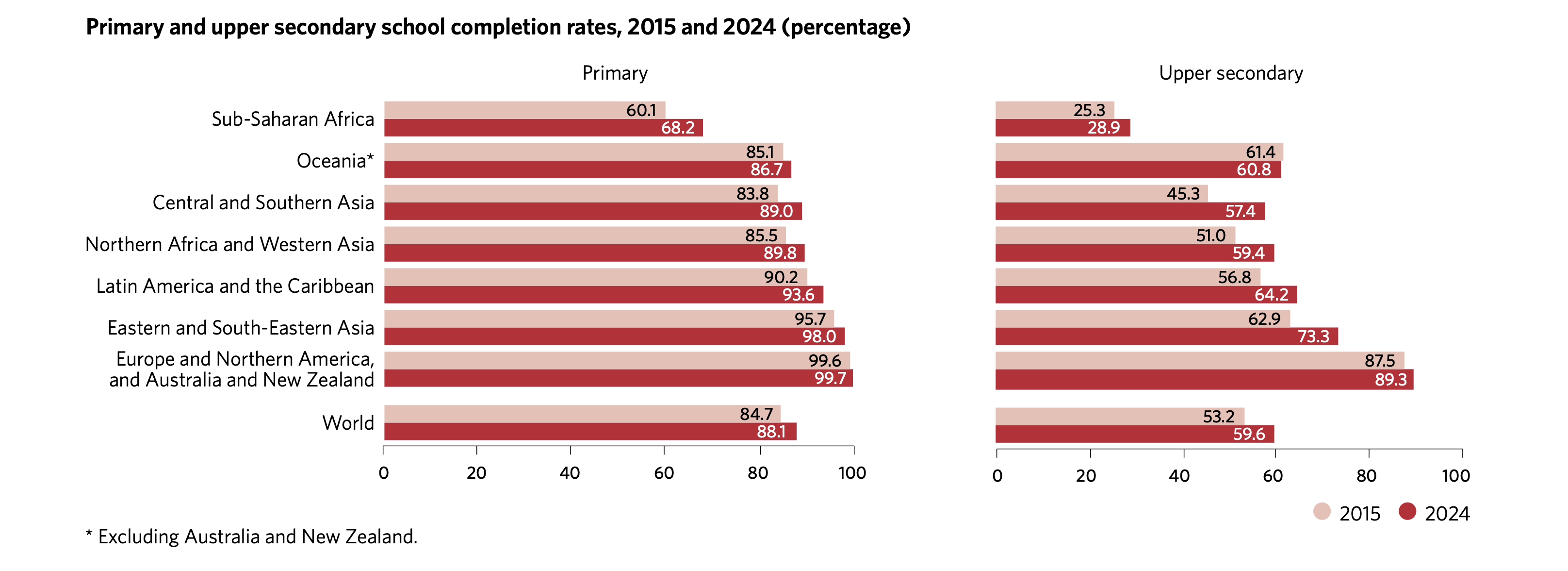
An additional 110 million children have entered school between 2015 and 2024, and global school completion rates have risen markedly from 84.7% to 88.1% in primary and from 53.2% to 59.6% in upper secondary education in 2024. However, the UN finds that progress has slowed, with the number of children out of school growing by 3% since 2015.
Low-income countries are the worst impacted, with 36% of school-aged youngsters in low-income countries out of school, compared to only 3% in high-income countries. Over half of out-of-school children live in sub-Saharan Africa.
These trajectories continue in employment. Despite global unemployment at a historic low of only 5% last year, more than half of workers worldwide were in informal roles. Women were the most negatively impacted, with more than 9 in 10 women in less developed countries pursuing informal roles. This situation is likely to feel the impact of global GDP per capita slowing to 1.5% this year – compared with 2% between 2010 and 2014.
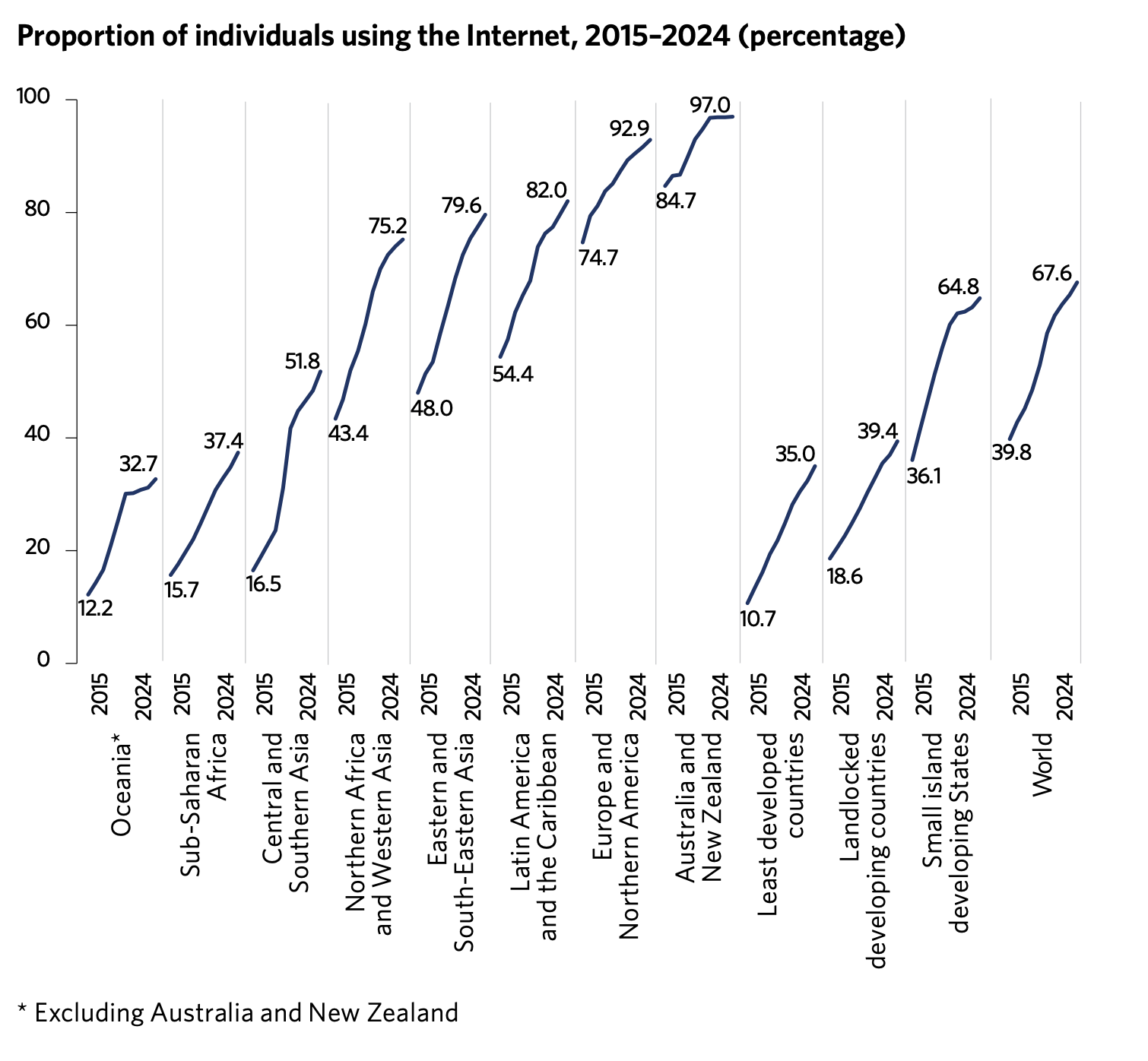
Information and communications technology (ICT) skills are essential for economic and social growth. Internet use globally improved from 40% in 2015 to 68% in 2024. Yet, in landlocked developing countries and in the least developed countries, it stands at 39% and 35% respectively. There was also a 5% gap between women and men, leaving nearly 190 million more men connected than women.
Gains in water and energy are threatened by climate change (SDGs 6, 7, 11, 13, 14, 15)
Since 2015, access to safe drinking water has increased from 68% to 74%, sanitation improved by 10 points to 58%, and basic hygiene services rose from 66% to 80%. However, 10% of the global population still faces high or critical water stress.
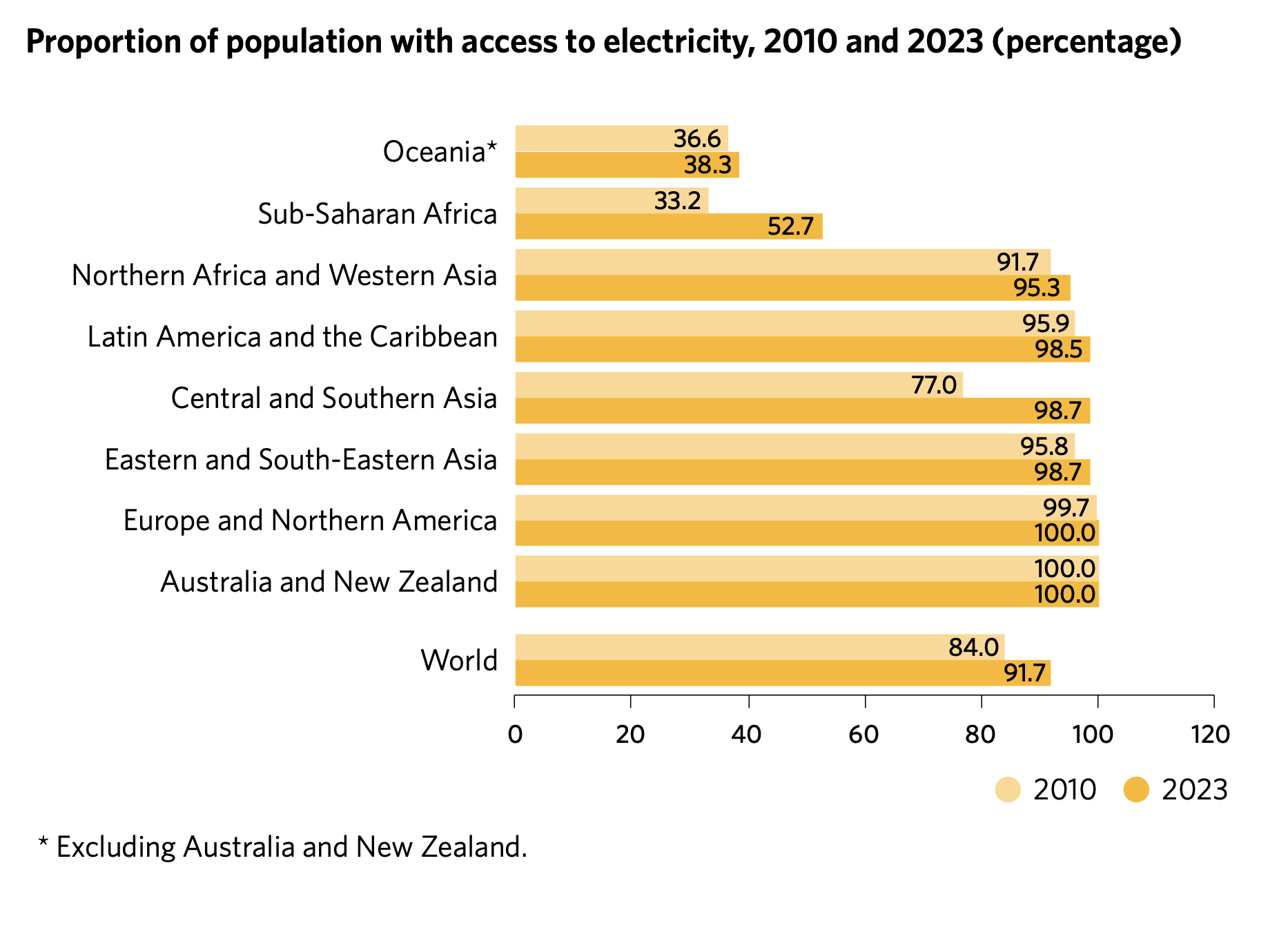
Electrification rose from 84% in 2015 to 91.7% in 2023, showing significant progress towards SDG 7. Forty-five countries achieved universal access, but Sub-Saharan Africa saw little change in its connected population, despite coverage increasing from 33% to 53%.
Renewable energy is the fastest-growing energy source today and is projected to surpass coal as the primary electricity source in 2025.
This transition is pressing as recent years have shattered temperature records, continuing an alarming upward trend. Temperatures surpassed the Paris Agreement's 1.5°C target. CO2 levels peaked, and effects like coral bleaching, melting glaciers and wildfires increased in their wake.
However, with risks like extreme weather, biodiversity loss and changes to Earth’s systems among the top concerns in the Forum’s Global Risks Report 2025, countries have increased their preparedness for natural disasters. Mortality from such events has halved between 2015 and 2023.
What is the World Economic Forum doing to promote sustainable urban development?
Funding the SDGs remains elusive (SDG 17)
The UN’s latest report finds that a wide funding gap remains to reach the SDGs by the 2030 target.
Developing countries must close a $4 trillion annual SDG financing chasm, while also facing a debt servicing burden of $1.4 trillion. Moreover, development aid declined by 7.1% last year, with further cuts expected in 2025.
Funding will be essential for making the necessary transitions for significant progress towards the SDGs, along with ongoing commitments to both international and local action – whether it’s eradicating poverty, feeding the world, improving global health and gender equality, or closing the digital divide.
Driving progress on the SDGs is central to the World Economic Forum’s Sustainable Development Impact Meetings. Taking place in New York between 22–26 September 2025, the meetings will bring together business leaders, policymakers, social entrepreneurs and international civil society organizations to share insights and examples of effective action to accelerate our journey towards 2030.
Don't miss any update on this topic
Create a free account and access your personalized content collection with our latest publications and analyses.
License and Republishing
World Economic Forum articles may be republished in accordance with the Creative Commons Attribution-NonCommercial-NoDerivatives 4.0 International Public License, and in accordance with our Terms of Use.
The views expressed in this article are those of the author alone and not the World Economic Forum.
Stay up to date:
Sustainable Development


Forum Stories newsletter
Bringing you weekly curated insights and analysis on the global issues that matter.