The future of innovation is collective but only if we reimagine how we work together
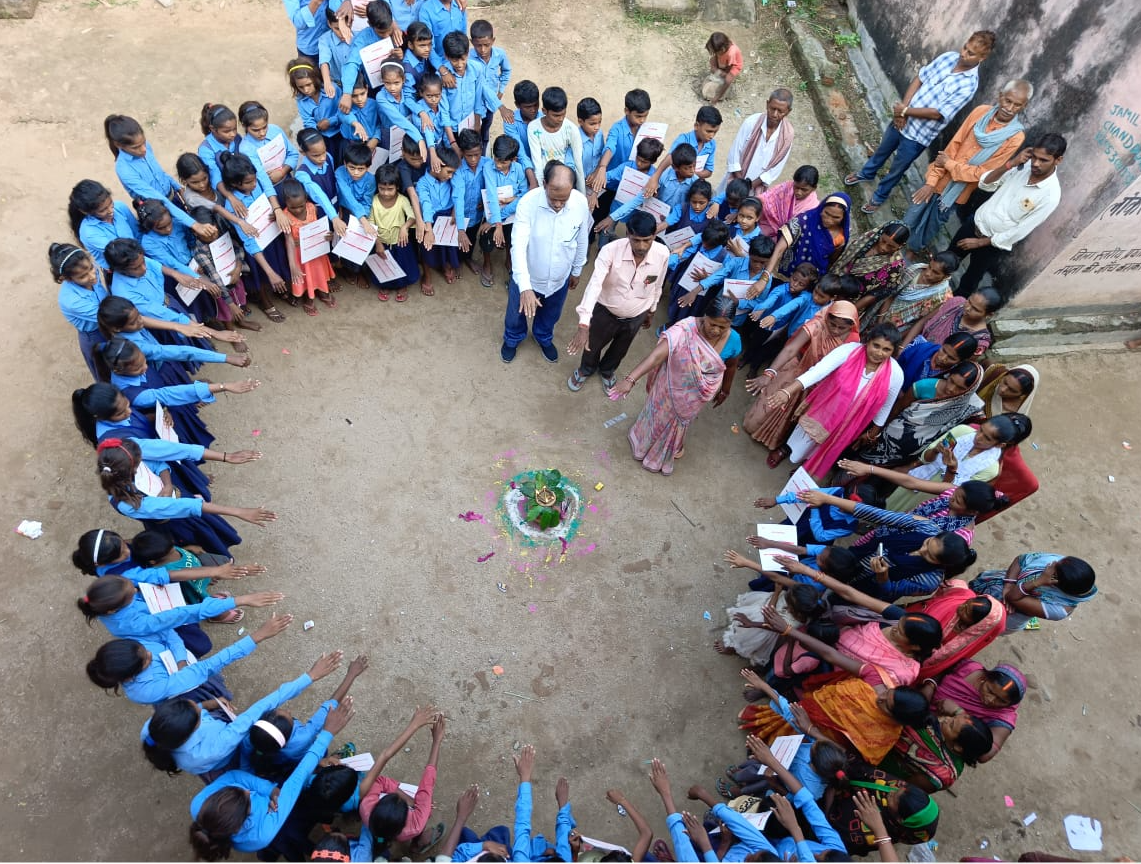
Collective social innovation is when communities, governments, markets and funders work together for a shared purpose. Image: Shikshagraha
François Bonnici
Director, Schwab Foundation for Social Entrepreneurship, Head of Social Innovation, World Economic Forum- Collective social innovation happens when communities, governments, markets and funders work side by side for a shared purpose.
- Systemic change requires funders to invest in long-term infrastructure such as relationships, trust and shared platforms, rather than short-term, siloed projects.
- Funders should value contribution over attribution, build trust as a core asset and act as orchestrators who enable collaboration across communities, markets and governments.
Humanity’s greatest strength has always been collaboration. Collective approaches, as a form of strategic collaboration, are a key area of innovation alongside technologies and financing to navigate the complex challenges of the 21st century.
Our most pressing challenges – climate disruption, education inequity, fractured trust in institutions – are still often addressed through fragmented initiatives, siloed funding and short-term projects.
These systemic challenges demand an in-kind response, one that strengthens connections across sectors, addresses root causes and builds the collective capacity of communities, markets and governments to align and act together.
Philanthropy often measures success through attribution and credit. However, collective action thrives when diverse actors come together to contribute to a shared goal.
”A redefined mandate for funders
Philanthropy often speaks the language of systems change. Yet much of the funding practice still resembles project financing: siloed initiatives, short-term outputs and a relentless focus on attribution.
What if the very models we rely on to fund change are quietly constraining it?
In Bridging Divides: Rethinking Collaboration Amid Global Crises, we noted that collective social innovators are pioneering new ways of working together as well as new solutions.
But what does that mean for philanthropy? How must funders reimagine not just what they finance but how they enable collective social innovation to thrive to enable systems change?
Collective social innovation happens when communities, governments, markets and funders reject siloes and work side by side to achieve a shared purpose.
Fund networks and platforms, not just projects
Evidence shows that the majority of philanthropy, almost 80–85%, remains programme-restricted. Only about 16–19% of grants go as unearmarked or general support. Most philanthropy still funds projects with clear outputs and timelines.
Yet, systemic change depends on networks, relationships and shared platforms – the invisible infrastructure that allows collective action to endure.
The Future is Collective, a report by the Schwab Foundation in collaboration with its community of Collective Social Innovators and the World Economic Forum, highlights case studies where funders enabled platforms and networks such as MapBiomas and Shikshagraha, which brought together actors across sectors – from global climate coalitions to grassroots education movements.
For example, in India’s Punjab state, the Punjab Education Collective brought together four civil society organizations and government institutions to transform the performance of the public education system. Through initiatives such as leadership programmes, parent-teacher conferences and teacher collectives, it helped the state rise from 13th to 1st in India’s national school rankings within two years, where it has remained for five years.
Investing in such projects means building the connective tissue that outlasts any single initiative.
Provide risk capital
Systemic change is uncertain and non-linear. It requires trial, error and space for adaptation. Traditional funding often penalizes risk, demanding proof of impact too early and discouraging experimentation.
What collective action needs instead is risk capital: patient, flexible resources that give networks room to test bold ideas, learn in real time and evolve solutions that address root causes.
ProjectTogether’s codification of a new operating model for mobilizing cross-sector alliances became possible because of “risk capital.”
Risk capital is not charity without rigour – it is strategic investment in long-term resilience. By being evidence-led rather than evidence-bound, funders can let emerging insights guide the journey, without stifling innovation under premature certainty.
Research indicates that addressing root causes yields long-term social benefits that significantly surpass the incremental outcomes of individual projects. For instance, a Bridgespan study found that systemic approaches can create impact on a magnitude and with a durability not achievable through isolated interventions.
Build trust capital
Trust is not a by-product of collaboration; it is its foundation. Just as financial capital fuels markets, trust capital fuels collective action. Building trust capital means resourcing participatory governance, open data systems and time for relationship-building.
These may look like “overheads” and may not always yield immediate, quantifiable outcomes but they are the very infrastructure of systemic change. Here, too, philanthropy must be guided by signals of strengthened relationships and legitimacy, even if these don’t fit neatly into conventional metrics.
When funders invest in collective capacity rather than isolated projects, the results are not incremental but transformational.
”Shift from attribution to contribution
Philanthropy often measures success through attribution and credit. However, collective action thrives when diverse actors come together to contribute to a shared goal. This requires a mindset shift: from controlling outcomes to enabling ecosystems, from asking “what did we fund?” to “what did we make possible?”
For funders, this means rethinking metrics to value contribution to system-level outcomes over attribution, encouraging shared credit in communications, supporting backbone organizations that enable collaboration and rewarding grantees for partnering and co-creating rather than competing.
Strive Together’s work on cradle-to-career with over 7,000 organizations is a great example of how holistic change for a child – from kindergarten readiness to securing a job – becomes possible when the funding ecosystem enables contribution as a norm.
Redefine leadership as orchestration
Systemic change does not emerge from command-and-control. It emerges from leaders who weave, host and convene, creating the conditions for others to act. Philanthropists can play this orchestration role: not at the centre but as enablers of collective social innovation.
This redefined leadership calls for humility, patience and a willingness to share power. In South Africa, for instance, the DG Murray Trust has played a crucial role in orchestrating platforms for diverse actors to align around child development, without claiming central ownership.
Shibulal Family Philanthropic Initiatives is enabling similar collective action and network building in India by weaving Shikshagraha.
Let’s reimagine together
Humanity’s greatest strength is collaboration and philanthropy’s greatest opportunity is to nurture it. The five shifts we have outlined are not abstract ideals but practical mandates – from funding shared infrastructure to backing distributed leadership.
A stronger funding ecosystem enables actors across society, government and markets to align their efforts and tackle root causes together. When funders invest in collective capacity rather than isolated projects, the results are not incremental but transformational.
This is what we mean when we say the exponential nature of our crises demands exponential collaboration. The urgency is clear: the way we fund must evolve from backing projects to enabling movements. The future is collective – our funding must be too.
Don't miss any update on this topic
Create a free account and access your personalized content collection with our latest publications and analyses.
License and Republishing
World Economic Forum articles may be republished in accordance with the Creative Commons Attribution-NonCommercial-NoDerivatives 4.0 International Public License, and in accordance with our Terms of Use.
The views expressed in this article are those of the author alone and not the World Economic Forum.
Stay up to date:
Social Innovation
Related topics:


Forum Stories newsletter
Bringing you weekly curated insights and analysis on the global issues that matter.


