UN pushes for action on major chronic diseases, and other health stories

Reducing premature death from non-communicable diseases is a global priority. Image: REUTERS/Lucy Nicholson (UNITED STATES)
Shyam Bishen
Head, Centre for Health and Healthcare; Member of the Executive Committee, World Economic Forum- This global round-up brings you health stories from the past fortnight.
- Top health news: UN summit to tackle NCD and mental health crises; Global progress against top killer diseases stalling; Fund shifts aid to world's poorest amid shortfall.
The Centre for Health and Healthcare is once again bringing health to the global stage during the Forum's upcoming Sustainable Development Impact Meetings in New York, from September 22 to 26, 2025. This year, as the world marks 80 years since the founding of the UN Charter and Bretton Woods institutions, leaders are gathering at a pivotal moment of geopolitical shifts, technological breakthroughs, and sustainability imperatives. Health sits at the centre of these conversations.
We’ve curated a dynamic mix of sessions and partner-led events that cut across today’s most pressing health priorities, including women's health, resilient health systems, climate and health, the brain economy and mental wellbeing, nutrition, health equity, and digital health. These sessions are designed to spark collaboration, scale innovation, and deliver real-world impact. We look forward to sharing outcomes from New York and to building momentum toward healthier, more resilient societies.
1. World leaders to confront failing NCD targets at UN summit
Heads of State and Government are preparing to gather at the UN General Assembly later this month for the Fourth High-level Meeting on noncommunicable diseases (NCDs), a critical summit aimed at tackling the world's leading causes of death and disability. The meeting in New York on 25 September is tasked with adopting a new, ambitious Political Declaration to accelerate global action on conditions like heart disease, diabetes, cancer and mental health disorders.
The summit's urgency is driven by a stark reality: the world is significantly "off track" to meet the 2030 Sustainable Development Goal of reducing premature mortality from NCDs by one-third. The meeting's framework documents state that chronic "underinvestment in health services has created a significant equity gap" in care for the billions of people affected.
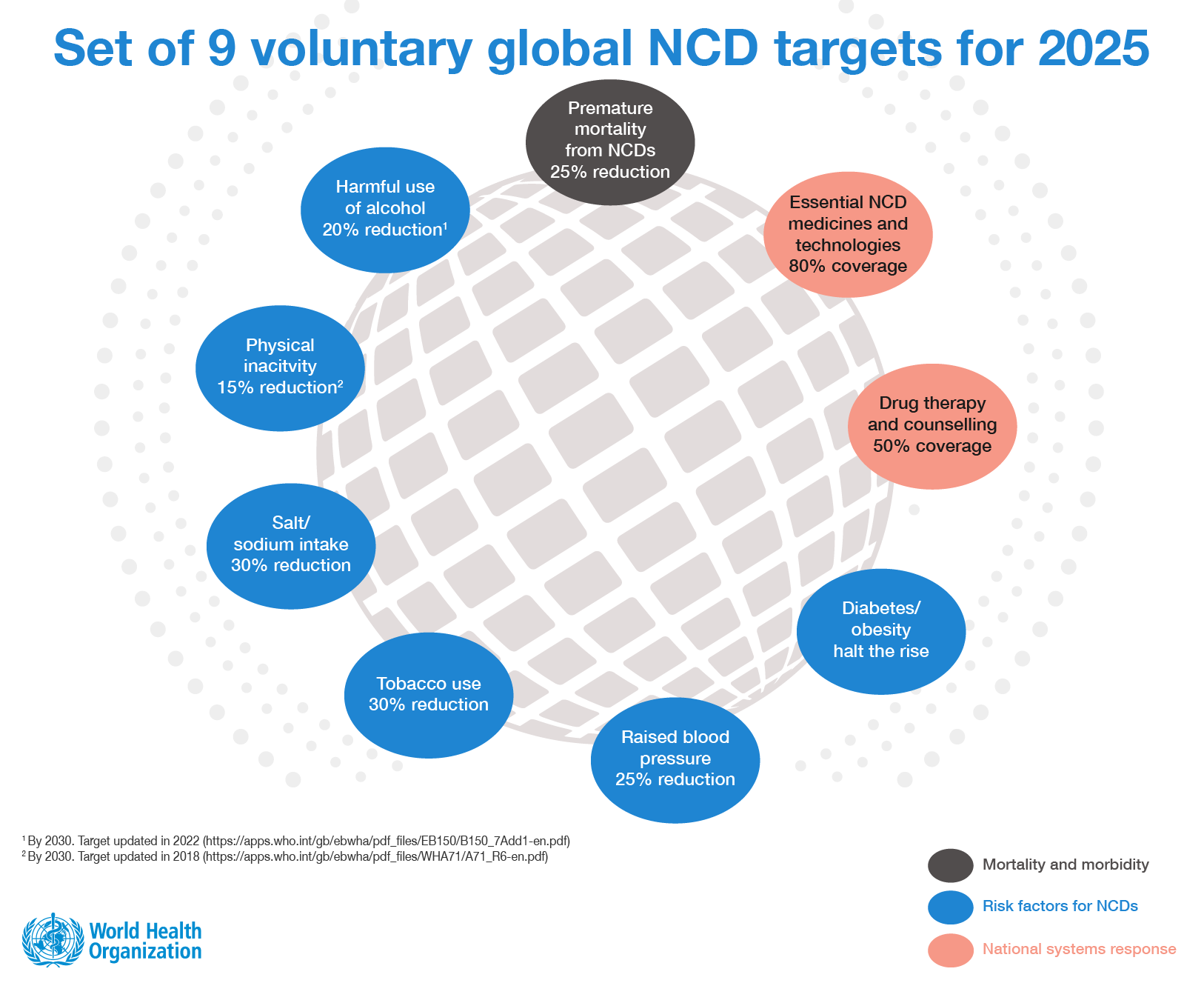
The scale of this challenge is underscored by recent data from the World Health Organization (WHO), particularly on mental health. The WHO's reports, which will inform the summit's discussions, revealed that over a billion people are living with a mental health condition, costing the global economy an estimated $1 trillion annually, while receiving a median of just 2% of health budgets.
In response, the new declaration is expected to move beyond a purely health-focused approach. It will call for "whole-of-government and whole-of-society collaboration" to address the underlying drivers of NCDs, urging member states to reshape health systems, commit to sustainable financing, and tackle the social, economic, and environmental factors that fuel these crises, the UN says.
How the Forum helps leaders strengthen health systems through collaboration
2. Study reveals slowdown in fight against leading causes of death
Progress against the world's leading causes of death – including cancer, heart disease and stroke – slowed significantly in the decade before the COVID-19 pandemic, according to a landmark new report from researchers at Imperial College, London.
The analysis, published in The Lancet, is described as the most comprehensive of its kind at a national level, tracking mortality rates in 185 countries from 2010-2019. It found that while reductions in deaths from cardiovascular diseases were the primary driver of progress, these gains were increasingly offset by rising mortality from dementia, other neuropsychiatric conditions, and certain cancers like pancreatic and liver.
In nearly two-thirds (60%) of countries, the rate of improvement was slower than in the preceding decade.
The report's authors, who will present their findings at the UN’s NCD summit, say the slowdown shows an urgent need to re-invigorate public health policies and healthcare programmes.
3. News in brief: Health stories from around the world
The Global Fund, a major financing partnership that raises and distributes international aid to fight Aids, TB and malaria, is redirecting its resources to the world's poorest countries due to cuts in foreign aid. Chief Executive Peter Sands said the shift is to support places with "no alternative". The Fund faces a $1.4 billion shortfall in its current 2024-2026 funding cycle.
Chinese authorities are using COVID-era measures, including insecticide spraying, quarantines and strict case reporting, to contain a record chikungunya outbreak in Guangdong province. The mosquito-borne virus, which causes fever and joint pain, has infected more than 10,000 people since July. The US Centers for Disease Control and Prevention has issued a travel health notice as global cases climb, with climate change accelerating the spread of mosquito-driven diseases worldwide.
Researchers from the University of South Australia have found that common pain relief medications like ibuprofen and acetaminophen may increase antibiotic resistance. Their study, conducted in aged care settings, showed that these drugs can increase mutations in E. coli, and using multiple medications together made the bacteria even more resistant, raising concerns about everyday medicines contributing to antimicrobial resistance.
In response to shrinking overseas aid and post-pandemic challenges, the Wellcome Trust has released a series of papers from five global experts calling for a fundamental redesign of the global health architecture. The initiative aims to spark a global dialogue on reform. Key proposals include:
- Shifting power from centralized, donor-led models to the regions and countries most affected by health crises.
- Integrating siloed sectors by creating new coordinating mechanisms, such as a proposed 'Global Commons Coordinating Council' to link health, climate and global finance.
- Embedding justice and fairness by ending what one author calls a 'saviourism' approach and redesigning systems to explicitly correct historic power imbalances.
For the first time, more children worldwide are obese than underweight, with 188 million affected, UN agencies report. Rising consumption of ultra-processed foods is displacing nutritious options, threatening growth, cognitive development and long-term health, they warn.
When we talk about malnutrition, we are no longer just talking about underweight children.
—Catherine Russell, Executive Director, UNICEF”4. More on health from Forum Stories
Could the bioeconomy be the key to solving some of the world’s biggest challenges – or a source of new risks? Advances in biotechnology, AI and global collaboration are driving breakthroughs in health, agriculture and climate solutions, but experts warn that building a secure and equitable bioeconomy requires careful oversight and shared responsibility.
A new twice-yearly injection could prevent HIV in high-risk populations, and the EU has just approved it. Find out how lenacapavir works, what Gilead is doing to expand access, and how it could reduce stigma worldwide:
License and Republishing
World Economic Forum articles may be republished in accordance with the Creative Commons Attribution-NonCommercial-NoDerivatives 4.0 International Public License, and in accordance with our Terms of Use.
The views expressed in this article are those of the author alone and not the World Economic Forum.

Forum Stories newsletter
Bringing you weekly curated insights and analysis on the global issues that matter.