Is Asia-Pacific ready for the era of precision medicine that could transform economies and lives?
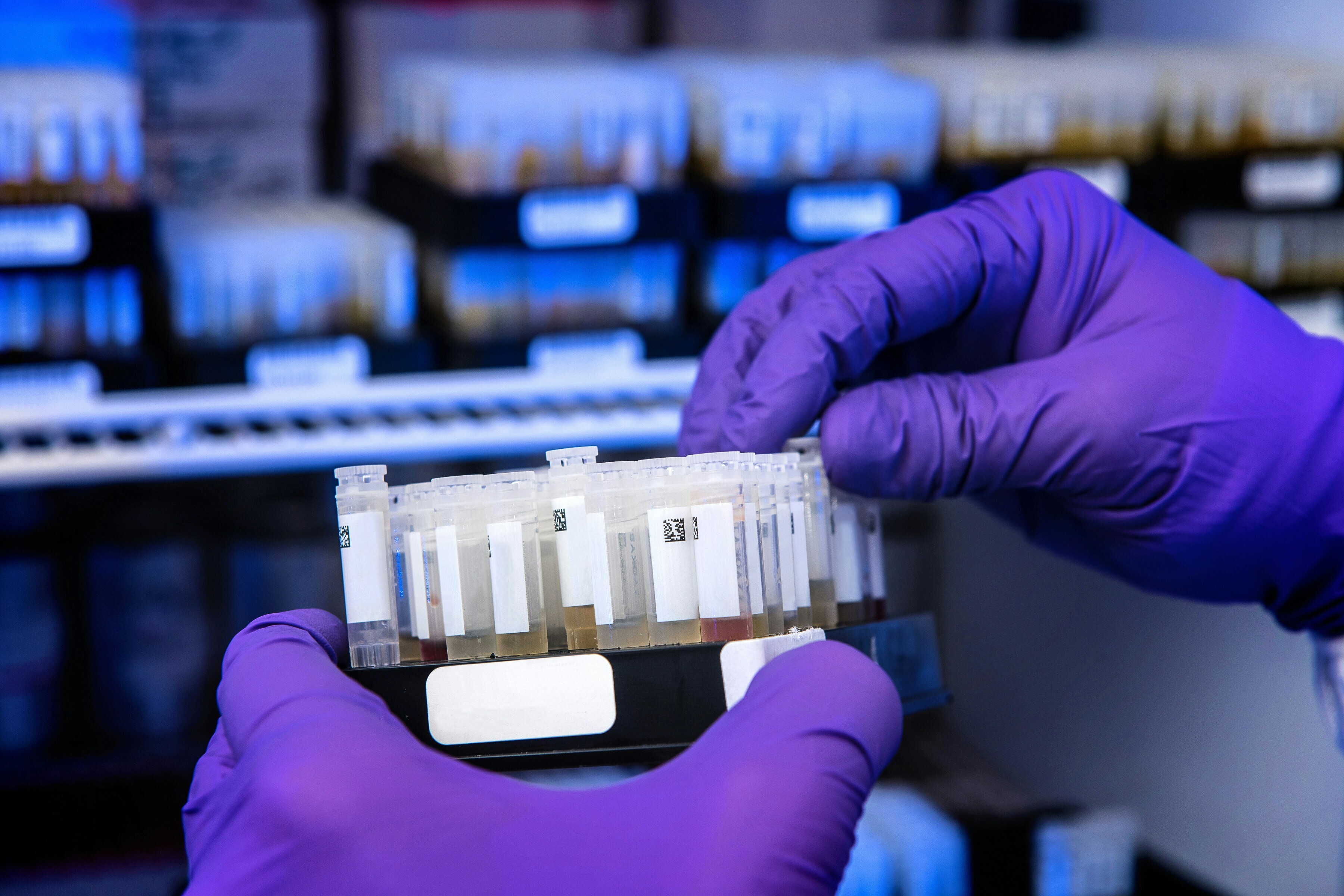
The era of precision medicine is set to transform entire economies Image: Photo by CDC on Unsplash
- Advances in advanced genomics and data science are helping to usher in a new era of precision medicine.
- Research has evaluated the whole-system benefits of precision therapies across the Asia-Pacific region, with a focus on Australia, China, Japan and Korea.
- The On the Cusp of a Cure report found that these innovations could transform the lives of more than 24 million patients and caregivers.
We are in the middle of a quiet but significant revolution in medicine. For decades, the dominant model has been to treat patients with standardized therapies.
That paradigm is now changing. Advances in advanced genomics and data science are helping to usher in an era of precision medicine. A wave of over 4,000 new precision therapies can fundamentally reshape how we approach and manage life-threatening diseases.
Shifting from a one-size-fits-all approach, we can now tailor treatments to patients’ own genetic makeup. For millions of patients, this wave means a departure from symptom management to potentially unlocking cures and extending lifespans.
We are seeing this revolution first-hand in chimeric antigen receptor T-cell (CAR-T) therapies. These treatments re-engineer a patient's immune cells to target and destroy cancer and represent a profound leap beyond conventional chemotherapy. They deliver the potential to transform a terminal diagnosis into a long-term survival treatment, alleviating immense human suffering and easing the downstream economic burden of chronic care.
For the Asia-Pacific region, this new era could not arrive at a more pressing time. The region shoulders nearly half of all global cancer incidence and is home to 258 million people living with rare diseases. These numbers are growing, so the need for solutions has never been greater.
The social and economic promise of the era of precision medicine
Discussions around precision therapies rightly emphasize individual patient impact, but often overlook their exponential societal and economic benefits. This limited perspective impedes the meaningful assessment of reimbursement pathways, preventing the full realization of their potential to benefit more patients, communities and entire economies.
First-of-its-kind research has evaluated the whole-system benefits of precision therapies across the Asia-Pacific region, with a focus on Australia, China, Japan and Korea. The On the Cusp of a Cure report series, a project I was a part of, found that these innovations could transform the lives of more than 24 million patients and caregivers who could regain the ability to return to work, participate fully in their communities and, most importantly, reclaim their lives.
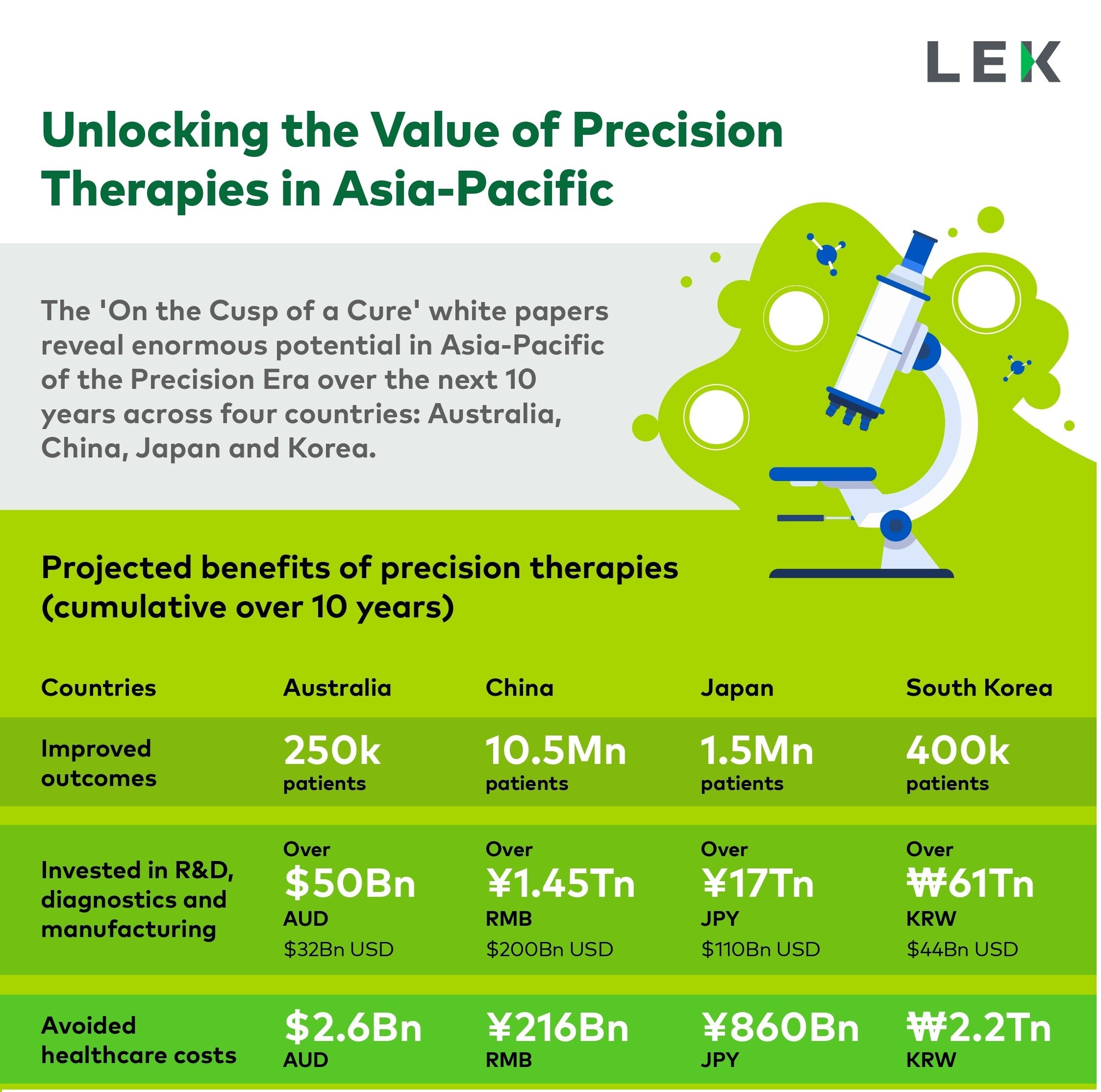
The economic potential is equally striking. Over the next decade, precision therapies are expected to drive approximately $450 billion in economic investment across the four markets, creating nearly 1.2 million jobs. Through a powerful multiplier effect, it could stimulate adjacent industries, fuel innovation and ripple through the wider economy; the total potential economic growth could reach an estimated $1.6 trillion.
These figures paint a clear picture. An initial investment is projected to be returned nearly fourfold in broader social and economic benefits. The conversation must shift to how we prime our regulatory frameworks to unlock these benefits for communities in the region and beyond now.
How the Forum helps leaders strengthen health systems through collaboration
Patients want a cure – precision therapies offer it to them
The era of precision medicine promises something extremely valuable: a lifeline for millions of patients and their families across Asia-Pacific. First, it offers a direct saving of $39 billion to healthcare systems across just four key markets, alleviating strain and freeing up critical capacity.
Second, these new therapies are lifesaving and their promise is already becoming a reality. CAR T-cell therapy, a treatment often used for blood cancers, offers a 50% survival rate for more than a third of patients. Instead of enduring multiple rounds of gruelling chemotherapy, a patient can receive a single therapy tailored specifically to their condition. A close friend underwent CAR-T therapy to treat her lymphoma after other treatments had failed. Today, she is cancer-free, back at work, spending time with her family and living the life she once feared she might lose.
This is the promise of the era of precision medicine: delivering the right treatment, for the right patients, at the right time — giving people the priceless gift of more time with their loved ones. It has already enabled patients with difficult-to-treat diseases to continue working, raise their children and contribute to society.
Seizing the moment
The research, however, also reveals that markets across the Asia-Pacific region face similar, significant barriers to adopting precision therapies. While some reimbursement rules may be clear, the evolving nature of precision therapies and the changing ways patients are managed mean that access is becoming increasingly difficult. This is compounded by limited awareness of these therapies across patient and provider groups and outdated healthcare infrastructure.
With the rising burden of disease in our region, overcoming these hurdles is a moral imperative. This is a rare opportunity to rewrite the future of healthcare. The stakes are too high to delay. It’s not just about advancing medicine; it’s about saving lives, reducing suffering and creating a healthier, more equitable world. Realizing this potential requires decisive action. Governments, healthcare providers and industry leaders must step up to invest in the infrastructure, policies and partnerships that will unlock the full benefits of this transformative era.
We must establish streamlined regulatory and reimbursement pathways tailored for precision therapies. Bold, patient-focused reforms that focus on removing barriers and delivering life-saving treatments to patients faster must be the catalyst for the precision era of medicine policymaking.
Industry must foster collaboration between public and private sectors to serve as another cornerstone of success, drive innovation and ensure equitable access. Access and affordability must be central to our efforts. Smart pricing strategies married with robust reimbursement frameworks can make these treatments available to all. We must also equip healthcare providers with the tools and knowledge to navigate this new landscape, using clear clinical guidelines and shared expertise to guide patients through complex treatment paths.
Finally, investing in local industries and nurturing homegrown expertise will create a sustainable ecosystem that ensures the benefits of this revolution are felt across the region. Education is critical. By increasing awareness among healthcare providers and communities, we can empower everyone to embrace the possibilities of precision medicine.
The era of precision medicine is within our reach, but only if we act boldly and decisively. The cost of inaction, measured in lives, suffering and lost potential, is far greater than the investment required to seize this moment.
Don't miss any update on this topic
Create a free account and access your personalized content collection with our latest publications and analyses.
License and Republishing
World Economic Forum articles may be republished in accordance with the Creative Commons Attribution-NonCommercial-NoDerivatives 4.0 International Public License, and in accordance with our Terms of Use.
The views expressed in this article are those of the author alone and not the World Economic Forum.
Stay up to date:
Data Science


Forum Stories newsletter
Bringing you weekly curated insights and analysis on the global issues that matter.
More on Health and Healthcare SystemsSee all

Shyam Bishen
April 9, 2026


