Building a future-ready society so people can live long and age well
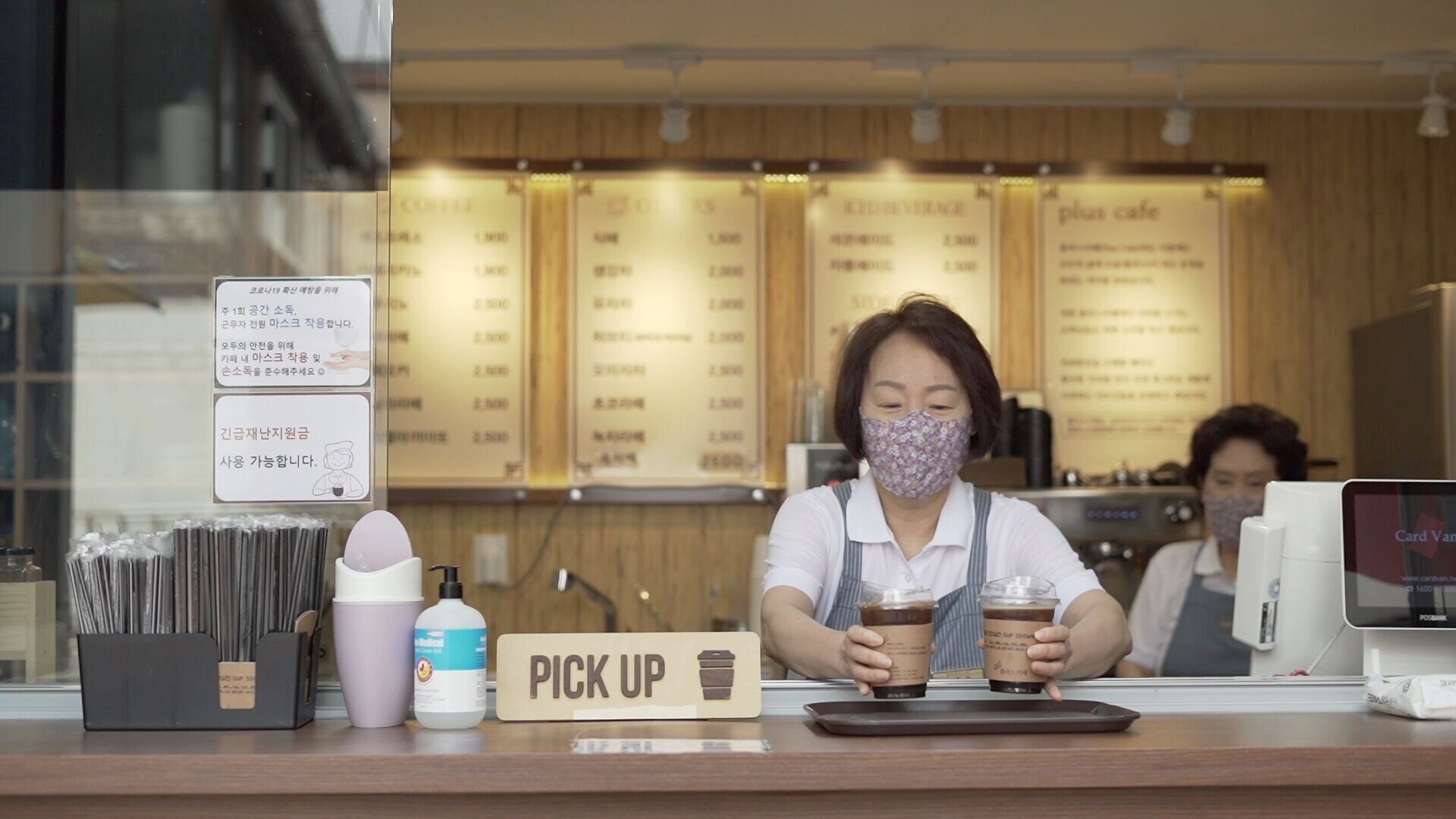
Older people represent a "silver dividend" by contributing a lifetime of skills, experience, care and resilience to their communities. Image: WHO/Paulus
Lin Yang
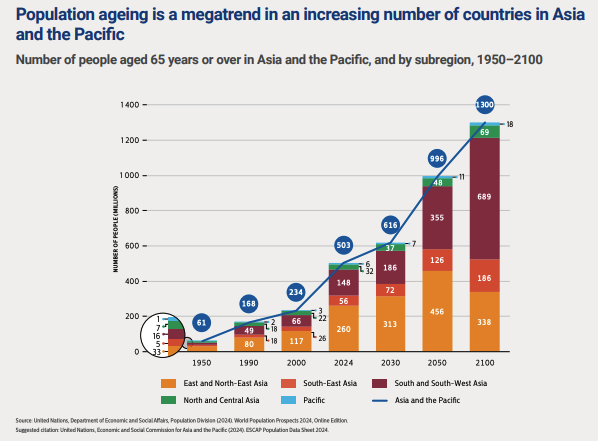
Deputy Executive Secretary for Programme, United Nations Economic and Social Commission for Asia and the Pacific (UNESCAP)- People are living longer across Asia and the Pacific, with those aged 65 or older set to almost double to around one billion by 2050.
- Older people represent a "silver dividend" because they can contribute a lifetime of skills, experience, care and resilience to their communities.
- This UN International Day of Older Persons, governments, employers and communities must start doing more to support older people.
Across Asia and the Pacific, older family members, friends and neighbours are workers, caregivers, innovators and community anchors. About 503 million people aged 65 or over — roughly 60% of the world’s older people — currently live in Asia-Pacific. By 2050, that number will almost double to around one billion.
Contrary to the fears of many governments and policy-makers, ageing is not socioeconomic decline. With the right policies and investment, longer lives can be healthier, more productive and fulfilling.
In fact, older people could represent a "silver dividend". They can contribute a lifetime of skills, experience, care and resilience to their communities. This vision of an ageing population as a triumph of development is grounded in the Madrid International Plan of Action on Ageing, the UN Decade of Healthy Ageing (2021–2030) and the 2030 Agenda for Sustainable Development and the Pact for the Future.
But to fully realize this vision, governments, businesses and communities must act now. Some countries are already taking this vision forward with policies and action plans that support people to live longer and age well. These countries prove that three shifts can make this vision real.
Universal health coverage for all older people
Universal Health Coverage (UHC) is more than a policy promise, it’s about making sure everyone, everywhere can get quality care without financial ruin.
To achieve this, health systems need to extend their reach beyond hospital corridors and onto people’s doorsteps. This means bringing care closer to where people live, with a focus on prevention-led, primary care-centred services and person-centred community support. This should include long-term care that enables autonomy, empowers families and strengthens community bonds and cohesion.
The WHO Integrated care for older people (ICOPE) model, for example, helps primary healthcare teams detect people’s needs early through brief screening and personalized care plans linked to home and community support. These services aren’t only for older people, they’re future-ready avenues that can apply across lifetimes and allow people to age in place with dignity and independence. Digital tools and services, and assistive technologies can also help to address inequities and keep people independent.
In Thailand, for example, nurses and community workers bring long-term care into neighbourhoods under the country’s Universal Coverage Scheme. And across the Pacific Islands, village-focused outreach – from women’s groups in Samoa to mobile clinics in Fiji – delivers care to remote communities.
Care work that's valued, not invisible
While long-term care is an essential part of health and social systems, it is also a vast domain of human work – much of it unpaid and carried out disproportionately by women. Instead, care work must be seen as a productive, skilled job that keeps societies going. Valuing and professionalizing it can turn invisible hours into visible investment.
Governments can lead by investing in the care workforce through competency frameworks, fair pay and safe working conditions. They can use gender-responsive budgets and disaggregated data drawn from time-use surveys and national transfer accounts to track who gives and receives care. They can also design mixed models of long-term care (LTC) that integrate home- and community-based services with primary health care and social protection, so families are supported, not left alone.
Many countries are demonstrating such pathways – from insurance-based LTC schemes in the Republic of Korea to municipal service networks in Shanghai, China and community-based care in Singapore – showing that care systems can be both humane and fiscally smart.
Participation and resilience at every age
It’s vital to acknowledge that older people are not passive recipients of support – they should be active contributors, co-designers and decision-makers.
Social isolation and loneliness erode health, independence and resilience. Effective responses include social protections, digital inclusion and accessible and supportive environments. The fix is not a single programme, however, but smart design and implementation that makes human connection the default.
This means enabling flexible work and reskilling or upskilling older people, as well as building age-friendly, accessible and universally designed housing, transport and public spaces. Ensuring affordable, reliable digital access with support to use it is also key, as is co-designing climate-smart services that strengthen resilience, and investing in community hubs that link people to groups and learning. Strong income and care support reduces the pull toward isolation.
Significant advances are already being made. Viet Nam’s Intergenerational Self-Help Clubs, for example, are voluntary community-based gatherings where people, many of them older, come together for mutual support, peer-learning and socialization. And in the Maldives, the government is establishing community centres for older people across the island-nation that offer social support as well as cultural and wellness activities.
Enabling this kind of participation and resilience can help societies to turn silver into gold, transforming ageing into a source of shared strength and wellbeing.
Living longer, healthier and more fulfilling lives
The ageing of the population in Asia and the Pacific is accelerating, but this presents a once-in-a-generation opportunity to unlock older people’s contribution to society.
This means reorienting health systems, investing in care and boosting the value of unpaid care, and tackling social isolation. By acting now to change the perception of ageing, we can ensure longer lives are healthier and more fulfilling.
This UN International Day of Older Persons, governments, employers and communities must cast aside stereotypes and genuinely value and engage with older people. By building caring societies in the here and now, we can all secure a future worth celebrating.
Don't miss any update on this topic
Create a free account and access your personalized content collection with our latest publications and analyses.
License and Republishing
World Economic Forum articles may be republished in accordance with the Creative Commons Attribution-NonCommercial-NoDerivatives 4.0 International Public License, and in accordance with our Terms of Use.
The views expressed in this article are those of the author alone and not the World Economic Forum.
Stay up to date:
Longevity Economy
Related topics:


Forum Stories newsletter
Bringing you weekly curated insights and analysis on the global issues that matter.
More on Health and Healthcare SystemsSee all

Saia Ma’u Piukala
April 5, 2026


