Healing hands, hurting minds: The mental health crisis among Europe's medical workers
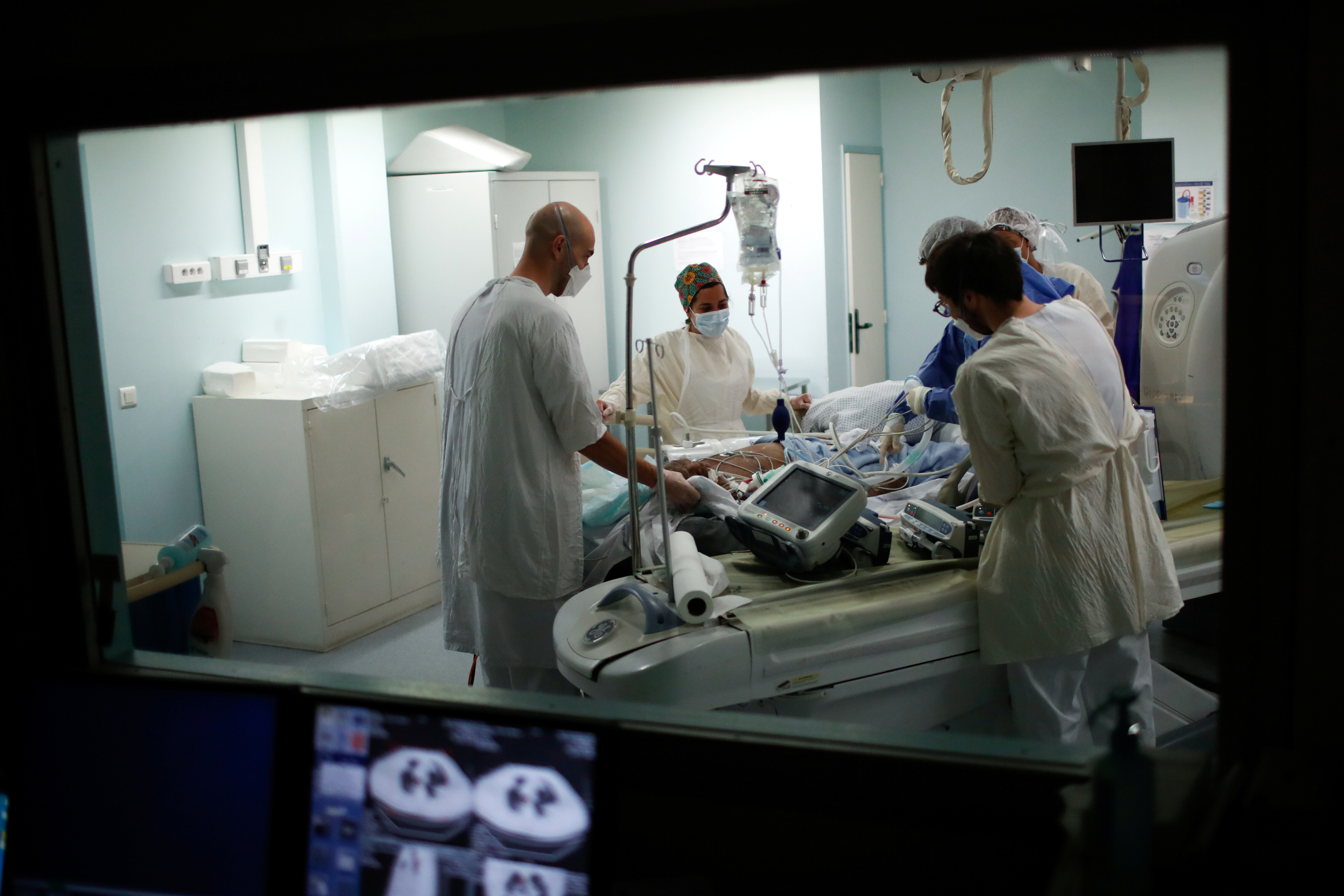
A widespread mental health crisis is endangering health workers and medical systems across the EU. Image: Reuters/Gonzalo Fuentes
- A widespread mental health crisis is endangering health workers and medical systems across the EU.
- Long-standing neglect, underinvestment and complacent policy are putting unsustainable pressure on those who work in European healthcare.
- Immediate action is needed on relieving workloads and eradicating workplace violence, while using technology where appropriate to optimize systems.
As she nears the end of a 24-hour shift, an exhausted doctor double-checks the treatment of her last patient, who’s in pain but needs to be discharged to free up beds. Despite being mentally and physically drained, her focus remains on the patient in front of her.
Stepping out of the hospital, she’s immediately met with a different kind of pain – sharp, verbal abuse from relatives insisting their loved one must remain admitted. They plead for more days of care amid a shortage of beds. A wave of guilt washes over her, even though she’s raised this dilemma with management repeatedly.
At home, there’s no time to decompress. Just a few precious hours to rest before it’s time to get her own child ready for school. Sadly, this story is not unique. It’s the silent reality for thousands of doctors and nurses across Europe, carrying the heavy weight of burn-out, anxiety and stress.
Doctors and nurses in our region are in crisis. Today, on World Mental Health Day, I say loud and clear: Society is failing those who dedicate their lives to caring for others.
The largest ever survey of mental health and well-being of health workers across the EU plus Iceland and Norway has exposed some uncomfortable truths. One in three doctors and nurses is struggling with depression or anxiety. One in 10 has recently thought they would be better off dead. Let that sink in. These are not isolated cases of exhaustion. They are systemic failures, born of years of neglect, underinvestment and complacency at the highest levels of policy.
Violence against health workers is rampant: A third endure bullying or threats in the workplace, and one in 10 has been physically assaulted or sexually harassed. A quarter of doctors work more than 50 hours per week, often on temporary contracts that leave them vulnerable and insecure, further adding to their anxiety about job security.
Unsafe and unsupported working conditions are taking their toll. Doctors and nurses exposed to long hours, night shifts, violence and heavy workloads are twice as likely as the general population to contemplate suicide. This is not just a personal tragedy for each affected health worker. It is a direct threat to the functioning of our health systems, affecting each and every one of us.
And yet, despite all this, our survey also shows the majority of health workers remain motivated by a sense of purpose. They are still showing up for their patients every day, even as we allow their well-being to be eroded. But let’s be clear: Dedication is not an infinite resource. Without radical change, we will break the backbone of European healthcare: its people.
The time for discussion is over; we need immediate, concrete action. This means implementing a zero-tolerance policy for violence and harassment in every health setting. It’s time to end the culture of working to the point of collapse by establishing enforceable limits on overtime and creating fair, predictable shift patterns. Smarter workflow planning supported by digital technologies can help lighten workloads instead of increasing them. AI can support doctors and nurses by automating tasks such as documentation, scheduling or non-urgent triage. It should be treated as tool to relieve pressure, never as a substitute for investing in people.
Health workers must also have guaranteed and stigma-free access to mental healthcare. Finally, we need to hold leadership accountable. Health ministers and hospital directors must be held responsible for the culture and safety of their workplaces.
If these measures sound bold, consider the alternative: By 2030, Europe faces a shortfall of nearly 1 million health workers. But it is not a soft metric – it is as fundamental as hospital capacity or surgical outcomes. If our health workforce collapses under the weight of despair, health systems in our region collapse with it.
Let me be blunt: The suffering of doctors and nurses is not inevitable. It is the result of political choices to underfund, to understaff, to look the other way when violence occurs, to view burn-out as dedication. These choices must end.
How the Forum helps leaders strengthen health systems through collaboration
Leaders in the European region must now make a different choice: to defend the defenders of our health; to recognize that their well-being is not optional, but essential; to act, not tomorrow or after another report, but now.
Because every day we delay, we gamble with the lives of those who care for us – and with the health of millions across our region.
Don't miss any update on this topic
Create a free account and access your personalized content collection with our latest publications and analyses.
License and Republishing
World Economic Forum articles may be republished in accordance with the Creative Commons Attribution-NonCommercial-NoDerivatives 4.0 International Public License, and in accordance with our Terms of Use.
The views expressed in this article are those of the author alone and not the World Economic Forum.
Stay up to date:
Mental Health
Related topics:


Forum Stories newsletter
Bringing you weekly curated insights and analysis on the global issues that matter.
More on Health and Healthcare SystemsSee all

Shyam Bishen
April 9, 2026


