How investing in urban resilience can foster sustainable growth and long-term competitiveness
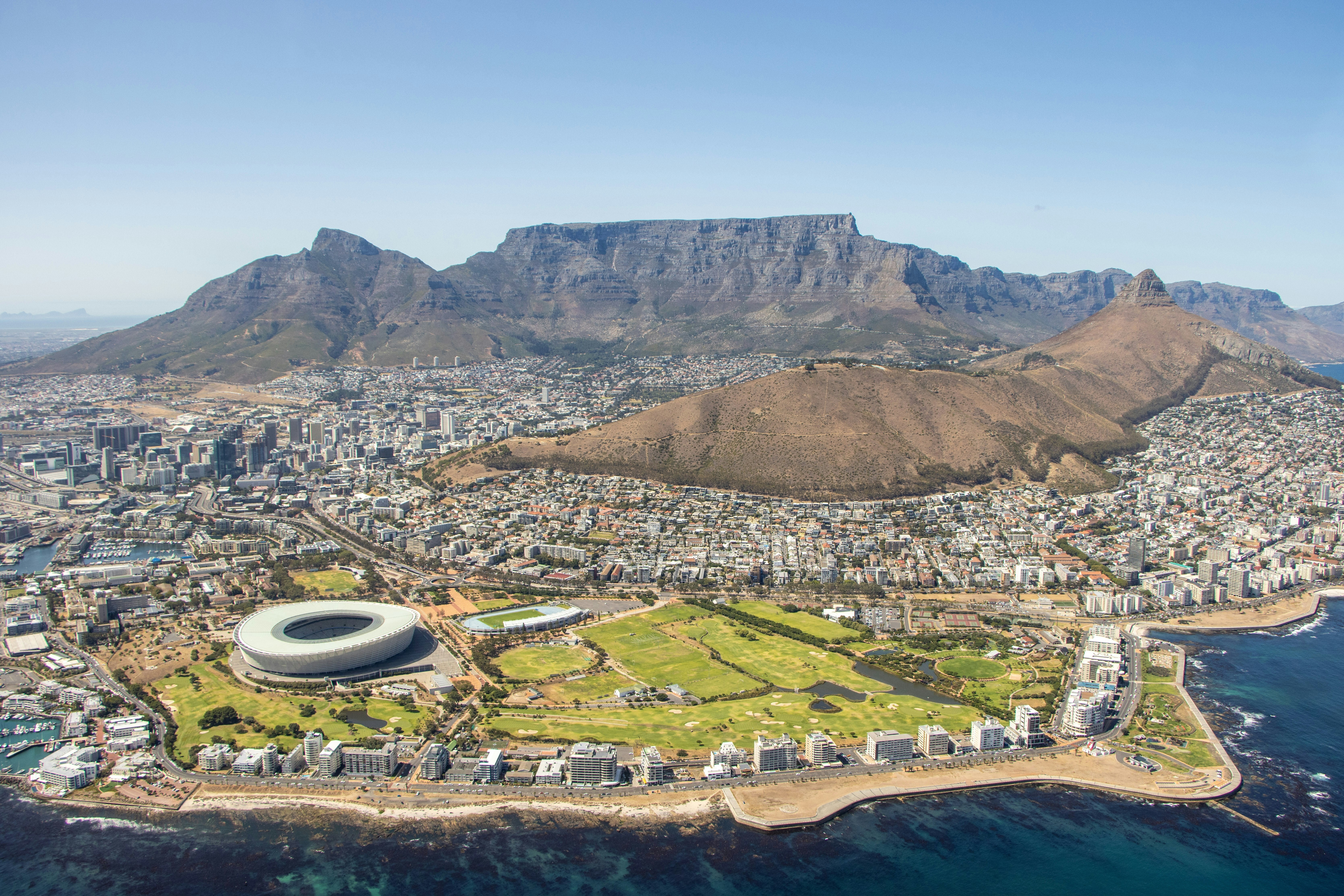
Cape Town is an example of where a new urban resilience economy is emerging. Image: Unsplash/Marlin Clark
Nathaniel Echeverria
Resilience Finance and Engagement Lead, North America, Resilient Cities Network (RCN)- A new resilience economy is emerging where measurable impact, inclusive growth and strategic collaboration unlock the full resilience dividend.
- Cities such as New York, Los Angeles and Cape Town are turning resilience planning into an engine for investment, linking climate action with inclusive economic growth.
- Cross-sector partnerships are translating climate risk into opportunity, advancing data-driven, finance-ready models that strengthen both infrastructure and communities.
As climate shocks intensify – driving over $300 billion in annual losses worldwide – cities and businesses are recognizing resilience as a major market opportunity.
Across low- and middle-income countries, building resilient, low-carbon infrastructure will require up to $821 billion annually through 2050 to safeguard trillions in future value.
The private sector is responding: climate resilience technologies and services could attract more than $1 trillion in private capital by 2030, spanning infrastructure, agriculture and water management.
In the United States, only one-third of disaster losses are insured, leaving communities and governments exposed. Nearly one in five homes – worth an estimated $8 trillion – face severe hurricane risk without adequate protection. These widening protection gaps heighten fiscal and financial volatility.
Every dollar invested in resilience can yield tenfold returns through avoided losses, job creation and stronger local economies. Leading investors now treat adaptation as a new asset class – one that protects value and drives returns.
Leading investors now integrate climate adaptation into portfolios, viewing resilience as a new asset class that protects value and generates returns.
By aligning the incentives of cities, investors, insurers and developers, a global marketplace for resilience is emerging.
“This is not just about strengthening infrastructure,” said Lina Liakou, managing director of the Resilient Cities Network. “By shaping resilience portfolios that attract private capital, we are making resilience practical, measurable and investable.”
“The scale of climate risk is simply too big for any city or company to tackle on its own,” said Jeff Merritt, head of Urban Transformation at the World Economic Forum.
“It’s going to take deep collaboration – across sectors and geographies – to unlock the investment, innovation and partnerships needed to build resilient systems that strengthen both communities and competitiveness.”
The imperative to bend the risk curve
Intensifying climate threats and mounting financial losses are heightening the urgency to reduce both physical and fiscal exposure to climate shocks.
From San Francisco to South Florida, shifting climate dynamics are reshaping local economies, straining infrastructure and exposing the fragility of global risk systems. Unchecked climate risk is fast becoming uninsurable, unaffordable and unsustainable.
In the insurance sector, creating sustainable risk models amid escalating climate events demands cross-sector collaboration, linking municipal planning, public finance, financial innovation and risk modelling, to enable proactive adaptation rather than reactive recovery.
The solution is multifaceted, however. Zoning codes, land use decisions and building standards all determine whether communities can withstand and recover from shocks.
Encouragingly, new partnerships are demonstrating progress. The Insurance Institute for Business and Home Safety, for example, partners with policymakers and industry to develop science-based building standards that reduce losses from high wind, hail and wildfire.
Insurers are increasingly acting as resilience partners, developing products that reward climate-smart design and incentivize prevention.
”Similarly, a recently released white paper from the Resilient Cities Network, in partnership with Tokio Marine, Under Pressure, Overdue: The Portfolio Approach and Financing Cities for Resilience, highlights growing alignment between insurers and city leaders. It warns that without a major shift in how cities fund resilience, many risk economic decline and disinvestment.
The report recommends a “portfolio approach,” connecting resilience planning with strategic capital mobilization so cities can proactively build and maintain critical yet underfunded resilience projects.
“Insurance must go beyond payouts,” said Brad Irick, managing executive officer and co-head of international, Tokio Marine Holdings. “By partnering with cities from the start, we can help price and reduce risk, mobilize capital and protect long-term economic competitiveness.”
From crisis management to capital mobilization
Cities are shifting from reactive disaster response to proactive, investment-ready resilience planning.
Global experience shows that resilience depends on mobilizing capital – not only as protection against loss but as a driver of sustainable economic growth.
In New York City, Hurricane Sandy catalyzed a new approach to resilience finance. Last year, the Department of Environmental Protection convened a Resilience Finance Task Force with public and private stakeholders to prioritize resilient capital projects and fund ongoing maintenance.
Taskforce recommendations have led the city to explore value-at-risk modelling and assess various value-capture approaches that align insurance incentives with city-wide risk reduction.
To help, the city is participating in the Global Risk and Resilience Fellowship, a collaboration between the Resilient Cities Network, Howden Insurance and the wider Sustainable Markets Initiative Insurance Task Force, connecting insurance professionals with senior city leadership to develop resilience-building risk transfer solutions.
Already, the Fellowship has partnered with 12 cities globally – e.g. Norfolk, Oakland, Glasgow, The Hague, Lagos and Cape Town.
In Los Angeles County, partnerships between local government and utilities and technology providers are linking wildfire management, water security and equitable climate adaptation.
Cape Town has embedded resilience into strategic planning, project management and financial decision-making, linking data on infrastructure, service delivery and revenue collection with financing tools such as green bonds and development bank partnerships to unlock capital, while maintaining flexibility across its portfolio.
In Broward County, Florida, climate vulnerability from hurricanes and sea level rise has prompted a proactive, data-driven resilience strategy.
Under its chief resilience officer, the county has integrated technical risk assessments, stakeholder engagement and cost-benefit analysis into planning for infrastructure, such as stormwater storage, pumps and elevated seawalls, while linking these to municipal finance and insurance markets to make climate adaptation projects effective and investable.
“It was clear that while the business community was supportive of resilience planning in general, their ability to endorse a large-scale plan requiring sizable financing would hinge on the county’s ability to produce a plan that delivered on flood risk and economic metrics,” according to Dr Jennifer Jurado, chief resilience officer of Broward County, Florida.
Private sector's evolving relationship with climate risk
Across industries, the private sector is redefining its relationship with climate risk, shifting from managing losses to reducing risk and creating long-term value.
Insurers are increasingly acting as resilience partners, developing products that reward climate-smart design and incentivize prevention. These include premium discounts for resilient buildings, coverage linked to verified adaptation measures and partnerships that help cities price and mitigate risk from the outset.
For example, State Farm’s California Wildfire Resilience Partnership helps homeowners rebuild and retrofit properties to higher fire-resilience standards, providing financial support and guidance on preventive measures.
Similarly, Tokio Marine’s acquisition of Integrated Design & Engineering Holdings Co., Ltd, enables the insurer to integrate engineering insights with risk modelling, helping cities and businesses design climate-resilient infrastructure and reduce potential losses before disasters occur.
Investors, too, are treating resilience as a measurable asset class. Through blended finance, resilience bonds and impact funds, they are mobilizing capital for projects that strengthen infrastructure, protect supply chains and stabilize local economies.
Structured finance vehicles, such as those offered by the Vermont Bond Bank, allow smaller municipalities to access adaptation capital through pooled instruments and portfolio approaches, and to examine emerging tools like parametric insurance that attract private investors and lower borrowing costs.
Developers and infrastructure leaders are embedding climate-proofing into urban projects through flood-resilient design, green infrastructure, and adaptive land use, enhancing both bankability and community outcomes.
The Urban Climate Resilience Programme, led by the Zurich Foundation, exemplifies this collaboration, working across nine countries to help urban communities facing extreme heat and flood risks while linking local action to global resilience goals.
A call to collective action: Urban resilience readiness
Resilience readiness lies in building measurable dividends, unlocking finance through engagement with insurers and developers, integrating robust data into investment decisions and targeting resilient supply chains and infrastructure that can withstand and adapt to future shocks.
The stakes could not be higher. Climate risks are escalating, as are opportunities to create investable, impact-driven urban solutions.
Realizing the resilience dividend requires collective action: collaboration across sectors, innovation in financing and governance and a shared commitment to translate planning into capital flows that strengthen communities and local economies.
The World Economic Forum and Resilient Cities Network are collaborating across their global networks of cities and industry to unlock private investment for urban resilience. During the Urban Transformation Summit in October, city officials, insurers, investors and developers explored new models to close the $4.3 trillion annual resilience investment gap, turning climate adaptation into a driver of long-term competitiveness.
Don't miss any update on this topic
Create a free account and access your personalized content collection with our latest publications and analyses.
License and Republishing
World Economic Forum articles may be republished in accordance with the Creative Commons Attribution-NonCommercial-NoDerivatives 4.0 International Public License, and in accordance with our Terms of Use.
The views expressed in this article are those of the author alone and not the World Economic Forum.
Stay up to date:
Cities and Urbanization


Forum Stories newsletter
Bringing you weekly curated insights and analysis on the global issues that matter.
More on Built Environment and InfrastructureSee all

Jeff Merritt and Vivian Brady-Phillips
February 27, 2026


