Towards personalized care for all: Abu Dhabi's digital health quest
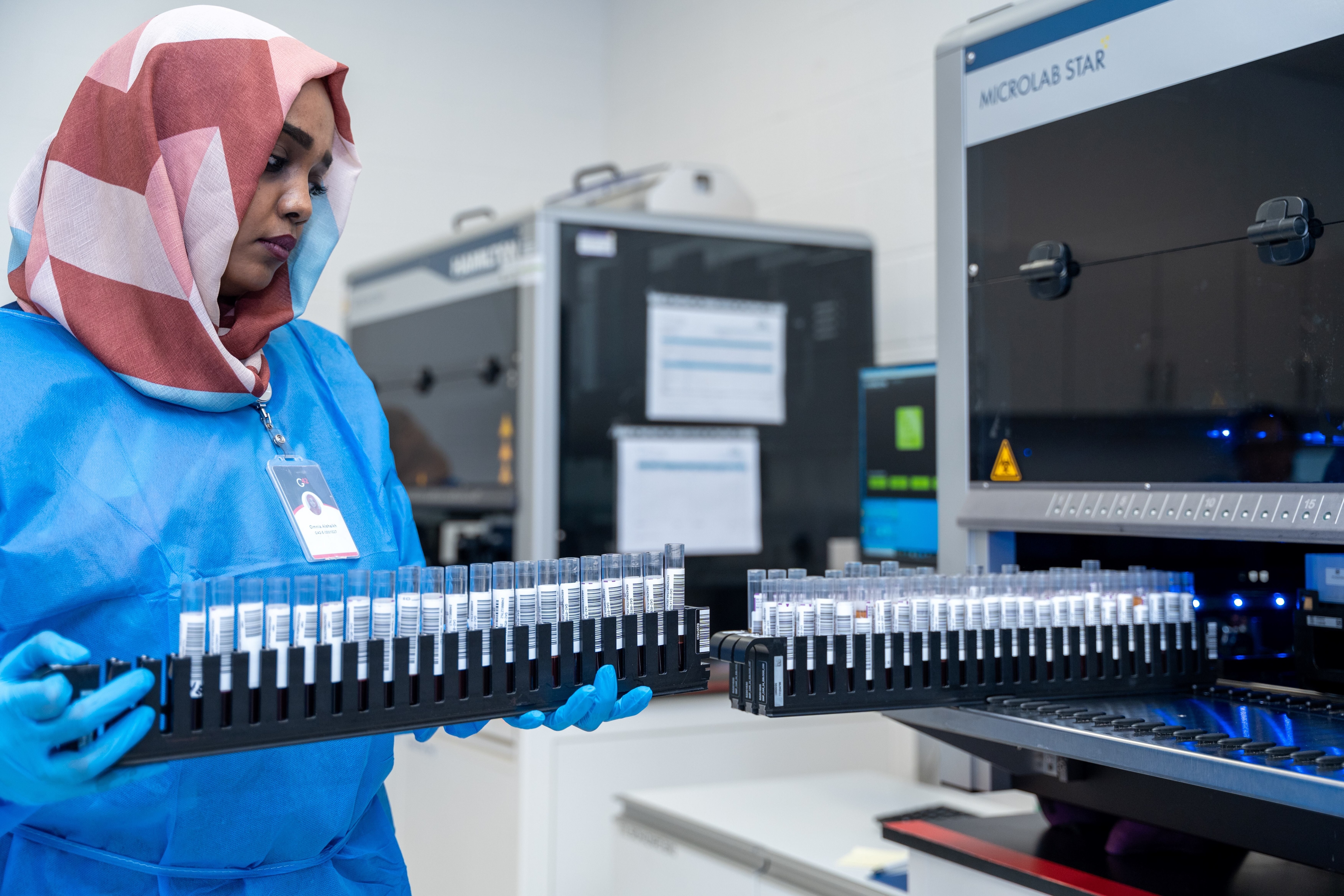
Recognized by the World Economic Forum in 2025 as a rising leader in digital health, Abu Dhabi is demonstrating how visionary governance, interoperable data and technology, and impact-driven execution can turn health intelligence into real health impact. Image: Abu Dhabi Media Office
- In line with the UN agenda, Abu Dhabi is leveraging technology to tackle non-communicable diseases (NCDs) through smarter, more proactive and more equitable interventions.
- It has created a fully integrated ecosystem powered by AI that delivers personalized population health at scale.
- The Abu Dhabi health ecosystem is a proven model with demonstrated impact that can serve as a blueprint worldwide.
For more than a decade, global leaders have recognized the rising burden of chronic, non-communicable diseases (NCDs) such as heart disease, diabetes, obesity and cancer. These conditions are the leading cause of death globally – accounting for 71% of all deaths – and represent the most costly, preventable health challenge of our time.
Abu Dhabi, however, is establishing a new global benchmark for health, demonstrating that prevention at population scale is possible. Advances in digitalization, AI, multimodal data and life sciences technology are making it possible to move decisively from reactive “sick care” to predictive, proactive and personalized healthcare.
Guided by the UAE’s vision to lead in health and digital innovation, Abu Dhabi’s Department of Health (DoH) is building one of the world’s most intelligent and efficient health systems. Not merely offering a sovereign, scalable model for nations seeking to transform population health, the approach also advances key priorities on the global agenda, from health equity and digital sovereignty, to responsible AI governance.
From the outset, the DoH has recognized that next-generation health services require a real-time view of each individual’s health, environment and genetic profile. Abu Dhabi’s goal was not simply to modernize care delivery, but to design foundational infrastructure that enables personalized, preventative health interventions. Crucially, the approach is scaleable, ensuring that such care becomes a public good for all, not a luxury of the few. It aims to guide long-term population health strategies, resource planning and innovation cycles.
As countries confront the economic and social burden of NCDs, the United Nations General Assembly’s 2025 agenda reinforces the importance of innovation and prevention in tackling this crisis. More specifically, clause 39 of the draft resolution calls for leveraging technology for NCD control, supporting the direction Abu Dhabi is taking.
Recognized by the World Economic Forum in 2025 as a rising leader in digital health, Abu Dhabi is demonstrating how visionary governance, interoperable data and technology, and impact-driven execution can turn health intelligence into real health impact.
A strategic framework for intelligent health
Abu Dhabi’s goal is clear: Help people live longer, healthier and more productive lives, while reducing pressure on the healthcare ecosystem, and building long-term economic resilience.
At the core of its digital health transformation lies a unified strategy: Predict, Prevent and Act to Cure and to Restore. This is powered by Abu Dhabi’s Intelligent Health System, which integrates medical records, insurance data, genomics, environmental and lifestyle data into a fully sovereign, privacy-protected ecosystem.
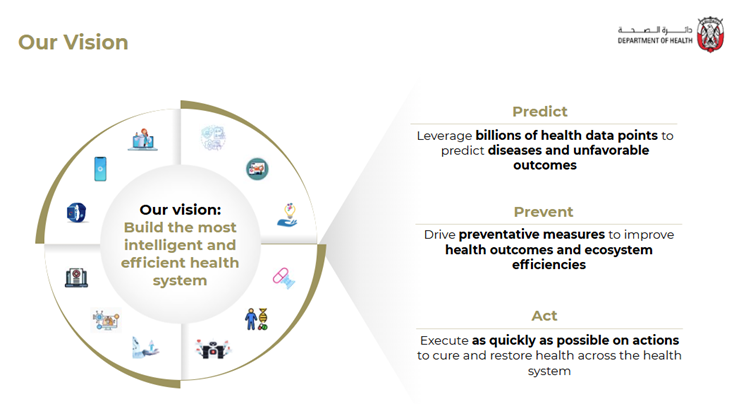
This infrastructure is powered by platforms like Malaffi, the region’s first health information exchange, connecting 100% of the emirate’s public and private healthcare providers and insurers with real-time access to patient histories, enabling more coordinated, efficient and patient-centred care and reducing system level costs for diagnostics.
Meanwhile, Sahatna, a mobile app used by more than 800,000 residents, empowers the community members to take ownership of their health. It provides secure access to personal health data, enables proactive appointment booking across the ecosystem, instant telehealth consultations, wellness tracking and behavioural nudges toward prevention. This plays a critical role in simplifying personal health, helping to shift the public’s mindset from reactive treatment to self-led prevention.
One key prevention component is Abu Dhabi’s IFHAS, a comprehensive health screening programme that annually screens individuals across vital areas and NCDs such as cardiovascular, oral health, mental health, bone health and oncology. When abnormalities and yearly changes are identified, individuals are automatically shifted into a personalized prevention and treatment plan, enabling earlier interventions and system-wide efficiency. The IFHAS initiative has delivered some of the highest early-stage detection rates globally.
Another area in which Abu Dhabi is setting an example is its investment in population genomics. The Emirati Genome Programme is one of the largest initiatives of its kind globally, with over 850,000 genomes sequenced to date. It has built a national genome database to enable earlier diagnosis, better treatment, and more targeted prevention of genetic and chronic conditions. This is already being used to detect rare diseases, inform reproductive health decisions, and develop genome-specific treatments. In August 2025, Abu Dhabi became the first health system in the world to launch comprehensive newborn genomic screening for more than 800 preventable conditions; within the first month, three infants were identified with genetic disorders, allowing timely intervention.
This combination of sovereign data infrastructure, population genomics and real-time health records at scale forms an integrated architecture for precision population health. The integration of these layers is Abu Dhabi’s key differentiator, turning innovation into action and measurable impact. The combination of strong governance, interoperable standards and technology, and human-centred design ensures that digital health is not just a tool, but a transformation of the entire ecosystem.
Technological foundations, cultural transformation
This transformation did not happen by chance. Abu Dhabi’s model is the result of a deliberate, long-term effort to embed prevention, personalization and equity into the fabric of its health system. The DOH led a case for investing in population health intelligence, demonstrating that such an approach could deliver both measurable outcomes and long-term sustainability.
This required cross-government collaboration, regulatory reform, and new models of partnership with the private sector and academia. Key enablers included sovereign infrastructure, privacy-by-design standards, and policy frameworks for health data interoperability.
Building on this foundation, the DOH, in collaboration with Microsoft, has developed the world’s first AI-powered population health intelligence (PHI) platform. This integrates data from the Intelligent Health System into a unified digital twin of Abu Dhabi’s health ecosystem, enabling predictive insights and targeted interventions at population scale. The partnership exemplifies how data can be transformed into action, empowering policy-makers and clinicians to anticipate risks, simulate interventions and design evidence-based policies that improve health outcomes across the community.
Crucially, this approach recognizes that innovation is not just technological, but rather cultural. As a result, Abu Dhabi’s system is also enabling targeted investment in public health campaigns: Population health data triggers community-wide campaigns, policies and infrastructure to shift consumer behaviour, and improve food and fitness environments to prevent lifestyle-related NCDs.
From blueprint to global collaboration in digital health
Abu Dhabi is not only transforming its own system, it is presenting a proven blueprint. As more countries move toward data-rich, insight-driven health systems, the emirate offers both a model and an open invitation to co-create and scale the next generation of population-level health solutions.
Through platforms such as the World Economic Forum’s Digital Health Transformation (DHT) initiative, the emirate is partnering with governments, innovators and health leaders to pilot AI-enabled prevention, co-develop genomics-driven therapeutics, and advance interoperable standards for sovereign health data.
As a “living lab” for preventive, digital-first health, Abu Dhabi provides a safe and scalable platform to test, validate and expand innovations globally that deliver measurable outcomes today, while setting a new global standard for predictive, personalized care at scale. This intelligent system is not just a vision for the future; it is the new foundation that resilient health systems must embrace today.
Don't miss any update on this topic
Create a free account and access your personalized content collection with our latest publications and analyses.
License and Republishing
World Economic Forum articles may be republished in accordance with the Creative Commons Attribution-NonCommercial-NoDerivatives 4.0 International Public License, and in accordance with our Terms of Use.
The views expressed in this article are those of the author alone and not the World Economic Forum.
Stay up to date:
SDG 03: Good Health and Well-Being


Forum Stories newsletter
Bringing you weekly curated insights and analysis on the global issues that matter.
More on Health and Healthcare SystemsSee all

Shyam Bishen
April 9, 2026


