Entering the AI reality: How South-East Asia can transition into an intelligent economy

The scale of South-East Asia's digital transformation is undeniable. Image: Unsplash/Mike Enerio
- South-East Asia is shifting from a foundational digital economy to an intelligent AI reality, building on its monumental digital scale.
- AI redefines consumer experiences and transactions, with high user curiosity driving business growth and competitive advantage.
- Sustaining this growth will require robust foundational investments: increasing physical infrastructure and careful AI regulation.
South-East Asia’s digital economy has concluded a foundational digital decade and the scale of this transformation is undeniable: the new e-Conomy SEA 2025 report, from Google, Temasek and Bain & Company, predicts the region’s digital economy will surpass $300 billion in gross merchandise value this year – 1.5 times the inaugural forecast 10 years ago. Yet, this monumental achievement is not a finish line. It’s the closing chapter that immediately launches the region’s next and greatest shift: the artificial intelligence (AI) reality.
The digital economy’s next decade demands a deep structural transformation where AI becomes more than just an efficiency tool – an intelligent conductor that unlocks the region’s full potential. The key to this lies in the deep adoption and integration of AI across all sectors of the digital economy. This transformation unfolds across three mutually reinforcing layers that power a new intelligent economy.
Consumers first: The AI-powered experience
The most powerful engine driving South-East Asia's AI transformation is its mobile-first, vibrant consumer base of 200 million new users that came online over the last digital decade. The region’s digital depth provides a crucial foundation: three in five people now shop online, and over 60% of all payments are digital. This digital fluency has translated into a remarkable AI curiosity: consumer interest in AI topics stands at an impressive three times the global average.
The benefits are already tangible, with three out of four users reporting that AI-powered tools have helped them discover content and make tasks easier.
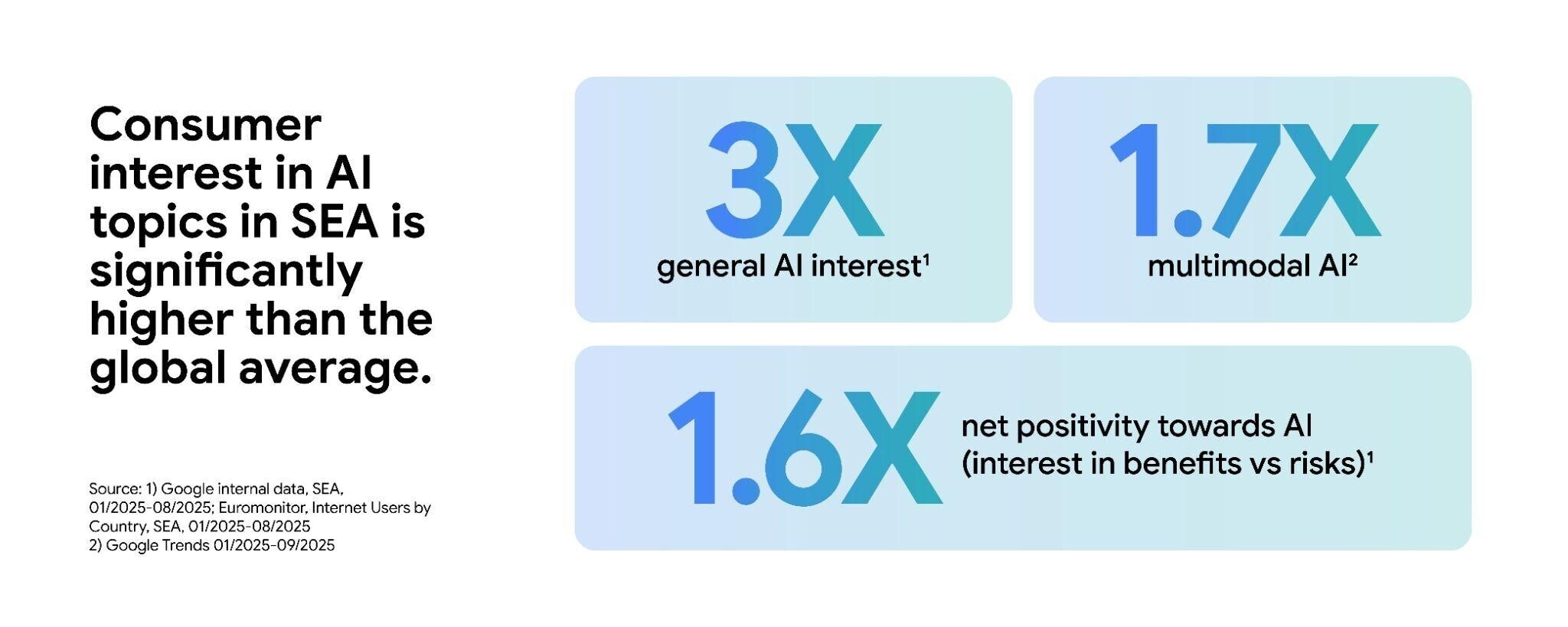
The high curiosity of users translates directly into two critical shifts. First, AI becomes the new frontier for exploration; 75% of consumers say AI-powered platforms help them expand their choices and make tasks easier. Second, in a market saturated with options, AI becomes an intelligent reductive filter that helps them manage selection by doing the heavy lifting; 45% of consumers say saving time on research and comparisons is their main motivation for using AI features.
Ultimately, this first layer is the fundamental redefinition of the consumer experience. AI is actively reshaping the entire consumer journey, moving from initial discovery to tasks like agentic or automated purchases. For platforms to succeed, they must embrace systems where AI completes actions on the user's behalf. This requires a deep focus on building and maintaining consumer trust, which is the critical factor in the AI reality.
Business advantage: AI for faster, smarter transactions
Consumer-driven demand is pushing businesses to pivot their operations so they can harness AI to unlock new value, meet sophisticated customer expectations and boost efficiency. This requires platforms to move beyond using AI simply for productivity gains or cost savings and to instead actively fuel business growth and competitive advantage.
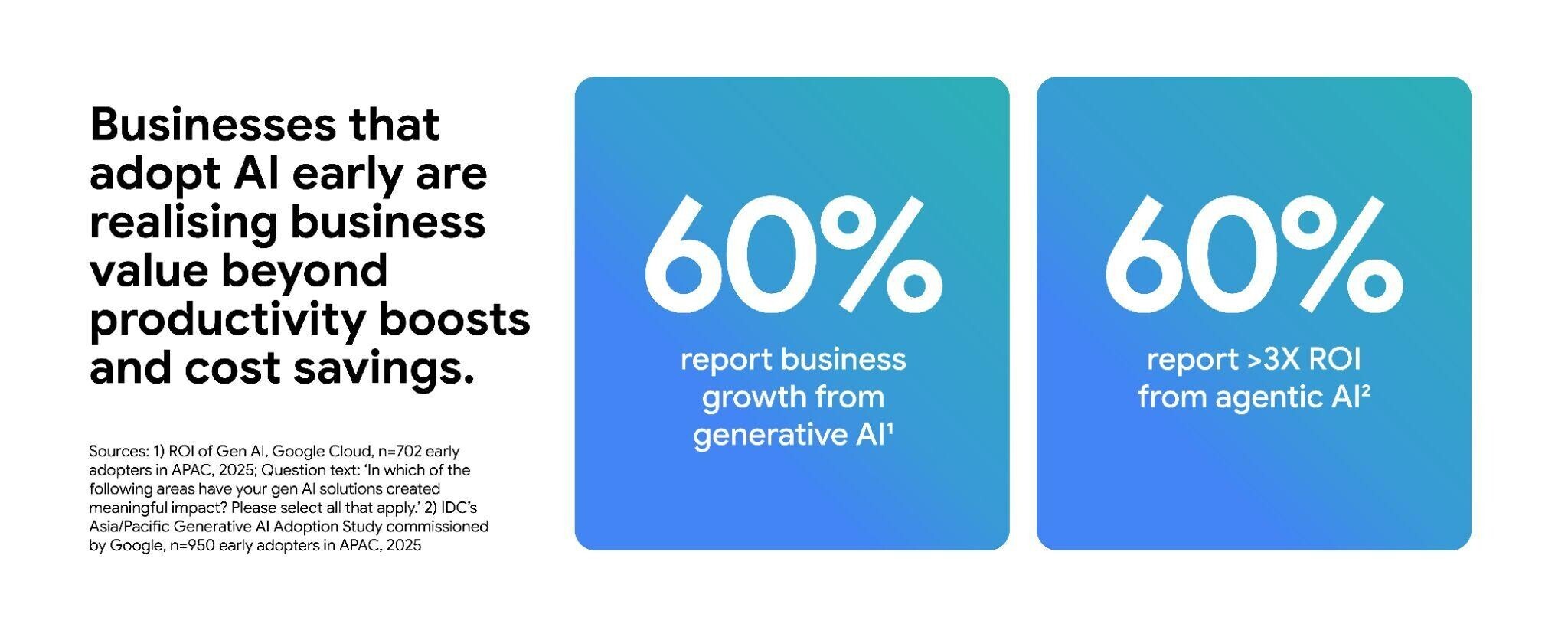
Early AI adopters are already realizing business value beyond productivity boosts and cost savings: 60% report business growth from generative AI, and another 60% are achieving over 3x return on investment from agentic AI.
South-East Asia is structurally advantaged to lead this shift. The region operates as a digital-native, non-card market, relying on e-wallets and interoperable QR code payments. This unique foundation allows innovators to leapfrog outdated payment infrastructure. Instead, they can accelerate the development of agentic transaction systems capable of reasoning, planning and taking complex actions on a user's behalf.
We are already seeing this emerge in two critical areas: AI-powered commerce and seamless regional payments. AI can handle multi-destination travel bookings or manage complex cross-border purchases and logistics. And with cross-border QR interoperability already a reality across eight South-East Asian countries, AI is essential for managing the real-time, multi-currency complexity of these transactions. This dramatically lowers friction, boosts intra-regional trade, and encourages greater participation from small businesses.
The foundation: Building infrastructure and guardrails
The final, essential layer is providing the foundation necessary to scale and sustain AI-driven growth. Confidence in the region's AI future is grounded in its commitment to building this strong foundation.
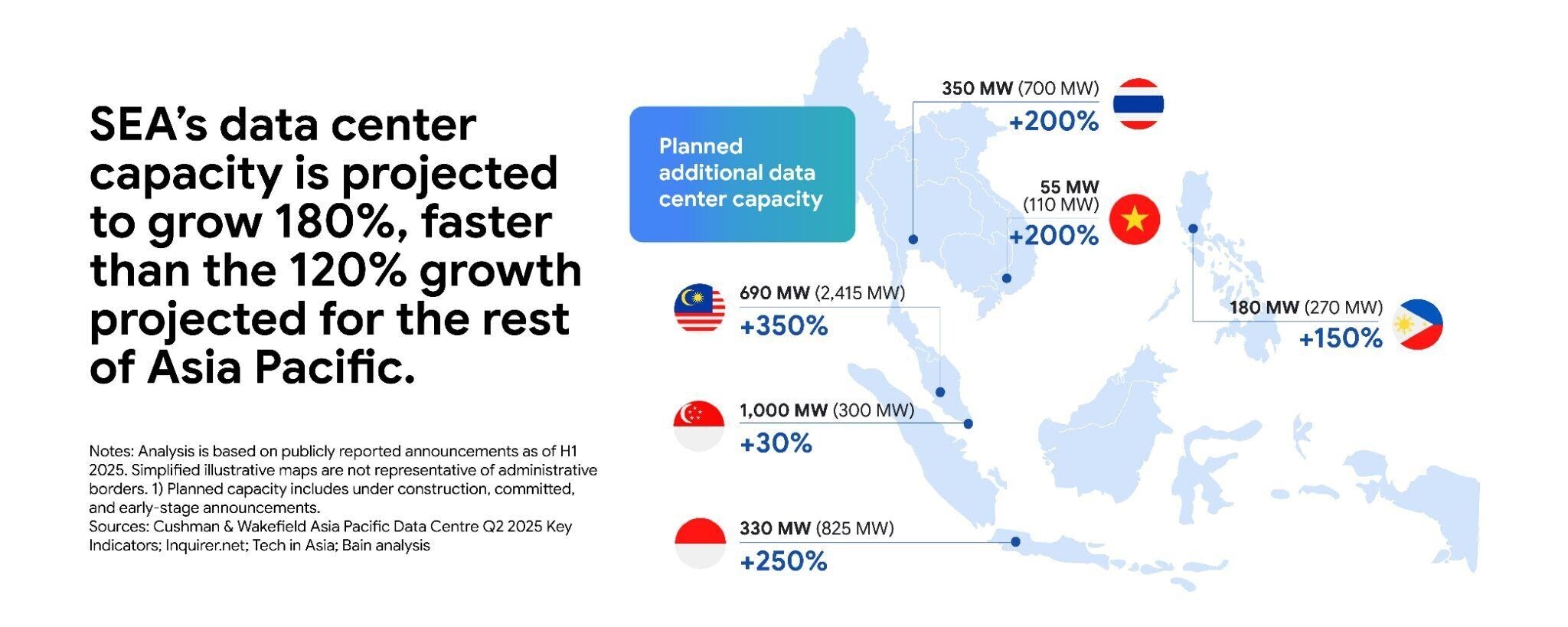
The AI acceleration demands robust physical infrastructure, and investment is actively flowing into the region to fill the gaps. Its data centre capacity is set to grow by 180% – faster than the 120% growth projected for the rest of Asia-Pacific – with over 4,600 MW of new capacity planned.
Forward-looking government leadership is powering these ambitions. Key nations like Singapore, Malaysia, Thailand and Indonesia are actively partnering with the private sector to pour funding into critical AI infrastructure. This top-down support combined with market-proven profitability creates fertile ground for global capital.
Alongside physical infrastructure, robust AI regulation and governance frameworks are paramount. These policies must strike a careful balance: encouraging innovation while establishing clear ethical guidelines to build and maintain the necessary consumer trust. This dual investment ensures the digital ecosystem matures responsibly, providing the stable bedrock upon which South-East Asia's intelligent economy can stand.
AI reality: Leading the intelligent future
Having successfully concluded a transformative decade defined by resilience and profitable growth, the region's future now rests on a powerful, self-reinforcing dynamic. It is uniquely positioned to achieve its full potential not merely by adopting AI, but by leveraging its structural advantages to define the next wave.
The AI reality is here, but realizing its promise requires unified, conscious commitment. The necessary physical infrastructure is being built, the regulatory guardrails are being planned, and the consumer appetite and business growth are proven. Now, governments, private sector leaders and consumers must continue to partner, ensuring the final, essential layer of ecosystem enablement is secured.
Moving beyond simply adopting the future, the focus is now on accelerating our transition into the intelligent economy to solidify South-East Asia's position at the forefront of the global AI economy.
Don't miss any update on this topic
Create a free account and access your personalized content collection with our latest publications and analyses.
License and Republishing
World Economic Forum articles may be republished in accordance with the Creative Commons Attribution-NonCommercial-NoDerivatives 4.0 International Public License, and in accordance with our Terms of Use.
The views expressed in this article are those of the author alone and not the World Economic Forum.
Stay up to date:
The Digital Economy


Forum Stories newsletter
Bringing you weekly curated insights and analysis on the global issues that matter.