How upskilling quantum talent will prepare us for a quantum-safe future

Quantum technologies are already revolutionizing use cases across industries Image: Generated with Gemini AI
- Quantum technologies are already revolutionizing use cases across industries and advancing the Sustainable Development Goals, while jeopardizing our most sensitive data.
- Quantum ecosystems require a diverse set of skills, ranging from engineers to business, technicians to physicists. The industry is experiencing a growing talent gap across roles.
- Organizations must align technology adoption with workforce development by investing in training, fostering cross-sector partnerships and collaborating through global initiatives such as the Quantum Economy Network.
The year 2025 marks a century since the birth of quantum mechanics, a theory that explains how matter behaves at the smallest scales. Today, quantum technologies are transforming industries by processing and acquiring information in revolutionary ways. From materials science and drug discovery to sustainability, quantum innovations are already reshaping sectors.
However, the same power that fuels innovation also poses a cybersecurity threat, as quantum computers could soon render current encryption methods obsolete. With data breaches averaging $4.4 million globally, organizations must urgently prepare by training a skilled quantum workforce.
The World Economic Forum’s report Embracing the Quantum Economy highlights the rapid advancement and adoption of quantum technologies in various sectors, redefining industries such as finance, manufacturing, healthcare and energy.
The Forum’s Quantum Application Hub is a unique platform that enables leaders to experience diverse quantum applications across various technologies.
For example, SandboxAQ’s quantum sensing improves heart diagnostics and magnetic navigation in GNSS (Global Navigation Satellite System) denied environments – i.e. areas where signals from these satellites are unavailable, weak or unreliable – AXA uses quantum computing to optimize reinsurance and QuSecure has created quantum cryptography to safeguard sensitive data.
One of the most promising areas is molecular and materials simulation. Quantum processors can accurately model atomic interactions, drastically accelerating drug discovery, industrial chemistry and materials design, unlocking breakthroughs in pharmaceuticals and sustainability.
However, these processors currently require large computing capacity and long runtimes, so progress is real, but will depend heavily on milestones achieved in error correction and speed.
Although today’s quantum processors do not yet fully outperform classical systems, organizations should prepare now to be ready as capabilities mature. Yet, this progress comes with a critical warning: data encrypted today could leave information vulnerable tomorrow due to the “harvest-now, decrypt-later” risk.
As it took 10 years for previous algorithm migrations, starting the transition to post-quantum cryptography is a key priority and cryptographic agility is now an essential consideration to tackle. For example, the European Union has mandated its countries to start their transition to post-quantum cryptography by the end of 2026 and finalize it no later than 2030.
Quantum security and readiness must start now to ensure resilience, protect infrastructure and secure the digital economy’s future.
According to a 2024 survey by the Financial Conduct Authority for the Quantum Security for the Financial Sector: Informing Global Regulatory Approaches report, 93% of respondents agreed that quantum technologies will have significant implications for their regulatory frameworks.
Quantum workforce: demand versus current stage
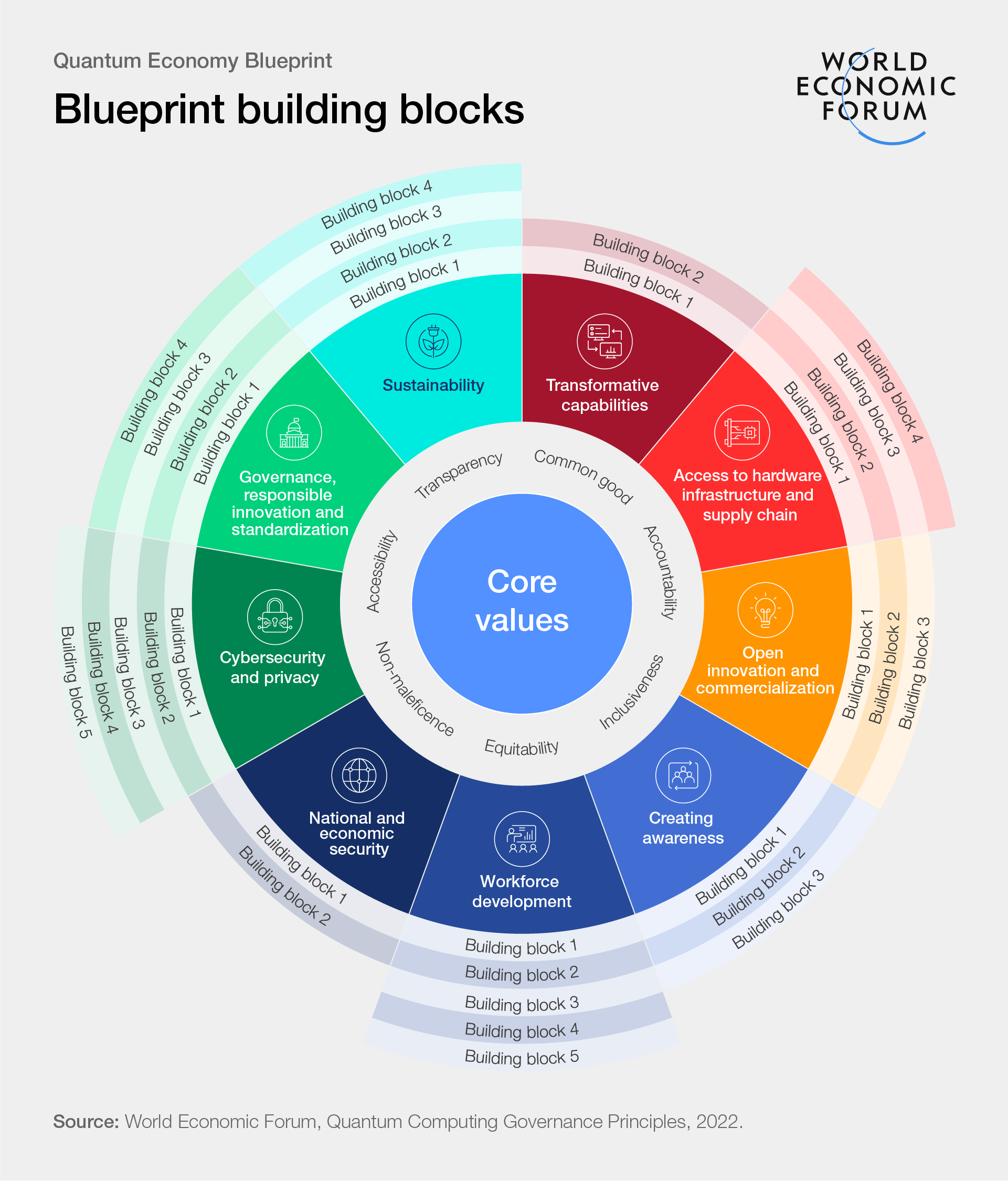
Workforce development is one of the key themes of the Quantum Economy Blueprint Framework, published in January 2024 to serve as a guide for policy-makers, industry and academia in building quantum ecosystems.
Diverse roles and expertise are essential to their success, reflecting the wide range of use cases that these technologies will unlock. These roles generally do not require the level of education and training typically expected in emerging technology fields.
Indeed, in addition to research scientists with PhDs in quantum physics, the industry relies on the essential expertise of engineers, technicians and business managers. A recent study by the Chicago Quantum Exchange revealed that two-thirds of quantum jobs in the industry sector only require a bachelor’s degree or less.
Hardware engineers specializing in electrical, mechanical, nanofabrication, or cryogenics play a pivotal role in the development of cutting-edge hardware for quantum computers, sensors, or communication networks.
A new generation of algorithms that leverage the capabilities of this leading hardware for practical applications is being developed by software engineers. Solution architects are essential for aligning technological advancements with customer requirements and market needs, ensuring the practical application of these innovations.
Business leaders, including programme managers, project managers, sales executives and business developers, are key to accelerating the commercialization of these technologies – a list expanded upon in the Embracing the Quantum Economy Insight Report.
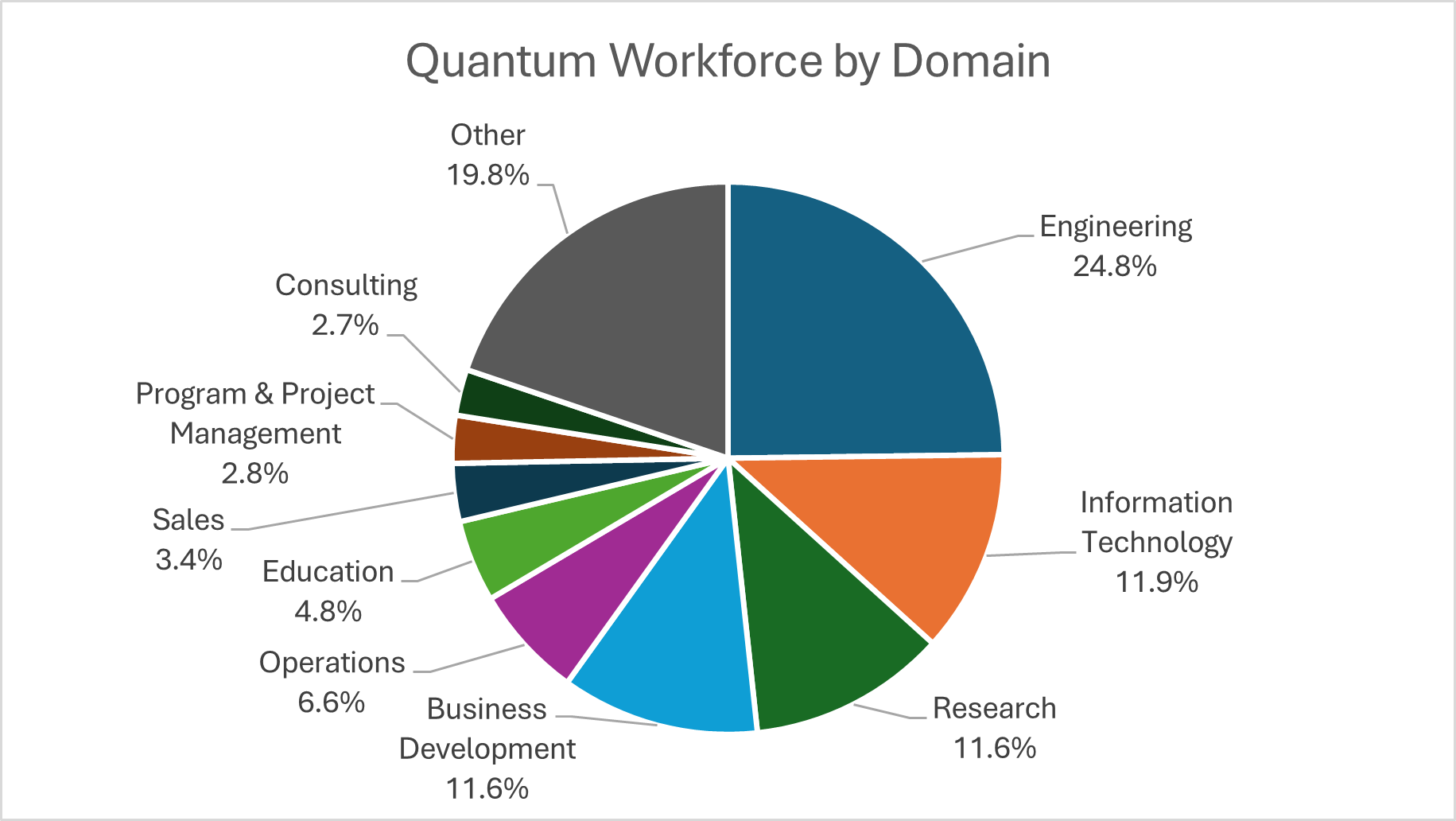
The quantum industry is experiencing an increasing talent gap across these roles. According to MIT’s Quantum Index Report 2025, the share of job postings requiring quantum skills in the United States has almost tripled since 2018 and continues on a moderate upward trend. However, McKinsey’s research showed that there is only one qualified quantum candidate for every three quantum jobs.
According to Kelly Richdale, Senior Advisor at SandboxAQ and a lead author of the Quantum Economy Blueprint: “The growing quantum divide is exacerbated by a global disparity in access to quantum education and training and is further fuelled by shifting talent flows.”
To bridge the talent gap, organizations must upskill domain experts, provide application-oriented training tailored to their specific needs and partner with leading public institutions.
Next steps for a skilled quantum workforce
As quantum technologies edge closer to real-world applications, organizations must create clear plans to adopt them.
According to Shreyas Ramesh, Managing Director at Accenture: “The quantum shift isn’t just technological, it’s organizational. Reinventing services for a quantum future means upskilling talent, fostering cross-sector collaboration and embedding quantum thinking into every layer of business strategy.”
A good first step involves building a roadmap to align quantum with business goals while making workforce training a key focus. Around the globe, successful efforts highlight how partnerships between universities and industries, government-supported training hubs and fellowship programmes equip people with technical know-how and business-savvy abilities.
Businesses can examine these examples to work with universities and policymakers in expanding the pool of trained professionals. Growing skilled talent must align with investments in technology. Useful steps include rotating job roles, funding quantum-related education and training employees.
How the Forum helps leaders understand cyber risk and strengthen digital resilience
To lead in the quantum age, organizations must combine solid internal strategies with effective partnerships. They should collaborate with schools, governments and industries to boost research, create shared standards and bring in diverse talent.
This is the mission of the Forum’s Quantum Economy Network, a global platform for governments, businesses and academia to understand the potential of quantum technologies, shape their development and prepare for their introduction into the economy.
Inside an organization, cross-functional teams must study current encryption, assess dangers and rank systems to migrate to post-quantum standards. This helps reduce new threats while securing digital assets over time. With smart planning and investments, organizations can do more than prepare, they can lead in tomorrow’s quantum world.
Don't miss any update on this topic
Create a free account and access your personalized content collection with our latest publications and analyses.
License and Republishing
World Economic Forum articles may be republished in accordance with the Creative Commons Attribution-NonCommercial-NoDerivatives 4.0 International Public License, and in accordance with our Terms of Use.
The views expressed in this article are those of the author alone and not the World Economic Forum.
Stay up to date:
Cybersecurity


Forum Stories newsletter
Bringing you weekly curated insights and analysis on the global issues that matter.
More on Emerging TechnologiesSee all

Markus Kirchschlager and Benedikt Gieger
March 20, 2026


