Opinion
What should the school of the future look like?
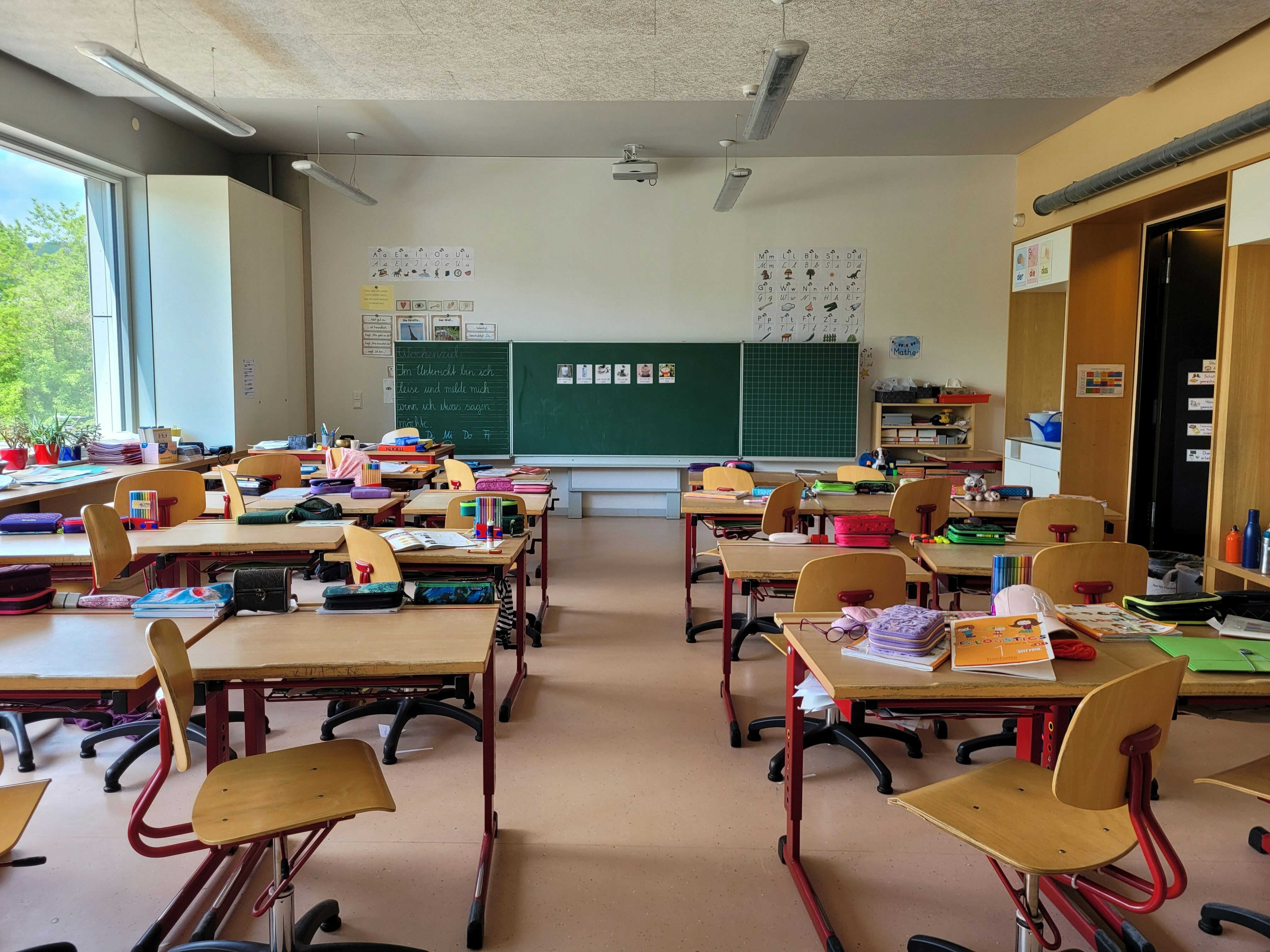
The future school isn’t defined by a checklist of subjects, but by its underlying cultural and belief system. Image: Unsplash/Nathan Cima
- The future of education depends on cultivating a strategic institutional mindset and culture, not on adopting a checklist-style approach.
- Schools must focus on fostering critical thinking, cultural diversity and personalized learning to prepare students for complexity.
- Educators must empower students with an innovator’s mindset and ethical awareness to bridge the gap between today and tomorrow.
As an educator, I’m frequently asked to predict the future of the sector, especially now, with seismic forces like artificial intelligence fundamentally transforming work and society. All too often, these discussions about future readiness devolve into narrow technical debates over curriculum areas like coding or specific “life skills.”
I believe this approach misses the point. The future school isn’t defined by a checklist of subjects, but by its underlying cultural and belief system. In other words, as educators think through what schools might look like tomorrow, we must focus on the mindset of our institutions today. So what, exactly, should that spirit and culture encompass? I think the following four principles must be prioritized.
1. A celebration and appreciation of cultural diversity and collective care
An excessive focus on performance above all else — an approach that sees school culture as nothing more than a springboard to individual ambitions — can create a sterile and sometimes toxically competitive environment that will merely exacerbate the social polarization, ethnocentricism and xenophobia that we are seeing in many countries today.
Instead, school leaders must create environments where intercultural learning can take place. We can do this by staffing schools with educators who bring different perspectives and stand against stereotyping, social cruelty and discrimination, and by ensuring the curriculum is diverse and global in scope while anchoring students in their host country’s traditions and history. We have to build rituals, events and learning moments, and articulate institution-wide discourses that make us proud of where we come from while learning from other cultures.
When, in the early 1970s, the social psychologist Elliot Aronson designed the jigsaw classroom approach — a cooperative learning strategy based on student interdependence and peer teaching — it was after observing the socially polarizing environment of classrooms that were failing to truly racially desegregate, since the emphasis was not on children learning with each other but against each other, in competition. This traditional competitive model creates superficial short-term gains, but often does little to nurture the compassion, friendship and open-mindedness needed for deeper human flourishing at individual, collective and public levels.
This is not to say that we should dumb down learning, because that is a veritable poison, especially when forming an educational ideology. It simply means that this should be done in an inclusive fashion, with the dignity of others always respected, and the notion of success framed in questions of social responsibility and international-mindedness.
This happens through powerful assemblies articulating higher-order moral imperatives, student and parent engagement in cultural festivities that are focused on learning, and strong standards related to the protection of every person in the learning environment. The identity of the school should be bold and uncompromising, articulating the superordinate goals of learning to cultivate an intrinsic global mindset. The future should be a myriad of cultural identities interacting, not a dull, politically correct and ultimately featureless third culture with no specificities or traditions. Peaceful cooperation means building our future together, not away from each other.
2. An emphasis on critical thinking through ongoing discussion-based learning
The school of the future must deliberately cultivate critical thinking as a core competency. Learning should move beyond a mere accumulation of facts towards an uncovering of the history and sociology of constructs — whether in mathematics, science, the humanities, or the arts. This deeper learning is achieved through continuous, discussion-based engagement.
Students must also engage with the ethical implications of modern advancements. For example, they should actively wrestle with the philosophy behind technological concepts like quantum physics, or use artificial intelligence to generate answers, then critique those responses in teams. Learning at least two languages thoroughly is vital, not just for the cognitive benefits of bilingualism, but because it opens the mind to different concepts and cultural viewpoints.
Team debate and discussion must be central. Activities such as Model United Nations and mock trials should flourish, teaching students how to exercise the language of international diplomacy and law. Leadership should extend this culture of criticality by engaging staff in intellectually stimulating discussions on pedagogy, world affairs and psychology.
In a global environment marked by oversimplified political debates, vitriolic “Othering” and populist playbooks, the entire enterprise of caring and critical thinking has never been more vital. Educational institutions can no longer simply emulate great standards of debate; they must actively salvage and model what higher-order, discerning discourse should look like for society more broadly.
3. A centering of every individual’s learning
All school staff must be taught the principles of gifted education — not to create ersatz “gifted programmes” but to know how to identify gifts in all children and to nourish those gifts so they become talents. Schools must understand that restlessness in the classroom, difficulty concentrating, retreat and even anti-social behaviour are often symptoms of gifts that are neglected. These types of behaviour are not deficits, and often occur when a child has what is sometimes called a “spiky” cognitive profile — when someone has significant challenges in some areas, but equally significant strengths in others.
Not only should all staff be equipped to provide tailored support and structured assistance to neurodivergent children, they should also know how to identify strengths and capabilities across a range of domains. This means curricula must be broad, encompassing academics, sports, entrepreneurship, inter and intra personal skill development, the arts, service learning and multiple literacies. Assessment systems should also be inclusive and broad, stepping away from the tired industrial model that is intensifying across schools. The future of learning starts now by helping every bird fly and every star shine.
4. A focus on cultivating the 'innovator’s mindset'
If schools are to bridge today with tomorrow, they must foster innovation in students and educators. We have to create learning experiences that cultivate a bold “can do” mindset and that push creative ideation, while also teaching the importance of ethical and social guardrails for innovation.
Future fitness is not about a blind adoption of the latest technological developments; it needs to be much more profound, reaching into the kind of visionary thinking we wish students to develop. One very simple yet enormously effective way of doing this is through a guest speakers series. Bringing leaders, artists and entrepreneurs to tell their stories directly inspires students to reflect on their own future paths. The innovator’s mindset is born by simply placing today’s shapers in front of tomorrow’s authors and allowing them to share their journeys.
Creating tomorrow’s schools, today
The future of education starts today in the way we think about our approach to learning. We shouldn’t focus on creating new curriculum subjects or chasing the latest educational fads and hype cycles. Instead, it is more a question of behaviours, and how we change those. Behaviours change with a strong and compelling mental framework, a belief system, an inner conversion.
Future fitness starts with a collective belief in our potential to do great things, then laying down the paving stones that bridge today with tomorrow. The school of the future starts in the mind, and it starts now.
Don't miss any update on this topic
Create a free account and access your personalized content collection with our latest publications and analyses.
License and Republishing
World Economic Forum articles may be republished in accordance with the Creative Commons Attribution-NonCommercial-NoDerivatives 4.0 International Public License, and in accordance with our Terms of Use.
The views expressed in this article are those of the author alone and not the World Economic Forum.
Stay up to date:
Future of Work


Forum Stories newsletter
Bringing you weekly curated insights and analysis on the global issues that matter.