Global energy in 2026 will be marked by growth, resilience and competition
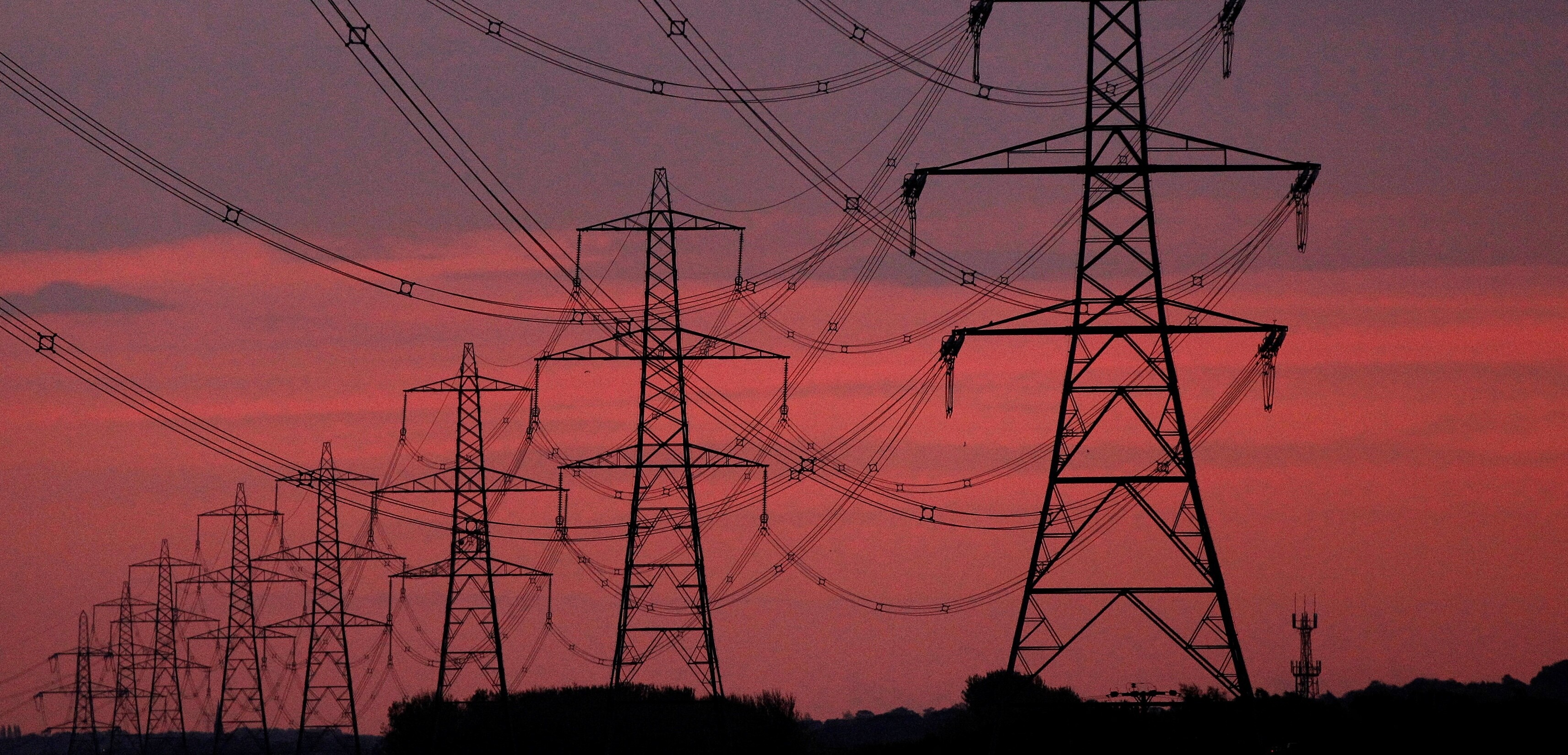
Today, the energy transition is about security, resilience and technologies. Image: REUTERS/Phil Noble/File Photo
- Global energy investment in 2025 is likely to have passed $3.3 trillion, with $2.2 trillion flowing into clean energy technologies.
- That's a sign that the energy transition is still happening, but the language being used is different.
- Today, the energy transition is about security, resilience and technologies. Here's how that plays out in 2026.
If 2025 felt confusing on energy, that’s because it was. Governments talked less about “saving the planet” and more about keeping the lights on, taming bills and managing the AI data-centre boom. Yet in the middle of geopolitical tension and economic jitters, clean energy spending quietly hit new records.
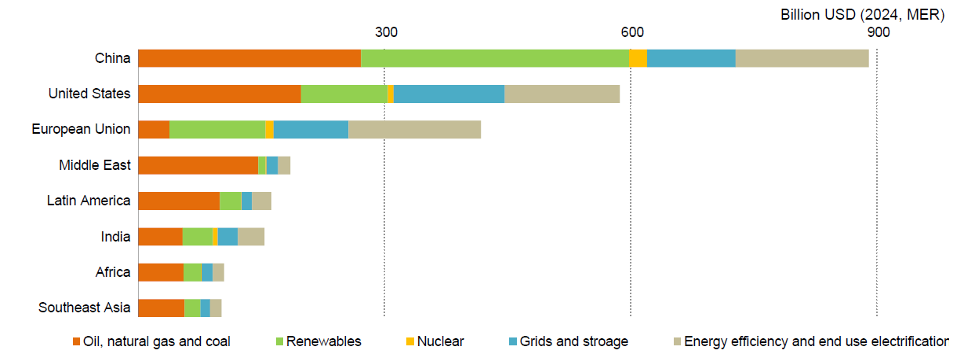
According to the International Energy Agency (IEA), global energy investment in 2025 was likely to pass $3.3 trillion, with $2.2 trillion flowing into clean energy technologies – everything from renewables and EVs to grids, storage, efficiency and clean fuels. In other words, two-thirds of every dollar spent on energy is already going to cleaner options, even as climate rhetoric often takes a back seat to security and affordability.
Welcome to 2026: a year that is shaping up less as a grand climate “pledge moment” and more as a high-stakes execution test shaped around three themes: growth, resilience and competition.
Strategic competition in energy
The first motive for 2026 is growth through industrial competition. Industrial and economic policy are now the main levers for energy transition policies. Instead of classic “energy policy”, governments focus on industrial policy – local-content rules, tax credits, subsidies and trade measures – to achieve economic and strategic goals. In other words, it is a race to build factories, not just solar and wind farms.
This race has so far been dominated by China, which spends nearly as much on clean energy as the US and EU combined and leads manufacturing across most clean and advanced energy supply chains, cementing its status as the world’s clean energy powerhouse.
India also demonstrates great ambitions and progress in this race. The government introduced a number of policies, including incentives for domestic manufacturing and mandates for clean energy deployment. It not only drives massive deployment of solar and storage capacity, but also drives investment in manufacturing. The Dhirubhai Energy Complex, for example, is scheduled to start operations in 2026 and aims to host gigafactories of solar panels, batteries and electrolyzers under one roof.
Europe is rethinking its industrial model to regain competitiveness. The Net-Zero Industry Act aims to ensure that by 2030 at least 40% of the EU’s annual deployment needs for key net zero technologies are manufactured at home. The EU is also moving to recycle more critical materials and restrict permanent magnet and metal scrap exports in order to cut dependence on external supply chains.
Securing the energy backbone
Geopolitical tensions put energy security back at the top of the agenda, making resilience the second big theme for 2026. China continues its efforts to bolster the resilience of its energy infrastructure and grow its dominance in new technologies. Europe is pivoting away from Russian fuels, aiming to eventually phase out Russian gas, oil and nuclear entirely. The US is diversifying and onshoring sources of lithium, cobalt, nickel and rare earths.
At the same time, resilience now means economic and social stability too, from safeguarding against traditional risks to oil and gas supplies to affordable access and system resilience in the face of new threats – cyber, climate, supply-chain shocks.
Public focus has shifted to here and now impacts. This looks like foregrounding transparent benefits – jobs, community funds, lower local tariffs – in exchange for accepting wind farms, transmission lines, manufacturing sites or data centres.
AI and energy in 2026
The artificial intelligence energy surge is turning power into the new data-centre bottleneck. That surge is already changing corporate priorities. Bloom Energy’s 2025 Data Center Power Report found that access to power is the leading factor in data centre site selection, ahead of traditional concerns like connectivity.
In practice, that means competition for grid connections and flexible, low-carbon power options will intensify in 2026. Locations able to offer cheap, reliable and clean electricity at scale will have a structural advantage in attracting AI-driven investment.
Outlook: a more competitive, realistic energy transition
All of this sets up 2026 as a year less about new promises and more about competing for advantage in a messy, politicized energy landscape. In 2026, the projects that move fastest will be those that combine resilience with a compelling local story: cleaner air, stable bills, visible economic benefits.
All of this points to a different kind of energy transition in 2026, one that prioritizes:
Execution over ambition. Less focus on headline-grabbing net-zero declarations; more on whether grids, factories and ports actually get built on time.
Competitive advantage over moral positioning. Governments are less interested in being “climate champions” and more in securing the industries and jobs of the future – batteries, hydrogen, data centres, clean-tech manufacturing.
Near-term impact over distant targets. Air quality, bill stability and local economic benefits are now as important to the political calculus as temperature goals.
The energy transition is no longer a niche climate project. By 2026, it will be one of the main arenas in which countries compete, companies differentiate and societies negotiate what “prosperity” looks like in a hotter, more volatile world.
The Advanced Energy Solutions community
The World Economic Forum supports an integrated approach to energy solutions, including energy storage, advanced nuclear, clean fuels, hydrogen and carbon removal. No single technology will solve the energy transition alone; a mix of solutions will be needed.
Different regions, industries and companies will have their strategies, but they must work together.
Platforms, such as the Forum’s Advanced Energy Solutions community, can help speed up this cooperation and accelerate the deployment of new technologies, such as energy storage, clean fuels, hydrogen, advanced nuclear and carbon removal, from decades to years.
The community engages industry leaders who drive frontier segments of the energy system to shape the advanced energy solutions industry vision and narrative. It supports partnerships among innovators, large energy companies, energy users and investors and informs policy-making.
Don't miss any update on this topic
Create a free account and access your personalized content collection with our latest publications and analyses.
License and Republishing
World Economic Forum articles may be republished in accordance with the Creative Commons Attribution-NonCommercial-NoDerivatives 4.0 International Public License, and in accordance with our Terms of Use.
The views expressed in this article are those of the author alone and not the World Economic Forum.
Stay up to date:
Energy Transition


Forum Stories newsletter
Bringing you weekly curated insights and analysis on the global issues that matter.