Here’s why we should be bullish on extended producer responsibility
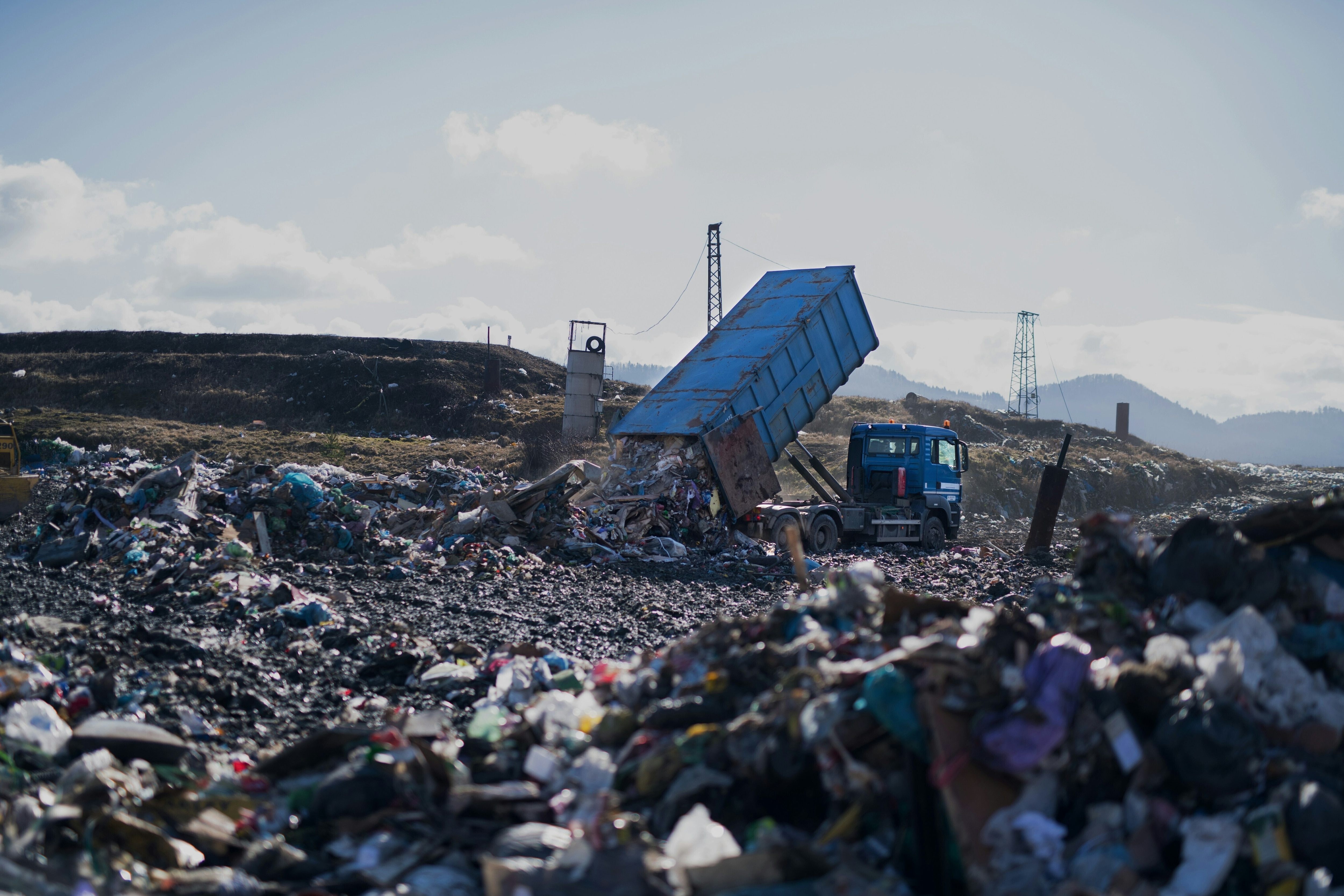
EPR is becoming central to global packaging and circularity efforts Image: Unsplash/Ian Yates
- Extended producer responsibility (EPR) is becoming central to global packaging and circularity efforts.
- Well-designed EPR systems enable scalable circularity, making EPR an opportunity for innovation and market growth.
- Six thought leaders give their views here on how we can unlock EPR’s full potential.
Extended producer responsibility (EPR) has rapidly moved to the centre of conversations about waste management and circularity, especially for packaging.
EPR is a policy approach that requires companies that make, use or sell packaged products to take responsibility for their packaging after use. This typically includes funding or organizing the collection, sorting and recycling of materials.
By some estimates, 63 jurisdictions worldwide, across developed and developing markets, have legislated or are currently legislating packaging EPR.
Across the packaging value chain, there is growing agreement that well-designed EPR systems not only improve environmental outcomes but also strengthen competitive and resilient markets for secondary materials.
Brand owners, recyclers, materials producers and the waste management sector increasingly recognize that predictable financing, credible data and clear performance targets create the conditions for scalable circularity.
Have you read?
As a result, EPR is evolving from a compliance obligation into a shared opportunity for market growth, innovation and more robust waste-management systems.
Negotiations toward a global plastics treaty and intersessional discussions have yielded a wealth of insights into the transformative power of EPR to create formal jobs and economic value.
Even as the last round of negotiations failed to reach consensus on a global treaty, businesses continue to bet on the revenue-generating potential of packaging EPR schemes – crucial to funding waste management as fiscal space shrinks.
Below, six private-sector experts share what they believe is needed to unlock this potential:
Unleashing traceability with digital tools
Vikram Prabhakar, Co-Founder and CPO, Recykal
India’s EPR regulation, introduced around 2016, has catalyzed the growth of recycling capacity. However, the original intent, to drive waste collection with traceability, remains only partially realised.
A national digital platform now connects recyclers and brand owners, enabling transparent credit exchange and reducing duplicate certifications through verified capacity linkage. Yet, collection challenges persist.
As a natural evolution, the government has introduced deposit return schemes, empowering states to implement digital deposit refund systems. Goa will pioneer the first digital deposit return scheme in April 2026, covering beverage containers, glass and multilayer packaging.
Under this model in Goa, each container carries a secure, uniquely encrypted code that records its journey from production to consumption and finally to its return through reverse vending machines.
This digital trace persists through the recycling process and into the reintroduction of recycled material into new packaging or products. The resulting dataset – comprising millions of immutable, item-level material traces – provides unprecedented visibility into material flows.
It enables policymakers, regulators and industry to pinpoint leakages, design targeted interventions and accelerate circularity pathways while preserving material value and reducing resource loss.
This premium on traceability and digital solutions to achieve that will be critical to the success of EPR schemes worldwide. Recykal is supporting this transition by integrating artificial intelligence (AI) driven digital infrastructure with smart collection hardware, strengthening India’s circular economy architecture and enabling a scalable, data-led approach to resource recovery.
Why developing countries should care
Roberto Benetello, CEO, Malaysian Recycling Alliance (MAREA)
EPR represents one of the most transformative economic opportunities for developing countries in the coming years. As governments shift from voluntary schemes to mandatory ones, including for packaging, entirely new markets will emerge.
The highest value will be generated through digital compliance infrastructure, verified collection and recycling claims and data-driven traceability tools that enable companies to meet regulatory obligations. EPR will also unlock investment in recycling by guaranteeing predictable feedstock flows, making previously marginal projects viable.
New revenue opportunities will arise in community engagement, behaviour change campaigns, research and development for innovative materials and technologies and AI-enabled marketplaces for secondary raw materials.
Crucially, EPR can accelerate the integration of the informal sector by enabling platforms that improve livelihoods, traceability, health and safety and social compliance.
To make EPR scalable and successful, countries must prioritize interoperable data systems, harmonized standards and robust monitoring frameworks – directly turbocharging social and economic development in developing countries.
A bouquet of opportunities in the next 5 years
Beatriz Mejia, Director of Environment, Latin America Region, The Coca Cola Company
In the next five years, the effective implementation of EPR systems in plastics and other packaging can strengthen value chains, increase revenues and formal incomes for waste pickers' cooperatives, and catalyze growth for innovators in eco-design and collection and logistics platforms.
To scale this positive impact, governments, companies and society at large will need to: continue enhancing EPR systems through consistent regulatory and policy frameworks, with data transparency on post-consumer materials
and their market dynamics; and promote investments as well as public-private partnerships for collection and infrastructure that can make the circular economy a true engine for sustainable development in Latin America.
A game changer for plastics circularity
Maarten Dubois, Director, Deloitte
EPR schemes, especially for packaging, are robust and proven policy instruments for accelerating the global transition to a circular plastics economy. They provide dedicated, sustainable financing for collection, sorting and recycling infrastructure.
By holding producers accountable for the entire lifecycle of their products, EPR can also drive upstream action in packaging value chains, encouraging eco-design and innovation in circular business models such as reuse.
By advancing packaging EPR schemes worldwide, a global plastics treaty can create predictable revenue streams and ensure that materials are kept in the economy and out of the environment.
What is already working
Cédric Dever, Director, Plastic Waste Coalition of Action, Consumer Goods Forum
By creating predictable, producer-funded revenue streams, EPR has been shown to strengthen waste collection and recycling infrastructure, stimulate private investment and develop local recycling markets.
When paired with the integration of informal workers, EPR schemes have also driven job creation and inclusive growth. Tailored to local realities, EPR can, in addition, catalyze circular-economy development and generate long-term economic returns.
Insights from The Consumer Goods Forum’s Plastic Waste Coalition of Action, including recent guidance on EPR for low- and middle-income countries, show that well-designed EPR systems unlock significant economic value.
What to avoid
Akshay Shah, Group Executive Director, Silafrica; Chair, Kenya Plastics Pact Steering Committee
EPR is a strong mechanism to fund the shift from a linear to a circular economy but in practice it varies widely across countries due to differences in subscription and operational costs, market dynamics and enforcement.
This creates extreme fee disparities – for polyethylene terephthalate (PET), from about $20 to $700 per ton, which drives waste exports toward high-fee markets. In Kenya, PET EPR fees are among the world’s lowest, so recyclable material is exported instead of supporting local recycling.
Since global fee harmonization isn’t realistic, a better solution could be to explore an export tariff on recyclable waste, with revenues reinvested locally to build circular systems.
Failing to stem outflows of valuable waste feedstock from developing countries risks aggravating cross-country inequalities in the circular economy transition.
Have you read?
Don't miss any update on this topic
Create a free account and access your personalized content collection with our latest publications and analyses.
License and Republishing
World Economic Forum articles may be republished in accordance with the Creative Commons Attribution-NonCommercial-NoDerivatives 4.0 International Public License, and in accordance with our Terms of Use.
The views expressed in this article are those of the author alone and not the World Economic Forum.
Stay up to date:
Circular Economy
Related topics:


Forum Stories newsletter
Bringing you weekly curated insights and analysis on the global issues that matter.
More on Circular EconomySee all

Pedro Gomez, Hernan J.F. Saenz and III
March 12, 2026