Good health is the world’s best investment – and the key to economic resilience
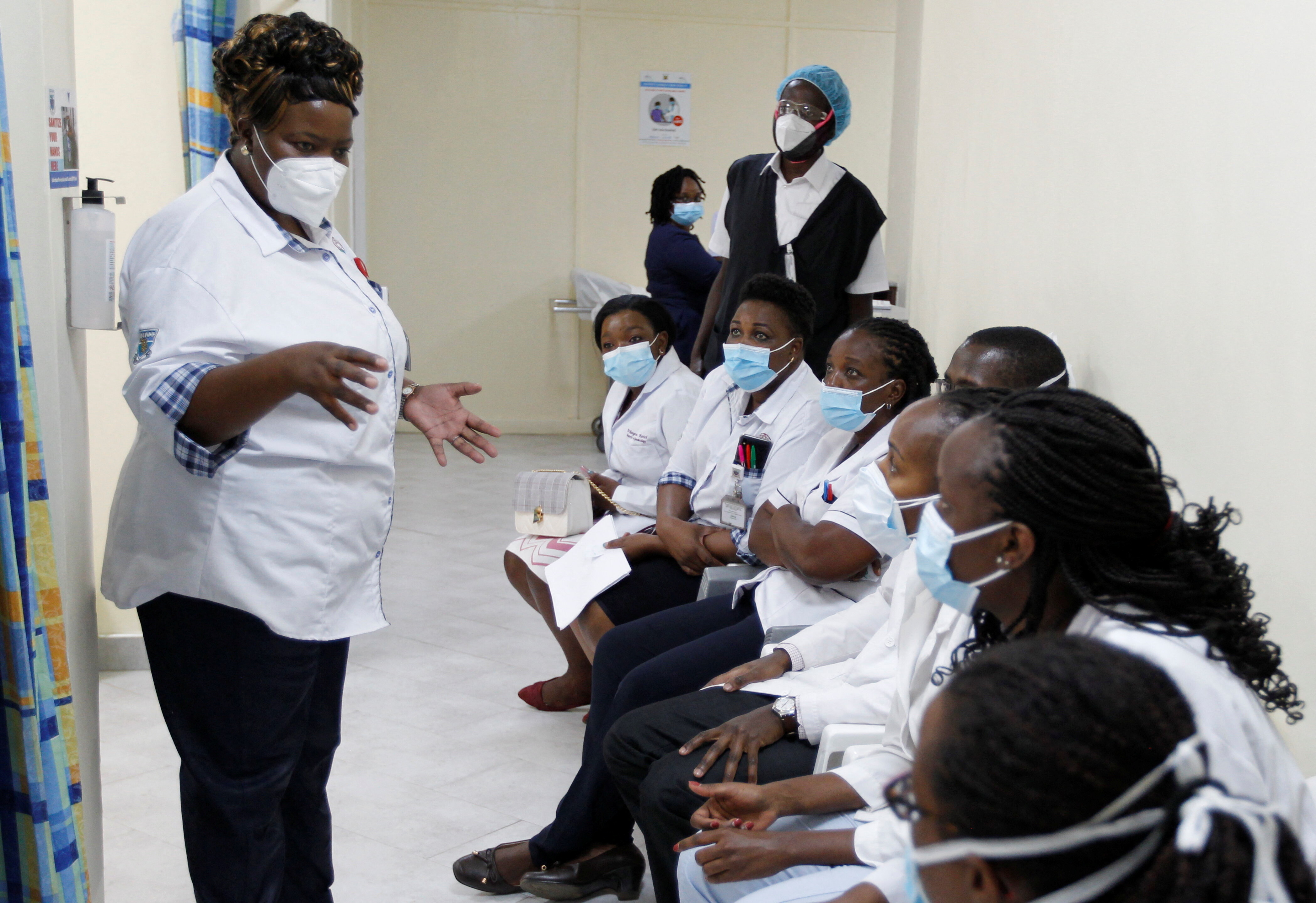
Long-term health resilience requires smarter financing Image: REUTERS/Monicah Mwangi
Shyam Bishen
Head, Centre for Health and Healthcare; Member of the Executive Committee, World Economic Forum- Poor health drains roughly 15% of global gross domestic product each year, while smart investments in prevention generate outsized economic returns.
- Healthcare systems must shift from volume to value to avoid the 20-30% of healthcare spending is wasted on ineffective interventions.
- Global health resilience requires smarter financing and cooperation to counter to the rising debt, climate impacts and declining aid that threaten health gains, especially in developing countries.
Poor health costs the global economy approximately 15% of GDP every year. Meanwhile, healthcare systems waste 20-30% on ineffective interventions. These are not abstract numbers; they translate into slowed growth, weakened competitiveness and shortened lives.
In January 2020, just as the first cases of COVID-19 were emerging, the World Health Organization’s Dr Tedros Adhanom Ghebreyesus told Davos: “Health is an investment, not a cost.”
Six years later, as we approach the World Economic Forum’s Annual Meeting 2026, that message has never been more urgent. Treating health as a line item to be trimmed is no longer fiscally conservative — it is economically short-sighted, and governments worldwide must take note.
The business of good health
The case for investing in health is unequivocal. The question now is not whether governments spend more on health but how to spend smarter. For example, every dollar invested in adult immunization yields a 19-fold economic return.
Preventive care delivers returns of up to eight times the investment. But there are 48 developing countries where governments spend more servicing debt than funding healthcare, according to the International Monetary Fund.
Meanwhile, heat stress alone will cost the global economy $2.4 trillion by 2030, the equivalent of 80 million jobs. Antimicrobial resistance could result in another $1 trillion in additional healthcare cost by 2050. The world stands at a critical juncture where hard-won health gains – from childhood vaccination to maternal health – are at risk of reversal.
Two crises are converging: rising public debt that squeezes health budgets, and climate-driven health impacts that increase demand for care. At the same time, many health systems remain siloed, reactive and volume-driven, rather than focused on value and outcomes.
As we move into 2026, here are four transformative shifts to the way we care that can have a measurable impact on wellbeing across the globe.
Reframing health as economic infrastructure
The first shift is to consider health as the engine of wealth, not a cost. Strong economies need healthy workforces. Healthy populations drive productivity, innovation and social stability.
Nations that fail to invest in resilient health systems will see productivity collapse, competitiveness erode and inequality deepen. Those positioning health as a global public good and shifting to value-driven care will outpace their peers economically and socially.
Healthcare must move from expenditure columns to investment portfolios, with clear return-on-investment metrics that demonstrate how prevention can avert cascading economic losses. This is not idealism – it is sound economics. There is another critical economic dimension.
Women account for almost 70% of the health and social care workforce, with the value of their input being estimated at around $3 trillion each year. On top of that, closing the gender health gap could boost the global economy by at least $1 trillion annually by 2040. Investing in health is both economically smart and a powerful gender equity move.
Eliminating waste through outcome-based care
The second shift focuses on the fact that the healthcare sector wastes 20-30% of total expenditure. An outcome-based care approach that prioritizes individuals’ wellbeing can reverse this by incentivizing what matters most: patient health, not procedure volume.
Effective management depends on robust measurement. Achieving this in healthcare requires a digital transformation, building real-time data infrastructure to track outcomes, identify inefficiencies and drive continuous improvement.
A shift to value and outcomes — supported by digital health data — can redirect billions from ineffective care toward what improves people’s lives. A system that prioritizes value is also better equipped to absorb and recover from health shocks, whether from heatwaves or superbugs.
Unlocking resources through innovative financing
The third shift to consider is the mobilization of capital for health resilience through debt relief, development finance, climate adaptation and public-private partnerships. Evidence shows that resilience investments outperform traditional expectations.
And every $1 invested in climate resilience yields more than $10 in economic benefits and average annual economic returns of over 20% (up to 79% in health services). Achieving this requires sustained commitment and investment.
Strengthening global cooperation
Finally, in a world where bilateral aid is declining and multilateral frameworks are under strain, health must be recognized as a global public good requiring renewed cooperation.
This changing landscape of global health provides the opportunity to explore new and sustainable delivery models where countries define, fund and implement their own priorities rather than react to global policies.
The Forum is accelerating its established Country Activator model to drive demonstrable health outcomes and cost savings. Using its convening power, the Forum can drive collaboration and address historical silos through public-private partnerships.
The path forward
The stakes could not be higher. Without decisive action, decades of progress risk being reversed. Let 2026 be the year we recognize that societal health is the world’s most valuable asset — and that the smartest investment we can make is in people.
Don't miss any update on this topic
Create a free account and access your personalized content collection with our latest publications and analyses.
License and Republishing
World Economic Forum articles may be republished in accordance with the Creative Commons Attribution-NonCommercial-NoDerivatives 4.0 International Public License, and in accordance with our Terms of Use.
The views expressed in this article are those of the author alone and not the World Economic Forum.
Stay up to date:
SDG 03: Good Health and Well-Being
Related topics:


Forum Stories newsletter
Bringing you weekly curated insights and analysis on the global issues that matter.
More on Health and Healthcare SystemsSee all

Andrea Willige
March 12, 2026


